
























One-Arm Rows vs Two-Arm Rows: Which Builds a Bigger Back?

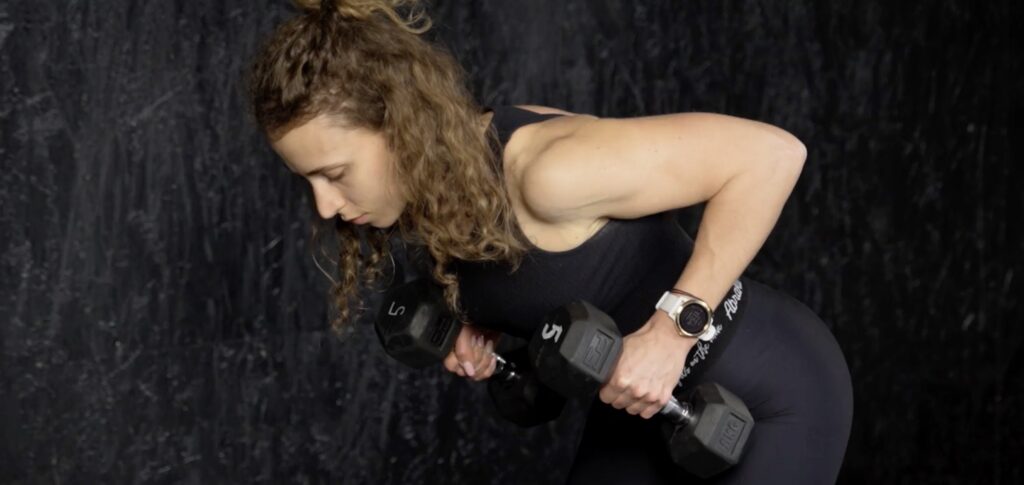
Rows are a foundational exercise for back development, but exactly how should you perform them?
In this article we explore exactly how each variation works, and which one is right for you.
How Unilateral and Bilateral Rows Challenge Your Back and Core
Rowing exercises train the latissimus dorsi, middle and lower trapezius, rhomboids, posterior deltoids, and elbow flexors, yet moving one arm at a time changes how your torso and pelvis handle load compared with pulling both hands together.
When you perform a two-arm row such as a bent-over barbell row or two-handed cable row, your body pulls symmetrically in the sagittal plane and often supports heavier combined loads across both limbs.
By contrast, a one-arm dumbbell or cable row shifts your center of mass and introduces an anti-rotation or anti-lateral-flexion challenge that forces your trunk musculature to steady your spine against asymmetric pull.
Electromyography research comparing unilateral and bilateral row variations shows that single-arm rowing elicits markedly higher activation in the external obliques and lateral trunk stabilizers than bilateral rowing because the core must resist twisting and side bending. At the same time, meta-analyses and controlled studies examining unilateral versus bilateral resistance training indicate that both approaches can promote meaningful muscle hypertrophy and strength gains when programmed with sufficient volume and effort.
Because muscle growth depends heavily on mechanical tension, proximity to muscular failure, and progressive overload over time, both rowing styles can contribute meaningfully to back development.
One-Arm vs Two-Arm Rowing Comparison
| Feature | One-Arm Rows | Two-Arm Rows |
| Loading Pattern | Unilateral single-limb work | Bilateral two-limb work |
| Core and Anti-Rotation Demand | Higher oblique and lateral trunk bracing | More symmetrical sagittal and spinal erector load |
| Limb Symmetry | Exposes and addresses side-to-side differences | Both sides move together under shared load |
| Best Training Role | Targeted lat focus, core stability, and balance | Heavy overall back loading and time efficiency |
Where Two-Arm Rows Shine for Back Size
Pulling with both arms at once allows you to handle substantial total resistance across heavy compound sets, which makes two-arm rows a classic staple for building overall upper-back thickness and pulling strength.
When you bend over with a barbell or sit down at a two-handle row station, you can overload the upper back and lats efficiently within a compact time window. For lifters who enjoy heavy, foundational compound lifting or want to train large muscle groups quickly during a busy schedule, two-arm rows offer straightforward progression.

Managing Lower-Back Fatigue and Form
Standing bent-over two-arm rows require your lower back extensors, glutes, and hamstrings to hold a hinged posture isometrically while your upper back pulls the weight.
If your lower back fatigues early from heavy squats or deadlifts earlier in the week, holding a bent-over hinge can become the limiting factor before your lats or rhomboids reach a strong growth stimulus. Using a chest-supported two-arm row or keeping your torso angle steady with clean control helps keep tension focused on your back muscles rather than letting momentum take over.
Where One-Arm Rows Shine for Back Size
Rowing one arm at a time gives you freedom to adjust your torso angle, pull slightly back toward your hip for extra lat emphasis, and achieve a full stretch and squeeze on each side independently.
When you brace one hand and knee or foot on a bench during a one-arm dumbbell row, much of the lower-back fatigue from standing upright disappears so you can push your target back muscles close to failure. Research on resistance training proximity to failure shows that pushing sets close to muscular failure supports muscle hypertrophy, and a supported unilateral setup makes it easier to stay safe and controlled near the end of hard sets.
Correcting Imbalances Without Losing Tension
Almost everyone has a dominant side that naturally takes over slightly when two hands pull on the same rigid bar, especially as fatigue sets in during later sets. Training one arm at a time ensures your non-dominant side does its fair share of work without hiding behind your stronger arm. Just make sure you do not twist your torso wildly to heave heavy dumbbells upward with body English unless you are intentionally using a specialized high-load variation, because excessive twisting shifts work away from strict back tension.
Which One Builds a Bigger Back?
Neither one-arm rows nor two-arm rows holds a monopoly on back growth, because the biggest backs are typically built by combining the heavy bilateral loading of two-arm rows with the targeted control and unilateral balance of one-arm rows. If your lower back feels fresh and you want heavy total-body pulling volume, start your back session with a well-executed two-arm row before moving to one-arm rows to finish each side cleanly. On days when your lower back is tired or you want extra lat focus and core bracing, leaning heavier on one-arm rows lets you keep pushing quality sets without compromise.
Resistance Bands vs Dumbbells: Which Builds More Muscle at Home?
Whichever rowing setup you choose, consistent weekly progression, clean control through the lowering phase, adequate daily protein, and restful sleep will drive your results over time. Track your sets, repetitions, and weights across multi-week training blocks so your back continues to grow steadily without unnecessary wear and tear.
Key Takeaways for Back Growth
| Decision Area | Practical Guideline | Why It Helps Your Back |
| Hypertrophy Potential | Use both one-arm and two-arm rows across your week | Combines heavy bilateral load with unilateral control |
| Core and Symmetry | Include one-arm rows to challenge obliques and balance | Increases lateral trunk demand and reduces side bias |
| Fatigue Management | Choose supported or one-arm rows when lower back is taxed | Protects set quality when spinal erectors are fatigued |
| Long-Term Progress | Push close to failure, log reps, and prioritize recovery | Sustains mechanical tension and steady back growth |


References
- Behm, D.G., Leonard, A.M., Young, W.B., Bonsey, W.A. and MacKinnon, S.N. (2005) ‘Trunk muscle electromyographic activity with unstable and unilateral exercises’, Journal of Strength and Conditioning Research, 19(1), pp. 193–201.
- Morton, R.W., Murphy, K.T., McKellar, S.R., Schoenfeld, B.J., Henselmans, M., Helms, E., Aragon, A.A., Devries, M.C., Banfield, L., Krieger, J.W. and Phillips, S.M. (2018) ‘A systematic review, meta-analysis and meta-regression of the effect of protein supplementation on resistance training-induced gains in muscle mass and strength in healthy adults’, British Journal of Sports Medicine, 52(6), pp. 376–384.
- Robinson, Z.P., Pelland, J.C., Remmert, J.F., Refalo, M.C., Jukic, I., Steele, J. and Zourdos, M.C. (2024) ‘Exploring the dose-response relationship between estimated resistance training proximity to failure, strength gain, and muscle hypertrophy: A series of meta-regressions’, Sports Medicine, 54(9), pp. 2209–2231.
- Rosa, A., Coleman, M., Aguiar, A.F., et al. (2025) ‘Effects of single-joint vs. multi-joint resistance training on muscle hypertrophy: A systematic review and meta-analysis’, Sports Medicine, 55(4), pp. 845–860.
- Saeterbakken, A.H., Fimland, M.S., Solstad, V., Iversen, V.M. and Andersen, V. (2015) ‘Core muscle activation in unilateral and bilateral row exercises’, Journal of Strength and Conditioning Research, 29(12), pp. 3425–3431.
Robbie Wild Hudson
Editor-In-Chief at BOXROX. I come from a background of rugby and weightlifting. Growing up in the English Lake District, I spent a great deal of time swimming in its stunning lakes and rivers. In 2015 my brothers and I became the first people to swim the 145km length of the River Eden, from source to mouth, in 9 days. We also swam the Corryvreckan whirlpool, the third largest in the world, and Crossfit is a huge part of my training for these events.
More from Robbie Wild Hudson