

Starting strength training can feel unnecessarily complicated. One person tells you to build your whole workout around heavy squats, presses, rows, and deadlifts. Another says machines, curls, and other focused exercises are the fastest route to visibly bigger muscles. Both approaches can build muscle, but they do not solve exactly the same problem.
For beginners, the most effective answer is not to pick one side and ignore the other. Compound exercises should make up the foundation of a muscle building program because they train several major muscle groups at once, develop coordination, and make it easier to accumulate productive training volume efficiently. Isolation exercises then add focused work for muscles that need more attention, or for people who need a simpler and more stable way to train around fatigue, confidence, or movement limitations.


The best muscle building plan is the one you can perform with good technique, progress over time, and recover from consistently. Understanding where compound and isolation exercises fit makes this far easier.
What Are Compound and Isolation Exercises?
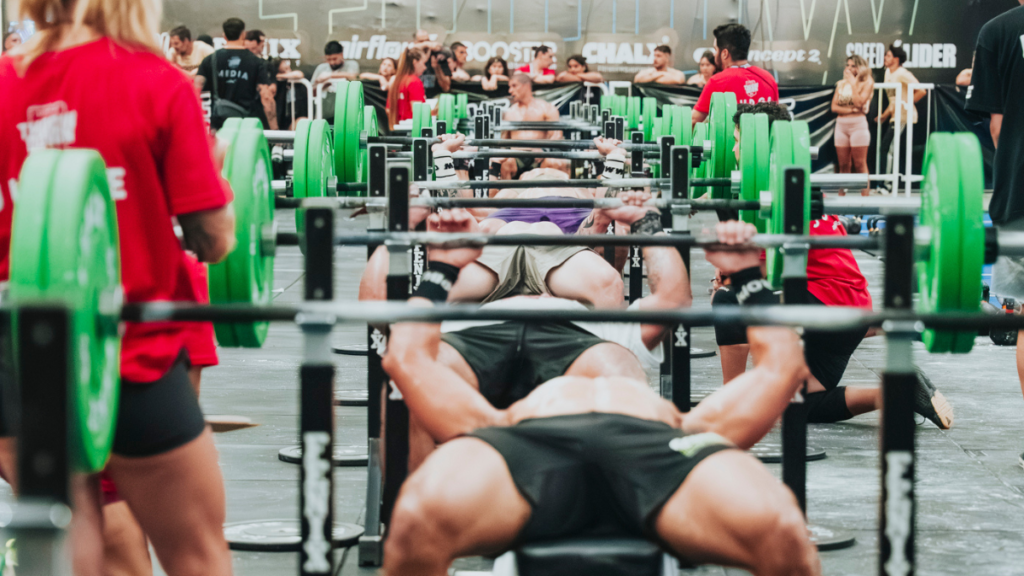
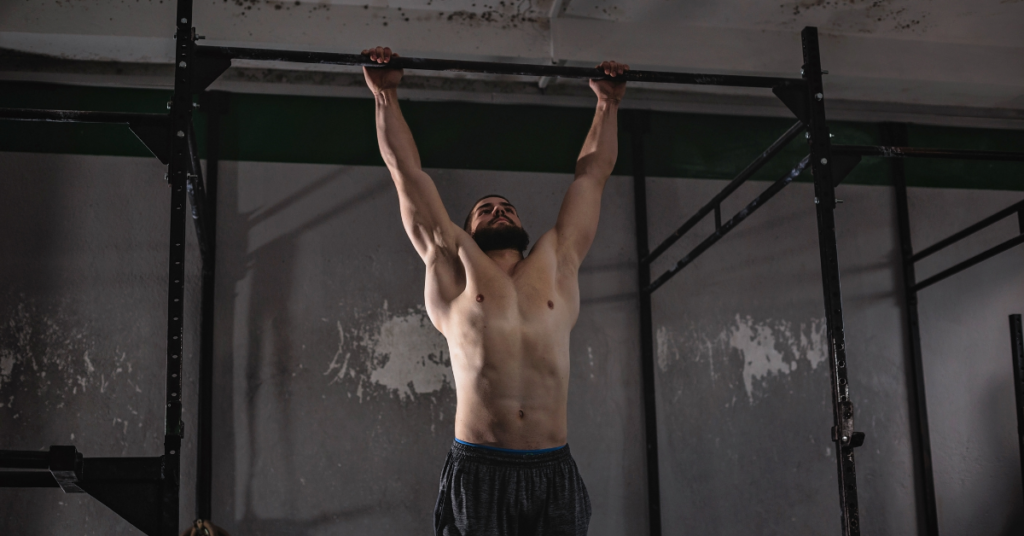
Compound exercises involve movement at multiple joints and train several muscle groups during the same repetition. A squat involves the hips, knees, and ankles while challenging the quadriceps, glutes, adductors, calves, and trunk. A bench press uses the shoulder and elbow joints, training the chest, triceps, and front of the shoulders. Rows, pull ups, lunges, overhead presses, and deadlifts are also compound exercises.
Isolation exercises focus most of the challenge on one joint action and usually emphasize one main muscle group. A leg extension targets knee extension and strongly trains the quadriceps. A leg curl trains knee flexion and emphasizes the hamstrings. Biceps curls, triceps extensions, lateral raises, chest flyes, calf raises, and cable pushdowns all fit into this category.
The distinction is useful, but it should not be treated as absolute. Every exercise requires other muscles to stabilize the body and control the weight. A curl still involves the forearms and shoulder muscles, while a squat still places a great deal of stress on the quadriceps. The important difference is where the greatest training stimulus falls and how many muscles can meaningfully contribute to the lift.
Why Compound Exercises Are Usually the Best Starting Point
They Train More Muscle in Less Time
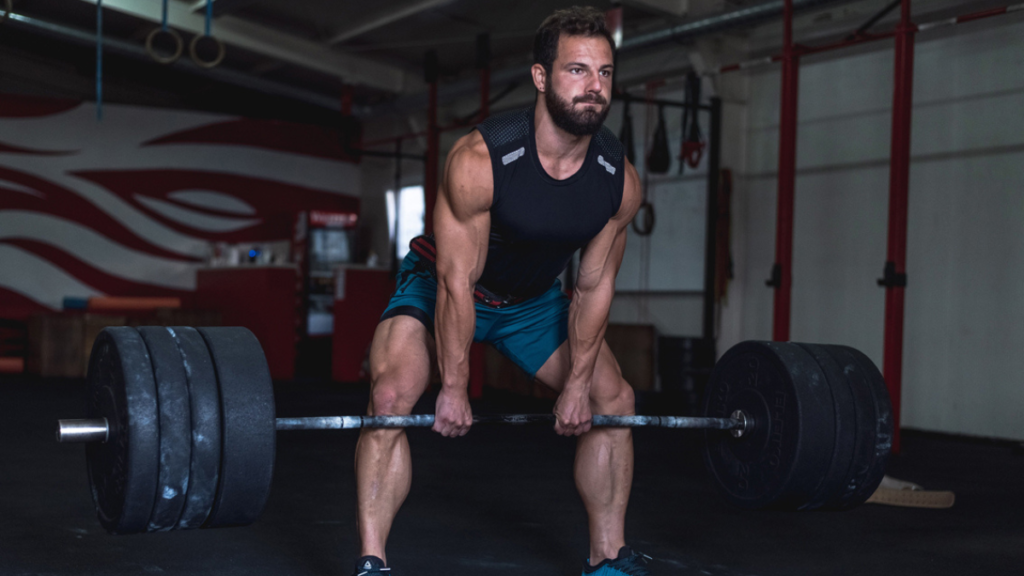
Compound movements are highly efficient because one set can provide a meaningful stimulus to several muscle groups. A well performed bench press can train the chest, triceps, and front deltoids. A pull up or pulldown trains the latissimus dorsi, upper back, biceps, and forearms. A squat or leg press trains much of the lower body in a single movement.
This matters especially for beginners because training time, concentration, and recovery capacity are limited. A new lifter who performs a squat pattern, horizontal press, row, hip hinge, and vertical pull can train most major muscle groups in a relatively short session. Research consistently shows that muscle growth is strongly related to accumulating enough challenging resistance training volume over time. Compound exercises make it easier to build that volume without turning every workout into a long list of separate movements.
They also help beginners learn the basic movement patterns that are useful inside and outside the gym. Improving your ability to squat, hinge, press, pull, brace, and carry develops a broad base of strength that supports future training.
They Produce Strong Whole Body Training Signals
Compound lifts require several muscles to work together. This means the body must coordinate force production, stability, balance, and technique at the same time. Over time, this improves neuromuscular coordination, which is one reason beginners often become substantially stronger early in a training program.
Initial strength improvements are not all caused by new muscle tissue. Learning how to perform the movement more effectively is a major part of early progress. Compound exercises give beginners repeated practice in producing force through large ranges of motion and controlling challenging loads. That technical development is valuable because progressive overload becomes easier when movement skill improves.
Compound exercises also allow a lifter to use relatively large external loads. Heavy loading is not essential for hypertrophy, since lighter weights can build muscle when sets are performed sufficiently close to muscular failure. However, compound movements provide a practical way to train with moderate and heavier loads while using fewer exercises.
They Build a Useful Base of Strength
Muscle growth is helped by progressive overload. This means gradually increasing the demands placed on the muscles through more repetitions, more weight, more sets, improved range of motion, or better technique. Compound lifts offer clear and measurable progression.
A beginner can begin with manageable weights, learn the movement, and gradually add small amounts of load or repetitions. This provides a simple structure for training. If you can squat, press, row, and pull more effectively than you could several months ago, you will usually have created a strong stimulus for muscular development.
This does not mean that every compound exercise must be performed with a barbell. Machines, dumbbells, cables, and bodyweight movements can all be compound exercises. A leg press, chest press machine, seated cable row, lat pulldown, and split squat can be excellent beginner choices. They can reduce the technical barrier while still training multiple muscles effectively.
Where Isolation Exercises Become Valuable

They Give Muscles More Direct Attention
Compound exercises do not always stimulate every involved muscle equally. During a bench press, the chest, triceps, and front deltoids all contribute, but one individual may feel more triceps involvement while another gets more chest stimulus. During a row, the back muscles and biceps work together, but the biceps may fatigue before the upper back has received enough challenging work.
Isolation exercises allow a beginner to give a specific muscle more direct training after compound work. A biceps curl can add direct elbow flexion work after rows and pulldowns. A triceps extension can supplement pressing movements. Lateral raises can provide more focused work for the side deltoids, which are less directly trained by many pressing exercises. Leg curls can provide a direct hamstring stimulus that squats may not fully deliver.
Research comparing single joint and multi joint training has found that both can produce meaningful increases in muscle size and strength. When overall training volume is considered, multi joint exercises can often produce similar hypertrophy in the muscles they train. However, direct single joint work may be useful when a particular muscle is a priority or when indirect work is not enough.
They Can Be Easier to Learn and Control
Some isolation exercises are easier for beginners to perform safely because they involve less coordination and fewer moving parts. A machine leg extension, cable curl, or chest fly machine often allows the trainee to focus on the target muscle without having to manage balance or complex technique.
The Only 3 Exercises Beginners Need to Transform Their Abs
This can be particularly helpful when someone is training alone, has little experience with free weights, or feels intimidated by a busy gym. The stability provided by machines can also make it easier to train a muscle close to fatigue while maintaining consistent form.
That does not mean machines are automatically safer or superior. Good exercise selection depends on the individual, the equipment available, and how the exercise feels. A beginner should use movements that can be controlled through a comfortable range of motion and progressed consistently.
They Help Address Weak Links and Personal Goals
Most people do not begin training with identical needs. Someone may want larger arms, shoulders, calves, or glutes. Another person may find that their triceps limit their pressing strength or that their hamstrings need more direct work. Isolation exercises allow a program to reflect those goals.
They can also be useful when a compound movement causes discomfort in one area but a more focused exercise can be performed comfortably. For example, a person who cannot yet tolerate heavy pressing may still be able to train the chest through a machine press or cable fly variation. Someone learning to squat may use leg extensions and leg curls to build additional lower body volume while developing squat technique gradually.
The key is to see isolation work as an addition, not a replacement for all multi joint training. It is a useful tool for targeted volume, rather than the entire structure of a beginner program.
Which Builds More Muscle?
The answer depends on whether the total amount of hard training is matched. If a beginner performs enough challenging sets, progressively increases the demands of training, eats enough protein and total calories to support their goal, and recovers well, both compound and isolation exercises can contribute to muscle growth.
Compound exercises tend to deliver more overall muscle building value per exercise because they train multiple muscles together. For someone with limited time, they are the better foundation. A beginner who only has three sessions per week can make excellent progress using a small number of compound movements performed consistently.
Isolation exercises can then improve the quality of the program by adding direct work where it matters most. They are especially helpful for muscles that are not fully challenged by compound lifts, such as the side deltoids, calves, and often the hamstrings. They can also increase weekly volume without requiring more demanding full body lifts.
Training volume is one of the most important drivers of hypertrophy, but more is not always better. Beginners can grow with relatively modest amounts of hard work because they are highly responsive to resistance training. Starting with a manageable number of weekly sets and adding work only when progress slows is usually more effective than beginning with excessive volume.
How Beginners Should Structure Their Training
A practical beginner approach is to place compound exercises first in the workout, when energy and concentration are highest. Use one lower body movement, one press, and one pull as the core of the session. Then add one or two isolation exercises based on your goals and the muscles that need extra attention.
For example, a full body workout could start with a leg press or squat, followed by a chest press or dumbbell bench press, then a row or lat pulldown. After that, the trainee could perform leg curls, lateral raises, or biceps curls. This structure gives you broad training coverage while still allowing focused work.
Most sets should be performed with controlled technique and a level of effort that feels challenging. You do not need to reach complete muscular failure on every set. Training close to failure can stimulate hypertrophy, but beginners often benefit from leaving a small number of repetitions in reserve while they learn technique. This supports good form, consistent training, and recovery.
For many beginners, two or three full body sessions each week is enough to produce results. Aim to progress gradually by adding repetitions before adding more weight whenever possible. If you can complete the top end of your planned repetition range with good control, increase the load slightly in the next session.
Common Mistakes to Avoid
A common mistake is treating compound exercises as the only exercises worth doing. This can leave some muscles undertrained and make workouts less enjoyable for people who have specific physique goals. Another mistake is the opposite approach: filling every session with curls, flyes, and machine work while avoiding the larger movements that build broad strength and efficiency.
Beginners should also avoid chasing constant variety. Changing exercises every week makes it harder to track progress. Keep the main movements for long enough to improve your technique and performance. Small changes can be useful when an exercise causes discomfort or becomes stale, but a program needs consistency to work.
Finally, do not confuse soreness with a successful workout. Muscle soreness can occur after unfamiliar exercise or greater training volume, but it does not reliably measure muscle growth. Consistent progress, sound technique, and recovery are better signs that the program is working.
The Bottom Line
Compound exercises should be the main muscle building tool for beginners because they train more muscle in less time, teach important movement patterns, and provide a simple path for progression. They offer the greatest return for a new lifter who wants to become stronger and add overall size.
Isolation exercises are still highly valuable. They allow you to add focused work for muscles that need more volume, develop areas that matter to your physique goals, and train productively with simpler movements when needed. The best beginner program is not compound versus isolation. It is compound exercises as the foundation, supported by carefully chosen isolation work.
Key Takeaways
| Focus | Key takeaway |
|---|---|
| Best foundation | Compound exercises should form the base of a beginner muscle building program because they train several muscles in one movement. |
| Muscle growth | Both exercise types can build muscle when training is challenging, progressive, and performed consistently. |
| Time efficiency | Compound movements provide more total muscle training per exercise and suit people with limited gym time. |
| Targeted growth | Isolation exercises help add direct volume for specific muscles such as the biceps, side deltoids, calves, and hamstrings. |
| Beginner programming | Start each workout with compound movements, then add one or two isolation exercises that suit your goals. |
| Progression | Add repetitions, load, or controlled training volume gradually while maintaining good technique. |
References
- American College of Sports Medicine (2009) ‘American College of Sports Medicine position stand: Progression models in resistance training for healthy adults’, Medicine and Science in Sports and Exercise, 41(3), pp. 687–708.
- Baz-Valle, E., Fontes-Villalba, M., Santos-Concejero, J. and Balsalobre-Fernández, C. (2022) ‘Total number of sets as a training volume quantification method for muscle hypertrophy: A systematic review’, Journal of Strength and Conditioning Research, 36(12), pp. 3503–3510.
- Brad Schoenfeld, B.J., Ogborn, D. and Krieger, J.W. (2017) ‘Dose-response relationship between weekly resistance training volume and increases in muscle mass: A systematic review and meta-analysis’, Journal of Sports Sciences, 35(11), pp. 1073–1082.
- Fink, J., Kikuchi, N., Nakazato, K., Akima, H. and Koyama, K. (2018) ‘Effects of rest intervals and training loads on metabolic stress and muscle hypertrophy’, Clinical Physiology and Functional Imaging, 38(2), pp. 261–268.
- Gentil, P., Soares, S. and Bottaro, M. (2015) ‘Single versus multi-joint resistance exercises: Effects on muscle strength and hypertrophy’, Asian Journal of Sports Medicine, 6(2), e24057.
- Grgic, J., Schoenfeld, B.J., Skrepnik, M., Davies, T.B. and Mikulic, P. (2018) ‘Effects of rest interval duration in resistance training on measures of muscular strength: A systematic review’, Sports Medicine, 48(1), pp. 137–151.
- Krieger, J.W. (2010) ‘Single versus multiple sets of resistance exercise for muscle hypertrophy: A meta-analysis’, Journal of Strength and Conditioning Research, 24(4), pp. 1150–1159.