

The push up looks like a simple test: get down, keep your body straight, and see how many you can do. But two people can report the same score after doing very different tests. One may have lowered their chest close to the floor each time, while the other shortened the movement as fatigue set in. Some tests also set a time limit or a required pace, which can change the result.
This guide will allow you to test yourself based on proper form, fair reps and give you goals to aim for as you continue to progress.
Find out how you stack up against your peers.
What Counts as a Push Up?
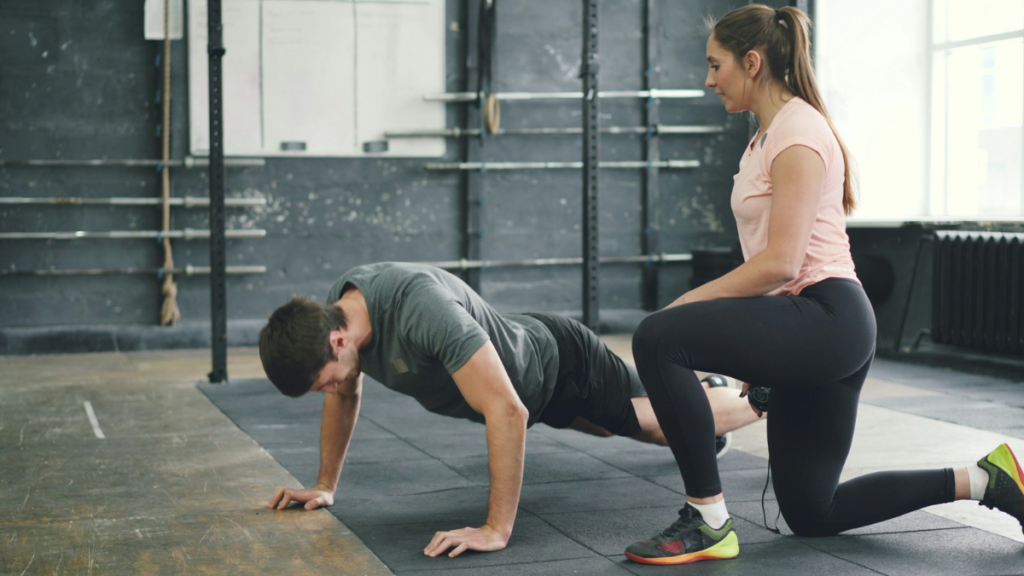
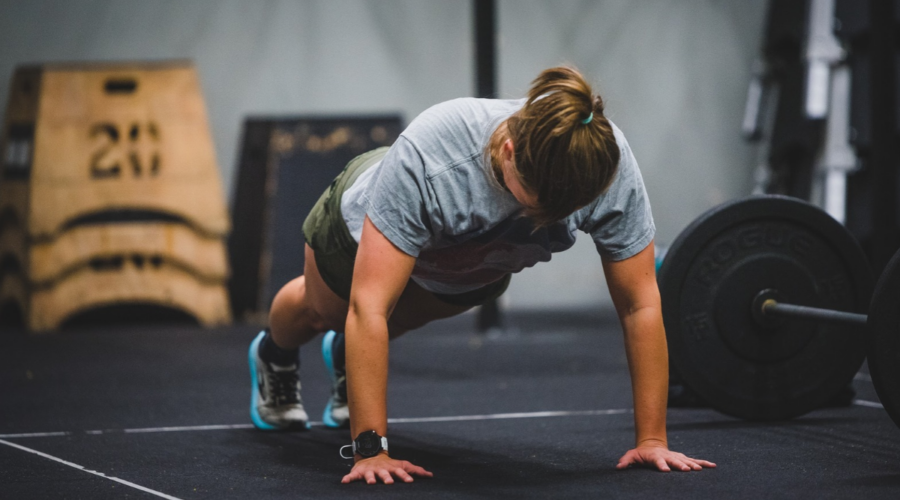
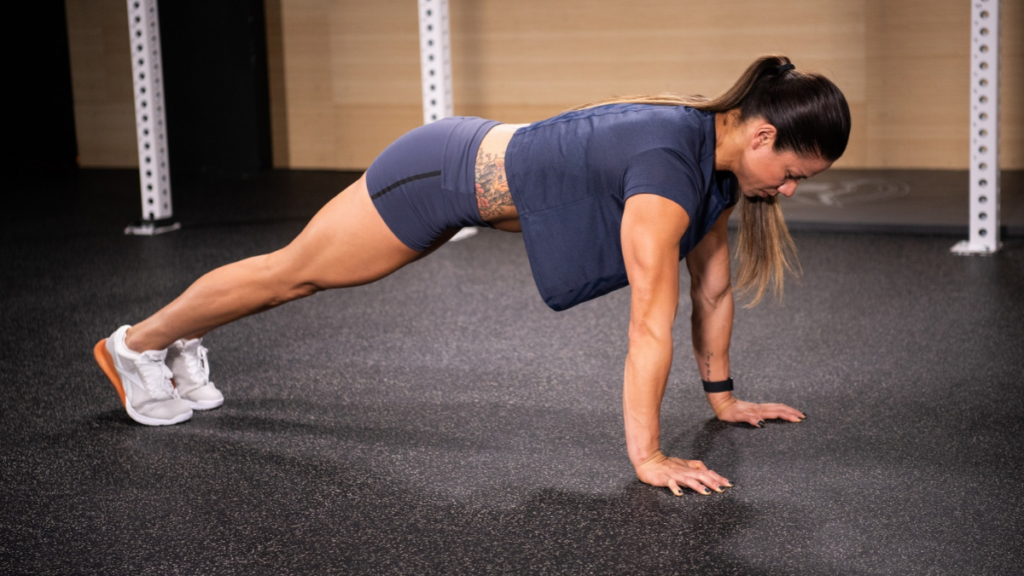
For a standard push up, start with your hands on the floor and your arms extended. Your hands should be around shoulder width apart, and your body should form a reasonably straight line from head to heels. Bend your elbows to lower your body, then press back up until your arms are extended again. Keep your hips from sagging or rising as you move.
The score only counts repetitions that meet the test’s rules. In the Canadian Society for Exercise Physiology protocol, the standard version is performed from the toes, and the test ends when you can no longer maintain the required technique. The protocol is not the same as a one minute challenge, a fast set done at your own pace, or a test with a metronome. Those approaches can produce different scores, so they should not be compared as if they were identical.
If you are testing yourself, choose one version and use it every time. Keep the same hand position, depth, pace, and stopping rule. That gives you a more useful way to judge your progress than trying to match a number from a different test.
The Benchmark for Men in Their 30s
A widely used set of age based fitness ratings gives men aged 30 to 39 the following push up ranges:
| Rating | Push ups |
|---|---|
| Needs improvement | 11 or fewer |
| Fair | 12 to 16 |
| Good | 17 to 21 |
| Very good | 22 to 29 |
| Excellent | 30 or more |
These are ratings for a specific test, not a rule every man in his 30s must meet. They offer a point of comparison for standard push ups performed with consistent form. The categories are based on Canadian fitness standards, so they should be treated as a reference rather than a universal measure of health or ability.
The word “good” here describes a score category. It does not mean that a man below that range is unhealthy, nor does an excellent score prove that someone is healthy overall. A push up test measures a narrow part of fitness: repeated pressing ability using your body as resistance.
How the Benchmark Changes After 40
The same reference standards lower the repetition ranges as the age bands increase. The table below shows the categories for men aged 40 to 69.
| Age | Needs improvement | Fair | Good | Very good | Excellent |
|---|---|---|---|---|---|
| 40 to 49 | 9 or fewer | 10 to 12 | 13 to 16 | 17 to 24 | 25 or more |
| 50 to 59 | 6 or fewer | 7 to 9 | 10 to 12 | 13 to 20 | 21 or more |
| 60 to 69 | 4 or fewer | 5 to 7 | 8 to 10 | 11 to 17 | 18 or more |
These age bands can help put a score in context, but they do not predict what an individual should be capable of. A man who has trained push ups for years may exceed the typical range for his age. Someone returning from an injury, new to strength training, or living with a condition that affects movement may fall below it.
The published categories also stop at age 69. They do not provide a reliable push up target for men aged 70 and older, so it is better to track personal progress and seek individualized guidance than to assume the table applies beyond its stated range.
Why Your Score Depends on the Test
A timed test rewards a different skill from an untimed test. In one minute, someone who can move quickly may complete more repetitions than someone who uses a slower pace and pauses to reset. A required cadence changes the challenge again because every repetition must fit the same rhythm.

Range of motion matters too. If you lower only partway, you reduce the work required for each repetition. That can raise your count, but it also makes your score harder to compare with a test that requires a consistent depth. For a fair comparison, use a clear standard each time, such as lowering until your chest reaches a set marker and returning to full arm extension.
Stopping rules affect results as well. Some tests stop as soon as your form breaks. Others let you rest briefly or continue until you choose to stop. Decide what counts as the end of the test before you begin, and use that same rule when you test again.
What a Push Up Score Can Tell You
Push up performance reflects the ability to repeat a pressing movement while supporting part of your body weight. The exercise uses the chest, shoulders, and triceps, and the trunk helps maintain a stable body position. It is a practical measure of upper body muscular endurance, but it does not measure every aspect of strength or fitness.
Your body size and proportions can influence how demanding each repetition feels. The push up is a bodyweight exercise, so the amount of body mass supported through the hands and feet affects the task. Hand position, arm length, and movement strategy can also change how a repetition feels. That is another reason to focus on your own consistent score instead of treating a single number as a complete measure of fitness.
A study of occupationally active men found an association between push up capacity and later cardiovascular disease events. Men who completed more than 40 push ups had a lower observed risk than those who completed fewer than 10. The researchers studied firefighters, and the results show an association in that group. They do not prove that being able to do a certain number of push ups prevents heart disease, and the study does not establish 40 repetitions as a health target for every man.
How to Test Yourself Fairly
Test when you are rested and have not just trained your chest, shoulders, or triceps. Warm up with a few minutes of easy movement and several gentle repetitions. Then use the same surface and hand position you plan to use for future tests.
Standing Abs vs Floor Abs Exercises: Which Is Better for Beginners?
Keep each repetition controlled enough to maintain the chosen range of motion. Stop when you cannot complete another repetition with the agreed form, rather than adding short or uneven reps to the total. Record the date, your score, and any details that might affect the result, such as whether the test was timed or paced.
If standard push ups are not comfortable or suitable for you, use an easier variation such as incline push ups, with your hands on a stable elevated surface. Track that variation separately from floor push ups because it changes the difficulty. You can gradually lower the hand support as your capacity improves.
If you have pain, a recent injury, or a health condition that affects exercise, choose a test that is appropriate for you and ask a qualified health professional for guidance. A benchmark is useful only when the test can be performed safely and consistently.
How to Improve Your Number
The simplest way to improve is to practice push ups regularly while keeping your repetitions clean. If you can do only a few standard push ups, start with an incline version that lets you maintain good technique. As you get stronger, lower the hand support or add standard repetitions.
You can also practice sets that stop before your form breaks instead of testing your maximum every session. For example, if your best set is 10 clean repetitions, several smaller sets of 5 or 6 can help you build practice volume without turning every workout into an all out effort. Leave enough recovery between sets to keep the repetitions consistent.
Include other strength exercises if you want a more balanced program. Push ups train a pressing pattern, while pulling exercises train a different movement pattern. General physical activity guidance recommends muscle strengthening activity that works the major muscle groups on at least two days each week. Push ups can contribute to that routine, but they do not need to be the only exercise you do.
So, How Many Should You Be Able to Do?
For a man aged 30 to 39 using the Canadian age based standard, 17 to 21 clean push ups falls in the “good” category, 22 to 29 is rated “very good,” and 30 or more is “excellent.” The corresponding categories shift with age, as shown in the table above.
Treat these ranges as reference points, not requirements. The most useful score is one earned with consistent form under a clear test protocol. If your current result is below the range you hoped for, it gives you a starting point. Retest under the same conditions after a period of regular practice and compare your progress with your own baseline.
References
- Canadian Society for Exercise Physiology (2021) CSEP Physical Activity Training for Health Resource Manual. 3rd ed. Ottawa: Canadian Society for Exercise Physiology.
- Payne, N., Gledhill, N., Katzmarzyk, P.T., Jamnik, V.K. and Keir, P.J. (2000) ‘Canadian musculoskeletal fitness norms’, Canadian Journal of Applied Physiology, 25(6), pp. 430–442.
- Rozenek, R., Byrne, J.J., Crussemeyer, J. and Garhammer, J. (2022) ‘Male-female differences in push-up test performance at various cadences’, Journal of Strength and Conditioning Research, 36(12), pp. 3324–3329.
- Yang, J., Christophi, C.A., Farioli, A., Baur, D.M., Moffatt, S., Zollinger, T.W. and Kales, S.N. (2019) ‘Association between push-up exercise capacity and future cardiovascular events among active adult men’, JAMA Network Open, 2(2), e188341.
Key Takeaways
| Topic | Key takeaway |
|---|---|
| Men aged 30 to 39 | 17 to 21 clean repetitions is rated good in a widely used Canadian standard. |
| Men aged 40 and older | The reference ranges change by age band. |
| Test conditions | Use the same range of motion, pace, and stopping rule when comparing scores. |
| Health meaning | A push up score measures one part of fitness and does not diagnose overall health. |
| Progress | Track your own score over time and practice a variation you can perform with consistent form. |