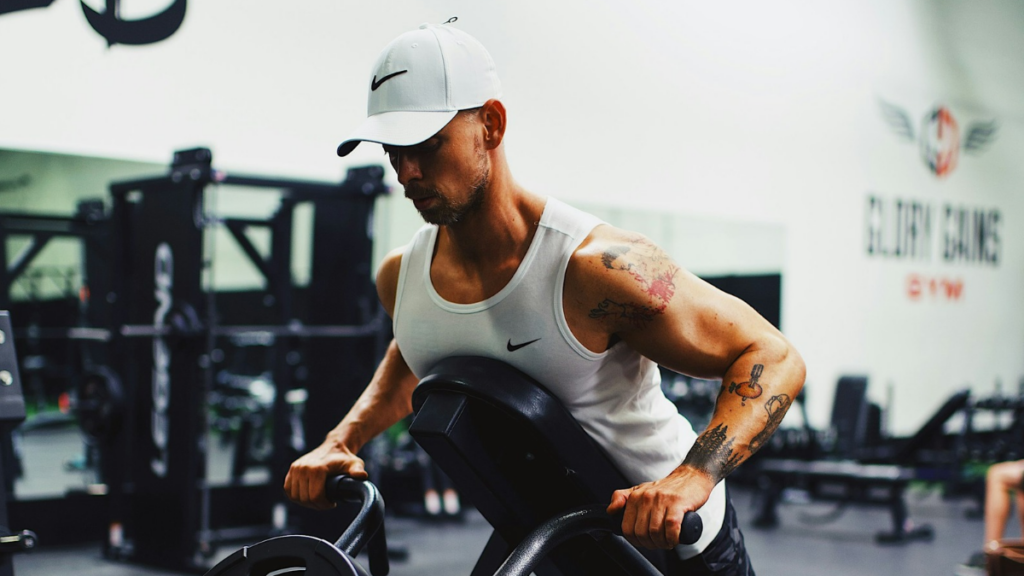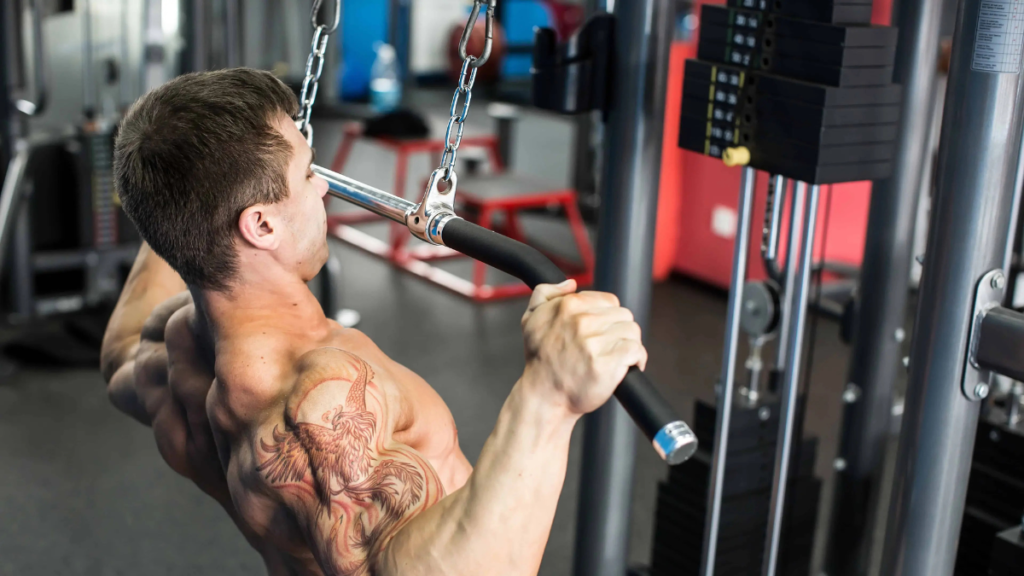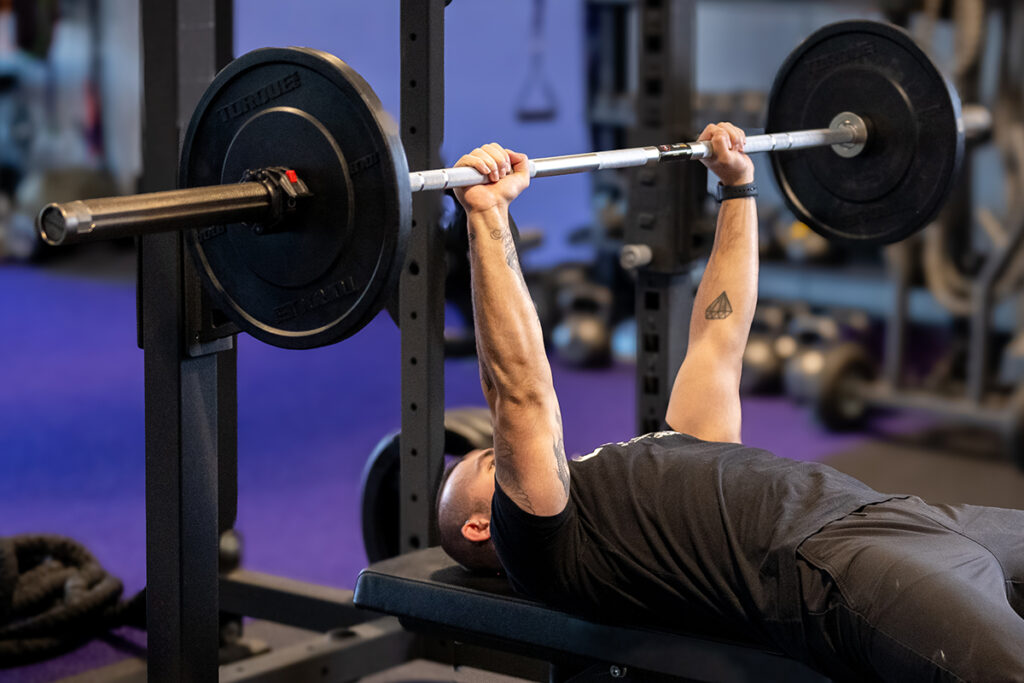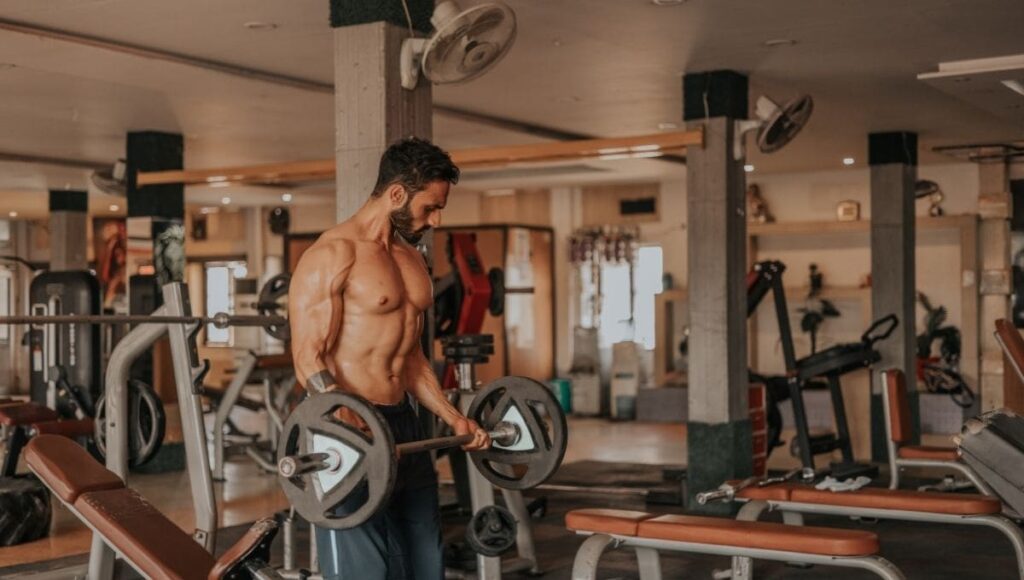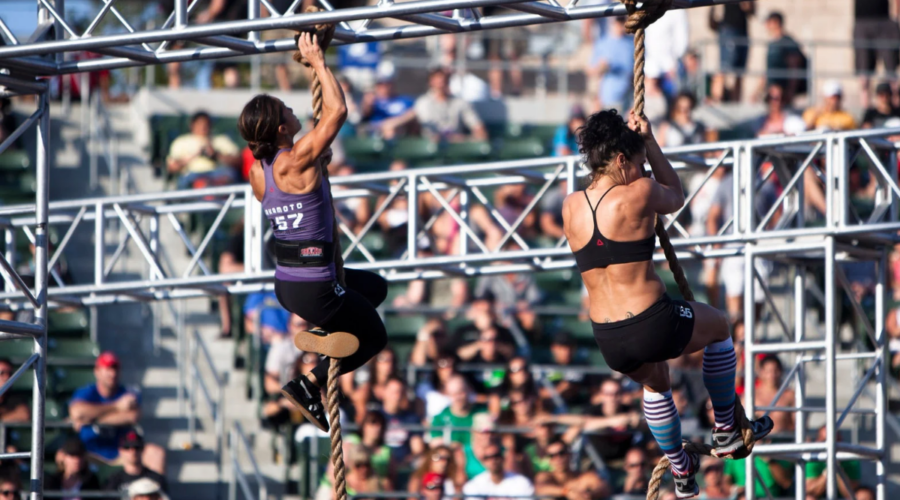


Dumbbells are useful. They let you train each arm separately, adjust your range of motion, and work around the equipment in a busy gym. But if your idea of strong shoulders includes pressing a heavy load overhead, climbing a rope, or hauling resistance toward you, a set of lateral raises will only take you so far.
Athletes often train shoulders as part of bigger tasks. That means producing force, controlling the body, and keeping the shoulder stable while the hands and arms work.
These three exercises that challenge those skills in different ways. Learn more now.
Why athletes train shoulders through whole body movements
The shoulder is involved in pushing, pulling, reaching, and controlling the arm under load. In many athletic tasks, it works alongside the upper back, arms, trunk, and grip rather than in isolation. A shoulder exercise can therefore be useful because it trains a movement an athlete needs, even when it is not the most direct choice for targeting one part of the deltoid.
That distinction matters. An exercise that activates a muscle during a single set has not automatically been shown to build more muscle over time. Electromyography studies measure electrical activity during a movement. They can help describe which muscles are working, but they do not prove that one exercise produces more long term growth than another.
For shoulder size and strength, consistency and progressive resistance training matter more than choosing an exercise because it looks athletic. A recent overview of research on resistance training found that regular training can improve muscle strength and size, while training variables such as load and weekly volume can be adjusted to suit the goal. The three movements below make sense as options for athletes who also want to build usable strength.
1. Overhead barbell press
The overhead barbell press is the most direct shoulder builder in this group. You press a bar from around shoulder height to overhead, using the deltoids and triceps to move the load while your trunk and upper back help keep you steady. Standing adds a balance and bracing demand, while a seated version provides more support.
Research comparing barbell and dumbbell presses found that the muscles measured did not respond identically across every version. The standing dumbbell press produced greater activity in some parts of the deltoid than the standing barbell press, while the barbell allowed participants to lift more weight. That is a useful reminder that “more functional” and “more muscle activation” do not always mean the same thing. The barbell is valuable because it allows an athlete to practice pressing and gradually handle heavier loads, not because it has been proven superior to dumbbells for shoulder growth.
How to perform it
Set the bar in a rack around upper chest height. Grip it just outside shoulder width, rest it across the front of your shoulders, and stand with your feet about hip width apart. Brace your midsection and squeeze your glutes so your torso stays steady. Press the bar upward, moving your head slightly back to let the bar pass, then bring your head through as the bar reaches overhead. Finish with the bar over your shoulders and midfoot, then lower it under control.
Use a range of motion you can control without pain or excessive arching through your lower back. If your shoulders do not tolerate the position comfortably, try a lighter load, a seated variation, or another press that suits your mobility and training history. Do not force a behind the neck press simply because one small study found different muscle activity in that variation. Greater activation in a lab is not a reason to use a position that feels wrong for you.
How to train it
Treat the press as a strength exercise, not a test of how much weight you can move with a dramatic lean. Start with a load that lets you keep the bar path controlled and repeat the same technique each set. Add a small amount of weight or a repetition when you can complete your planned work with good form.
For athletes, pressing strength can support tasks that involve pushing overhead or stabilizing a load above the head. But the press does not train every shoulder function by itself. Pair it with pulling work and sensible shoulder training across the week, rather than expecting one lift to cover everything.
2. Legless rope climb
A legless rope climb removes much of the assistance that comes from wrapping or pinching the rope with the feet. That leaves the arms, shoulders, back, trunk, and grip doing more of the climbing work. It is a demanding bodyweight pull, especially when repeated climbs are involved.
Direct research on legless rope climbing is limited. A study comparing rope climbing styles found that hand climbing placed higher demands on the forearm and biceps than techniques that used the legs to help secure the rope. A separate study of rope pull ups also recorded activity across muscles in the shoulder, arm, and forearm. These findings support the idea that rope climbing challenges pulling muscles and grip, although they do not establish that legless climbs are the best way to build shoulder size.
How to approach it
If you are new to rope climbing, build the pieces before trying a full climb. Practice hanging from the rope, controlled rope pulls from a seated or low position, and regular pull ups if you can perform them without pain. These easier versions let you develop grip and pulling capacity before you add the full bodyweight demand of climbing.
For a legless climb, begin from a secure position with both hands on the rope. Pull one hand higher, then the other, keeping your body close to the rope and your trunk braced. Avoid swinging wildly to gain height. Descend under control rather than dropping, since a fast uncontrolled descent can place a sudden demand on the hands and shoulders.
Rope climbs are a skill as well as a strength exercise. Fatigue can affect grip and coordination, so stop a set when you can no longer climb with control. There is no need to make every session a maximum effort test.
What it can add to shoulder training
A rope climb trains the shoulder during repeated pulling and body control. It also asks the grip and elbow flexors to contribute, so it is best thought of as an upper body task rather than a pure deltoid exercise. If your goal is specifically to grow the shoulders, keep a progressive press or other direct shoulder work in your plan. Use rope climbs to build pulling ability and athletic skill alongside it.
3. Sled pull
The term “sled pull” can describe more than one exercise. Some athletes tow a sled using a harness, while others pull a sled toward themselves hand over hand using a rope. The second version is the one that most directly challenges the arms and shoulders through pulling.
Research on heavy sled pulls has mostly examined sprint style pulling, where athletes move a loaded sled using their legs and body position. That work cannot be treated as direct evidence about arm over arm sled pulls or shoulder muscle growth. Studies of forceful pulling in other settings have found that shoulder muscle activity changes with pulling direction and effort, but those tasks are not the same as a gym sled pull.
So the practical case for the arm over arm version is based on the movement itself and its training demands, rather than a large body of direct shoulder hypertrophy research.
How to perform it
Attach a rope to a sled and choose a load that allows you to move it smoothly. Stand facing the sled with a stable stance, grip the rope, and pull it toward your body one hand at a time. Keep your trunk braced and avoid twisting hard through the lower back as you reach for the next section of rope. Continue hand over hand until the sled reaches you or you complete the planned distance.
The resistance can change substantially with the surface, sled design, and load. Start lighter than you think you need, then increase the difficulty once you can keep a steady rhythm and maintain your position. If the sled barely moves, you may end up straining through awkward positions instead of performing a clean pulling effort.
Why athletes include it
An arm over arm sled pull can combine repeated shoulder and elbow movement with trunk control and grip. That makes it a useful conditioning or event preparation exercise for sports that involve hauling, climbing, or repeated pulling. It is less suitable as a precise way to measure shoulder strength because the friction and equipment can vary from one setup to another.
How to fit the three exercises into a plan
You do not need to perform all three in the same workout. The overhead press is the clearest choice when your priority is progressive pressing strength. Rope climbs and arm over arm sled pulls are more skill and task specific, and they can create substantial fatigue in the hands and arms.
Standing Abs vs Floor Abs Exercises: Which Is Better for Beginners?
A simple approach is to press once or twice a week, depending on your overall program, and add a rope climb or sled pull on a separate day or after your main strength work. Keep the climbing volume modest at first, especially if you have little experience. For the sled, record the load, surface, distance, and number of pulls so you can compare sessions more fairly.
These movements do not make dumbbells obsolete. Dumbbells remain a practical way to train the shoulders, and a direct side raise can target the lateral deltoid more specifically than a rope climb or sled pull. The point is that athletic shoulder strength involves more than lifting a pair of weights out to the sides. A strong athlete may need to press overhead, pull the body up a rope, and move resistance toward them with control.
Key Takeaways
| Exercise | Main training demand | Best use |
|---|---|---|
| Overhead barbell press | Overhead pressing strength | Progressively loaded shoulder and upper body strength |
| Legless rope climb | Bodyweight pulling, grip, and control | Climbing skill and demanding upper body pulling |
| Arm over arm sled pull | Repeated pulling against resistance | Sport specific conditioning and pulling practice |
References
- Alasim, H.N., Nimbarte, A.D. and Jaridi, M. (2019) ‘Impact of pulling direction and magnitude of force exertion on the activation of shoulder muscles’, International Journal of Industrial Ergonomics, 69, pp. 14–22.
- American College of Sports Medicine (2026) ‘Resistance training prescription for muscle function, hypertrophy, and physical performance in healthy adults: an overview of reviews’, Medicine & Science in Sports & Exercise.
- Keogh, J.W.L., Newlands, C., Blewett, S., Payne, A. and Chun-Er, L. (2010) ‘A kinematic analysis of a strongman-type event: the heavy sprint-style sled pull’, Journal of Strength and Conditioning Research, 24(11), pp. 3088–3097.
- Saeterbakken, A.H. and Fimland, M.S. (2013) ‘Effects of body position and loading modality on muscle activity and strength in shoulder presses’, Journal of Strength and Conditioning Research, 27(7), pp. 1824–1831.
- Song, D., Bak, H. and Shin, G. (2019) ‘Activation pattern of the upper extremity muscles during dynamic push and pull tasks’, Proceedings of the Human Factors and Ergonomics Society Annual Meeting, 63(1).
- The Korean Society of Sport Science (2022) ‘The functional movement study on rope climbing’, Korean Journal of Sport Science, 33(2), pp. 180–189.