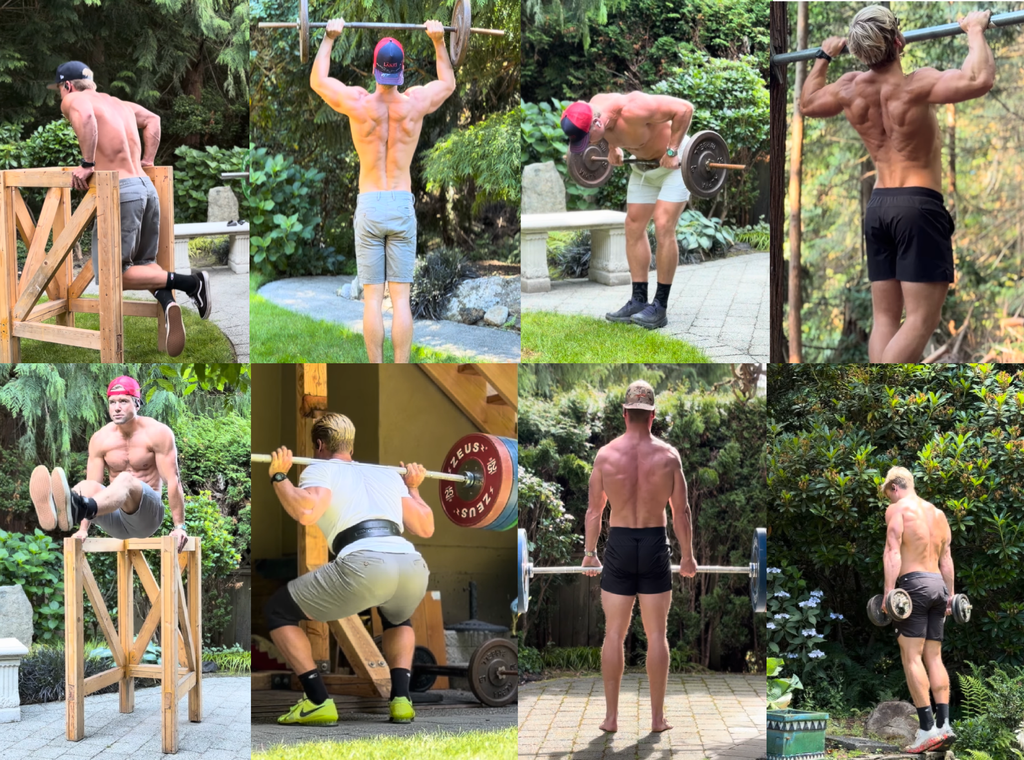


Everyone wants bigger biceps. Whether your goal is building impressive arms, improving pulling strength, or simply filling out your sleeves, bigger biceps are among the most visible signs of muscular development.
The problem is that many lifters waste months or even years using ineffective methods. Endless curls, random workouts, and poor recovery habits often produce disappointing results.


The good news is that exercise science has identified the key factors that drive muscle growth. While there is no way to build huge arms overnight, there are proven strategies that can maximize your progress and help you build bigger biceps as quickly as possible.
How Biceps Growth Actually Works
The biceps brachii consists of two heads that work together to flex the elbow and supinate the forearm. The brachialis, which sits beneath the biceps, also contributes significantly to upper arm size.
Muscle growth occurs when resistance training creates sufficient mechanical tension within muscle fibers. The body responds by increasing muscle protein synthesis, leading to gradual increases in muscle size over time.

Research consistently shows that training volume, intensity, exercise selection, nutrition, and recovery all influence hypertrophy outcomes. The lifters who optimize these variables generally experience the fastest gains.
Tip 1: Train Your Biceps More Than Once Per Week
Many people still train arms only once every seven days. While this can work, evidence suggests that training a muscle group at least twice per week may produce superior hypertrophy results.
Muscle protein synthesis rises after resistance training but generally returns to baseline within a few days. By training the biceps more frequently, you create more opportunities for growth throughout the week.
A practical approach is to train biceps directly two or three times weekly while keeping total weekly volume manageable.
Example
Train biceps after a pull workout on Monday and again after an upper body session on Thursday.
Tip 2: Increase Weekly Training Volume
Training volume is one of the strongest predictors of muscle growth.
Research shows that performing more challenging sets generally leads to greater hypertrophy, provided recovery remains adequate. For most people, 10 to 20 hard sets per week is an effective target for biceps growth.
Hard sets are those performed close to muscular failure. Performing a few easy sets and expecting significant growth is unlikely to produce optimal results.
Useful exercises include barbell curls, dumbbell curls, preacher curls, cable curls, hammer curls, and incline curls.
Tip 3: Train Close to Failure
Muscles need a strong stimulus to grow. Studies show that hypertrophy can occur across a wide range of repetition ranges when sets are performed close to failure. This means the muscle is challenged enough to recruit a high percentage of available muscle fibers.
You do not need to take every set to absolute failure, but finishing most working sets with only one to three repetitions left in reserve is a highly effective strategy. If you constantly stop sets while feeling fresh, you may be leaving growth potential on the table.

Tip 4: Use a Full Range of Motion
Many gym goers shorten their range of motion to lift heavier weights. Unfortunately, this often reduces the effectiveness of the exercise. Research generally favors full range of motion training for hypertrophy. Allowing the elbow to fully extend at the bottom and fully flex at the top increases the amount of work performed by the muscle.
A lighter weight moved through a complete range is usually more effective than a heavier weight lifted with excessive momentum and poor technique.
Tip 5: Prioritize Exercises That Stretch the Biceps
Recent research suggests that muscles may grow particularly well when challenged under load in a lengthened position. For the biceps, incline dumbbell curls are one of the best examples. Because the shoulders are positioned behind the torso, the long head of the biceps experiences a greater stretch.
Cable curls performed with the arms behind the body can also create significant tension in the stretched position.
Including at least one exercise that emphasizes the lengthened range may enhance overall biceps development.
Tip 6: Control the Lowering Phase
The lowering portion of a repetition is known as the eccentric phase. Research has shown that eccentric contractions contribute significantly to muscle growth. Yet many lifters rush through this portion of the exercise.
Instead of letting gravity do the work, lower the weight under control for approximately two to four seconds. This increases muscular tension and improves overall training quality.

Simply slowing down the eccentric phase can make a familiar exercise far more challenging and productive.
Tip 7: Use Different Rep Ranges
There is no single perfect repetition range for muscle growth. Studies show that both heavy and lighter loads can stimulate hypertrophy when effort is high enough. Using a variety of repetition ranges can provide a more comprehensive training stimulus.
Lower Repetitions
Sets of 5 to 8 repetitions help develop strength and allow heavier loading.
Moderate Repetitions
Sets of 8 to 15 repetitions are highly effective for hypertrophy and are often considered the sweet spot for muscle building.
Higher Repetitions
Sets of 15 to 30 repetitions can also build muscle when performed close to failure.
Combining all three approaches can keep training productive and interesting.
Tip 8: Do Not Neglect Hammer Curls
Many lifters focus exclusively on traditional curls. While standard curls are excellent, hammer curls target the brachialis and brachioradialis more effectively. The brachialis sits underneath the biceps and can contribute significantly to overall arm thickness.
Developing this muscle helps push the biceps upward, creating the appearance of larger arms. Including two to four sets of hammer curls each week is a simple way to improve overall arm development.

Tip 9: Eat Enough Protein
No amount of training can compensate for poor nutrition. Protein provides the amino acids required for muscle repair and growth. Research consistently shows that higher protein intakes support increases in lean muscle mass during resistance training.
Most evidence suggests that active individuals seeking muscle growth should consume approximately 1.6 to 2.2 grams of protein per kilogram of body weight daily.
Good protein sources include lean meat, fish, eggs, dairy products, and high quality plant based proteins. Spreading protein intake across multiple meals throughout the day may further support muscle protein synthesis.
Tip 10: Prioritize Recovery and Sleep
Muscles do not grow during workouts. They grow during recovery. Sleep is particularly important because it supports muscle repair, hormone regulation, and athletic performance. Research has shown that sleep restriction can negatively affect muscle building and recovery processes.
Most adults should aim for seven to nine hours of quality sleep each night. Recovery also includes managing overall training stress, consuming adequate calories, staying hydrated, and allowing sufficient time between hard training sessions.

Ignoring recovery often limits results regardless of how hard you train.
How Fast Can You Actually Grow Your Biceps?
The desire for bigger biceps fast is understandable, but expectations should remain realistic. Beginners often experience the fastest growth rates because they are highly responsive to resistance training. Intermediate and advanced lifters typically gain muscle more slowly.
Under ideal conditions, beginners may add noticeable arm size within a few months of consistent training. More experienced lifters should focus on gradual improvements over the course of many months.
The key is consistency. The lifters who train intelligently week after week almost always outperform those who constantly search for shortcuts.
Final Thoughts
Building bigger biceps is surprisingly simple when you focus on the variables that matter most. Train the muscles frequently, perform enough hard sets, use a full range of motion, emphasize stretched positions, eat sufficient protein, and prioritize recovery.
No supplement or secret exercise can replace these fundamentals. The fastest path to bigger biceps is not a complicated one. It is a science based approach built on progressive overload, quality training, and consistency.
Follow these ten tips, stay patient, and your arms will have every opportunity to grow.
Key Takeaways
| Tip | Why It Works | Practical Application |
|---|---|---|
| Train more frequently | Increases growth opportunities | Train biceps 2 to 3 times weekly |
| Increase volume | More effective sets drive hypertrophy | Aim for 10 to 20 hard sets weekly |
| Train close to failure | Maximizes muscle fiber recruitment | Finish sets with 1 to 3 reps in reserve |
| Use full range of motion | Increases muscle stimulation | Fully extend and flex the elbow |
| Emphasize stretch | Lengthened tension may boost growth | Use incline curls and cable variations |
| Control eccentrics | Increases muscular tension | Lower weights slowly |
| Vary rep ranges | Stimulates growth through multiple mechanisms | Use heavy, moderate, and high rep sets |
| Include hammer curls | Develops brachialis and arm thickness | Add several sets weekly |
| Eat enough protein | Supports muscle protein synthesis | Consume 1.6 to 2.2 g/kg daily |
| Prioritize recovery | Growth occurs between workouts | Sleep 7 to 9 hours nightly |
References
- Brad Schoenfeld, B., Ogborn, D. and Krieger, J.W. (2017) ‘Dose response relationship between weekly resistance training volume and increases in muscle mass: A systematic review and meta analysis’, Journal of Sports Sciences, 35(11), pp. 1073 to 1082.
- Schoenfeld, B.J., Grgic, J., Ogborn, D. and Krieger, J.W. (2017) ‘Strength and hypertrophy adaptations between low versus high load resistance training: A systematic review and meta analysis’, Journal of Strength and Conditioning Research, 31(12), pp. 3508 to 3523.
- Schoenfeld, B.J. (2010) ‘The mechanisms of muscle hypertrophy and their application to resistance training’, Journal of Strength and Conditioning Research, 24(10), pp. 2857 to 2872.
- Grgic, J., Schoenfeld, B.J., Orazem, J. and Sabol, F. (2022) ‘Effects of resistance training performed to repetition failure or non failure on muscular strength and hypertrophy: A systematic review and meta analysis’, Journal of Sport and Health Science, 11(2), pp. 202 to 211.
- Schoenfeld, B.J. and Grgic, J. (2020) ‘Effects of range of motion on muscle development during resistance training interventions: A systematic review’, Sports Medicine, 50(9), pp. 1697 to 1712.
- Pedrosa, G.F., Lima, F.V., Schoenfeld, B.J. and colleagues (2023) ‘Training at long muscle lengths and muscle hypertrophy: Current evidence and practical applications’, Sports Medicine, 53(7), pp. 1301 to 1315.
- Douglas, J., Pearson, S., Ross, A. and McGuigan, M. (2017) ‘Eccentric exercise: Physiological characteristics and acute responses’, Sports Medicine, 47(4), pp. 663 to 675.
- Morton, R.W., Murphy, K.T., McKellar, S.R. and colleagues (2018) ‘A systematic review, meta analysis and meta regression of protein supplementation on resistance training induced gains in muscle mass and strength in healthy adults’, British Journal of Sports Medicine, 52(6), pp. 376 to 384.