

A ripped six pack is one of the most sought after fitness goals. Walk into any gym and you will see people grinding through endless crunches, sit ups, and planks in the hope of carving out visible abs. Yet many people overlook one of the most important functions of the abdominal muscles: rotation.
The core is not designed solely to bend the spine forward. It is built to stabilize, rotate, and transfer force between the upper and lower body. Twisting exercises train these functions directly while also targeting muscles that standard crunches often miss.



If your goal is to build a stronger, more athletic, and more defined midsection, adding rotational movements to your training can be highly effective. However, not all twisting exercises are created equal. Some provide greater muscle activation, better functional carryover, and a lower risk of injury than others.
This article examines three of the best twisting ab exercises supported by scientific evidence. You will learn how each movement works, why it is effective, how to perform it correctly, and how to integrate it into a complete six pack training strategy.
Before diving into the exercises, it is important to understand what actually creates visible abdominal definition.
What Really Creates a Ripped Six Pack?
Many fitness enthusiasts believe that performing hundreds of ab exercises will reveal their abs. Scientific evidence consistently shows that visible abdominal definition depends primarily on body fat levels rather than the number of abdominal exercises performed.
Abdominal muscles develop similarly to any other skeletal muscle. They respond to progressive overload, resistance training, and adequate recovery. However, even well developed abs remain hidden beneath layers of body fat.
Research has repeatedly demonstrated that spot reduction is largely ineffective. Training a specific muscle group does not selectively burn fat from that area. Fat loss occurs systemically across the body and is influenced by genetics, nutrition, energy balance, and physical activity.
For most men, visible abdominal definition becomes apparent at approximately 10 to 12 percent body fat. For women, visible abs typically appear around 16 to 20 percent body fat, although individual variation exists.
This means the fastest route to a ripped six pack combines three key elements:
- Strong abdominal muscle development.
- Low body fat levels.
- A nutrition strategy that supports fat loss while preserving muscle mass.
Twisting movements contribute significantly to the first component by strengthening the rectus abdominis, internal obliques, external obliques, and deeper stabilizing muscles.
Why Twisting Exercises Matter
The abdominal wall consists of multiple layers of muscle that work together to stabilize and move the torso.
Rectus Abdominis
The rectus abdominis is the muscle most people associate with a six pack. Its segmented appearance becomes visible when body fat levels are low enough.
External Obliques
The external obliques run diagonally along the sides of the abdomen. They contribute heavily to trunk rotation and lateral flexion.
Internal Obliques
Located beneath the external obliques, these muscles assist with rotational movement and spinal stability.
Transverse Abdominis
This deep core muscle functions like a natural weightlifting belt. It stabilizes the spine and helps transfer force throughout the body.
Electromyography studies consistently show that rotational and anti rotational exercises activate the obliques more effectively than traditional crunches alone. Because the obliques frame the abdominal wall, developing them contributes significantly to the appearance of a lean, athletic midsection.
Twisting movements also improve athletic performance. Sports such as baseball, golf, tennis, boxing, mixed martial arts, rugby, soccer, and CrossFit all involve rotational force production. Training these patterns strengthens the connection between the upper and lower body. With that foundation established, let us look at the three best twisting ab movements.
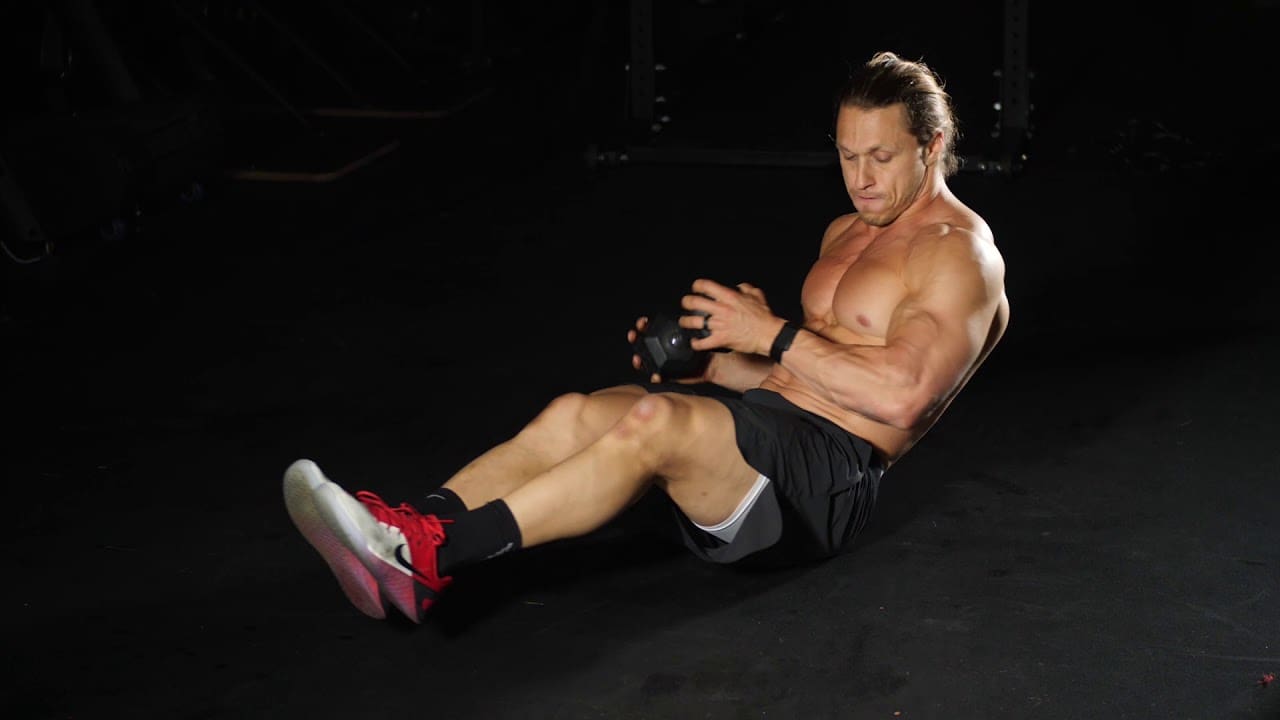
1. Russian Twist
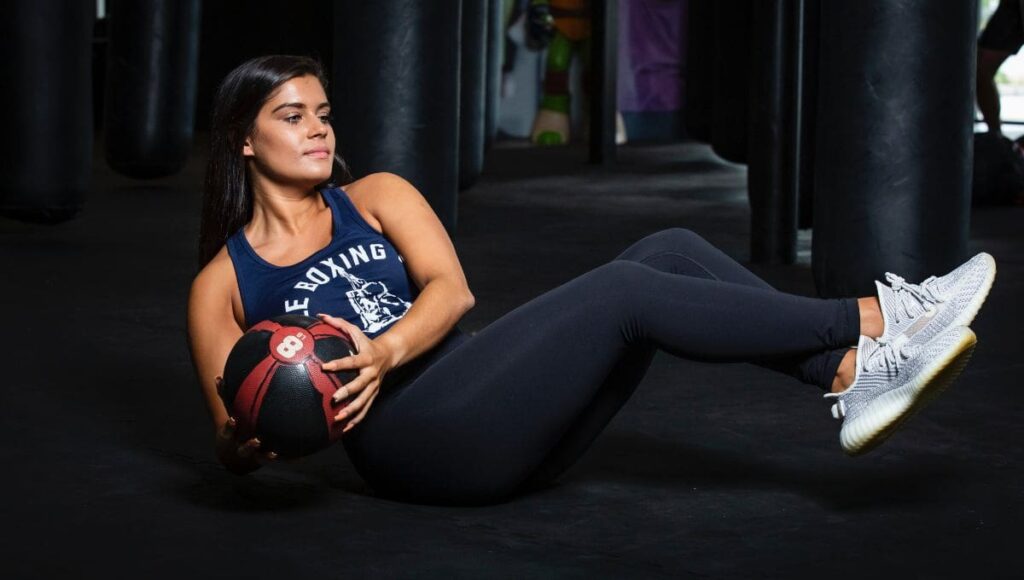
The Russian Twist remains one of the most popular rotational core exercises for good reason. When performed correctly, it effectively challenges the obliques, rectus abdominis, and hip stabilizers.
Why It Works
The Russian Twist places the torso in a partially flexed position while requiring controlled rotation from side to side. This combination creates substantial tension throughout the abdominal wall.
Electromyographic research has demonstrated high levels of oblique activation during rotational core exercises. The sustained isometric contraction required to maintain the torso angle further increases overall abdominal recruitment. Adding external resistance increases muscular demand and promotes hypertrophy of the abdominal muscles.
How to Perform the Russian Twist
- Sit on the floor with your knees bent and feet planted.
- Lean back slightly while maintaining a neutral spine.
- Brace your core.
- Hold a medicine ball, dumbbell, or weight plate in front of your chest.
- Rotate your torso to one side.
- Rotate under control to the opposite side.
- Continue alternating while maintaining tension throughout the core.
The movement should originate from the torso rather than the arms. Swinging the weight with the shoulders reduces effectiveness and increases injury risk.
Common Mistakes
One of the most common errors is rounding the lower back excessively. This increases spinal stress and reduces core engagement.Another mistake involves moving too quickly. Momentum eliminates muscular tension and shifts the workload away from the abs. Many people also allow their knees to move excessively. Keeping the lower body relatively stable forces the core to perform the rotational work.
Progression Options
- Beginners can keep their feet on the floor.
- Intermediate trainees can elevate their feet slightly.
- Advanced athletes can increase load or use unstable surfaces cautiously.
Increasing resistance is generally a better progression strategy than simply increasing repetitions indefinitely.
2. Cable Woodchopper
If there is one twisting exercise consistently recommended by strength coaches and sports performance experts, it is the cable woodchopper.
Why It Works
The cable woodchopper trains rotational force production through a large range of motion while maintaining constant tension. Unlike many bodyweight exercises, cables provide resistance throughout the entire movement. This creates substantial activation of the internal and external obliques.

Research examining trunk muscle activity has found that cable based rotational exercises generate high levels of core recruitment while simultaneously training movement patterns that transfer to sports performance. Because the resistance originates from the side, the exercise also challenges anti rotational stability. This dual demand makes the woodchopper particularly effective for overall core development.
How to Perform the Cable Woodchopper
- Set a cable pulley at shoulder height or higher.
- Stand sideways to the machine.
- Grip the handle with both hands.
- Engage your core and maintain a stable stance.
- Pull the handle diagonally across your body.
- Rotate through the torso while allowing the hips to move naturally.
- Finish near the opposite hip.
- Return slowly to the starting position.
- Repeat before switching sides.
The movement should feel smooth and controlled rather than explosive unless specifically programmed for power development.
Common Mistakes
Using excessive weight often causes compensatory movement patterns. Many trainees rely too heavily on their arms rather than rotating through the torso. Others allow the lower back to twist excessively instead of distributing movement through the hips and thoracic spine. Proper technique prioritizes controlled rotation and full core engagement.
3. Landmine Rotations
Landmine rotations combine rotational strength, stability, coordination, and athletic power into a single exercise. Despite being less common than Russian Twists or cable woodchoppers, they may offer some of the greatest real world benefits.
Why It Works
Landmine rotations require the body to control a long lever arm moving through an arc. This creates substantial rotational torque that challenges the obliques, rectus abdominis, transverse abdominis, shoulders, hips, and glutes simultaneously.
The exercise closely resembles force transfer patterns seen in throwing, striking, and rotational sports. Research on integrated core training suggests that multi joint rotational exercises often generate greater functional carryover than isolated abdominal movements. Landmine rotations train the core to transmit force efficiently between the lower and upper body.
How to Perform Landmine Rotations
- Secure one end of a barbell in a landmine attachment.
- Stand facing the free end of the barbell.
- Hold the barbell with both hands at chest height.
- Extend the arms while maintaining a slight bend in the elbows.
- Rotate the barbell from one side of the body to the other.
- Pivot through the feet and hips naturally.
- Maintain a braced core throughout the movement.
- Control the barbell during both directions.
- The movement should be fluid and coordinated.
Common Mistakes
Allowing the arms to dominate the exercise reduces core involvement. Many lifters fail to rotate through the hips, increasing stress on the spine. Using excessive speed can also compromise technique and reduce muscular tension. Focus on quality movement rather than maximum loading.
Building the Complete Six Pack
Twisting exercises are powerful tools for abdominal development, but they represent only one piece of the puzzle. A complete approach includes compound lifts such as squats, deadlifts, rows, pull ups, and presses. These exercises generate significant core activation while building overall muscle mass.
- Adequate protein intake supports muscle retention and growth.
- Consistent calorie control promotes fat loss.
- Quality sleep improves recovery, hormone regulation, and body composition.
When these factors are combined, the three twisting exercises discussed in this article become even more effective.
Final Thoughts
If your goal is to develop a stronger, more defined midsection, twisting exercises deserve a place in your training program.
- The Russian Twist remains an accessible and highly effective choice for targeting the obliques and rectus abdominis.
- The Cable Woodchopper provides constant resistance and exceptional rotational training stimulus.
- The Landmine Rotation develops real world rotational strength while integrating the entire kinetic chain.
Combined with progressive overload, proper nutrition, consistent resistance training, and reduced body fat levels, these movements can help accelerate the path toward a ripped six pack.
The key is not performing endless repetitions. The key is training the core intelligently, progressively, and consistently while creating the nutritional conditions necessary for visible abdominal definition.
Key Takeaways
| Exercise | Primary Muscles | Main Benefit | Difficulty Level |
|---|---|---|---|
| Russian Twist | Obliques, rectus abdominis | Strong rotational core endurance and muscle activation | Beginner to Intermediate |
| Cable Woodchopper | Internal and external obliques, transverse abdominis | Constant resistance and functional rotational strength | Intermediate |
| Landmine Rotation | Entire core, hips, shoulders | Athletic force transfer and integrated core power | Intermediate to Advanced |
References
• American College of Sports Medicine. (2009) ‘American College of Sports Medicine position stand. Progression models in resistance training for healthy adults’, Medicine & Science in Sports & Exercise, 41(3), pp. 687–708.
• Behm, D.G., Drinkwater, E.J., Willardson, J.M. and Cowley, P.M. (2010) ‘Canadian Society for Exercise Physiology position stand: The use of instability to train the core in athletic and nonathletic conditioning’, Applied Physiology, Nutrition, and Metabolism, 35(1), pp. 109–112.
• Escamilla, R.F., Lewis, C., Bell, D., Bramblet, G., Daffron, J., Lambert, S., Pecson, A., Imamura, R., Paulos, L. and Andrews, J.R. (2010) ‘Core muscle activation during Swiss ball and traditional abdominal exercises’, Journal of Orthopaedic & Sports Physical Therapy, 40(5), pp. 265–276.
• Hibbs, A.E., Thompson, K.G., French, D., Wrigley, A. and Spears, I. (2008) ‘Optimizing performance by improving core stability and core strength’, Sports Medicine, 38(12), pp. 995–1008.
• Krieger, J.W. (2010) ‘Single versus multiple sets of resistance exercise for muscle hypertrophy: A meta analysis’, Journal of Strength and Conditioning Research, 24(4), pp. 1150–1159.
• Lederman, E. (2010) ‘The myth of core stability’, Journal of Bodywork and Movement Therapies, 14(1), pp. 84–98.
• McGill, S.M. (2010) ‘Core training: Evidence translating to better performance and injury prevention’, Strength and Conditioning Journal, 32(3), pp. 33–46.