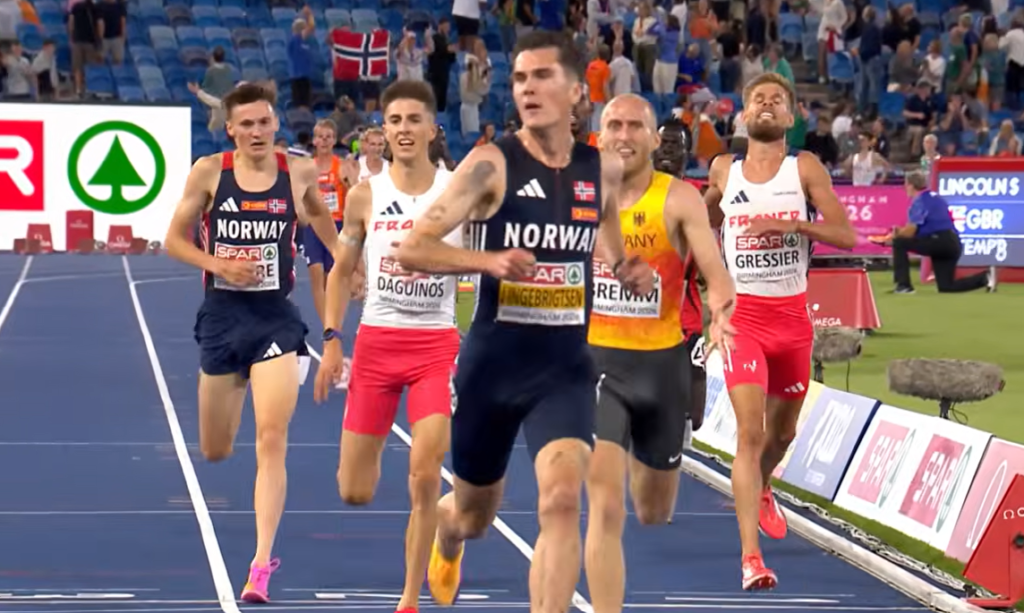


The Cooper 12 Minute Run Test is one of the simplest, most accessible, and most scientifically validated fitness assessments ever created. Developed more than 50 years ago, it remains a popular tool used by athletes, coaches, military organizations, schools, and fitness professionals to evaluate aerobic fitness.
The test requires just one task: run as far as possible in 12 minutes. The total distance covered provides valuable insight into cardiovascular fitness and can be used to estimate maximal oxygen uptake, commonly known as VO2 max.



Although modern sports science now offers sophisticated laboratory testing and wearable technology, the Cooper Test continues to be widely used because it combines simplicity, practicality, and scientific credibility. Whether you are a runner, CrossFit athlete, HYROX competitor, or simply looking to improve your health, the Cooper Test can provide useful information about your current fitness level and help guide future training.
What Is the Cooper 12 Minute Run Test?
The Cooper Test is a field based assessment of aerobic fitness developed in 1968 by Dr. Kenneth H. Cooper, a physician serving in the United States Air Force.
Cooper was looking for a practical way to assess the cardiovascular fitness of large groups of military personnel without requiring expensive laboratory equipment. His research showed that the distance covered during a maximal 12 minute run strongly correlated with directly measured aerobic capacity.
The test is straightforward. After a proper warm up, participants run continuously for 12 minutes and attempt to cover the greatest possible distance. The final distance can then be compared against normative standards or used to estimate VO2 max.
More than five decades after its introduction, the Cooper Test remains one of the most recognized endurance fitness assessments in the world.
Why Aerobic Fitness Matters
Aerobic fitness describes the body’s ability to transport and utilize oxygen during sustained exercise. It depends on the combined function of the heart, lungs, blood vessels, and muscles.

When exercise continues beyond a few minutes, the aerobic energy system becomes the primary source of energy production. The more efficiently the body can deliver oxygen to working muscles, the better an individual can sustain physical activity and recover from demanding efforts.
Aerobic fitness is not only important for athletic performance. Research consistently shows that higher levels of cardiorespiratory fitness are associated with lower risks of cardiovascular disease, type 2 diabetes, metabolic disorders, and premature death.
In fact, many researchers now consider cardiorespiratory fitness to be one of the strongest predictors of long term health and longevity.
For athletes, aerobic fitness supports endurance performance, improves recovery between high intensity efforts, and enhances overall work capacity.
The Science Behind the Cooper Test
Understanding VO2 Max
VO2 max refers to the maximum amount of oxygen the body can consume and utilize during intense exercise. It is widely regarded as the gold standard measure of aerobic fitness.
VO2 max reflects the integrated performance of multiple physiological systems. The heart must pump blood efficiently, the lungs must oxygenate the blood, the circulatory system must transport oxygen effectively, and the muscles must extract and use oxygen to generate energy.
Higher VO2 max values generally indicate greater aerobic capacity and superior endurance potential.
How the Cooper Test Estimates VO2 Max
Direct measurement of VO2 max requires laboratory equipment that analyzes respiratory gases during exercise. While highly accurate, laboratory testing is expensive and often unavailable to recreational athletes.
The Cooper Test offers a practical alternative.
One commonly used equation estimates VO2 max based on the distance covered during the test:
VO2 max = (distance in meters minus 504.9) divided by 44.73
Although not as precise as laboratory testing, numerous validation studies have shown that the Cooper Test provides a reasonably accurate estimate of aerobic fitness when performed correctly.
Why Twelve Minutes?
The 12 minute duration was chosen because it is long enough for aerobic metabolism to become the dominant source of energy production while remaining short enough to allow participants to sustain a near maximal effort.
Research in exercise physiology suggests that exercise performances lasting approximately 10 to 15 minutes are strongly influenced by aerobic capacity, making this duration particularly useful for estimating cardiovascular fitness.
How to Perform the Cooper Test Correctly
The ideal testing location is a standard 400 meter running track because it allows accurate measurement of distance. A measured running course can also be used.
Begin with a thorough warm up lasting 10 to 15 minutes. Light jogging, dynamic mobility drills, and several short accelerations help prepare the cardiovascular system and muscles for maximal effort. Once ready, start a timer and run continuously for 12 minutes. The goal is to cover as much distance as possible during the allotted time.

Pacing is critical. Many people start too fast and fade significantly during the final minutes. Most athletes achieve better results by settling into a challenging but sustainable pace before gradually increasing effort near the finish.
At the end of 12 minutes, stop immediately and record the total distance covered.
Cooper Test Performance Standards
The following standards are commonly used to classify Cooper Test performance.
Men
| Age | Excellent | Above Average | Average | Below Average | Poor |
|---|---|---|---|---|---|
| 20 to 29 | Over 2800 m | 2400 to 2800 m | 2200 to 2399 m | 1600 to 2199 m | Under 1600 m |
| 30 to 39 | Over 2700 m | 2300 to 2700 m | 1900 to 2299 m | 1500 to 1899 m | Under 1500 m |
| 40 to 49 | Over 2500 m | 2100 to 2500 m | 1700 to 2099 m | 1400 to 1699 m | Under 1400 m |
Women
| Age | Excellent | Above Average | Average | Below Average | Poor |
|---|---|---|---|---|---|
| 20 to 29 | Over 2700 m | 2200 to 2700 m | 1800 to 2199 m | 1500 to 1799 m | Under 1500 m |
| 30 to 39 | Over 2500 m | 2000 to 2500 m | 1700 to 1999 m | 1400 to 1699 m | Under 1400 m |
| 40 to 49 | Over 2300 m | 1900 to 2300 m | 1500 to 1899 m | 1200 to 1499 m | Under 1200 m |
These standards should be viewed as general benchmarks rather than definitive indicators of athletic potential.
How the Cooper Test Can Help Your Fitness
One of the biggest advantages of the Cooper Test is its ability to provide an objective measure of progress. Many people judge fitness improvements based on how they feel during workouts, but subjective impressions are often misleading.
5 Signs You Are Actually Fitter Than You Think
The Cooper Test provides a measurable benchmark that can be repeated every six to twelve weeks. Improvements in distance covered often reflect meaningful physiological adaptations, including increased stroke volume, greater mitochondrial density, improved oxygen delivery, and enhanced endurance performance.
The test can also help identify training priorities. An athlete with excellent strength but poor aerobic fitness may benefit from additional endurance work. Conversely, someone with strong endurance but limited power may choose to focus more heavily on strength and speed development.
For coaches and athletes, the test provides a simple way to monitor training effectiveness over time.
Cooper Test vs VO2 Max Testing
The Cooper Test and laboratory VO2 max testing are both designed to assess aerobic fitness, but they differ significantly in complexity and accuracy.
Laboratory VO2 max testing measures oxygen consumption directly through respiratory gas analysis. Participants exercise while wearing a mask connected to specialized equipment that measures oxygen uptake and carbon dioxide production. This method provides highly accurate data and is considered the gold standard.
The Cooper Test estimates aerobic capacity indirectly based on running performance. While slightly less accurate, it is far more practical and accessible.
For elite athletes seeking the highest level of precision, laboratory testing remains the preferred option. For most people, however, the Cooper Test provides sufficient information to monitor fitness progress without the expense and logistical challenges of laboratory assessment.
Cooper Test vs Beep Test
The Cooper Test is often compared with the Multi Stage Fitness Test, commonly known as the Beep Test.
Both assessments evaluate aerobic fitness, but they place different demands on the athlete.
The Cooper Test requires continuous running for 12 minutes at a self selected pace. It primarily measures sustained aerobic performance and closely resembles endurance running.
The Beep Test involves repeated shuttle runs over a 20 meter distance while following increasingly rapid audio signals. Participants must accelerate, decelerate, and change direction repeatedly until they can no longer maintain the required pace.
Because of its stop and start nature, the Beep Test places greater demands on agility, acceleration, and change of direction ability. The Cooper Test generally provides a purer measure of continuous endurance performance.
Athletes involved in team sports often use the Beep Test because it reflects the intermittent nature of their activities. Distance runners and endurance athletes frequently prefer the Cooper Test because it more closely matches the physiological demands of their sport.
Cooper Test for CrossFit Athletes
Although CrossFit workouts often emphasize high intensity intervals and mixed modal training, aerobic fitness remains a crucial component of performance.
A well developed aerobic system helps athletes recover more quickly between efforts, sustain higher training volumes, and maintain performance during longer workouts.
Many CrossFit athletes focus heavily on strength and power while underestimating the importance of aerobic development. The Cooper Test can reveal weaknesses in cardiovascular fitness that may limit overall performance.
Improving Cooper Test performance often translates into better recovery, improved work capacity, and greater consistency across multiple workouts.
Cooper Test for HYROX Athletes
HYROX events combine repeated running segments with functional fitness stations, creating substantial demands on the aerobic system.
Success requires the ability to sustain a relatively high output for an extended period while repeatedly transitioning between running and functional exercises.
Although the Cooper Test does not replicate the specific demands of HYROX competition, it can provide useful information about the aerobic foundation that supports performance. Athletes with stronger aerobic fitness generally recover more effectively between stations and maintain pace more successfully throughout the event.
For this reason, many HYROX competitors use the Cooper Test as one of several tools to monitor conditioning progress.
Can the Cooper Test Predict Longevity?
The Cooper Test itself does not directly predict lifespan, but the aerobic fitness it measures is strongly associated with longevity.
Large population studies have consistently demonstrated that higher levels of cardiorespiratory fitness are linked to lower risks of cardiovascular disease and all cause mortality.
Researchers have found that individuals with higher aerobic fitness levels generally experience lower rates of chronic disease and live longer than those with poor cardiorespiratory fitness.
Because Cooper Test performance correlates with aerobic fitness, improvements in test results often reflect positive changes in a physiological characteristic that has been strongly linked to long term health outcomes.

While no fitness test can predict exactly how long someone will live, maintaining a high level of cardiorespiratory fitness is one of the most powerful lifestyle factors associated with healthy aging.
Common Mistakes During the Test
The most common error is starting too fast. Athletes who sprint early often experience excessive fatigue and cover less total distance than those who pace themselves effectively. Another mistake is performing the test without a proper warm up. Insufficient preparation can reduce performance and increase injury risk.
Environmental conditions can also influence results. Heat, humidity, wind, altitude, and running surface all affect performance. For the most meaningful comparisons, future tests should be conducted under similar conditions.
Finally, testing while fatigued can underestimate true fitness. Scheduling the assessment after adequate recovery improves reliability.
Limitations of the Cooper Test
Although highly useful, the Cooper Test has limitations.
- It estimates aerobic capacity rather than measuring it directly. Laboratory testing remains more accurate.
- Running economy also affects performance. Two individuals with similar aerobic fitness may achieve different results if one runs more efficiently.
- Motivation and pacing strategy can influence outcomes because the test requires maximal effort.
- The assessment may also be unsuitable for individuals with orthopedic injuries, cardiovascular conditions, or medical limitations that make maximal exercise inappropriate.
How to Improve Your Cooper Test Score
Improving Cooper Test performance requires the same principles that improve aerobic fitness in general. Consistent endurance training helps increase cardiovascular efficiency and develop the physiological adaptations associated with improved aerobic capacity.
Low intensity aerobic sessions play an important role in building an endurance base, while interval training can stimulate improvements in VO2 max and exercise tolerance. Strength training can also contribute by improving running economy and movement efficiency.
Most importantly, training must be consistent. Small improvements accumulated over months and years often produce substantial gains in aerobic fitness.
Final Thoughts
The Cooper 12 Minute Run Test remains one of the most practical and scientifically supported fitness assessments available. Developed by Dr. Kenneth Cooper in 1968, it continues to provide athletes and everyday exercisers with a simple way to evaluate aerobic fitness, estimate VO2 max, and track progress over time.
Its combination of accessibility, low cost, and scientific validation explains why it remains relevant in an era of advanced laboratory testing and wearable technology.
Whether your goal is better health, improved endurance, stronger CrossFit performance, or success in HYROX competition, the Cooper Test offers a straightforward method for measuring one of the most important components of fitness: aerobic capacity.
Key Takeaways
| Topic | Key Point |
|---|---|
| Purpose | Measures aerobic fitness through a maximal 12 minute run |
| Creator | Developed by Dr. Kenneth Cooper in 1968 |
| Main Metric | Distance covered in 12 minutes |
| VO2 Max | Provides an estimate of aerobic capacity |
| Best Use | Tracking changes in cardiovascular fitness over time |
| Major Advantage | Simple, inexpensive, and scientifically validated |
| Cooper vs VO2 Max Testing | Less precise but far more practical |
| Cooper vs Beep Test | Better reflects continuous endurance performance |
| Longevity Connection | Aerobic fitness is strongly associated with long term health and survival |
| Recommended Frequency | Every 6 to 12 weeks |
References
- Blair, S.N., Kohl, H.W., Paffenbarger, R.S., Clark, D.G., Cooper, K.H. and Gibbons, L.W. (1989) ‘Physical fitness and all-cause mortality. A prospective study of healthy men and women’, Journal of the American Medical Association, 262(17), pp. 2395-2401.
- Cooper, K.H. (1968) ‘A means of assessing maximal oxygen intake. Correlation between field and treadmill testing’, Journal of the American Medical Association, 203(3), pp. 201-204.
- Grant, S., Corbett, K., Amjad, A.M., Wilson, J. and Aitchison, T. (1995) ‘A comparison of methods of predicting maximum oxygen uptake’, British Journal of Sports Medicine, 29(3), pp. 147-152.
- Kodama, S., Saito, K., Tanaka, S., Maki, M., Yachi, Y., Sugawara, A., Totsuka, K., Shimano, H., Ohashi, Y., Yamada, N. and Sone, H. (2009) ‘Cardiorespiratory fitness as a quantitative predictor of all-cause mortality and cardiovascular events’, Journal of the American Medical Association, 301(19), pp. 2024-2035.
- Milanović, Z., Sporiš, G. and Weston, M. (2015) ‘Effectiveness of high-intensity interval training versus moderate-intensity continuous training on cardiorespiratory fitness’, Sports Medicine, 45(10), pp. 1469-1481.
- Ross, R., Blair, S.N., Arena, R., Church, T.S., Després, J.P., Franklin, B.A., Haskell, W.L., Kaminsky, L.A., Levine, B.D., Lavie, C.J., Myers, J., Niebauer, J., Sallis, R., Sawada, S.S., Sui, X. and Wisløff, U. (2016) ‘Importance of assessing cardiorespiratory fitness in clinical practice’, Circulation, 134(24), pp. e653-e699.
- Saunders, P.U., Pyne, D.B., Telford, R.D. and Hawley, J.A. (2004) ‘Factors affecting running economy in trained distance runners’, Sports Medicine, 34(7), pp. 465-485.
- Weston, M., Wisløff, U. and Coombes, J.S. (2014) ‘High-intensity interval training in patients with lifestyle-induced cardiometabolic disease’, Sports Medicine, 44(7), pp. 1005-1017.