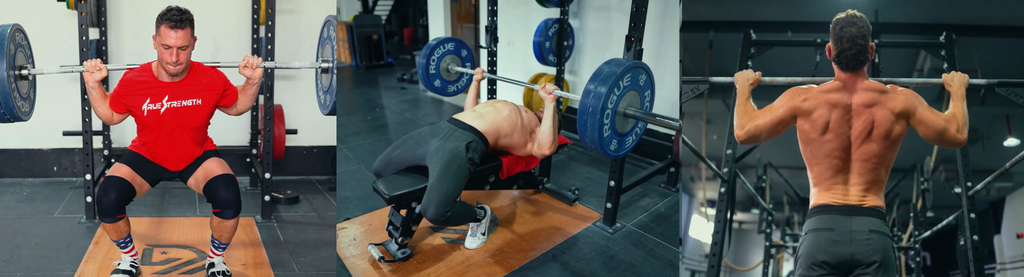


Fitness is often measured with numbers. How much weight you can lift. How fast you can run. How many calories you burn during a workout. While these metrics can be useful, they do not always tell the full story.
Real fitness is broader. It includes strength, muscular endurance, cardiovascular health, mobility, coordination, balance, and the ability to control your body through space. In many ways, your own bodyweight is one of the most honest tools for assessing overall fitness because it requires multiple physical qualities to work together.


Bodyweight testing has become increasingly valuable in sports science, military fitness assessment, rehabilitation, and general health screening. Researchers have found that simple bodyweight movements can provide meaningful insight into cardiovascular fitness, functional strength, injury risk, mobility limitations, and even long term health outcomes.
The best part is that you do not need expensive equipment or laboratory testing. A small amount of space and a few minutes of effort can reveal a surprising amount about your current physical condition.
The following five bodyweight tests are supported by scientific research and provide a practical snapshot of real world fitness. They challenge different aspects of physical performance and together create a comprehensive picture of how well your body functions.
Why Bodyweight Testing Matters
Many traditional fitness assessments isolate one specific quality. A one repetition maximum squat primarily measures maximal strength. A treadmill test may focus on aerobic capacity. While useful, real life rarely demands one physical ability in isolation.
Functional fitness requires multiple systems to work together. Muscles, joints, the cardiovascular system, the nervous system, and balance mechanisms must coordinate efficiently.
Research consistently shows that performance on simple bodyweight movements correlates strongly with health outcomes, athletic performance, injury risk, and overall physical function. Bodyweight assessments also have excellent practicality because they can be performed almost anywhere and repeated regularly to track progress.
The tests below evaluate five critical pillars of fitness: cardiovascular endurance, upper body strength endurance, lower body function, mobility, and movement control.
Test 1: The Push Up Test

What It Measures
The push up test evaluates upper body muscular endurance, core stability, shoulder function, and relative strength.
Unlike a bench press, which measures how much external weight you can move, the push up assesses how effectively you can control your own body mass. This makes it a highly functional indicator of real world strength.
Several studies have found that push up performance is associated with cardiovascular health and overall fitness. One particularly influential study involving active adult men found that individuals capable of performing more than 40 push ups had a significantly lower risk of cardiovascular disease events compared with those who could perform fewer than 10.
How to Perform the Test
Begin in a standard push up position with hands slightly wider than shoulder width.
Lower your body until your chest approaches the floor while maintaining a straight line from head to heels. Push back up until your elbows are fully extended.
Perform as many repetitions as possible with proper form and without resting.
What Your Score Means
- For most adults, fewer than 10 push ups suggests below average upper body endurance and relative strength.
- Between 15 and 30 repetitions generally indicates a good level of fitness.
- More than 40 repetitions demonstrates excellent muscular endurance and bodyweight strength.
- Age, sex, and training background should always be considered when interpreting results.
Why It Matters
Push up performance requires coordination between the chest, shoulders, triceps, abdominal muscles, and spinal stabilizers. Because multiple muscle groups contribute simultaneously, it provides insight into integrated movement quality rather than isolated strength.
Test 2: The Wall Sit Test

What It Measures
The wall sit test assesses lower body muscular endurance, particularly in the quadriceps, glutes, and supporting stabilizing muscles.
Lower body endurance is essential for athletic performance, daily movement, and long term mobility. Weakness or fatigue resistance deficits in these muscles can negatively affect walking, running, climbing stairs, and injury prevention.
How to Perform the Test
Stand with your back against a wall.
Slide downward until your thighs are parallel to the floor and your knees form approximately 90 degree angles.
Keep your back flat against the wall and your feet shoulder width apart.
Hold the position for as long as possible.
What Your Score Means
- Less than 30 seconds indicates poor lower body endurance.
- Thirty to 60 seconds reflects average fitness.
- One to two minutes suggests good muscular endurance.
- More than two minutes demonstrates excellent lower body stamina.
- Highly trained athletes may exceed three minutes.
Why It Matters
Research shows that muscular endurance contributes significantly to functional independence and athletic performance. The ability to sustain force production over time supports movement efficiency and fatigue resistance during both sport and daily life.
The wall sit is also useful because it places minimal technical demands on participants, making it accessible across a wide range of fitness levels.
Test 3: The Sit to Stand Test
What It Measures
The sit to stand test evaluates lower body strength, balance, coordination, and functional movement capacity.
Although it appears simple, standing from a seated position is one of the most important movement patterns humans perform. Difficulty with this task is associated with reduced independence, increased fall risk, and lower physical function.
Researchers have extensively studied sit to stand performance because it provides a strong indication of lower body power and overall health status.
How to Perform the Test
Sit in a standard chair with arms crossed over your chest.
Stand fully and sit back down repeatedly for 30 seconds.
Count the total number of complete repetitions.
Avoid using your hands for assistance.
What Your Score Means
- Fewer than 10 repetitions generally indicates below average lower body function.
- Between 12 and 17 repetitions reflects average performance for many adults.
- More than 20 repetitions demonstrates strong lower body endurance and functional capacity.
Why It Matters
The sit to stand movement closely resembles many real world activities. Unlike gym based exercises that isolate specific muscles, this test evaluates the integration of strength, balance, and movement coordination.
Research has shown that sit to stand performance is associated with mobility, fall risk, and overall physical function across a variety of populations.
Test 4: The Plank Hold Test

What It Measures
The plank test assesses core endurance and trunk stability.
The core serves as a transmission system between the upper and lower body. Effective force transfer during walking, running, lifting, jumping, and athletic movement depends on adequate trunk stability.
Contrary to popular belief, core fitness is not primarily about visible abdominal muscles. It is about the ability to maintain spinal alignment and control under load.
How to Perform the Test
Begin in a forearm plank position.
Keep your body in a straight line from shoulders to ankles.
Avoid allowing your hips to sag or rise excessively.
Hold the position for as long as possible while maintaining proper form.
What Your Score Means
- Less than 30 seconds suggests poor core endurance.
- Thirty to 60 seconds indicates average fitness.
- One to two minutes reflects good trunk endurance.
- More than two minutes demonstrates excellent core stability.
- Elite athletes may exceed three minutes.
Why It Matters
Research has linked trunk endurance to athletic performance, injury prevention, and movement efficiency. A stable core helps reduce unnecessary motion and improves force transfer throughout the body.
The plank is particularly useful because it assesses endurance rather than maximal strength, which better reflects the core’s primary function during most activities.
Test 5: The Deep Squat Assessment
What It Measures
The deep squat assessment evaluates mobility, stability, balance, coordination, and movement quality.
Unlike the previous tests, this assessment focuses less on fitness capacity and more on movement competency.
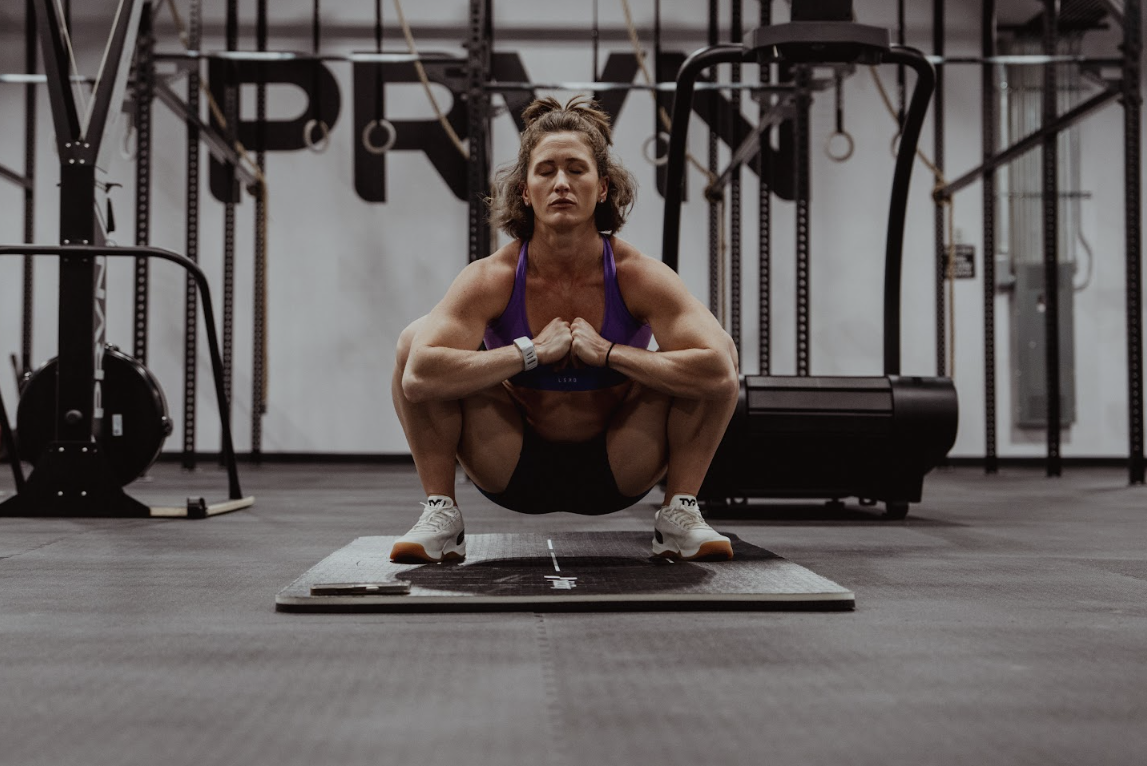
Mobility restrictions in the ankles, hips, thoracic spine, or shoulders often become visible during a deep squat. Because the movement requires coordination across multiple joints, it provides a valuable screening tool for identifying limitations.
How to Perform the Test
Stand with your feet approximately shoulder width apart.
Raise your arms overhead.
Slowly descend into the deepest squat possible while keeping your heels on the floor.
Attempt to maintain an upright torso and stable balance throughout the movement.
What Your Performance Means
- An inability to reach squat depth without lifting the heels may indicate ankle mobility limitations.
- Excessive forward lean can suggest hip or thoracic spine restrictions.
- Knees collapsing inward may reveal deficits in stability or motor control.
- A deep, balanced squat with good posture generally indicates healthy mobility and movement quality.
Why It Matters
Research supports the use of squat based movement assessments for identifying mobility deficits and potential injury risk factors.
While poor squat mechanics do not automatically predict injury, movement limitations often reduce efficiency and may contribute to compensatory patterns during training and daily activities.
The deep squat offers valuable information that traditional fitness tests frequently miss.
What Science Says About Functional Fitness
Modern exercise science increasingly emphasizes function rather than isolated performance measures. Research consistently demonstrates that muscular strength, endurance, mobility, balance, and aerobic fitness each contribute independently to health and longevity.
Individuals who maintain higher levels of functional fitness tend to experience lower rates of cardiovascular disease, reduced risk of physical disability, better quality of life, and improved long term health outcomes.
Importantly, bodyweight testing reflects many of the same movement demands encountered in everyday life. Standing up from a chair, climbing stairs, carrying groceries, lifting objects, and maintaining posture all rely on the qualities these tests assess.
For most people, improving bodyweight performance translates directly into improved physical capability outside the gym.
The Bottom Line
Real fitness is more than a number on a barbell, a smartwatch score, or a race time. Your ability to move, stabilize, endure fatigue, maintain mobility, and control your body provides a more complete picture of physical capability.
The push up test, wall sit test, sit to stand test, plank hold test, and deep squat assessment each reveal a different dimension of fitness. Together they offer a practical, evidence based framework for evaluating how well your body performs in the real world.
Most importantly, these tests require nothing more than your body and a willingness to challenge yourself honestly. Fitness does not have to be complicated. Sometimes the most revealing assessments are also the simplest.
Key Takeaways
| Test | Primary Quality Measured | Strong Performance |
|---|---|---|
| Push Up Test | Upper body strength endurance and relative strength | 40+ repetitions |
| Wall Sit Test | Lower body muscular endurance | 2+ minutes |
| Sit to Stand Test | Functional lower body strength and coordination | 20+ repetitions in 30 seconds |
| Plank Hold Test | Core endurance and stability | 2+ minutes |
| Deep Squat Assessment | Mobility, balance, and movement quality | Full depth with upright posture and heels down |
Bibliography
- Bohannon, R.W. (1995) ‘Sit to stand test for measuring performance of lower extremity muscles’, Perceptual and Motor Skills, 80(1), pp. 163 to 166.
- Granacher, U., Gollhofer, A., Hortobagyi, T., Kressig, R.W. and Muehlbauer, T. (2013) ‘The importance of trunk muscle strength for balance, functional performance and fall prevention in seniors’, Sports Medicine, 43(7), pp. 627 to 641.
- Katzmarzyk, P.T. and Craig, C.L. (2002) ‘Musculoskeletal fitness and risk of mortality’, Medicine and Science in Sports and Exercise, 34(5), pp. 740 to 744.
- Kiesel, K., Plisky, P. and Voight, M. (2007) ‘Can serious injury in professional football be predicted by a preseason functional movement screen?’, North American Journal of Sports Physical Therapy, 2(3), pp. 147 to 158.
- Lee, D.C., Artero, E.G., Sui, X. and Blair, S.N. (2010) ‘Review of health benefits of muscle strength in relation to mortality and chronic disease’, British Journal of Sports Medicine, 44(1), pp. 14 to 23.
- McGill, S.M., Childs, A. and Liebenson, C. (1999) ‘Endurance times for low back stabilization exercises: clinical targets for testing and training from a normal database’, Archives of Physical Medicine and Rehabilitation, 80(8), pp. 941 to 944.
- Pollock, M.L., Franklin, B.A., Balady, G.J., Chaitman, B.L., Fleg, J.L., Fletcher, B., Limacher, M., Piña, I.L., Stein, R.A., Williams, M. and Bazzarre, T. (2000) ‘Resistance exercise in individuals with and without cardiovascular disease’, Circulation, 101(7), pp. 828 to 833.
- Rikli, R.E. and Jones, C.J. (1999) ‘Development and validation of a functional fitness test for community residing older adults’, Journal of Aging and Physical Activity, 7(2), pp. 129 to 161.
- Storer, T.W., Davis, J.A. and Caiozzo, V.J. (1990) ‘Accurate prediction of VO2max in cycle ergometry’, Medicine and Science in Sports and Exercise, 22(5), pp. 704 to 712.
- Yang, J., Christophi, C.A., Farioli, A., Baur, D.M., Moffatt, S. and Kales, S.N. (2019) ‘Association between push up exercise capacity and future cardiovascular events among active adult men’, JAMA Network Open, 2(2), e188341.