































Can You Build Muscle Without Weights? The Truth About Bodyweight Training


The belief that lifting weights is essential for muscle growth is widespread, but can you build muscle without them? Bodyweight training has been used for centuries to develop strength, size, and endurance.
This article explores whether bodyweight training can genuinely lead to hypertrophy, how to optimise bodyweight workouts for muscle growth, and what science says about its effectiveness.
The Science Behind Muscle Growth
Muscle hypertrophy, the increase in muscle size, occurs primarily through mechanical tension, metabolic stress, and muscle damage (Schoenfeld, 2010). Mechanical tension is created when muscles contract under load. Metabolic stress results from the accumulation of by-products such as lactate. Muscle damage occurs when muscle fibres experience microtears that then repair and grow stronger.
Traditionally, weights are seen as the best way to create these conditions, but bodyweight training can be just as effective if done correctly.
Can Bodyweight Exercises Create Enough Mechanical Tension?
Mechanical tension is crucial for hypertrophy. Traditional resistance training achieves this by progressively overloading muscles with external weights. However, bodyweight exercises can also generate significant tension by increasing time under tension, adjusting leverage, and performing explosive movements.
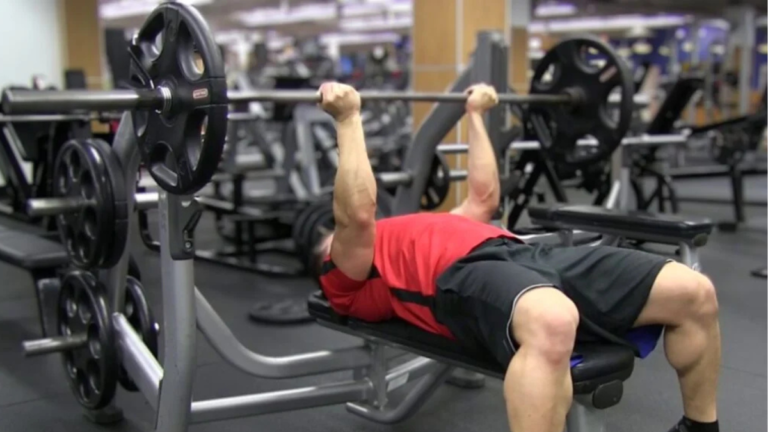
A study by Kikuchi & Nakazato (2017) found that push-ups can elicit similar levels of muscle activation in the pectorals and triceps as bench presses when performed with progressive overload techniques.
Ways to Increase Mechanical Tension in Bodyweight Training
- Slow Tempo Repetitions: Performing exercises with a slow eccentric (lowering) phase increases time under tension, enhancing muscle recruitment.
- One-Limb Variations: Exercises such as pistol squats and one-arm push-ups place greater load on each limb, mimicking heavier weights.
- Increased Range of Motion: Extending the range of motion, such as elevating feet during push-ups, recruits more muscle fibres.
- Explosive Movements: Plyometric exercises, such as clap push-ups or jump squats, increase force production and muscle engagement.
Does Bodyweight Training Generate Enough Metabolic Stress?
Metabolic stress is another key driver of hypertrophy. This is achieved through moderate to high reps, shorter rest periods, and blood flow restriction. Research by Schoenfeld et al. (2014) indicates that high-rep, low-load training can stimulate hypertrophy effectively when sets are taken to failure.
This suggests that bodyweight training can achieve similar metabolic stress levels as traditional resistance training when intensity is properly managed.
Methods to Maximise Metabolic Stress
- Higher Repetition Sets: Training to failure with high reps generates lactate accumulation and metabolic fatigue, triggering hypertrophy.
- Shorter Rest Intervals: Reducing rest between sets increases metabolic stress and enhances muscle growth.
- Isometric Holds: Adding static holds at peak contraction, such as holding a squat at the bottom, increases muscle tension.
Muscle Damage in Bodyweight Training
Muscle damage results from eccentric contractions, where the muscle lengthens under tension. Exercises that emphasise slow, controlled movements with extended eccentric phases are effective in stimulating hypertrophy.
Research by Hedayatpour & Falla (2015) suggests that eccentric training leads to significant increases in muscle growth and strength.
Techniques to Maximise Muscle Damage
- Slow Eccentrics: Lowering phases of exercises like push-ups and dips performed over 3-5 seconds increase muscle damage.
- Paused Reps: Holding a position during the eccentric phase creates additional muscle strain.
- Extended Sets: Incorporating drop sets using modified movements keeps the muscle under tension longer.
Progressive Overload in Bodyweight Training

Progressive overload is essential for muscle growth. In weight training, this is done by increasing weight. In bodyweight training, progression is achieved through different variables.
Strategies for Progressive Overload
- Increased Difficulty: Progressing from standard push-ups to archer push-ups or from squats to Bulgarian split squats enhances intensity.
- More Volume: Increasing the number of reps and sets ensures continued adaptation.
- Decreased Stability: Performing exercises on unstable surfaces engages stabiliser muscles more intensively.
Comparisons to Traditional Weight Training
Several studies have compared bodyweight training to weightlifting in terms of muscle hypertrophy. A study by Calatayud et al. (2015) found that push-ups can activate the chest muscles similarly to the bench press when executed with progressive overload techniques. Similarly, research by Tanimoto & Ishii (2006) showed that low-load, high-rep resistance training leads to comparable hypertrophic effects as traditional weight training.
Advantages of Bodyweight Training
- Minimal Equipment: Training can be done anywhere, making it highly accessible.
- Joint-Friendly: Exercises often involve more natural movement patterns, reducing injury risk.
- Functional Strength: Develops strength that translates to real-world movements.
Limitations of Bodyweight Training
- Difficult to Target Some Muscle Groups: While lower body and pushing movements are easily trained, pulling exercises like pull-ups require equipment.
- Harder to Quantify Load Progression: Unlike weightlifting, where you can add increments, bodyweight training requires creative progression.
Conclusion
Bodyweight training can be highly effective for building muscle, provided that mechanical tension, metabolic stress, and muscle damage are maximised through proper progression techniques. While traditional weightlifting offers easier progression, bodyweight exercises remain a viable and practical alternative for hypertrophy.
Key Takeaways Table
| Key Takeaway | Explanation |
|---|---|
| Mechanical Tension | Can be increased through slow reps, unilateral exercises, and explosive movements. |
| Metabolic Stress | Achieved with high-rep sets, shorter rest intervals, and isometric holds. |
| Muscle Damage | Eccentric movements and paused reps enhance hypertrophy. |
| Progressive Overload | Achieved through exercise progression, increased volume, and reduced stability. |
| Effectiveness | Bodyweight training can be as effective as weightlifting when structured properly. |
References
Calatayud, J., Borreani, S., Colado, J. C., Martin, F., Rogers, M. E., Behm, D. G., & Andersen, L. L. (2015). Muscle activation during push-ups with different suspension training systems. Journal of Sports Science & Medicine, 14(3), 502-510.
Hedayatpour, N., & Falla, D. (2015). Physiological and neural adaptations to eccentric exercise: Mechanisms and considerations for training. BioMed Research International, 2015, 193741.
Kikuchi, N., & Nakazato, K. (2017). Low-load bench press and push-up induce similar muscle hypertrophy and strength gain. Journal of Exercise Science & Fitness, 15(1), 37-42.
Schoenfeld, B. J. (2010). The mechanisms of muscle hypertrophy and their application to resistance training. Journal of Strength and Conditioning Research, 24(10), 2857-2872.
Schoenfeld, B. J., Wilson, J. M., Lowery, R. P., & Krieger, J. W. (2014). Muscular adaptations in low versus high-load resistance training. Journal of Strength and Conditioning Research, 28(10), 2647-2658.
Tanimoto, M., & Ishii, N. (2006). Effects of low-intensity resistance exercise with slow movement and tonic force generation on muscular function in young men. Journal of Applied Physiology, 100(4), 1150-1157.
Robbie Wild Hudson
Editor-In-Chief at BOXROX. I come from a background of rugby and weightlifting. Growing up in the English Lake District, I spent a great deal of time swimming in its stunning lakes and rivers. In 2015 my brothers and I became the first people to swim the 145km length of the River Eden, from source to mouth, in 9 days. We also swam the Corryvreckan whirlpool, the third largest in the world, and Crossfit is a huge part of my training for these events.
More from Robbie Wild Hudson