




























Machines vs Free Weights: Which Is Better for Building Muscle After 30?

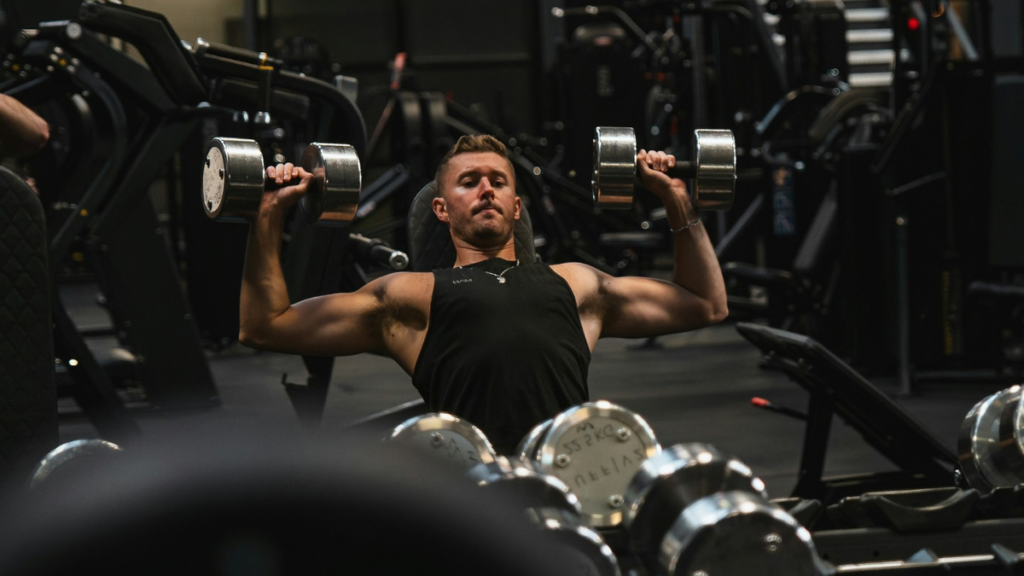
Training past 30 requires intelligent programming, dedicated recovery, and a shift in perspective to do well. But what are the right tools for the job? What would work best for you and your goals?
What Changes After 30 and Why Equipment Choice Matters
Crossing into your thirties does not mean your muscle-building days are behind you, because your body remains highly responsive to well-structured resistance training at any adult age. However, subtle shifts in recovery capacity, work and life stress, and gradual age-related changes in muscle mass and connective tissue resilience make smart programming much more valuable than reckless grit. When you push through nagging shoulder or lower-back twinges just to hit a number on a barbell, a single bad session can sideline you for weeks.
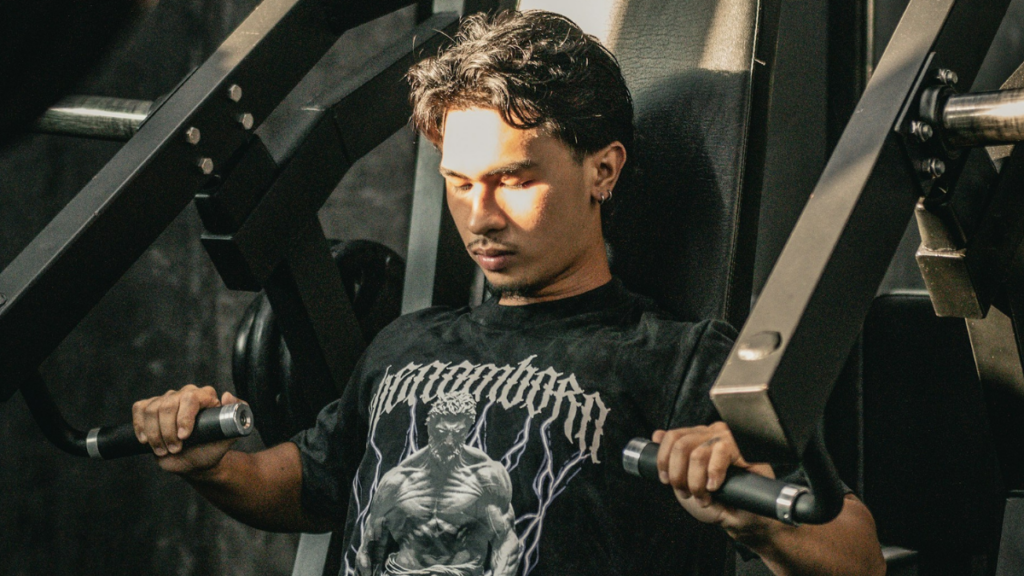
Exercise science research on resistance training across adulthood shows that consistent mechanical tension drives muscle hypertrophy regardless of whether you are in your twenties, thirties, forties, or beyond. What matters most after thirty is generating enough stimulus to trigger growth while managing cumulative fatigue on your joints and central nervous system. That is where understanding the distinct mechanics of machines and free weights becomes a major advantage.
How Free Weights Build Muscle and Coordination
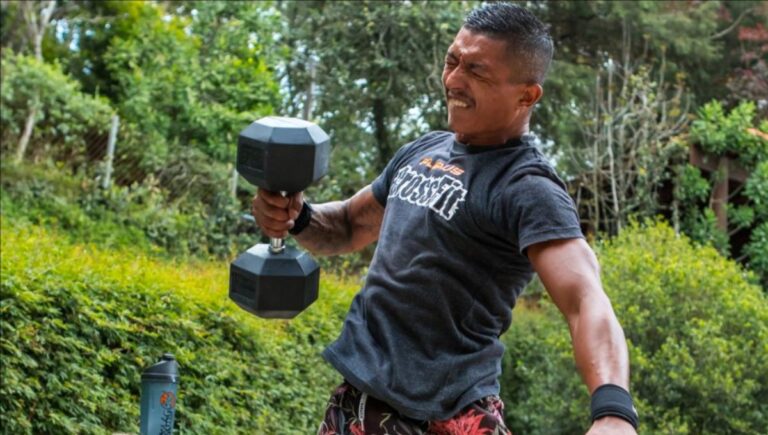
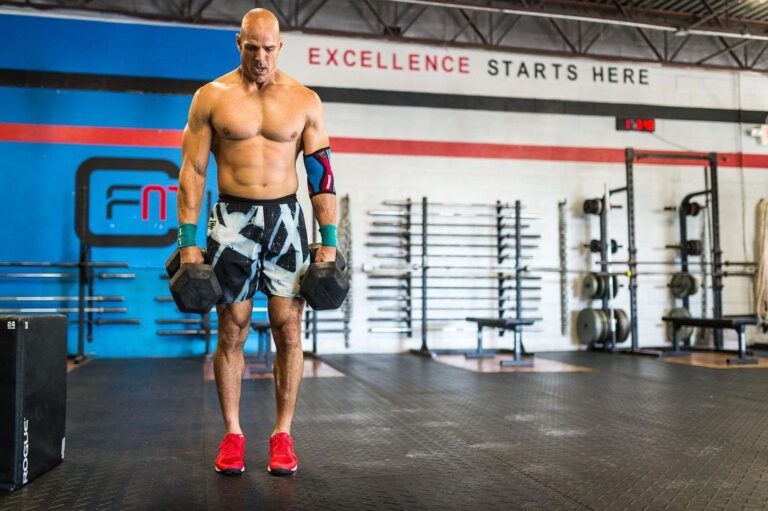
Free weights such as barbells, dumbbells, and kettlebells force your body to control resistance across three dimensions without a fixed track guiding the path. Because you have to stabilize the load and coordinate multiple joints and stabilizer muscles simultaneously, free weights excel at building full-body coordination, balance, and transferable real-world strength. Many lifters also love the natural feel and versatility of free weights for foundational patterns like squats, hinges, presses, and rows.
Biomechanical and electromyographic research comparing free weights and machines often shows higher stabilizer muscle demand and strong compound force production with free weights, while controlled strength and hypertrophy studies confirm they are highly effective for building muscle.
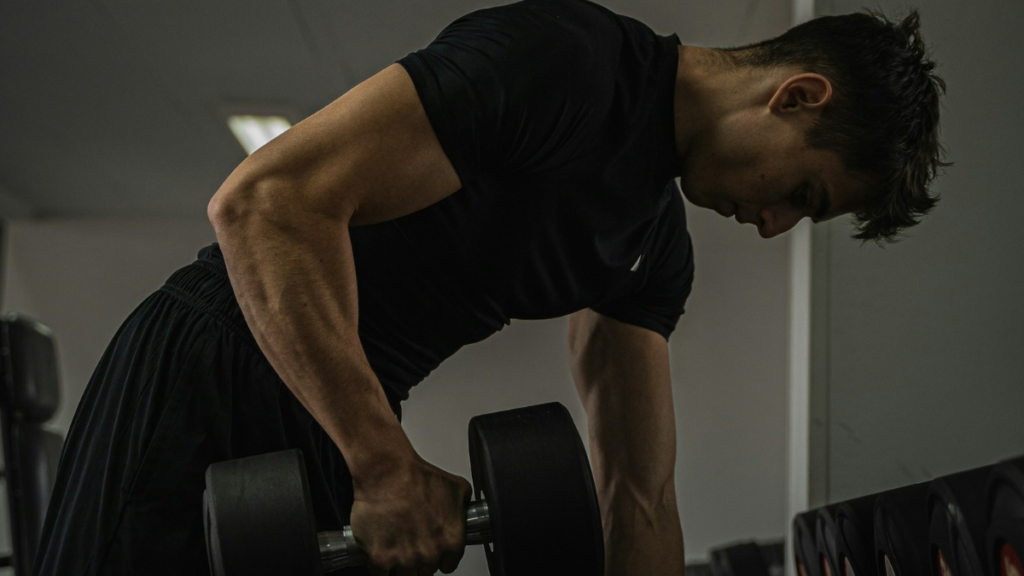
At the same time, free weights require sharper technical focus when fatigue sets in, and balancing heavy loads through awkward ranges of motion can place extra shear or joint stress on sensitive areas if your form slips. Used thoughtfully, free weights give you tremendous strength and structural versatility after thirty.
How Machines Drive Hypertrophy and Joint-Friendly Effort
Gym machines guide your movement along a set trajectory or cam profile, which reduces the balance and coordination burden so you can focus intently on the target muscle. Many modern machines also alter resistance across the range of motion to match your strength curve or emphasize lengthened muscle positions where growth signals are strong. When you are tired after a long workday or pushing a set close to muscular failure, stability from a machine lets you take a muscle right to its limit safely without worrying about losing balance.
Controlled training studies comparing machine-based and free-weight resistance programs indicate that both modalities can produce substantial gains in muscle size and strength when effort and volume are matched. Furthermore, systematic review and meta-analysis evidence on training loads confirms that moderate to lighter loads taken close to muscular failure can stimulate muscle growth comparable to heavy loads, which pairs nicely with controlled machine sets when your joints want a break. Machines shine especially well for isolation work, fatigued finishers, and days when extra external stability helps you train hard without joint aggravation.
Comparing Free Weights and Machines for Lifters Over 30
| Feature | Free Weights (Barbells and Dumbbells) | Machines (Selectorized and Plate-Loaded) | Best Practical Use After 30 |
| Stability Demand | High, requiring active balance and stabilizer recruitment | Lower, with guided paths and built-in torso or limb support | Use free weights when fresh; lean on machines when fatigued or protecting joints |
| Muscle Growth Potential | High when taken close to failure with clean technique | High when taken close to failure with controlled range of motion | Combine both across the week for complete muscle development |
| Joint and Fatigue Management | Can tax joints or lower back if form breaks down under heavy fatigue | Easier to push close to failure safely with less stabilizing fatigue | Pair heavy or foundational free weights with controlled machine accessories |
| Movement Versatility | Very high across compound and unilateral patterns | Tailored to specific angles and often strong on stretched or isolated paths | Pick whichever tool lets you train pain-free through a full range of motion |
The Verdict and How to Program Both After 30
So which option is better for building muscle after thirty? The honest, evidence-backed answer is that neither equipment type holds a monopoly on muscle growth, and the best choice is usually a smart blend of both rather than an all-or-nothing split. Free weights give you unmatched versatility and full-body coordination for core movement patterns, while machines give you stable, joint-friendly ways to accumulate high-quality volume close to muscular failure without beating up your body.
Is the Bayesian Cable Curl Better Than Regular Curls for Growing Your Biceps?
A practical weekly structure for lifters over thirty is to train each major muscle group twice per week, which aligns with meta-analytic findings showing that twice-weekly training supports superior hypertrophy compared to once-weekly training. You might open a workout with a compound free-weight movement while your energy and focus are highest, then transition to machine presses, rows, leg extensions, or curls to pile on safe, controlled volume right near failure.
Paying attention to how your joints feel from week to week, progressing reps or load gradually, and prioritizing sleep and protein will carry your physique much further than arguing over equipment labels.
Key Takeaways
| Decision Area | Evidence-Based Guidance | Why It Matters After 30 |
| Overall Winner | Neither wins alone; combine free weights and machines strategically | Captures coordination and compound strength alongside safe, high-effort volume |
| Muscle Hypertrophy | Focus on taking sets close to muscular failure across both tools | Drives muscle growth effectively regardless of whether resistance is guided or free |
| Weekly Frequency | Aim to train major muscle groups twice per week | Supports stronger muscle growth outcomes than training each muscle once per week |
| Joint Longevity | Adjust exercise selection when joints feel cranky and progress gradually | Keeps training consistent over years rather than derailing progress with setbacks |
References
- Haugen, M.E., Vårvik, F.T., Larsen, S., et al., 2023. Effect of free-weight vs. machine-based strength training on maximal strength, hypertrophy and jump performance: a systematic review and meta-analysis. Sports Medicine – Open, 9(1), p.103.
- Schwanbeck, S., Chilibeck, P.D. and Binsted, G., 2009. A comparison of free weight squat to Smith machine squat using electromyography. Journal of Strength and Conditioning Research, 23(9), pp.2588-2591.
- Schoenfeld, B.J., Grgic, J., Ogborn, D. and Krieger, J.W., 2017. Strength and hypertrophy adaptations between low- vs. high-load resistance training: a systematic review and meta-analysis. Journal of Strength and Conditioning Research, 31(12), pp.3508-3523.
- Schoenfeld, B.J., Ogborn, D. and Krieger, J.W., 2016. Effects of resistance training frequency on measures of muscle hypertrophy: a systematic review and meta-analysis. Sports Medicine, 46(11), pp.1689-1697.
Robbie Wild Hudson
Editor-In-Chief at BOXROX. I come from a background of rugby and weightlifting. Growing up in the English Lake District, I spent a great deal of time swimming in its stunning lakes and rivers. In 2015 my brothers and I became the first people to swim the 145km length of the River Eden, from source to mouth, in 9 days. We also swam the Corryvreckan whirlpool, the third largest in the world, and Crossfit is a huge part of my training for these events.
More from Robbie Wild Hudson