

The bench press is one of the most popular exercises in the world. Walk into almost any gym and you will see someone lying on a bench trying to push a barbell off their chest. The movement has become the standard test of upper body strength. But there is a problem.
A lot of people are bored of bench pressing. Others deal with shoulder pain, elbow irritation, or stalled progress after years of doing the same movement pattern over and over again. Some lifters also struggle to actually feel their chest working during the exercise. Instead, the front delts and triceps take over.



That does not mean the bench press is bad. It is still an excellent exercise. However, science shows that muscle growth responds extremely well to exercise variation, especially when new movements challenge muscles at different lengths, angles, and resistance profiles.
The chest muscles are highly responsive to movements that create strong tension during horizontal adduction and deep loaded stretches. That means you are not limited to traditional pressing if your goal is building size, strength, and athletic performance.
Why Changing Chest Exercises Can Help You Grow
Many lifters assume that if an exercise is good, doing more of it must be better. That is not always true.
The body adapts quickly to repeated stress. Over time, the same movement can become less stimulating because your nervous system and muscles become highly efficient at performing it.
Research on resistance training consistently shows that varying exercise selection can improve muscular development by exposing muscles to slightly different demands. Different exercises challenge fibers in different ways, especially when joint angles and ranges of motion change. The pectoralis major is a large muscle with fibers running in multiple directions. That means different pressing and flye patterns can emphasize different regions of the chest.
Another important factor is muscle length. Recent hypertrophy research suggests that exercises creating high tension in stretched positions may stimulate greater muscle growth. Traditional barbell bench pressing creates substantial tension at the bottom of the movement, but some alternative exercises produce even greater stretch and contraction.
There is also the issue of joint stress. The fixed hand position of a barbell bench press can be uncomfortable for lifters with shoulder mobility restrictions, previous injuries, or longer limb lengths. Exercises that allow the hands and shoulders to move more naturally can sometimes reduce discomfort while still producing high muscle activation.
Finally, motivation matters. People stick to training programs longer when workouts feel engaging. Consistency is one of the most important predictors of long term results. Changing exercises is not about abandoning the basics. It is about finding smarter ways to keep progressing.
What Makes a Chest Exercise Effective?
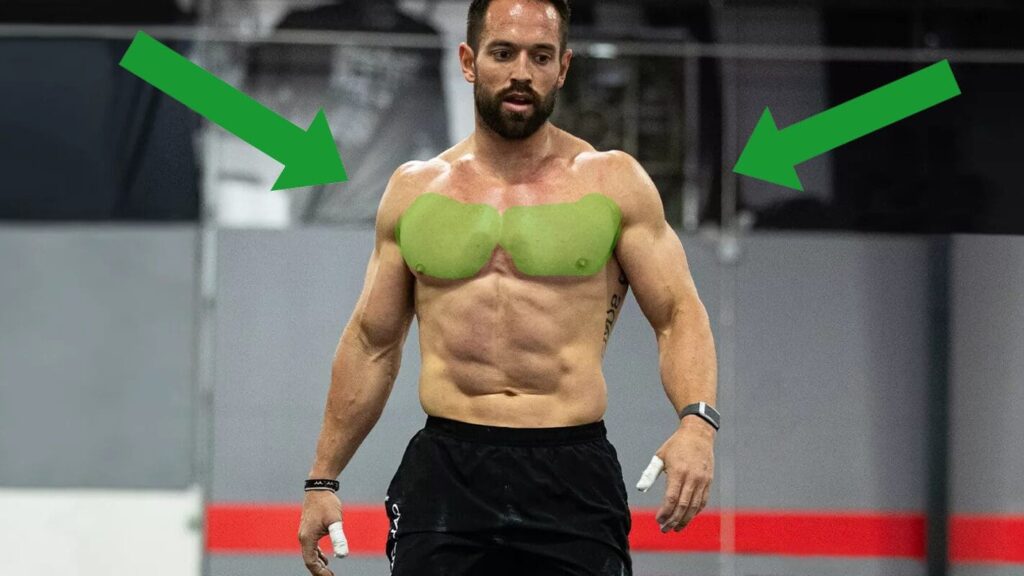
To understand why these exercises work, it helps to understand what the chest actually does. The pectoralis major has two major regions. The clavicular head contributes more to upper chest movements, while the sternocostal head makes up most of the middle and lower chest.
The chest muscles primarily perform horizontal adduction, shoulder flexion, and internal rotation. In practical terms, great chest exercises usually have several characteristics in common. They allow a meaningful range of motion, create high levels of tension, challenge the chest in stretched positions, and let the lifter train hard without excessive joint discomfort.
The three exercises below do all of those things.
Exercise 1: Dumbbell Hex Press
Why the Hex Press Feels So Different
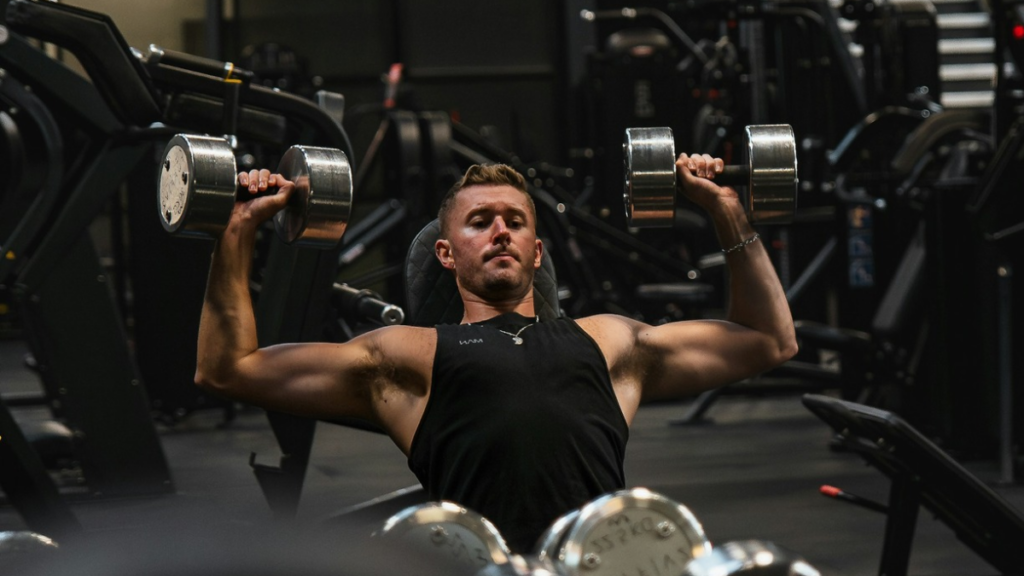
At first glance, the dumbbell hex press does not look particularly impressive. It appears to be a normal dumbbell press with the weights touching each other. But the movement changes the mechanics of the exercise in a very important way.
Instead of simply pushing the dumbbells upward, you actively squeeze them together throughout the entire set. That constant inward pressure creates additional tension in the chest muscles because the pecs are heavily involved in shoulder adduction.
The result is a movement that creates a massive chest contraction with relatively moderate weight. A lot of lifters who struggle to feel their chest during traditional pressing immediately notice the difference.
How to Perform the Dumbbell Hex Press
- Lie on a flat bench while holding two dumbbells together directly over your chest. Your palms should face each other.
- Before lowering the weights, squeeze the dumbbells together as hard as possible.
- Keep that inward pressure throughout the entire repetition.
- Lower the weights slowly toward your chest while maintaining control. Once the dumbbells lightly touch your chest, press them back upward without losing the squeeze.
- The movement should feel smooth and controlled from start to finish.
This is not an exercise for ego lifting. The goal is maximizing tension, not moving the heaviest possible load.
The Science Behind It
Research using electromyography has shown that squeezing actions can increase pectoral activation during pressing exercises. The hex press combines horizontal pressing with isometric adduction. That means the chest is working through two functions at the same time.
Another advantage is joint comfort. Because the elbows tend to stay closer to the body during the movement, many people experience less shoulder irritation compared to heavy barbell pressing. The exercise also improves mind muscle connection.
Studies suggest that focusing internally on muscle contraction may improve activation in trained lifters, especially during hypertrophy focused training.
Best Way to Program It
The dumbbell hex press works especially well after heavier compound pressing. For most people, 3 to 4 sets of 10 to 15 reps is ideal. Slow eccentric phases and short rest periods tend to make the movement even more effective. You can also use the exercise as a finisher because the continuous tension creates a serious chest pump without requiring extremely heavy loading.
Exercise 2: Ring Push Up Flye
Why Rings Change Everything
Most people underestimate push ups. That changes the moment gymnastic rings enter the equation. Rings create instability, increase range of motion, and force the body to stabilize constantly during movement.
The ring push up flye combines the mechanics of a flye and a push up into one exercise. As you lower yourself, the rings drift outward, creating a deep stretch across the chest. As you push upward, you actively bring the rings back together.
The movement creates enormous tension in the pecs while also challenging the shoulders, triceps, and core. It is one of the most demanding bodyweight chest exercises you can perform.
How to Perform the Ring Push Up Flye
- Set gymnastic rings low to the ground.
- Grab the rings and assume a push up position with your body straight and core braced.
- As you descend, allow the rings to move outward slowly. Lower yourself only as far as you can control.
- You should feel a significant stretch across the chest.
- From the bottom position, pull the rings back inward while pressing yourself upward.
- Move slowly and avoid bouncing.
Beginners can make the exercise easier by raising the height of the rings.
Exercise 3: Guillotine Press
The Chest Exercise Most Lifters Avoid
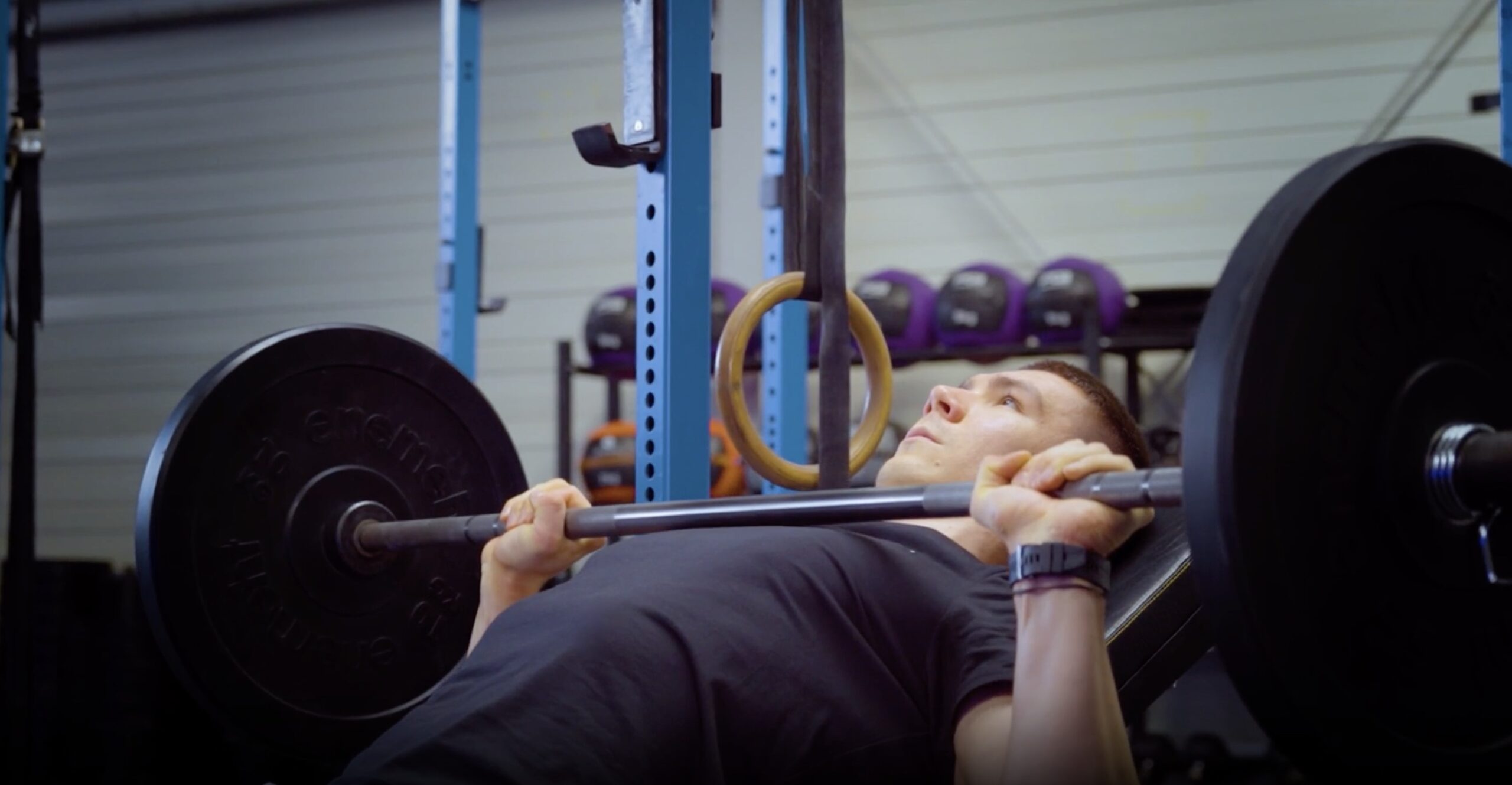
The guillotine press has a dramatic name, and many lifters avoid it because it looks unusual. Instead of lowering the bar toward the middle of the chest, you lower it toward the neck while flaring the elbows outward.
That changes the mechanics of the press significantly. The movement places the chest fibers in a position that can dramatically increase pectoral involvement.
It also creates a deep stretch across the pecs. Bodybuilding coach Vince Gironda famously used the exercise decades ago, but it has recently regained attention because of research examining chest muscle activation.
How to Perform the Guillotine Press Safely
- Use a lighter weight than you would for normal bench pressing.
- Lie on a flat bench with a wider than shoulder width grip.
- As you lower the bar, allow your elbows to flare naturally outward.
- Bring the bar slowly toward the upper chest or lower neck area.
- Pause briefly before pressing the bar back upward.
- The movement should feel controlled rather than explosive.
A spotter is strongly recommended.
Why the Exercise Works
Research comparing bench press variations has shown that higher elbow flare can increase activation in the clavicular region of the chest. The guillotine press also places the pecs under substantial stretch.
As mentioned earlier, loaded stretch appears to be an important factor for hypertrophy. Many lifters also report a stronger chest contraction during the movement because the triceps contribute slightly less compared to standard bench pressing. That can make the exercise valuable for bodybuilders and physique focused athletes.
Who Should Use It?
The guillotine press is best suited for experienced lifters with healthy shoulders and solid pressing mechanics. Beginners should first build strength and control with more conventional pressing exercises.
If performed correctly, the exercise can become a powerful chest builder. However, it should complement your program rather than completely replace safer compound pressing patterns.

How to Build a Chest Workout Around These Exercises
You do not need to eliminate traditional pressing completely. A smart approach is combining standard compound lifts with more targeted accessory work. For example, a chest session could look like this:
• Incline dumbbell press for heavy compound work.
• Dumbbell hex press for continuous chest tension.
• Ring push up flyes for stretch focused hypertrophy.
• Guillotine press for upper chest emphasis.
• Cable lateral raises or triceps work as accessories.
That combination exposes the chest to multiple resistance profiles and movement patterns. Research consistently supports the idea that training variation can help maximize muscular development over time.
Should You Stop Bench Pressing?
Probably not. The bench press remains one of the best upper body strength exercises ever created.
But strength and hypertrophy are not always identical goals. If your chest training feels stale, uncomfortable, or ineffective, adding new exercises can help create fresh progress.
The best training programs evolve over time. Great lifters are not loyal to exercises. They are loyal to results. Sometimes the smartest thing you can do is step away from the movement you always use and challenge your muscles from a completely different angle. That is often where new growth begins.
Key Takeaways
| Exercise | Main Benefit | Best Use | Key Limitation |
|---|---|---|---|
| Dumbbell Hex Press | Constant chest tension and strong contraction | Hypertrophy focused accessory work | Limited loading potential |
| Ring Push Up Flye | Deep stretch and stabilization challenge | Advanced bodyweight chest training | Difficult for beginners |
| Guillotine Press | High upper chest activation | Moderate load bodybuilding work | Requires shoulder mobility and caution |
References
• Barnett, C., Kippers, V. and Turner, P. (1995) ‘Effects of variations of the bench press exercise on the EMG activity of five shoulder muscles’, Journal of Strength and Conditioning Research, 9(4), pp. 222 to 227.
• Calatayud, J., Borreani, S., Colado, J.C., Martin, F. and Rogers, M.E. (2014) ‘Muscle activation during push ups with different suspension training systems’, Journal of Sports Science and Medicine, 13(3), pp. 502 to 510.
• Gentil, P., Soares, S. and Bottaro, M. (2015) ‘Single versus multi joint resistance exercises: Effects on muscle strength and hypertrophy’, Asian Journal of Sports Medicine, 6(2), pp. 1 to 6.
• Maeo, S., Ando, Y., Kanehisa, H. and Kawakami, Y. (2021) ‘Muscular adaptations to lengthened position resistance training’, Frontiers in Physiology, 12, pp. 1 to 12.
• Schoenfeld, B.J. (2010) ‘The mechanisms of muscle hypertrophy and their application to resistance training’, Journal of Strength and Conditioning Research, 24(10), pp. 2857 to 2872.