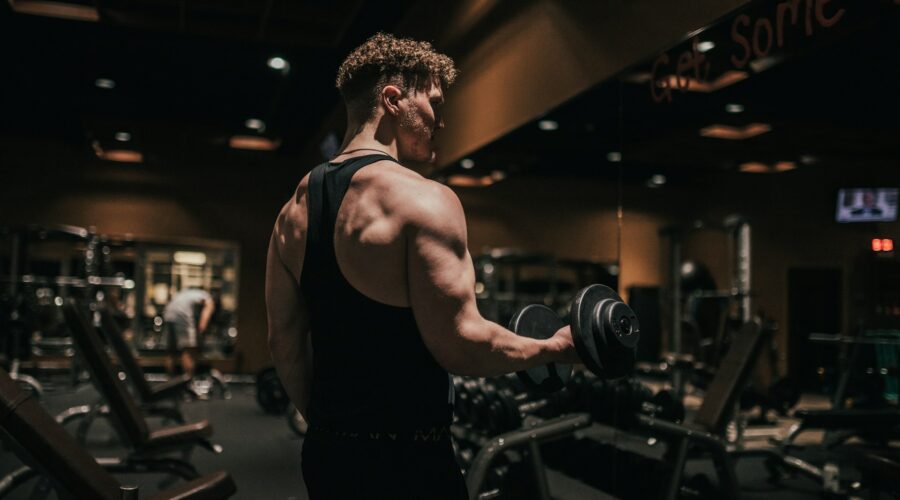


Big arms have always been a symbol of strength, and the bicep curl remains one of the most recognizable exercises in any gym. Most lifters are taught to keep perfect form, avoid swinging the weight, and isolate the biceps as much as possible. That advice makes sense for beginners, but experienced lifters often discover that strict curls eventually stop producing meaningful progress. This is where the cheat curl enters the conversation.
The cheat curl has a reputation for being sloppy or even dangerous, but that reputation is only deserved when the movement is performed without control. When done correctly, the cheat curl is a deliberate training technique that allows you to overload the biceps with heavier weights while still emphasizing the lowering phase of the lift. Scientific research on muscle growth, eccentric training, and mechanical tension suggests there may be good reasons to include cheat curls in a well designed arm program.


Does that make the cheat curl the best bicep exercise you are not doing? The answer depends on your experience level and your goals, but the evidence suggests it deserves far more respect than it usually receives.
What Is a Cheat Curl?
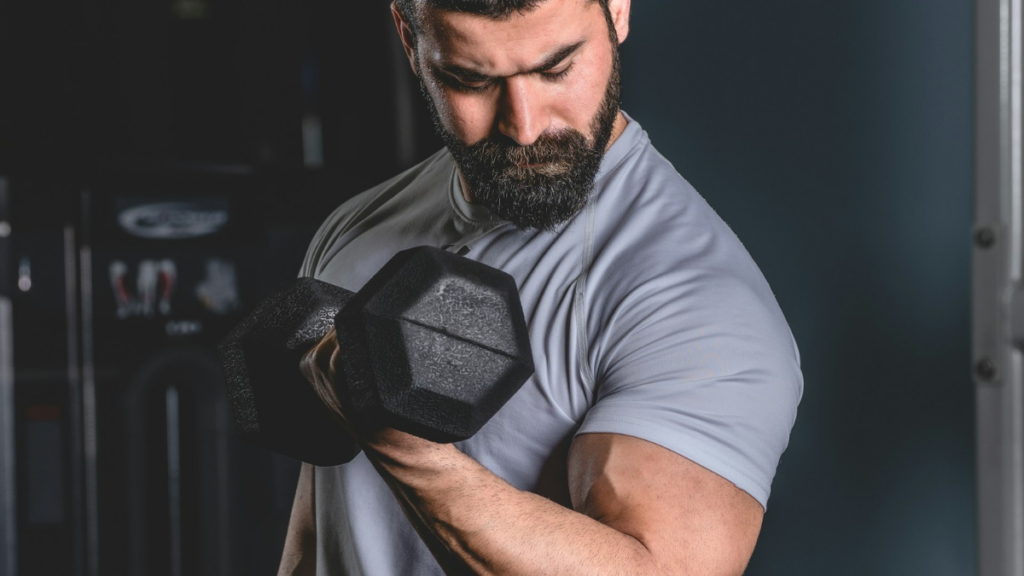
A cheat curl is a variation of the standing barbell curl where a controlled amount of momentum from the hips and legs helps initiate the lifting phase. Instead of trying to curl the weight with perfectly strict technique from the bottom position, the lifter uses a slight body drive to overcome the hardest part of the movement.
Once the weight reaches approximately halfway up, the biceps take over to finish the lift. The lowering phase is then performed slowly and under complete control. This is the critical difference between cheating and cheat curls.
How Much Should You Be Able to Bench Press?
Random body swinging shifts the work away from the target muscles and increases injury risk. Purposeful cheating uses momentum only to assist the concentric phase while maximizing loading during the eccentric phase, where the muscles produce the greatest force.
Many legendary bodybuilders, including Arnold Schwarzenegger and Ronnie Coleman, incorporated cheat curls during heavy arm sessions. While anecdotes do not prove effectiveness, modern research provides several reasons why the method may work.
Why Heavy Loading Matters for Muscle Growth
Muscle hypertrophy is primarily driven by mechanical tension placed on muscle fibers. Although metabolic stress and muscle damage may contribute, current evidence suggests mechanical tension is the dominant stimulus for long term muscle growth. When you perform strict curls, the amount of weight you can lift is limited by the weakest point of the exercise, which occurs near the bottom position. This often prevents the stronger portions of the range of motion from being challenged sufficiently.
Cheat curls allow slightly heavier loads than strict curls because momentum helps overcome this sticking point. The biceps are then exposed to greater tension during the remainder of the movement, particularly during the eccentric phase.

Research consistently shows that a wide range of loads can stimulate hypertrophy when sets are taken close to failure. However, heavier loading can improve strength while also providing a unique stimulus that complements lighter, higher repetition work.
This means cheat curls are not necessarily replacing strict curls. Instead, they can expand the range of loading your biceps experience throughout a training cycle.
The Science Behind Eccentric Training
Your Muscles Are Stronger While Lowering Weight
One of the most fascinating findings in exercise science is that muscles can generate substantially greater force while lengthening than while shortening.
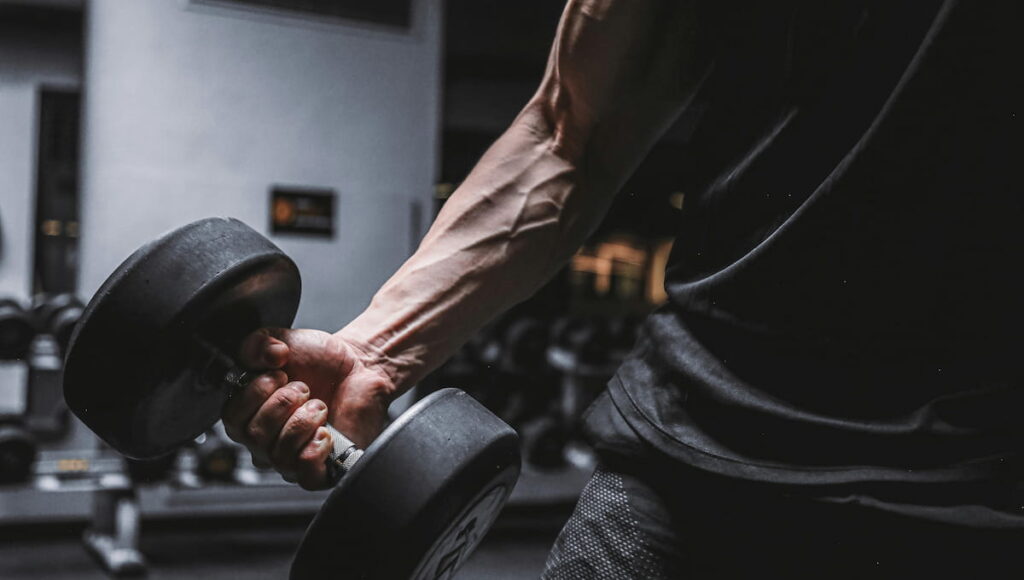
The lowering portion of a curl is known as the eccentric phase. During this phase, muscle fibers resist the downward movement of the weight while remaining under high levels of tension. Cheat curls capitalize on this natural strength advantage. Instead of struggling to lift a weight through the entire concentric phase, the lifter uses controlled momentum to reach the top before slowly lowering a heavier load than would normally be possible with strict form.
Numerous studies have shown eccentric focused training can produce significant improvements in muscle size and strength. Eccentric loading also appears to stimulate unique adaptations in muscle architecture and tendon function. This helps explain why many experienced lifters report excellent results from controlled cheat curls.
Higher Forces Mean Greater Adaptation
Research suggests eccentric contractions create greater force per muscle fiber while requiring less energy than concentric contractions. Higher force production may recruit more high threshold motor units, particularly during heavy training.
Since motor unit recruitment plays a major role in muscle growth, exposing the biceps to greater eccentric tension could provide an additional hypertrophy stimulus beyond conventional strict curls. That does not mean every curl should become a cheat curl. Instead, eccentric overload represents one useful tool within a complete resistance training program.
What Research Says About Exercise Technique
Strict technique is valuable because it improves exercise consistency and reduces unnecessary stress on joints. However, research on resistance training repeatedly demonstrates that perfect isolation is not always necessary for maximizing muscle growth.
The body functions as an integrated system, and multi joint movements often produce excellent hypertrophy despite involving several muscle groups simultaneously. Cheat curls introduce assistance from the hips and trunk during only the initial phase of the lift. The biceps still perform the majority of the work through the strongest portion of the range of motion.
Studies examining movement velocity and resistance training also suggest that intentional variations in lifting style can influence muscle recruitment without necessarily reducing training effectiveness.
The key variable is maintaining tension on the target muscle instead of allowing momentum to complete the entire repetition.
Are Cheat Curls Better Than Strict Curls?
The answer is no if you are looking for a universal winner. Strict curls remain one of the best exercises for beginners because they develop technique, improve mind muscle connection, and ensure the biceps perform nearly all the work.
Cheat curls become valuable once strict curls no longer provide sufficient overload. Think of the relationship similarly to squats and partial squats. One is not inherently superior. Each serves a different purpose. Strict curls excel at isolation. Cheat curls excel at overload. The most effective programs often include both.
Research comparing different resistance training strategies consistently finds that exercise variation helps maintain long term progress by exposing muscles to different loading patterns. Rather than replacing strict curls, cheat curls may simply extend your progression when strength plateaus.
The Benefits of Cheat Curls
Greater Mechanical Tension
Mechanical tension remains the primary driver of hypertrophy. Using slightly heavier weights increases the amount of force experienced by the biceps, particularly during the eccentric portion of the lift.
Progressive Overload Without Machines
Many gyms lack specialized equipment for eccentric overload. Cheat curls provide a simple solution using only a barbell. Instead of requiring weight releasers or specialized machines, lifters can overload the lowering phase with equipment already available.
Improved Strength Carryover
Handling heavier weights can improve confidence and neurological efficiency. Over time, stronger elbow flexors often contribute to improved pulling strength during rows, chin ups, and other compound exercises. Although compound lifts remain the primary strength builders, direct arm work can still contribute to overall upper body performance.
Variety for Experienced Lifters
Exercise variety helps maintain motivation while reducing repetitive loading patterns. Changing from strict curls to cheat curls during specific training blocks may provide a fresh stimulus without abandoning a proven movement pattern.
The Risks of Cheat Curls
Despite their advantages, cheat curls are not appropriate for everyone. The biggest problem occurs when lifters misunderstand the exercise. The movement should involve only a small amount of hip drive. Excessive swinging removes tension from the biceps and shifts stress toward the lower back and shoulders.
Using weights that are dramatically heavier than your strict curl also increases the likelihood of losing control during the lowering phase. Research consistently supports the importance of proper resistance training technique for minimizing injury risk. If you cannot lower the weight smoothly over approximately three to five seconds, it is too heavy.
People with existing shoulder, elbow, or lower back injuries should also approach cheat curls cautiously or avoid them entirely until cleared by a qualified healthcare professional.
How to Perform Cheat Curls Correctly
- Stand with your feet approximately shoulder width apart while holding a barbell using an underhand grip.
- Begin exactly as you would during a strict curl.
- As the bar reaches the sticking point near the bottom, use a slight extension of the hips to help initiate the movement.
- Avoid throwing your torso backward.
- Once the bar passes the midpoint, contract the biceps forcefully until the bar reaches shoulder height.
- Pause briefly.
- Lower the weight under complete control while resisting gravity throughout the entire eccentric phase.
- Reset your posture before beginning the next repetition.
- Every repetition should look deliberate rather than chaotic.
If another person cannot easily distinguish whether the movement was intentional or simply poor technique, you are probably using too much momentum.
Who Should Use Cheat Curls?
Cheat curls are most appropriate for intermediate and advanced lifters who already possess solid technique during strict curls.
- Beginners should spend several months mastering conventional barbell curls before experimenting with overload methods.
- Competitive bodybuilders, strength athletes, and experienced recreational lifters may benefit the most because they often require greater training variation to continue progressing.
- Athletes whose sports rely heavily on pulling strength may also use cheat curls strategically during hypertrophy phases.
- For general fitness enthusiasts, strict curls alone remain highly effective, particularly when progressive overload and adequate training volume are already in place.
How to Program Cheat Curls
Cheat curls work best as a secondary exercise after strict curls or compound pulling movements. For example, an arm workout might begin with chin ups or rows, followed by strict barbell curls, and finish with cheat curls performed using a heavier load.
Most lifters respond well to two or three working sets of six to eight repetitions. Because eccentric loading produces greater muscle damage, excessive volume is unnecessary. Allow adequate recovery before training biceps intensely again.
Current evidence indicates that weekly training volume remains one of the strongest predictors of hypertrophy, so cheat curls should contribute to total weekly volume rather than dramatically increasing it beyond recoverable levels.
The Verdict
The cheat curl is not a shortcut. It is not an excuse for poor form. It is not a replacement for strict curls.
Instead, it is a legitimate overload technique supported by principles of mechanical tension, eccentric training, and progressive resistance. Scientific evidence suggests muscles respond well to controlled heavy loading, particularly when eccentric contractions receive special attention. Cheat curls provide an accessible way to achieve that overload without specialized equipment, provided they are performed with discipline and restraint.
For beginners, strict curls remain the foundation of effective arm training.
For experienced lifters who have reached a plateau, cheat curls may be one of the simplest ways to expose the biceps to a new growth stimulus while continuing to build strength.
They are probably not the single best bicep exercise ever created because no exercise deserves that title in every situation. They may, however, be one of the most underrated exercises available to experienced lifters looking for bigger and stronger arms.
Key Takeaways
| Topic | Summary |
|---|---|
| What is a cheat curl? | A controlled curl that uses minimal hip drive to assist the lifting phase while emphasizing a slow eccentric lowering phase. |
| Main benefit | Allows greater mechanical tension through heavier loading than strict curls alone. |
| Scientific support | Research on hypertrophy and eccentric training supports heavy controlled loading as an effective muscle building strategy. |
| Best for | Intermediate and advanced lifters with solid lifting technique. |
| Not recommended for | Beginners who have not mastered strict curls or individuals with unresolved shoulder, elbow, or lower back injuries. |
| Programming | Use two to three sets of six to eight repetitions near the end of an arm workout after stricter exercises. |
| Biggest mistake | Excessive swinging that removes tension from the biceps and increases injury risk. |
| Final verdict | Cheat curls are an effective overload tool, not a replacement for strict curls, and deserve a place in many advanced hypertrophy programs. |
References
- Aagaard, P., Simonsen, E.B., Andersen, J.L., Magnusson, P. and Dyhre Poulsen, P. (2000) ‘Increased rate of force development and neural drive of human skeletal muscle following resistance training’, Journal of Applied Physiology, 93(4), pp. 1318 to 1326.
- Franchi, M.V., Reeves, N.D. and Narici, M.V. (2017) ‘Skeletal muscle remodeling in response to eccentric versus concentric loading: Morphological, molecular, and metabolic adaptations’, Frontiers in Physiology, 8, Article 447.
- Henneman, E., Somjen, G. and Carpenter, D.O. (1965) ‘Functional significance of cell size in spinal motoneurons’, Journal of Neurophysiology, 28(3), pp. 560 to 580.
- Krzysztofik, M., Wilk, M., Wojdala, G. and Gołaś, A. (2019) ‘Maximizing muscle hypertrophy: A systematic review of advanced resistance training techniques and methods’, International Journal of Environmental Research and Public Health, 16(24), Article 4897.
- Roig, M., O’Brien, K., Kirk, G., Murray, R., McKinnon, P., Shadgan, B. and Reid, W.D. (2009) ‘The effects of eccentric versus concentric resistance training on muscle strength and mass in healthy adults: A systematic review with meta analysis’, British Journal of Sports Medicine, 43(8), pp. 556 to 568.
- Schoenfeld, B.J. (2010) ‘The mechanisms of muscle hypertrophy and their application to resistance training’, Journal of Strength and Conditioning Research, 24(10), pp. 2857 to 2872.
- Schoenfeld, B.J., Grgic, J., Ogborn, D. and Krieger, J.W. (2017) ‘Strength and hypertrophy adaptations between low versus high load resistance training: A systematic review and meta analysis’, Journal of Strength and Conditioning Research, 31(12), pp. 3508 to 3523.
- Schoenfeld, B.J., Ogborn, D. and Krieger, J.W. (2019) ‘Dose response relationship between weekly resistance training volume and increases in muscle mass: A systematic review and meta analysis’, Journal of Sports Sciences, 37(11), pp. 1286 to 1295.
- Suchomel, T.J., Nimphius, S. and Stone, M.H. (2016) ‘The importance of muscular strength in athletic performance’, Sports Medicine, 46(10), pp. 1419 to 1449.
- Wernbom, M., Augustsson, J. and Thomeé, R. (2007) ‘The influence of frequency, intensity, volume and mode of strength training on whole muscle cross sectional area in humans’, Sports Medicine, 37(3), pp. 225 to 264.