

Pull ups have earned their place as one of the best upper body exercises ever created. Among the many variations, Gironda Sternum Chin Up have developed an almost legendary reputation. Many lifters claim it is the ultimate bodyweight movement for building bigger biceps while also creating an impressive back. But does the science support those claims?
The Gironda Sternum Chin up is certainly different from a traditional chin up. The movement changes body position, shoulder mechanics, and the line of pull in ways that may increase muscle activation across several upper body muscles. At the same time, no exercise is magical, and muscle growth depends on far more than choosing one specific variation.


This article explores what Gironda Sternum Chin ups are, how they compare with standard chin ups, what research says about muscle activation and hypertrophy, and whether they really deserve a place in your training if your goal is bigger arms.
What Are Gironda Sternum Chin Ups?
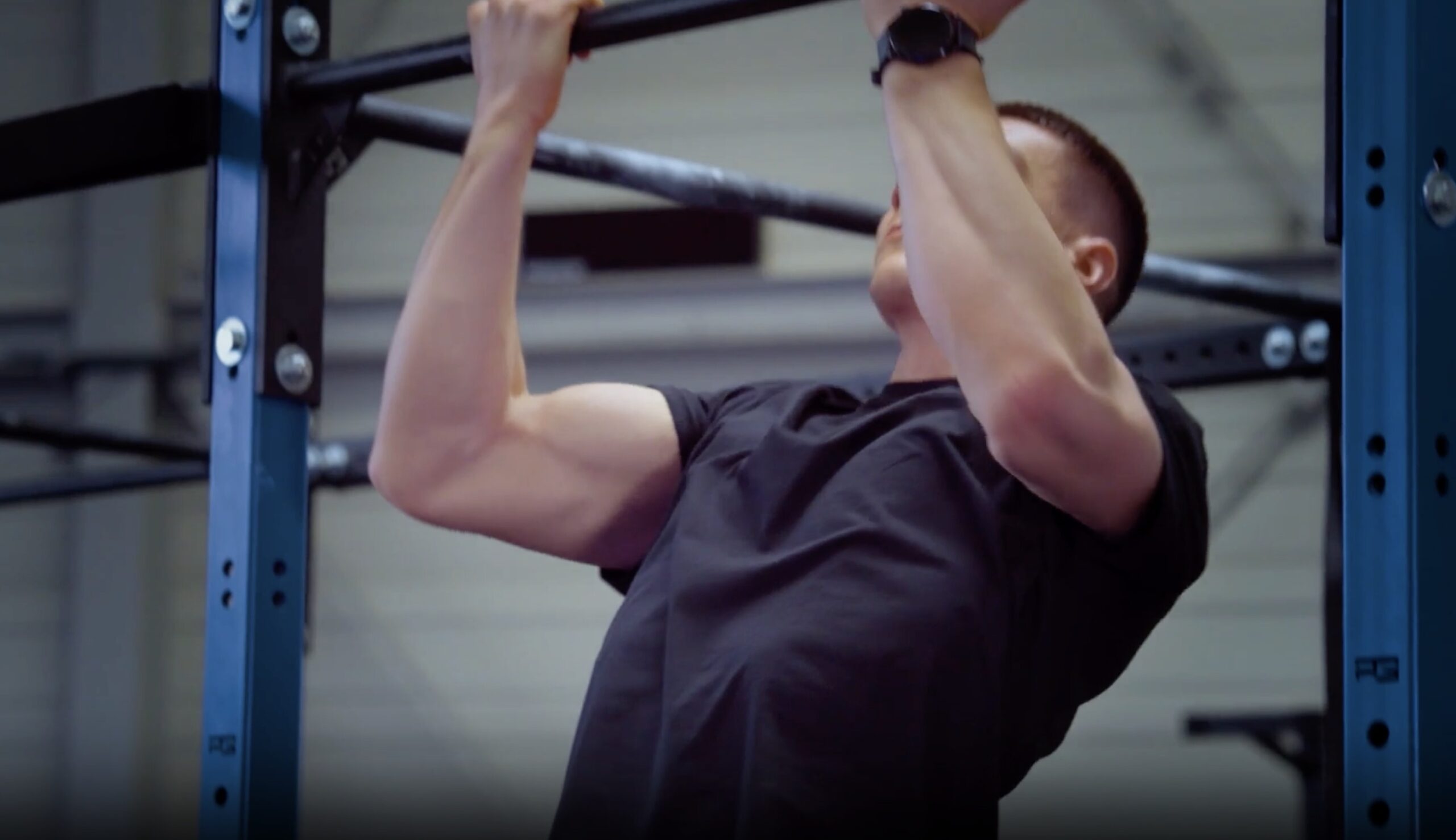
The Gironda Sternum Chin up was popularized by legendary bodybuilding coach Vince Gironda. Unlike a standard chin up where the chest remains relatively upright and the chin clears the bar, this variation requires you to lean your torso backward throughout the movement while pulling the lower chest or sternum toward the bar.
Your legs extend slightly forward while your torso angles backward. At the top position, your elbows travel behind your body, your chest is lifted toward the bar, and your shoulder blades are strongly retracted. This creates a movement that combines elements of a vertical pull with some characteristics of a rowing exercise.
The exercise typically uses a supinated grip, meaning your palms face you. This grip naturally places the biceps in a mechanically stronger position compared with an overhand pull up.
Why Do People Think They Build Bigger Biceps?
The popularity of sternum chin ups comes from several theories that make sense from both anatomy and biomechanics. The supinated grip increases elbow flexor involvement because the biceps brachii functions as both an elbow flexor and forearm supinator. Using an underhand grip allows the muscle to contribute more force during the pulling motion.
The backward lean also allows greater shoulder extension at the top of the movement. Because the long head of the biceps crosses the shoulder joint, exercises involving both elbow flexion and shoulder extension may place the muscle under greater stretch and tension. The movement also typically allows a larger range of motion than many standard chin ups, particularly if the chest reaches the bar rather than simply getting the chin over it.
These factors suggest that sternum chin ups could provide an excellent stimulus for the biceps while also heavily recruiting the muscles of the upper back.
The Science Behind Chin-ups and Biceps Activation
Researchers have spent years examining muscle activation during different pulling exercises using electromyography, commonly called EMG. Several studies consistently show that underhand grip chin ups produce greater biceps activation than overhand pull ups. This finding aligns well with the known anatomy of the biceps.
One study comparing different pull up techniques found that the chin up generated higher activation of the biceps brachii than pronated grip variations while still heavily recruiting the latissimus dorsi and lower trapezius. Another investigation examining multiple pulling exercises reported that chin ups ranked among the highest bodyweight exercises for biceps activation.
It is important to understand what EMG studies actually tell us. Higher muscle activation does not automatically guarantee greater muscle growth. However, muscle activation does indicate that a muscle is contributing significantly to the movement, making it one useful piece of the hypertrophy puzzle.
Does the Sternum Chin-up Increase Muscle Activation?
Interestingly, there is very little direct scientific research specifically examining the Gironda Sternum Chin up. Instead, most evidence comes from broader studies examining shoulder position, grip width, grip orientation, and range of motion during vertical pulling exercises.
The sternum variation likely changes muscle recruitment by increasing shoulder extension and scapular retraction. These adjustments may increase involvement of muscles such as the lower trapezius, rhomboids, posterior deltoids, and lower fibers of the latissimus dorsi. The biceps also remain highly involved because the elbows continue to flex under significant load throughout the movement.
Although no published research has directly compared sternum chin ups with standard chin ups, current biomechanical evidence suggests that the movement recruits a wide range of upper body muscles simultaneously. That makes it an outstanding compound exercise, although it does not necessarily prove superior for isolated biceps growth.
Muscle Growth Depends on Mechanical Tension
The most important driver of hypertrophy is mechanical tension applied consistently over time. Research has repeatedly shown that muscles grow when they experience sufficient tension while training close to failure across an appropriate volume of work.
Whether that tension comes from barbells, dumbbells, machines, or bodyweight exercises matters less than many people believe. If sternum chin ups allow you to generate high levels of effort through a large range of motion while progressively increasing training difficulty, they can certainly contribute to impressive biceps growth.
However, they are only one tool among many effective exercises.
What About Stretch Mediated Hypertrophy?
One of the most interesting developments in resistance training research involves stretch mediated hypertrophy. Recent evidence suggests that training muscles under high tension while they are lengthened may stimulate greater muscle growth than shorter range movements.
The biceps experience meaningful stretch during the bottom portion of a chin up when the elbows are extended and the shoulders flex overhead. During the sternum variation, the movement also includes greater shoulder extension near the top, potentially exposing the long head of the biceps to additional loading throughout a large range of motion.
While direct evidence for sternum chin ups does not yet exist, the current understanding of muscle physiology suggests that exercises emphasizing long muscle lengths can be highly effective for hypertrophy.
How Do They Compare With Barbell Curls?
Many people wonder whether compound pulling exercises can replace direct arm training. The answer is both yes and no. Heavy chin ups recruit the biceps very effectively. For beginners, they often provide enough stimulus to produce noticeable arm growth without additional isolation work. However, experienced lifters generally achieve greater hypertrophy by combining compound exercises with isolation exercises.
Barbell curls, dumbbell curls, preacher curls, and incline curls allow higher training volume directed specifically toward the elbow flexors without fatigue from larger muscle groups limiting performance.
Multiple reviews of resistance training literature conclude that combining multi joint and single joint exercises produces greater overall muscular development than relying exclusively on one type.

For maximum biceps size, sternum chin ups should complement direct arm work rather than replace it.
3 Best Unusual Exercises for Wide and Muscular Triceps
Additional Muscles Worked
One reason the Gironda Sternum Chin up has remained popular for decades is its impressive ability to train multiple muscles at once.
- The latissimus dorsi remains one of the primary movers, particularly during shoulder adduction and extension.
- The biceps brachii contributes heavily through elbow flexion.
- The brachialis and brachioradialis assist during pulling.
- The rhomboids and middle trapezius retract the shoulder blades throughout the movement.
- The lower trapezius helps stabilize the scapula while supporting upward rotation and depression.
- The posterior deltoids contribute to shoulder extension during the top portion of the lift.
- The core muscles stabilize the body while maintaining the leaned back position.
This broad recruitment makes sternum chin ups an extremely efficient exercise for overall upper body development.
Technique Matters More Than Variation
Many people perform sternum chin ups incorrectly by simply swinging backward or using momentum.
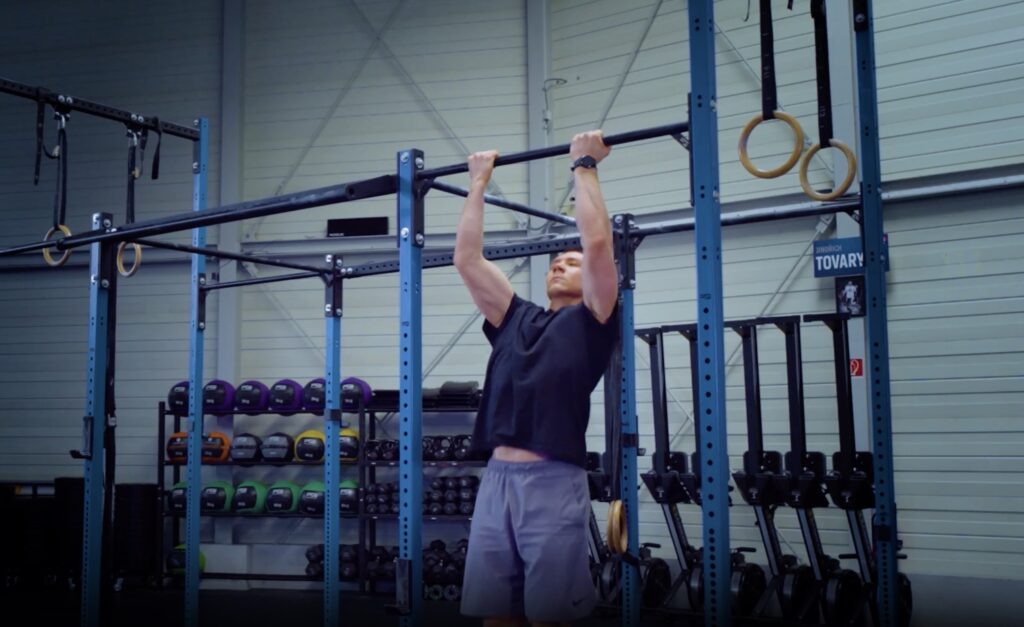
- Proper execution begins with a shoulder width underhand grip.
- The body should lean backward smoothly as the pull begins while maintaining full body tension.
- Rather than thinking about bringing the chin over the bar, focus on driving the chest toward the bar while squeezing the shoulder blades together.
- The elbows should travel behind the torso near the top of the movement.
- Lower under control until the elbows fully extend before beginning the next repetition.
- Using controlled tempo increases time under tension while reducing unnecessary stress on the shoulders.
Are There Any Downsides?
The Gironda Sternum Chin up is significantly more technically demanding than a standard chin up.
Many beginners lack the strength, shoulder mobility, or coordination to perform it correctly. The movement also places the shoulders in greater extension at the top, which may be uncomfortable for individuals with previous shoulder injuries or limited mobility.
Some lifters may also find it difficult to maintain proper body position without excessive swinging. For these individuals, mastering traditional chin ups first remains the smarter progression.
Who Should Use Gironda Sternum Chin-ups?
Intermediate and advanced trainees looking for a challenging upper body exercise can benefit greatly from including sternum chin ups. Bodybuilders seeking additional back thickness while simultaneously stimulating the biceps may find them particularly valuable.
Strength athletes can also use the exercise as an accessory movement to improve pulling strength through a large range of motion. Beginners should first build proficiency with regular chin ups before progressing to the more demanding sternum version.
Are They the Perfect Biceps Exercise?
The evidence suggests the answer is no, but they come remarkably close as a compound movement. No single exercise is perfect for maximizing muscle growth. Instead, hypertrophy results from consistently applying progressive overload, accumulating sufficient weekly training volume, recovering properly, eating enough protein, and training close to muscular failure.
Gironda Sternum Chin ups satisfy many of those requirements. They place substantial tension on the biceps while simultaneously training the back, shoulders, and core. Their large range of motion and demanding mechanics make them one of the most effective bodyweight pulling exercises available.
However, they should not replace dedicated arm training if your primary goal is maximum biceps size. Direct isolation exercises still allow greater targeted volume and may produce additional hypertrophy when combined with compound pulling.
For most lifters, the smartest approach is to use sternum chin ups as a cornerstone pulling exercise while pairing them with curls and other isolation work.
Final Verdict
Gironda Sternum Chin ups are one of the most effective compound exercises for building strong, muscular arms and an impressive upper back. Their unique mechanics combine high biceps activation with excellent recruitment of the lats, rhomboids, trapezius, and posterior shoulders.
Current scientific evidence strongly supports underhand pulling exercises for biceps development, even though direct research on the sternum variation remains limited. The biomechanics suggest that the movement provides high mechanical tension through a large range of motion, both of which are favorable for muscle growth.
They are not a miracle exercise, and they are certainly not the only path to bigger arms. Yet when performed with excellent technique and progressively overloaded over time, Gironda Sternum Chin ups deserve their reputation as one of the best bodyweight exercises for building serious upper body muscle.
Key Takeaways
| Topic | Practical Takeaway |
|---|---|
| Biceps activation | Underhand chin ups produce high biceps activation compared with overhand pull ups. |
| Gironda variation | The backward lean increases range of motion and upper back involvement while maintaining heavy biceps loading. |
| Muscle growth | Mechanical tension, progressive overload, and sufficient training volume remain the primary drivers of hypertrophy. |
| Isolation work | Sternum chin ups are highly effective but should complement rather than replace curls for maximum arm growth. |
| Best users | Intermediate and advanced lifters benefit most after mastering regular chin ups. |
| Overall verdict | One of the best compound exercises for upper body development, but not a perfect standalone solution for building huge biceps. |
References
- American College of Sports Medicine. (2009). Progression models in resistance training for healthy adults. Medicine & Science in Sports & Exercise, 41(3), pp. 687 to 708.
- Andersen, V., Fimland, M.S., Brennset, O., Haslestad, L., Lundteigen, M.S., Skalleberg, K., Saeterbakken, A.H. and Raastad, T. (2014). Muscle activation and strength in squat and pull up variations. Journal of Strength and Conditioning Research, 28(12), pp. 3404 to 3414.
- Brandao, L., Vaz, J.R., Arsa, G., Diefenthaeler, F. and Del Vecchio, F.B. (2020). Electromyographic analysis of pull up exercise variations. Journal of Human Kinetics, 71, pp. 5 to 15.
- Gentil, P., Fisher, J. and Steele, J. (2017). A review of the acute effects and long term adaptations of single joint and multi joint exercises during resistance training. Sports Medicine, 47(5), pp. 843 to 855.
- Grgic, J., Schoenfeld, B.J., Orazem, J. and Sabol, F. (2022). Effects of resistance training performed to repetition failure or non failure on muscular strength and hypertrophy. Journal of Sport and Health Science, 11(2), pp. 202 to 211.
- Maeo, S., Ando, Y., Kanehisa, H. and Kawakami, Y. (2021). Muscular adaptations to resistance training performed at long muscle lengths. Frontiers in Physiology, 12, Article 664913.
- Schoenfeld, B.J. (2010). The mechanisms of muscle hypertrophy and their application to resistance training. Journal of Strength and Conditioning Research, 24(10), pp. 2857 to 2872.