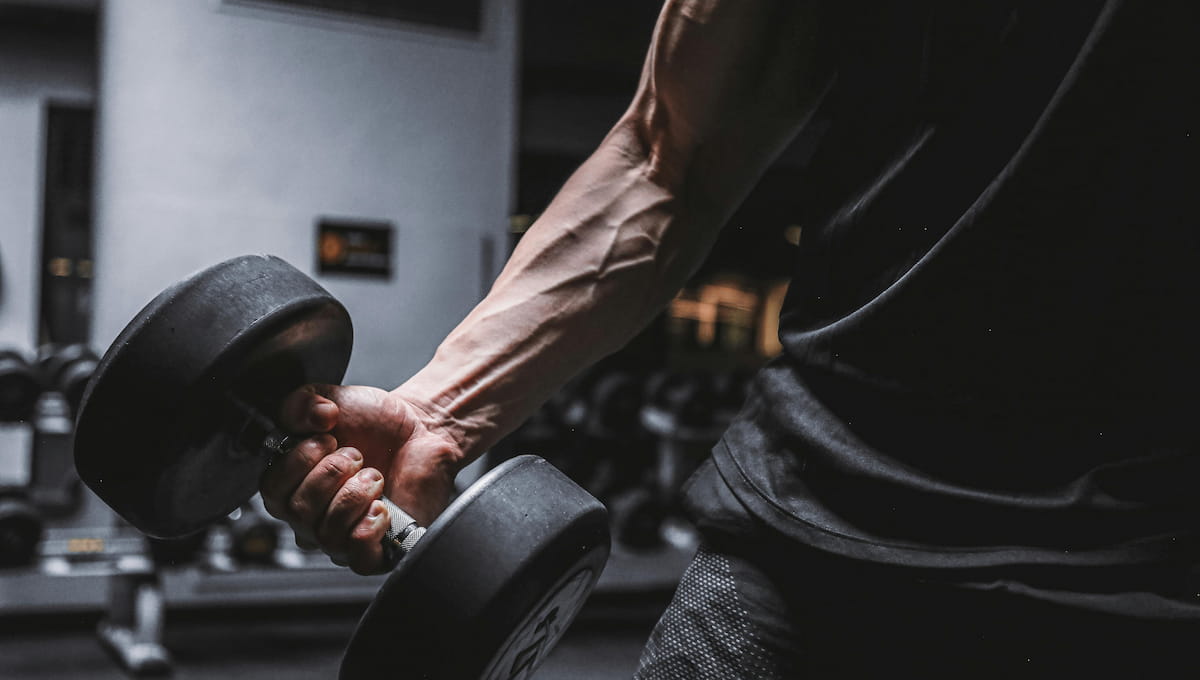


Strong, muscular forearms are one of the most noticeable signs of strength. Unlike the chest, shoulders, or legs, forearms are almost always visible. Whether you are gripping a barbell, carrying groceries, climbing a rope, or simply wearing a T shirt, well developed forearms stand out.
But forearm training is often neglected. Many people assume that deadlifts, rows, and pull ups provide enough stimulus. While compound exercises certainly contribute to forearm development, research suggests that targeted forearm training can significantly improve muscle growth, grip strength, and overall upper body performance.



The forearms contain more than 20 muscles responsible for wrist flexion, wrist extension, finger movement, and grip strength. Because these muscles are involved in almost every upper body movement, stronger forearms can improve performance across a wide range of exercises and sports. If your goal is to build bigger forearms fast, you need exercises that challenge these muscles through multiple functions, including crushing grip, support grip, wrist flexion, and wrist extension.
The following four exercises are among the most effective options for maximizing forearm hypertrophy and strength. They target different muscle groups within the forearm while providing a powerful stimulus for growth.
Why Forearm Training Matters
Before diving into the exercises, it is worth understanding why direct forearm training deserves attention.
If You Can’t Do These 3 Things, You’re Not Ready for a 100kg Bench Press
The forearm consists primarily of two major compartments:
The Flexor Compartment
Located on the palm side of the forearm, these muscles are responsible for:
• Wrist flexion
• Finger flexion
• Grip strength
• Forearm pronation
The flexor muscles contribute heavily to overall forearm size.
The Extensor Compartment
Located on the back side of the forearm, these muscles control:
• Wrist extension
• Finger extension
• Forearm supination
Many lifters neglect the extensors, which can create muscular imbalances and increase injury risk.
Grip Strength and Performance
Research consistently demonstrates a strong relationship between grip strength and overall strength capacity. Grip strength is associated with athletic performance, functional independence, and even long term health outcomes. A stronger grip can improve performance in:
• Deadlifts
• Pull ups
• Rows
• Carries
• Climbing
• Combat sports
• Gymnastics
From a hypertrophy perspective, stronger forearms often allow heavier loading during compound exercises, creating a positive cycle of increased strength and muscle growth throughout the body.
Exercise 1: Farmer’s Carry

The farmer’s carry may be the most underrated forearm exercise in existence. At first glance, it looks simple. Pick up heavy weights and walk. However, the forearm demands created by loaded carries are enormous.
Why Farmer’s Carries Work
The farmer’s carry trains what researchers call support grip strength. Unlike crushing grip, which involves squeezing an object as hard as possible, support grip requires maintaining force over an extended period.
During a heavy carry, the finger flexors, wrist stabilizers, brachioradialis, and numerous smaller forearm muscles must contract continuously to prevent the weight from slipping.
This prolonged time under tension creates an ideal environment for muscular adaptation. In addition to forearm growth, farmer’s carries improve:
• Grip endurance
• Core stability
• Shoulder health
• Postural strength
• Work capacity
How to Perform Farmer’s Carries
- Pick up a pair of heavy dumbbells, kettlebells, or farmer’s carry handles.
- Stand tall with shoulders back.
- Maintain a neutral wrist position.
- Walk under control for a set distance or time.
- Avoid leaning excessively or shrugging the shoulders.
Programming Recommendations
For forearm growth:
• 3 to 5 sets
• 20 to 60 seconds per set
• Heavy loads
• 60 to 120 seconds rest
Progressively increase weight or carrying duration over time.
Common Mistakes
Many lifters choose weights that are too light. The goal is not simply walking. The goal is challenging the grip to its limits while maintaining proper posture.
Exercise 2: Hammer Curls
Most people view hammer curls as a biceps exercise. In reality, they are also one of the best forearm builders available.

Why Hammer Curls Build Forearms
Hammer curls place substantial stress on the brachioradialis, one of the largest muscles of the forearm. The brachioradialis crosses both the elbow and forearm, playing an important role in elbow flexion and forearm positioning.
When developed, it creates visible thickness between the biceps and forearm, contributing significantly to arm size. Electromyography studies have shown that neutral grip curling variations produce high activation of the brachioradialis compared to traditional supinated curls.
How to Perform Hammer Curls
- Hold dumbbells at your sides with palms facing each other.
- Keep elbows close to the torso.
- Curl the weights upward while maintaining the neutral grip.
- Pause briefly at the top.
- Lower slowly under control.
Avoid swinging or using excessive body momentum.
Programming Recommendations
For hypertrophy:
• 3 to 4 sets
• 8 to 15 repetitions
• Controlled eccentric phase
• 60 to 90 seconds rest
Focus on achieving a strong muscular contraction rather than chasing heavier weight.
Variations
Several variations can further enhance forearm development:
• Cross body hammer curls
• Rope hammer curls
• Incline hammer curls
• Alternating hammer curls
Each variation slightly alters muscle recruitment while maintaining high brachioradialis involvement.
Exercise 3: Reverse Curls
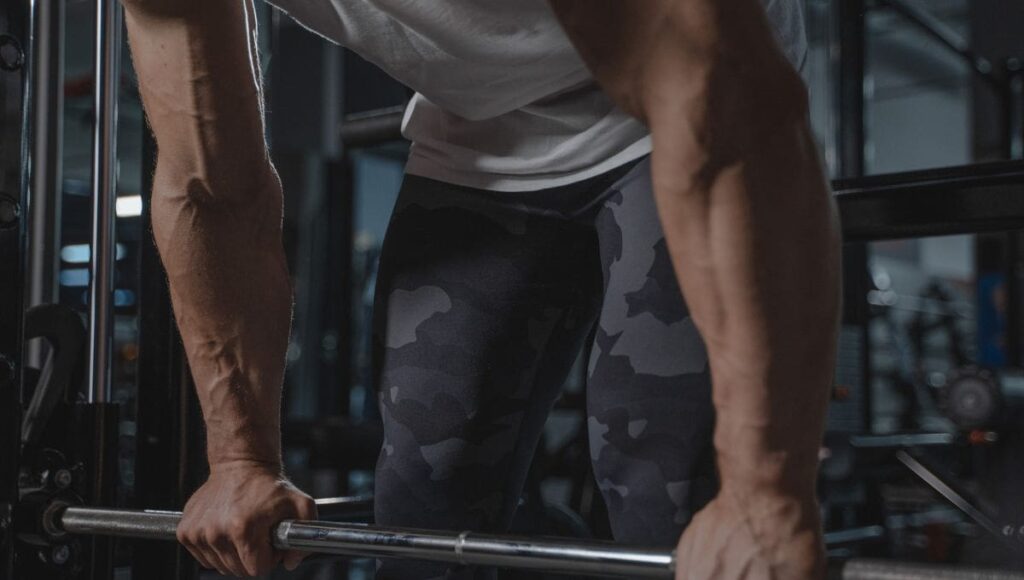
If you want complete forearm development, reverse curls should become a regular part of your training program.
Why Reverse Curls Are Effective
Reverse curls shift the grip into pronation, forcing the forearm extensors and brachioradialis to work harder. Many traditional pulling exercises emphasize the flexor muscles. Reverse curls help address this imbalance while building forearm thickness.

Research examining muscle activation patterns during different curl variations indicates that pronated grips increase recruitment of forearm musculature while reducing biceps dominance. This makes reverse curls particularly valuable for targeted forearm hypertrophy.
How to Perform Reverse Curls
- Hold a barbell or EZ curl bar with an overhand grip.
- Position hands approximately shoulder width apart.
- Keep elbows close to the body.
- Curl the weight upward.
- Lower under control.
The movement range may be shorter than standard curls due to mechanical limitations. This is normal.
Programming Recommendations
For muscle growth:
• 3 to 4 sets
• 10 to 15 repetitions
• Moderate loads
• Controlled tempo
Avoid using excessive weight. The goal is maximizing tension on the forearm muscles.
Benefits Beyond Size
Reverse curls can improve:
• Grip endurance
• Wrist stability
• Elbow health
• Balanced arm development
Athletes involved in racquet sports, climbing, and combat sports often benefit from stronger forearm extensors.
Exercise 4: Wrist Curls and Reverse Wrist Curls
No list of forearm exercises would be complete without direct wrist flexion and extension work. While these exercises may appear old fashioned, they remain among the most effective ways to isolate forearm musculature.
Why Direct Wrist Training Works
The forearm flexors and extensors respond well to high repetition training because of their fiber type composition and daily functional demands. Wrist curls primarily target:
• Flexor carpi radialis
• Flexor carpi ulnaris
• Palmaris longus
• Finger flexors
Reverse wrist curls emphasize:
• Extensor carpi radialis
• Extensor carpi ulnaris
• Extensor digitorum
Training both sides promotes balanced development.
How to Perform Wrist Curls
- Sit on a bench.
- Rest forearms on thighs or a bench.
- Hold a barbell with palms facing upward.
- Allow the wrists to extend fully.
- Curl the weight upward through wrist flexion.
Use a full range of motion.
How to Perform Reverse Wrist Curls
- Use the same setup.
- Hold the bar with palms facing downward.
- Extend the wrists upward.
- Lower slowly.
The weight used will be significantly lighter than wrist curls.
Programming Recommendations
For growth:
• 3 to 5 sets
• 15 to 25 repetitions
• Moderate tempo
• Short rest periods
The forearms often respond well to higher training volumes.
The Science of Forearm Hypertrophy
Understanding how muscles grow can help maximize training results. Research identifies several key drivers of hypertrophy:
Mechanical Tension
Mechanical tension remains the primary stimulus for muscle growth. Heavy carries, reverse curls, and hammer curls create substantial tension across the forearm musculature.
Metabolic Stress
Higher repetition work such as wrist curls generates metabolic stress, which may contribute to hypertrophic adaptations through cellular swelling and metabolite accumulation.
Progressive Overload
No exercise works forever without progression. You must gradually increase:
• Weight
• Repetitions
• Sets
• Time under tension
• Training frequency
Progressive overload remains essential for continued growth.
Training Volume
Current evidence suggests that muscle growth is strongly influenced by weekly training volume. For most individuals, approximately 10 to 20 hard sets per muscle group per week appears effective for maximizing hypertrophy. Because the forearms recover relatively quickly, they can often tolerate higher training frequencies than larger muscle groups.
Sample Forearm Workout
Here is a simple evidence based forearm workout that can be added to the end of an upper body session.
Forearm Growth Routine
Farmer’s Carry
• 4 sets
• 40 seconds
Hammer Curl
• 4 sets
• 10 to 12 reps
Reverse Curl
• 3 sets
• 12 to 15 reps
Wrist Curl
• 3 sets
• 20 reps
Reverse Wrist Curl
• 3 sets
• 20 reps
This routine targets virtually every major forearm muscle through multiple movement patterns.
Final Thoughts
Building bigger forearms fast is not complicated, but it does require targeted effort. While compound exercises provide a foundation, direct forearm work can dramatically accelerate growth and improve grip strength.
Farmer’s carries develop crushing support grip and total arm strength. Hammer curls build the brachioradialis and increase overall arm thickness. Reverse curls strengthen often neglected forearm muscles while improving balance and durability. Wrist curls and reverse wrist curls provide direct stimulation to the forearm flexors and extensors for complete development.
Combined with progressive overload, adequate protein intake, and consistent recovery, these four exercises can help transform underdeveloped forearms into one of your strongest and most impressive muscle groups.
References
• Aagaard, P., Simonsen, E.B., Andersen, J.L., Magnusson, P. and Dyhre Poulsen, P. (2002) ‘Increased rate of force development and neural drive of human skeletal muscle following resistance training’, Journal of Applied Physiology, 93(4), pp. 1318-1326.
• Andersen, L.L., Magnusson, S.P., Nielsen, M., Haleem, J., Poulsen, K. and Aagaard, P. (2010) ‘Neuromuscular activation in conventional therapeutic exercises and heavy resistance exercises’, Physical Therapy, 90(4), pp. 510-518.
• Crary, M.A., Carnaby Mann, G.D. and Groher, M.E. (2005) ‘Initial psychometric assessment of a functional oral intake scale for dysphagia in stroke patients’, Archives of Physical Medicine and Rehabilitation, 86(8), pp. 1516-1520.
• Dankel, S.J., Counts, B.R., Barnett, B.E., Buckner, S.L. and Loenneke, J.P. (2017) ‘Muscle adaptations following 21 consecutive days of strength test familiarization compared with traditional training’, Muscle and Nerve, 56(2), pp. 307-314.
• Fry, A.C. (2004) ‘The role of resistance exercise intensity on muscle fibre adaptations’, Sports Medicine, 34(10), pp. 663-679.
• Grgic, J., Schoenfeld, B.J., Orazem, J. and Sabol, F. (2022) ‘Effects of resistance training performed to repetition failure or non failure on muscular strength and hypertrophy’, Journal of Sport and Health Science, 11(2), pp. 202-211.
• Leong, D.P., Teo, K.K., Rangarajan, S., Lopez Jaramillo, P., Avezum, A. and colleagues (2015) ‘Prognostic value of grip strength: findings from the Prospective Urban Rural Epidemiology study’, The Lancet, 386(9990), pp. 266-273.
• Morton, R.W., Murphy, K.T., McKellar, S.R., Schoenfeld, B.J., Henselmans, M. and colleagues (2018) ‘A systematic review, meta analysis and meta regression of the effect of protein supplementation on resistance training induced gains in muscle mass and strength in healthy adults’, British Journal of Sports Medicine, 52(6), pp. 376-384.