The deadlift has earned its reputation as one of the most effective strength exercises ever created. It builds muscle across nearly the entire body, develops explosive power, improves grip strength, and teaches people how to lift heavy objects safely. A bigger deadlift also carries over into athletic performance, daily function, and long term health.
Yet despite its popularity, most men never build an impressive deadlift. Many spend years training without reaching the strength levels they expect. Some blame genetics. Others assume they simply are not built for pulling heavy weight from the floor. The reality is more encouraging.



Scientific research shows that most lifters fail to maximize their deadlift because of avoidable training mistakes rather than fixed biological limitations. Poor programming, weak supporting muscles, and technical errors often prevent steady progress. Addressing these factors can dramatically increase strength, regardless of whether your goal is lifting twice your body weight or competing in powerlifting. If your deadlift has stalled, one of these three reasons is probably holding you back.
Reason 1: You Are Training Hard Instead of Training Smart
Many lifters believe the path to a stronger deadlift is simply pulling heavy every week. While heavy lifting is necessary for developing maximal strength, research consistently shows that strength improves most effectively through structured progression rather than repeated maximal effort.
The deadlift places enormous demands on the nervous system and muscles. Compared with exercises like the squat or bench press, heavy deadlifts create greater fatigue because they involve large amounts of muscle mass and high mechanical loading. Constantly attempting one repetition maximum lifts often leads to accumulated fatigue that exceeds the body’s ability to recover. Instead of becoming stronger, performance stagnates or even declines.
Strength researchers have repeatedly found that progressive overload combined with appropriate recovery produces superior long term gains. Increasing volume, intensity, or frequency gradually allows the nervous system and muscles to adapt without overwhelming recovery capacity. Periodized training appears especially effective. Rather than using the same loading every session, successful programs vary intensity across weeks while maintaining consistent exposure to the movement pattern.
Research comparing different strength training strategies has shown that periodized resistance training generally leads to greater strength improvements than non periodized approaches, particularly in experienced lifters. Another common mistake involves training the deadlift too infrequently. Because the movement is demanding, some people avoid it for weeks at a time. Others train it only once every two weeks.
Motor learning research demonstrates that repeated practice improves movement efficiency. Performing variations such as Romanian deadlifts, paused deadlifts, block pulls, and lighter technique sessions reinforces movement quality while managing fatigue.
Elite powerlifters rarely spend every session pulling maximal weights from the floor. Instead, they rotate intensities, volumes, and exercise variations to continue improving while minimizing excessive fatigue.
Recovery deserves equal attention. Muscle protein synthesis increases after resistance exercise, but insufficient sleep, inadequate nutrition, and chronic stress reduce the body’s ability to adapt. Studies consistently show that sleep restriction negatively affects strength performance, recovery, and training quality.
Training hard matters, but intelligent programming ultimately determines whether hard work produces measurable strength gains.
Recovery Is Part of Training
Many lifters think recovery begins only after a difficult workout. In reality, recovery determines whether the next workout leads to improvement. Consuming adequate daily protein supports muscle repair and growth. Current evidence suggests that active individuals benefit from protein intakes considerably above the recommended dietary allowance for sedentary adults.
Carbohydrate intake also matters because heavy strength training relies heavily on muscle glycogen. Athletes consuming insufficient carbohydrates often experience reduced training quality across repeated sessions.
Sleep may be the most overlooked recovery tool. Research consistently associates sleeping less than seven hours per night with reduced physical performance, impaired recovery, and lower training readiness.
Reason 2: Your Weakest Muscles Are Limiting the Lift
The deadlift is often described as a full body exercise because nearly every major muscle contributes to moving the barbell. Many people assume that simply deadlifting more will strengthen every weak link. Sometimes it does. Often it does not. Every successful deadlift depends on coordinated force production from the glutes, hamstrings, spinal erectors, quadriceps, lats, abdominal muscles, forearms, and upper back.
If one muscle group cannot generate sufficient force, the entire lift suffers. The gluteus maximus deserves particular attention because it is one of the largest contributors during hip extension. Electromyography studies consistently demonstrate very high glute activation during heavy deadlifts.

Weak glutes frequently lead to slow lockouts or missed lifts above knee level.
The hamstrings also play an essential role by assisting hip extension while stabilizing the knee. Exercises such as Romanian deadlifts and Nordic hamstring curls strengthen these muscles through long ranges of motion that transfer well to pulling strength.
Grip strength represents another overlooked limitation. Many lifters fail before their posterior chain reaches its true limit simply because they cannot hold onto the bar. Research has shown that grip strength correlates with overall muscular strength and functional performance across multiple populations. Building stronger forearms through heavy carries, static holds, and direct grip training can remove this bottleneck. The upper back contributes more than most people realize.
The lats help keep the bar close to the body, minimizing unnecessary forward movement that increases spinal loading. The traps, rhomboids, and rear deltoids stabilize the shoulders while maintaining posture throughout the lift. Weak upper back muscles often allow the shoulders to drift forward, increasing mechanical disadvantage.
Core strength is equally important. Contrary to popular belief, the abdominal muscles do not simply stabilize the torso. They actively increase trunk stiffness, allowing force generated by the hips and legs to transfer efficiently into the barbell.
Studies examining spinal biomechanics have shown that increased trunk stiffness reduces unnecessary movement while improving force transmission during heavy lifting.
Accessory Work Is Not Optional
Many recreational lifters skip accessory exercises because they believe only the competition lift matters.
- This approach usually slows progress.
- Targeted accessory exercises strengthen muscles that may not receive enough stimulus during conventional deadlifts alone.
- Romanian deadlifts improve posterior chain strength while increasing time under tension.
- Hip thrusts develop powerful hip extension.
- Bent over rows strengthen the upper back and lats.
- Weighted back extensions improve spinal erector endurance.
- Farmer carries challenge grip, posture, and trunk stability simultaneously.
None of these movements replace conventional deadlifts, but together they create a stronger and more resilient athlete.
Reason 3: Your Technique Is Wasting Strength
Strength is not simply about muscle size. Technique determines how effectively existing strength transfers into the barbell. Small technical improvements often produce immediate increases in lifting performance without any additional muscle growth.
3 Best Dumbbell Exercises for Beginners to Build a Jacked and Muscular Torso
One of the most common mistakes occurs before the bar even leaves the floor. Many lifters begin pulling with relaxed arms and loose body tension. This creates slack throughout the system before force reaches the bar. Experienced lifters instead create full body tension before initiating the lift. They brace the trunk, engage the lats, pull tension into the bar, and then drive through the floor.
Biomechanical analysis has demonstrated that maintaining spinal stability while producing force through the hips allows more efficient load transfer throughout the movement.
Another frequent problem involves allowing the barbell to drift away from the body. Every extra inch increases the moment arm acting on the lower back, making the lift substantially harder. Keeping the bar close reduces unnecessary torque and improves lifting efficiency.
Hip position also matters. Starting with hips too low often turns the deadlift into an awkward squat that forces the hips upward before the bar moves. Starting with hips too high shifts excessive loading onto the lower back while limiting leg contribution.
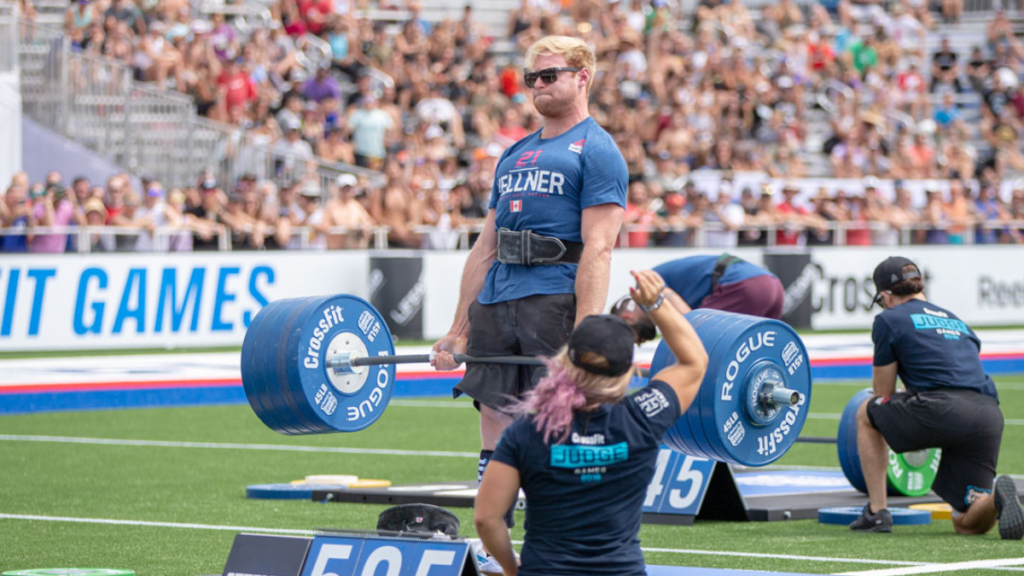
Optimal hip position depends on limb lengths, torso proportions, and mobility, which explains why different lifters display slightly different starting positions despite following the same fundamental principles.
Foot pressure provides another important technical cue. Strong deadlifters generally maintain balanced pressure across the entire foot rather than shifting excessively toward the toes or heels. This stable base improves force production while maintaining balance.
Breathing deserves attention as well. Proper diaphragmatic bracing increases intra abdominal pressure, creating additional spinal stability during heavy lifting. Research on spinal biomechanics has consistently demonstrated that increased intra abdominal pressure contributes to trunk stiffness and safer force transfer during heavy resistance exercise.
Filming Your Lifts Accelerates Progress
Most lifters rely solely on how a lift feels. Unfortunately, perception often differs from reality. Video analysis provides objective feedback on bar path, hip movement, spinal position, and timing. Many technical errors become immediately obvious when viewed from the side or at a slight angle.
Coaches have long used video because motor learning improves when athletes receive immediate visual feedback alongside verbal instruction. Even experienced lifters regularly review training footage to identify subtle changes before they become major problems.
Can Genetics Limit Your Deadlift?
Genetics certainly influence strength potential. Factors such as muscle fiber composition, tendon insertions, limb lengths, and hormone levels all contribute to individual differences in maximal strength.
However, genetics explain far less of the average person’s deadlift plateau than many people believe. Research involving twins has shown that genetic factors influence muscular strength, but environmental factors including training quality, nutrition, sleep, and consistency remain major determinants of actual performance.
A person with average genetics who follows evidence based training for several years will almost always outperform someone with exceptional genetics but inconsistent habits. Rather than comparing yourself with elite powerlifters, compare today’s performance with last month’s. Consistent progress over months and years matters far more than chasing unrealistic expectations.
Building a Bigger Deadlift Requires Patience
One reason many men abandon their deadlift goals is that progress naturally slows as training age increases. Beginners often add weight every week because their nervous system rapidly improves coordination and motor learning.
Intermediate and advanced lifters experience smaller improvements that accumulate gradually. This slower pace should not be mistaken for failure. Longitudinal strength research consistently shows that meaningful improvements continue for years when training remains progressive and recovery is managed appropriately.
Patience becomes a competitive advantage because many lifters quit just before long term adaptation begins to pay off. Building a strong deadlift is rarely about discovering secret exercises or magical programs. Instead, it comes from repeatedly practicing quality technique, strengthening weak links, recovering properly, and applying progressive overload over months and years.
Most men fail not because they lack potential, but because they overlook one or more of these fundamentals. The good news is that fundamentals can always be improved. If you train intelligently, strengthen the muscles that matter, and refine your technique with consistency, your deadlift can continue growing long after many people assume they have reached their limit.
Key Takeaways
| Factor | Why It Matters | Practical Solution |
|---|---|---|
| Training structure | Random heavy lifting increases fatigue without maximizing adaptation | Follow a progressive, periodized program with planned recovery |
| Weak supporting muscles | The weakest link limits the entire lift | Include accessory work for glutes, hamstrings, grip, upper back, and core |
| Technique | Efficient movement allows existing strength to reach the bar | Practice bracing, maintain a close bar path, and review lifting videos |
| Recovery | Adaptation occurs outside the gym | Prioritize adequate sleep, protein intake, carbohydrates, and stress management |
| Consistency | Long term progress outweighs short term intensity | Focus on gradual improvements over months and years |
References
- Aagaard, P., Simonsen, E.B., Andersen, J.L., Magnusson, P. and Dyhre Poulsen, P. (2002) ‘Increased rate of force development and neural drive of human skeletal muscle following resistance training’, Journal of Applied Physiology, 93(4), pp. 1318 to 1326.
- Grgic, J., Lazinica, B., Schoenfeld, B.J. and Pedisic, Z. (2018) ‘Testosterone responses to resistance exercise and changes in muscular strength and hypertrophy in trained individuals’, Sports Medicine, 48(10), pp. 2337 to 2350.
- Grgic, J., Mikulic, P., Schoenfeld, B.J., Bishop, D.J. and Pedisic, Z. (2018) ‘Effects of resistance training performed to repetition failure or non failure on muscular strength and hypertrophy’, Journal of Sport and Health Science, 10(3), pp. 275 to 291.
- Helms, E.R., Aragon, A.A. and Fitschen, P.J. (2014) ‘Evidence based recommendations for natural bodybuilding contest preparation: Nutrition and supplementation’, Journal of the International Society of Sports Nutrition, 11(20).
- Kraemer, W.J. and Ratamess, N.A. (2004) ‘Fundamentals of resistance training: Progression and exercise prescription’, Medicine & Science in Sports & Exercise, 36(4), pp. 674 to 688.
- McGill, S.M. (2007) ‘Low back disorders: Evidence based prevention and rehabilitation’, Human Kinetics.
- Peterson, M.D., Rhea, M.R. and Alvar, B.A. (2004) ‘Maximizing strength development in athletes: A meta analysis to determine the dose response relationship’, Journal of Strength and Conditioning Research, 18(2), pp. 377 to 382.
- Rhea, M.R. and Alderman, B.L. (2004) ‘A meta analysis of periodized versus nonperiodized strength and power training programs’, Research Quarterly for Exercise and Sport, 75(4), pp. 413 to 422.