

Fitness is easy to talk about but surprisingly difficult to measure. Many athletes spend years training hard without a clear understanding of where they stand physically. They track workouts, compare leaderboard scores, and chase personal records, yet often overlook the most important question: how fit are they, really?

Fitness is multi dimensional. Strength matters, but so does endurance. Power is important, but so is mobility. Cardiovascular fitness, body composition, work capacity, and recovery all contribute to athletic performance and long term health.


This is why benchmarks matter. They provide objective standards that allow athletes to assess strengths and weaknesses, monitor progress, and make informed training decisions. The best benchmarks are supported by scientific research and correlate strongly with health outcomes, athletic performance, or both.
The following ten fitness benchmarks represent some of the most useful measurements every serious athlete should know. They are not arbitrary challenges or social media trends. They are evidence based indicators that provide meaningful insight into physical capacity.
Why Fitness Benchmarks Matter
A benchmark is a measurable test that reflects a specific aspect of physical fitness. Good benchmarks have three important qualities. They are reliable, valid, and repeatable.
Reliable tests produce similar results when repeated under similar conditions. Valid tests accurately measure what they are intended to measure. Repeatable tests can be performed regularly to track improvement over time.
Research consistently shows that objective fitness measurements are among the strongest predictors of health, athletic performance, injury risk, and longevity. Athletes who regularly assess key physical capacities are better positioned to identify weaknesses and adjust training programs accordingly.
No single benchmark can define overall fitness. However, taken together, the following ten measurements provide a comprehensive snapshot of athletic ability.
Benchmark 1: VO2 Max
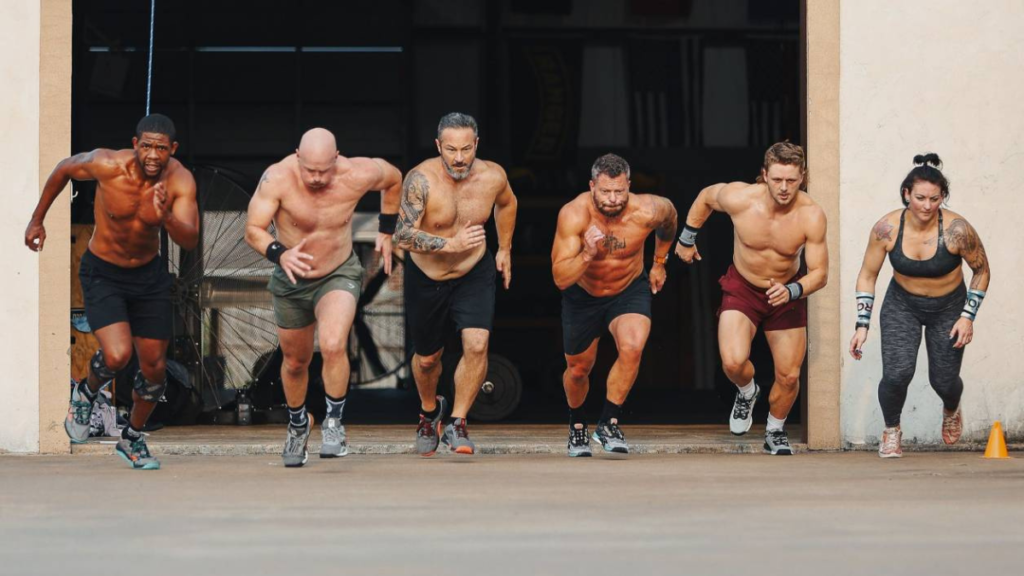
VO2 max measures the maximum amount of oxygen the body can utilize during intense exercise. It is widely regarded as the gold standard measure of aerobic fitness.
Why It Matters
During exercise, muscles require oxygen to produce energy. The more oxygen the body can transport and utilize, the greater the capacity for sustained performance.
Research consistently demonstrates that VO2 max is one of the strongest predictors of endurance performance and long term health. Higher VO2 max values are associated with lower risks of cardiovascular disease, metabolic disorders, and all cause mortality.
Elite endurance athletes often possess exceptionally high VO2 max values, but improving aerobic capacity benefits athletes across every sport.
What Is Considered Good?
For men, a VO2 max above 50 ml/kg/min is generally considered excellent. For women, values above 45 ml/kg/min are typically regarded as excellent. Elite endurance athletes often exceed 70 ml/kg/min, while world class performers may surpass 80 ml/kg/min.
How to Measure It
Laboratory testing remains the most accurate method. However, field tests such as the Cooper 12 minute run or modern wearable technology can provide useful estimates.
Benchmark 2: Relative Strength
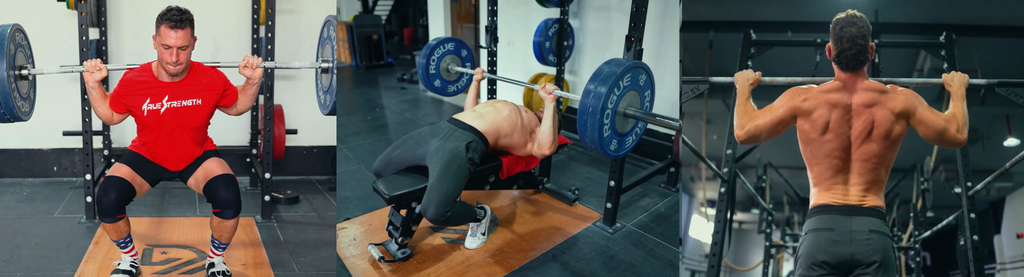
Absolute strength matters, but relative strength is often more important for athletic performance. Relative strength refers to the amount of force an athlete can produce relative to body weight.

Why It Matters
Athletes rarely compete in situations where body weight is irrelevant. Sprinting, jumping, climbing, gymnastics, combat sports, and CrossFit all reward high levels of strength relative to mass. Research shows that relative strength strongly influences movement efficiency, athletic performance, and injury resilience.
Key Standards
A commonly accepted benchmark for serious male athletes is a back squat equal to at least twice body weight. For women, a squat of 1.5 times body weight is often considered advanced.
Deadlifts exceeding 2.5 times body weight for men and twice body weight for women are also strong indicators of exceptional relative strength.
How to Measure It
Divide your one repetition maximum by body weight. For example, an athlete weighing 80 kilograms who squats 160 kilograms has a relative squat strength score of 2.0.
Benchmark 3: Grip Strength

Grip strength may seem simplistic, but it is one of the most researched and predictive measurements in sports science and health.
Why It Matters
Grip strength reflects overall muscular strength and neuromuscular function. Numerous studies have found strong associations between grip strength and mortality risk, cardiovascular health, physical function, and athletic performance. In athletes, strong grip strength supports lifting performance, climbing ability, grappling success, and throwing power.
What Is Considered Good?
For adult men, grip strength above 50 kilograms is generally considered excellent. For adult women, values above 30 kilograms are often categorized as excellent.
How to Measure It
A hand dynamometer provides the most accurate assessment. Many sports performance facilities include grip testing as part of routine athlete evaluations.
Benchmark 4: Resting Heart Rate
Resting heart rate is one of the simplest yet most informative indicators of cardiovascular fitness and recovery status.

Why It Matters
A lower resting heart rate often reflects improved cardiac efficiency. As the heart becomes stronger, it pumps more blood with each beat and requires fewer contractions to meet the body’s needs. Research shows that lower resting heart rates are associated with improved cardiovascular health and reduced mortality risk.
Athletes also use resting heart rate as a recovery marker. Sudden increases can indicate fatigue, illness, or excessive training stress.
What Is Considered Good?
The average adult resting heart rate ranges from 60 to 100 beats per minute. Well trained athletes frequently record resting heart rates between 40 and 60 beats per minute. Elite endurance athletes may fall below 40.
How to Measure It
Measure your pulse immediately after waking while still lying down. Consistency is critical for meaningful comparisons over time.
Benchmark 5: Body Fat Percentage
Body composition provides far more useful information than body weight alone.
Why It Matters
Excess body fat can impair performance by increasing energy demands during movement. Extremely low body fat levels can also negatively affect health, recovery, and hormonal function.
Research demonstrates that optimal body composition varies according to sport demands, but maintaining a healthy body fat range supports performance and long term health.
What Is Considered Good?
- For men, athletic body fat levels generally range from 6 to 13 percent.
- For women, athletic ranges typically fall between 14 and 20 percent.
- These values vary according to sport specific requirements.
How to Measure It
DEXA scanning is widely considered one of the most accurate methods. Skinfold testing and bioelectrical impedance can provide useful estimates when performed consistently.
Benchmark 6: Vertical Jump Height
Vertical jump performance is a widely used measure of lower body power.
Why It Matters
Power is the ability to generate force rapidly. Athletic success in many sports depends heavily on explosive power rather than strength alone.
Research consistently shows strong relationships between vertical jump performance and sprint speed, change of direction ability, and overall athleticism.
What Is Considered Good?
- Male athletes typically demonstrate strong performance with vertical jumps above 24 inches.
- Elite performers often exceed 30 inches.
- Female athletes generally achieve excellent scores above 20 inches.
How to Measure It
Force plates provide the most accurate assessments, but jump mats and smartphone applications can also produce reliable estimates.
Benchmark 7: Pull Up Capacity
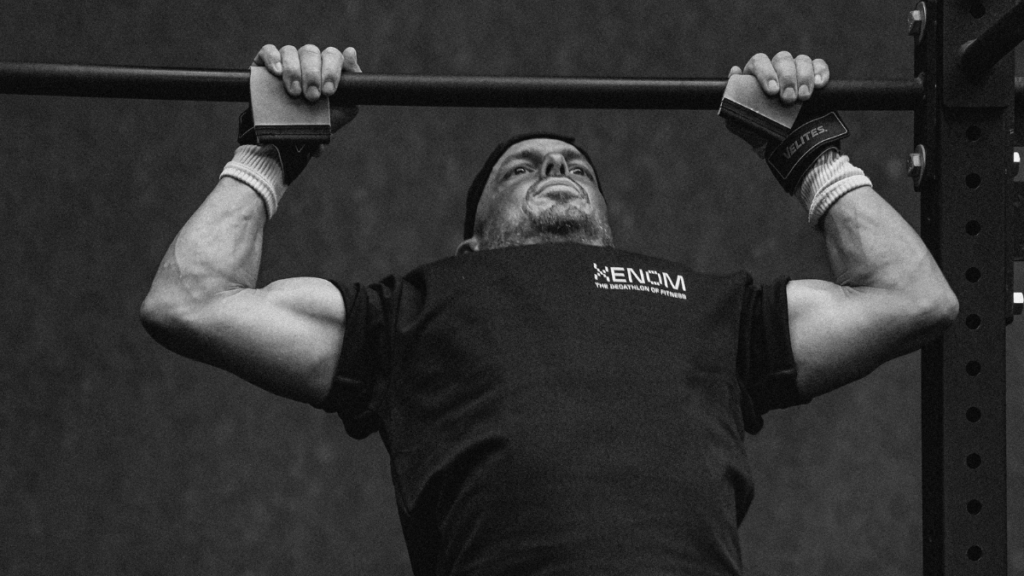
Pull ups remain one of the most valuable tests of upper body relative strength.
Why It Matters
Unlike many gym exercises, pull ups require athletes to move their own body mass through space. This makes them an excellent measure of functional strength.
Research shows that relative upper body strength contributes significantly to performance in many athletic activities.
What Is Considered Good?
- For men, 15 strict pull ups is a strong benchmark.
- Twenty or more indicates excellent upper body strength.
- For women, 8 to 12 strict pull ups represents a high level of performance.
How to Measure It
Use strict form. Begin from a dead hang and raise the chin clearly above the bar without excessive swinging or kipping.
Benchmark 8: Sprint Speed
Speed remains one of the most valuable athletic qualities across numerous sports.
Why It Matters
Sprint performance reflects a combination of strength, power, coordination, technique, and neuromuscular efficiency.
Research consistently identifies sprint speed as a major determinant of success in field sports, court sports, and many individual athletic events.
Key Standard
- The 40 yard sprint is one of the most widely recognized tests.
- Times below 5 seconds indicate strong athleticism.
- Times below 4.5 seconds are generally considered elite.
How to Measure It
Electronic timing systems provide the highest accuracy. Consistent testing conditions improve reliability.
Benchmark 9: Movement Quality and Mobility
Athletes often focus on strength and conditioning while neglecting movement quality.
Why It Matters
Mobility influences movement efficiency, force production, and injury risk.
Research suggests that poor movement patterns and mobility restrictions can contribute to compensations that increase injury likelihood.
One commonly used assessment is the Functional Movement Screen, which evaluates movement competency across several fundamental patterns.
What Is Considered Good?
A Functional Movement Screen score above 14 is generally associated with lower injury risk compared to lower scores.
However, movement quality should always be interpreted within the context of individual sport demands.
How to Measure It
Qualified coaches, physiotherapists, or sports scientists can conduct movement assessments using established screening protocols.
Benchmark 10: Work Capacity
Work capacity reflects an athlete’s ability to sustain high output over time.
Why It Matters
In many sports, athletes must repeatedly perform high intensity efforts while recovering quickly between bouts.
Work capacity combines aerobic fitness, anaerobic fitness, muscular endurance, and recovery efficiency.

Research demonstrates that athletes with greater work capacity often perform more training volume, recover faster between efforts, and maintain higher performance levels during competition.
A Practical Test
One useful benchmark is the 2,000 meter rowing test. This test strongly correlates with aerobic fitness and overall conditioning.
What Is Considered Good?
For men, completing 2,000 meters in under 7 minutes represents excellent conditioning. For women, times under 8 minutes are generally considered excellent.
How to Measure It
Use a Concept2 rowing machine under standardized conditions. Repeat periodically to track progress.
How Often Should You Test Fitness Benchmarks?
Testing too frequently can be counterproductive. Most benchmarks change gradually and require meaningful training adaptations before improvements become apparent.
For strength measurements, testing every 8 to 12 weeks is usually sufficient.
- Aerobic capacity assessments can be performed every 8 to 16 weeks.
- Body composition evaluations are often most useful every 2 to 3 months.
- Daily monitoring is appropriate for resting heart rate because it reflects short term recovery and health status.
The goal is not constant testing. The goal is gathering useful information that guides better training decisions.
Putting the Benchmarks Together
No athlete will dominate all ten categories simultaneously. Human physiology involves tradeoffs. Endurance athletes often prioritize aerobic development. Strength athletes prioritize force production. Team sport athletes require a blend of speed, power, endurance, and movement quality.
Taken together, these benchmarks create a balanced framework for assessing overall fitness. An athlete who demonstrates strong aerobic fitness, excellent relative strength, healthy body composition, good mobility, impressive power output, and solid work capacity possesses a foundation that supports both performance and long term health.
Rather than chasing random fitness challenges, serious athletes should focus on objective measurements that have proven scientific value. These ten benchmarks provide exactly that.
Key Takeaways
| Benchmark | What It Measures | Strong Performance Standard |
|---|---|---|
| VO2 Max | Aerobic fitness | Men above 50 ml/kg/min, women above 45 ml/kg/min |
| Relative Strength | Strength relative to body weight | Squat 2x body weight for men, 1.5x for women |
| Grip Strength | Overall muscular strength and health | Men above 50 kg, women above 30 kg |
| Resting Heart Rate | Cardiovascular efficiency | 40 to 60 bpm in trained athletes |
| Body Fat Percentage | Body composition | Men 6 to 13%, women 14 to 20% |
| Vertical Jump | Lower body power | Men above 24 inches, women above 20 inches |
| Pull Ups | Upper body relative strength | Men 15+, women 8 to 12+ |
| Sprint Speed | Athletic speed and explosiveness | 40 yard sprint under 5 seconds |
| Movement Quality | Mobility and movement competency | Functional Movement Screen above 14 |
| Work Capacity | Sustained athletic output | 2,000 m row under 7 min men, under 8 min women |
References
- American College of Sports Medicine (2021) ACSM’s Guidelines for Exercise Testing and Prescription. 11th edn. Philadelphia: Wolters Kluwer.
- Bohannon, R.W. (2019) ‘Grip strength: An indispensable biomarker for older adults’, Clinical Interventions in Aging, 14, pp. 1681 to 1691.
- Caspersen, C.J., Powell, K.E. and Christenson, G.M. (1985) ‘Physical activity, exercise, and physical fitness: Definitions and distinctions for health related research’, Public Health Reports, 100(2), pp. 126 to 131.
- Churchward Venne, T.A., Tieland, M. and Verdijk, L.B. (2017) ‘There are no non responders to resistance type exercise training in older men and women’, Journal of the American Medical Directors Association, 18(5), pp. 400 to 411.
- Claudino, J.G., Cronin, J., Mezencio, B., McMaster, D.T., McGuigan, M., Tricoli, V., Amadio, A.C. and Serrao, J.C. (2017) ‘The countermovement jump to monitor neuromuscular status: A meta analysis’, Journal of Science and Medicine in Sport, 20(4), pp. 397 to 402.
- Lee, D.C., Artero, E.G., Sui, X. and Blair, S.N. (2010) ‘Mortality trends in the general population: The importance of cardiorespiratory fitness’, Journal of Psychopharmacology, 24(4 Suppl), pp. 27 to 35.
- Myers, J., Prakash, M., Froelicher, V., Do, D., Partington, S. and Atwood, J.E. (2002) ‘Exercise capacity and mortality among men referred for exercise testing’, New England Journal of Medicine, 346(11), pp. 793 to 801.
- Ortega, F.B., Silventoinen, K., Tynelius, P. and Rasmussen, F. (2012) ‘Muscular strength in male adolescents and premature death: Cohort study of one million participants’, BMJ, 345, e7279.
- Plowman, S.A. and Smith, D.L. (2014) Exercise Physiology for Health, Fitness, and Performance. 4th edn. Philadelphia: Lippincott Williams & Wilkins.
- Ruiz, J.R., Sui, X., Lobelo, F., Morrow, J.R., Jackson, A.W., Sjostrom, M. and Blair, S.N. (2008) ‘Association between muscular strength and mortality in men: Prospective cohort study’, BMJ, 337, a439.
- Seiler, S. (2010) ‘What is best practice for training intensity and duration distribution in endurance athletes?’, International Journal of Sports Physiology and Performance, 5(3), pp. 276 to 291.
- Smith, J.F., Mason, B.R. and Watsford, M.L. (2014) ‘Relationships between measures of strength, power, speed and change of direction in athletes’, Journal of Strength and Conditioning Research, 28(1), pp. 1 to 8.
- Smith, M.M., Sommer, A.J., Starkoff, B.E. and Devor, S.T. (2013) ‘CrossFit based high intensity power training improves maximal aerobic fitness and body composition’, Journal of Strength and Conditioning Research, 27(11), pp. 3159 to 3172.
- Tomkinson, G.R., Carver, K.D., Atkinson, F., Daniell, N.D., Lewis, L.K., Fitzgerald, J.S., Lang, J.J. and Ortega, F.B. (2018) ‘European normative values for physical fitness in children and adolescents’, British Journal of Sports Medicine, 52(22), pp. 1445 to 1456.
- Vancini, R.L., de Lira, C.A.B., Andrade, M.S., Arida, R.M. and Vancini Campanharo, C.R. (2019) ‘Heart rate and heart rate variability in athletes’, Journal of Exercise Rehabilitation, 15(4), pp. 481 to 490.
- World Health Organization (2022) WHO Guidelines on Physical Activity and Sedentary Behaviour. Geneva: World Health Organization.