

Muscle loss is often viewed as an unavoidable part of aging. Many people assume that weakness, slower metabolism, and declining physical performance simply arrive with advancing years. However, modern research paints a much more nuanced picture. While age related muscle loss is a real biological process, its timing, severity, and impact vary enormously between individuals.
The good news is that losing muscle is not something that suddenly happens overnight. It develops gradually over decades, which means there is significant opportunity to slow, prevent, or even reverse much of the decline through targeted lifestyle interventions.


Understanding when muscle loss begins, why it happens, and what science says about preventing it can help people maintain strength, mobility, metabolic health, and quality of life for decades longer than previous generations.
Understanding Age Related Muscle Loss
The progressive loss of skeletal muscle mass, strength, and function associated with aging is known as sarcopenia. The term was first introduced in the late twentieth century and has become one of the most studied aspects of healthy aging.
Skeletal muscle is much more than tissue that allows movement. It serves as a major metabolic organ, helps regulate blood sugar, supports bone health, protects against injury, and contributes significantly to longevity and independence.

Muscle mass naturally increases throughout childhood and adolescence, reaches its peak during early adulthood, and eventually begins a gradual decline. However, the exact age at which this process starts is often misunderstood.
When Does Muscle Loss Actually Begin?
Research suggests that most adults reach their peak muscle mass somewhere between their late twenties and late thirties. After this period, muscle mass generally stabilizes for a time before beginning a gradual decline.
Several large population studies indicate that measurable muscle loss often starts around age 30 to 40, although the decline is relatively slow during middle age. The average adult may lose approximately 3 to 8 percent of muscle mass per decade after age 30. The process accelerates significantly after age 60 and becomes even more pronounced after age 70.
Importantly, muscle strength tends to decline faster than muscle mass. Many adults maintain a reasonable amount of muscle tissue while experiencing substantial reductions in force production, power output, and physical function.
This distinction matters because strength is often a stronger predictor of mortality, disability, and overall health than muscle size alone.
Why There Is No Single Age
Although age 30 is often cited as the beginning of muscle decline, there is no universal age at which everyone starts losing muscle. Genetics, physical activity levels, nutrition, hormone status, sleep quality, chronic disease, and body composition all influence the rate of muscle loss.
An inactive individual may begin experiencing meaningful muscle decline in their thirties, while a physically active person who consistently strength trains may preserve much of their muscle mass and function well into their seventies. This variation explains why some older adults remain remarkably strong and capable while others struggle with basic physical tasks.
Why Muscle Loss Happens
Muscle loss results from a combination of biological and lifestyle factors.
Reduced Muscle Protein Synthesis
Muscle tissue is constantly being broken down and rebuilt. This process is known as protein turnover. As people age, muscles become less responsive to the anabolic signals that stimulate growth and repair. Researchers refer to this phenomenon as anabolic resistance.
In practical terms, older adults often need more dietary protein and stronger training stimuli to achieve the same muscle building response seen in younger individuals.
Hormonal Changes
Several hormones that support muscle growth decline with age. Testosterone levels gradually decrease in men. Growth hormone production falls. Insulin like growth factor 1 decreases. Estrogen levels decline sharply in women during menopause. These hormonal changes contribute to reduced muscle protein synthesis and slower recovery from exercise.
Physical Inactivity
One of the strongest drivers of muscle loss is simply not using the muscles. Modern lifestyles involve prolonged sitting, reduced physical labor, and less overall movement than previous generations experienced.
Periods of inactivity can cause rapid muscle loss. Research shows that even short durations of bed rest can significantly reduce muscle mass and strength, especially in older adults.
Neurological Changes
Aging affects not only muscles but also the nervous system. Motor neurons, which control muscle fibers, gradually decline with age. When motor neurons are lost, some muscle fibers become inactive and eventually disappear. This contributes to reductions in strength, power, coordination, and balance.
Chronic Inflammation
Low grade chronic inflammation becomes more common with aging. Elevated inflammatory markers can interfere with muscle protein synthesis while increasing protein breakdown. This inflammatory environment accelerates sarcopenia and contributes to declining physical function.
Can Muscle Loss Be Prevented?
The evidence suggests that much of age related muscle loss is not inevitable. While aging cannot be stopped, the decline in muscle mass and strength can be dramatically slowed through targeted interventions.
Many adults are capable of gaining significant muscle and strength well into older age. Research involving participants in their seventies, eighties, and even nineties consistently demonstrates meaningful improvements from resistance training programs.
The Most Effective Strategy: Resistance Training
Resistance training remains the most powerful tool for preserving and building muscle throughout life. When muscles are challenged with progressively increasing loads, they adapt by becoming stronger and larger.
Why Resistance Training Works
Strength training stimulates muscle protein synthesis, improves neuromuscular function, increases bone density, and enhances insulin sensitivity. It directly targets nearly every mechanism involved in age related muscle decline. Research repeatedly shows that resistance training can increase muscle mass and strength even in very elderly populations.
How Much Training Is Needed?
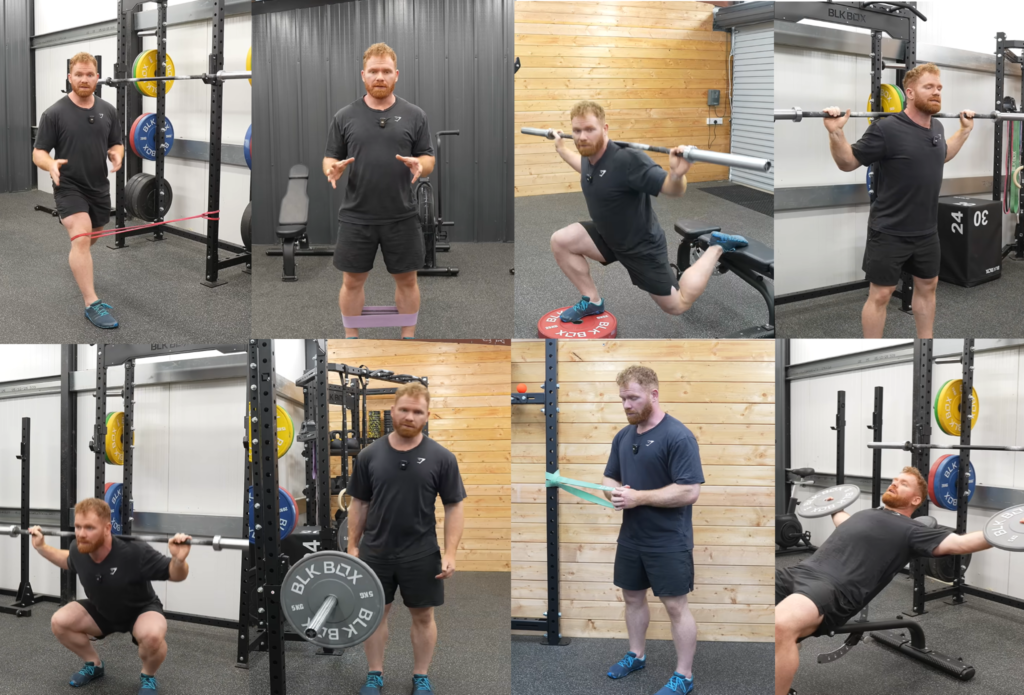
Most major health organizations recommend resistance training at least two times per week. For optimal results, training should involve all major muscle groups and incorporate progressive overload over time. This does not necessarily require complicated programs or expensive equipment. Free weights, resistance bands, machines, and bodyweight exercises can all be effective when applied consistently.
Focus on Compound Movements
Exercises that involve multiple muscle groups tend to provide the greatest return on investment. Squats, deadlifts, lunges, rows, presses, pull ups, and carries challenge large amounts of muscle tissue simultaneously and help maintain functional strength.
Protein: The Nutritional Foundation
Exercise provides the stimulus for muscle growth, but nutrition provides the raw materials. Protein is especially important.

Why Older Adults Need More Protein
Due to anabolic resistance, older adults generally require higher protein intakes than younger adults. Current evidence suggests that intakes around 1.2 to 1.6 grams of protein per kilogram of body weight per day are often beneficial for maintaining muscle mass during aging.
For physically active individuals, requirements may be even higher.
Protein Distribution Matters
Research indicates that spreading protein intake across multiple meals may maximize muscle protein synthesis. Rather than consuming most daily protein at dinner, individuals may benefit from including substantial protein at breakfast, lunch, and dinner.
High Quality Protein Sources
Animal proteins such as meat, fish, eggs, and dairy contain all essential amino acids and are highly effective for stimulating muscle growth. Plant based proteins can also support muscle maintenance when consumed in sufficient quantities and with adequate dietary variety.
The Role of Physical Activity Beyond Strength Training
Resistance training is critical, but it should not be the only form of movement. Daily physical activity contributes to muscle preservation by increasing energy expenditure, improving circulation, enhancing insulin sensitivity, and reducing inflammation.
Walking, cycling, swimming, hiking, and recreational sports all support overall health and complement strength training programs. Remaining active throughout the day may be just as important as structured exercise sessions.
Sleep and Muscle Preservation
Sleep is often overlooked in discussions about muscle health. During sleep, the body performs many of its repair and recovery processes. Poor sleep quality is associated with reduced muscle protein synthesis, hormonal disruption, increased inflammation, and impaired exercise recovery.
Most adults should aim for seven to nine hours of high quality sleep each night. Long term sleep deprivation may accelerate age related declines in muscle mass and physical performance.
Managing Body Weight
Both obesity and undernutrition can contribute to muscle loss. Excess body fat is associated with chronic inflammation, while inadequate calorie intake limits the body’s ability to maintain muscle tissue. Particularly concerning is a condition known as sarcopenic obesity, where individuals have both excess body fat and reduced muscle mass.
This combination increases risks for metabolic disease, disability, and mortality. Maintaining a healthy body composition through regular exercise and balanced nutrition is therefore essential.
The Importance of Muscle Power
Many people focus exclusively on strength. However, muscle power, the ability to generate force quickly, often declines faster with age than strength itself. Power is critical for preventing falls, maintaining balance, climbing stairs, and reacting to sudden changes in movement.
Incorporating safe forms of explosive movement, such as rapid sit to stands, medicine ball exercises, or appropriately supervised power training, can help preserve functional capacity.
The Bottom Line
Most adults begin losing muscle gradually between ages 30 and 40. The decline is typically modest at first but accelerates after age 60 and becomes increasingly significant with advancing age.
Muscle loss occurs because of changes in protein metabolism, hormones, nervous system function, physical activity levels, and inflammation. Left unchecked, it can contribute to weakness, reduced mobility, metabolic dysfunction, increased fall risk, and shorter lifespan.
Fortunately, muscle loss is not an unavoidable consequence of aging. Resistance training remains the most effective intervention, while adequate protein intake, regular physical activity, quality sleep, and healthy body composition all play important supporting roles.
The evidence is clear. Adults who consistently challenge their muscles through strength training and support recovery through proper nutrition can preserve remarkable levels of muscle mass and function throughout life. In many cases, they can continue building strength well beyond the age when most people assume decline is inevitable.
Key Takeaways
| Topic | Key Insight |
|---|---|
| When muscle loss begins | Most adults begin gradual muscle loss between ages 30 and 40 |
| Rate of decline | Approximately 3 to 8 percent of muscle mass may be lost per decade after age 30 |
| Critical age | Muscle loss accelerates significantly after age 60 |
| Biggest risk factor | Physical inactivity is one of the strongest contributors to muscle decline |
| Most effective solution | Resistance training is the most powerful intervention for preserving muscle |
| Protein needs | Older adults often benefit from 1.2 to 1.6 g/kg/day of protein |
| Sleep importance | Poor sleep can impair muscle recovery and maintenance |
| Women and menopause | Menopause can accelerate muscle loss due to hormonal changes |
| Strength vs muscle size | Strength often declines faster than muscle mass |
| Is it reversible? | Significant improvements are possible at almost any age through training and nutrition |
References
- Baumgartner, R.N., Koehler, K.M., Gallagher, D., Romero, L., Heymsfield, S.B., Ross, R.R., Garry, P.J. and Lindeman, R.D. (1998) ‘Epidemiology of sarcopenia among the elderly in New Mexico’, American Journal of Epidemiology, 147(8), pp. 755–763.
- Cruz Jentoft, A.J., Bahat, G., Bauer, J., Boirie, Y., Bruyère, O., Cederholm, T., Cooper, C., Landi, F., Rolland, Y., Sayer, A.A., Schneider, S.M., Sieber, C.C., Topinkova, E., Vandewoude, M. and Visser, M. (2019) ‘Sarcopenia: revised European consensus on definition and diagnosis’, Age and Ageing, 48(1), pp. 16–31.
- Dodds, R.M., Syddall, H.E., Cooper, R., Benzeval, M., Deary, I.J., Dennison, E.M., Der, G., Gale, C.R., Inskip, H.M., Jagger, C., Kirkwood, T.B.L., Lawlor, D.A., Robinson, S.M., Starr, J.M., Steptoe, A., Tilling, K., Kuh, D., Cooper, C. and Sayer, A.A. (2014) ‘Grip strength across the life course: normative data from twelve British studies’, PLoS One, 9(12), e113637.
- Fiatarone, M.A., Marks, E.C., Ryan, N.D., Meredith, C.N., Lipsitz, L.A. and Evans, W.J. (1990) ‘High intensity strength training in nonagenarians’, JAMA, 263(22), pp. 3029–3034.
- Janssen, I., Heymsfield, S.B., Wang, Z.M. and Ross, R. (2000) ‘Skeletal muscle mass and distribution in 468 men and women aged 18 to 88 years’, Journal of Applied Physiology, 89(1), pp. 81–88.
- Landi, F., Calvani, R., Cesari, M., Tosato, M., Martone, A.M., Bernabei, R. and Onder, G. (2018) ‘Sarcopenia as the biological substrate of physical frailty’, Clinical Geriatric Medicine, 31(3), pp. 367–374.
- Mitchell, W.K., Williams, J., Atherton, P., Larvin, M. and Lund, J. (2012) ‘Sarcopenia, dynapenia, and the impact of advancing age on human skeletal muscle size and strength’, Frontiers in Physiology, 3, Article 260.
- Moore, D.R., Churchward Venne, T.A., Witard, O., Breen, L., Burd, N.A., Tipton, K.D. and Phillips, S.M. (2015) ‘Protein ingestion to stimulate myofibrillar protein synthesis requires greater relative protein intakes in healthy older versus younger men’, Journals of Gerontology Series A: Biological Sciences and Medical Sciences, 70(1), pp. 57–62.
- Phillips, S.M. (2014) ‘A brief review of critical processes in exercise induced muscular hypertrophy’, Sports Medicine, 44(Suppl 1), pp. 71–77.
- Rezuş, E., Burlui, A., Cardoneanu, A., Rezuş, C., Codreanu, C., Pârvu, M. and Rusu, Z. (2020) ‘Inactivity and skeletal muscle metabolism: a vicious cycle in old age’, International Journal of Molecular Sciences, 21(2), 592.
- Robinson, S.M., Reginster, J.Y., Rizzoli, R., Shaw, S.C., Kanis, J.A., Bautmans, I., Bischoff Ferrari, H., Bruyère, O., Cesari, M., Dawson Hughes, B., Fielding, R.A., Kaufman, J.M., Landi, F., Malafarina, V., Martin, F.C., Michel, J.P., Rolland, Y., van Loon, L.J.C., Vellas, B. and Cooper, C. (2018) ‘Does nutrition play a role in the prevention and management of sarcopenia?’, Clinical Nutrition, 37(4), pp. 1121–1132.
- Rosenberg, I.H. (1997) ‘Sarcopenia: origins and clinical relevance’, Journal of Nutrition, 127(5 Suppl), pp. 990S–991S.
- Volpi, E., Campbell, W.W., Dwyer, J.T., Johnson, M.A., Jensen, G.L., Morley, J.E. and Wolfe, R.R. (2013) ‘Is the optimal level of protein intake for older adults greater than the recommended dietary allowance?’, Journals of Gerontology Series A: Biological Sciences and Medical Sciences, 68(6), pp. 677–681.
- Wolfe, R.R. (2006) ‘The underappreciated role of muscle in health and disease’, American Journal of Clinical Nutrition, 84(3), pp. 475–482.