

Strength is often misunderstood. Most people think strength is obvious. They assume that if you are strong, you know it. You lift impressive weights, dominate workouts, and constantly hit personal records. In reality, strength is much more complex than that. Many people become significantly stronger over time without fully recognizing it.
Part of the problem is that humans are remarkably good at adapting. What once felt impossible gradually becomes normal. The deadlift that used to intimidate you becomes part of your warm up. Carrying heavy groceries no longer feels challenging. Long training sessions become routine. Because adaptation happens slowly, it is easy to overlook the progress that has taken place.

Research in exercise science shows that strength is not simply about muscle size or the amount of weight on a barbell. Neural adaptations, movement efficiency, muscular endurance, work capacity, and resilience all contribute to real world strength. In many cases, these improvements occur before dramatic physical changes become visible.
If you have been training consistently, there is a good chance you are stronger than you think. Here are five science backed signs that reveal your true strength progress.
Strength Is More Than Muscle
Before diving into the signs, it helps to understand what strength actually means. Muscular strength is generally defined as the ability to produce force against resistance. However, the body develops strength through multiple mechanisms. Muscles grow larger through hypertrophy, but the nervous system also becomes more efficient at recruiting motor units, coordinating movement patterns, and producing force.
Studies consistently show that beginners often experience substantial strength gains before significant muscle growth occurs. Much of the early improvement comes from the nervous system learning how to use existing muscle more effectively.
This means that visible appearance is not always a reliable indicator of actual strength. Someone who does not look dramatically different from six months ago may still have become substantially stronger.
Sign 1: Everyday Tasks Feel Effortless
One of the clearest indicators of increased strength is that daily physical tasks no longer feel demanding.
Your Body Has Adapted to Higher Demands
Think back to activities that used to challenge you. Carrying grocery bags from the car. Moving furniture. Climbing stairs. Picking up children. Hauling sports equipment. Lifting heavy boxes.
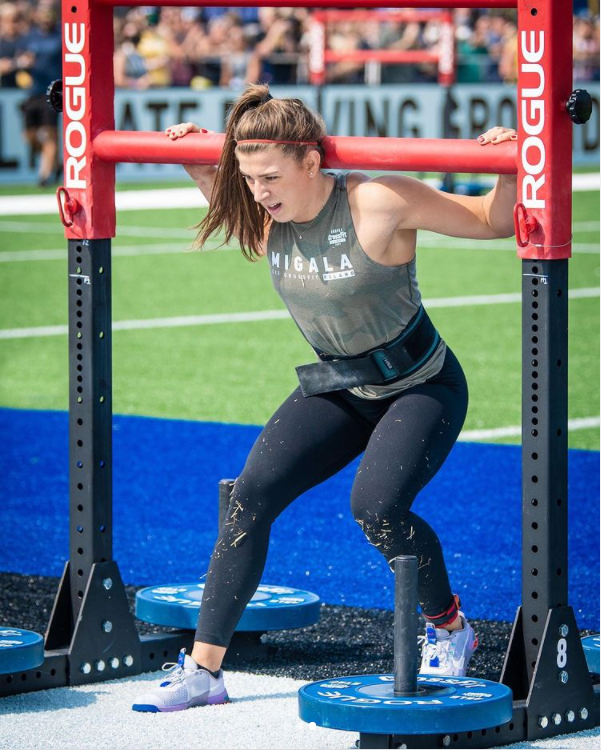
If these activities now feel noticeably easier, your strength has improved. The principle behind this is simple. As your maximum strength increases, any submaximal task requires a smaller percentage of your overall capacity. A task that once required 70 percent of your available force may now require only 40 percent. The physical demand has not changed. Your capability has.
Relative Effort Matters
Strength coaches often discuss the concept of relative intensity. Imagine two people carrying the same 50 pound object. For one person, the load may represent a major challenge. For another, it may feel almost effortless.
The difference lies in their strength reserve. Research shows that increasing maximal strength improves performance in lower intensity tasks because the body can perform them with less physiological stress. This translates directly into everyday life.
If you find yourself completing routine physical tasks without thinking about them, that is often a sign that your strength has improved considerably.
Functional Strength Is Real Strength
Many people dismiss improvements outside the gym because they are not recorded on a leaderboard. That is a mistake.
The purpose of strength is not simply to lift weights in a controlled environment. Strength enhances the ability to interact with the physical world more effectively. If daily activities require less effort than they once did, you are experiencing one of the most meaningful forms of strength development.
Sign 2: Your Recovery Is Faster Than Before
Recovery is an often overlooked marker of fitness and strength. Many athletes focus exclusively on performance metrics while ignoring how quickly their bodies bounce back from physical stress.
Adaptation Improves Recovery Capacity
As training experience increases, the body becomes more resilient. Muscles sustain less damage from familiar training stimuli. The nervous system becomes more efficient. Connective tissues adapt to repeated loading. Energy systems become more capable of handling demanding workloads.
As a result, recovery improves. You may notice that a workout which once left you sore for several days now requires only a day of recovery. You may be able to train hard multiple times per week without feeling completely exhausted. This adaptation reflects increased physical capacity.
The Repeated Bout Effect
Researchers have identified a phenomenon known as the repeated bout effect. After exposure to a particular training stimulus, the body develops protective adaptations that reduce muscle damage and soreness during future sessions.
This effect can be remarkably powerful. Exercises that once produced severe soreness may eventually generate only mild discomfort despite using heavier weights or greater training volumes.
The reduction in soreness is not evidence that the workout was ineffective. Instead, it often indicates that the body has become stronger and more resistant to physical stress.
Recovery Reflects Strength
Elite athletes are not only capable of producing high levels of force. They are also capable of recovering from those efforts efficiently.
If you can handle challenging training sessions and return ready for more work sooner than before, your strength and overall physical capacity have likely increased significantly.
Sign 3: Your Technique Has Improved Under Heavy Loads
Many people judge strength solely by the number on the bar. The reality is that movement quality under load is one of the most important indicators of genuine strength development.
Strength Requires Coordination
Every lift is a coordinated effort involving muscles, joints, connective tissues, and the nervous system. When loads become challenging, weaknesses often reveal themselves.
Knees collapse inward during squats. The back rounds during deadlifts. Pressing movements become unstable. Balance deteriorates. As strength improves, these issues often become less pronounced. The body learns to distribute force more effectively and maintain proper mechanics under stress.
Neural Adaptations Drive Performance
Research shows that strength gains are strongly influenced by neural adaptations. The nervous system becomes better at activating motor units, synchronizing muscular contractions, and coordinating movement patterns.
These changes allow athletes to express more force while maintaining control. As a result, improved technique under heavier loads often signals substantial increases in strength even when body weight remains unchanged.

Efficiency Is a Sign of Strength
Watch experienced lifters perform heavy movements. The weight may be enormous, but the movement often appears smooth and controlled. This efficiency reflects years of adaptation.
If your lifts feel more stable, balanced, and technically sound than they did months ago, you have likely developed meaningful strength even if you are focused on the number on the bar. Movement quality is performance.
Sign 4: You Can Do More Work Than Before
One of the strongest indicators of increased strength is the ability to handle greater training volume.
Work Capacity Reflects Physical Development
Work capacity refers to the amount of physical work a person can perform and recover from. In practical terms, it includes factors such as:
- Completing more sets.
- Performing more repetitions.
- Using heavier weights.
- Maintaining output throughout longer sessions.
- Recovering effectively between workouts.
As strength develops, work capacity generally improves as well.
Strength Supports Endurance
Many people assume strength and endurance exist in completely separate worlds. Exercise science tells a different story. Increased strength can improve endurance performance because each repetition requires a lower percentage of maximal force production.
For example, someone who increases their squat strength substantially may find that moderate weight sets become easier because each repetition demands less relative effort. This principle applies across countless activities.
Sign 5: You Handle Challenges That Used to Intimidate You
Strength is not purely physical. The psychological component is equally important. As people become stronger, they often develop greater confidence in their abilities, but this confidence is not based on wishful thinking or positive self talk alone. Instead, it is built through repeated evidence and experience.
Every difficult workout completed, every successful recovery from a demanding training session, and every challenge overcome reinforces a sense of capability. Over time, these experiences create trust in your own abilities. As a result, situations that once felt intimidating begin to feel manageable, not because they have become easier, but because you have become stronger and more resilient.
Self Efficacy and Performance
Sports psychology research highlights the importance of self efficacy, which refers to an individual’s belief in their ability to perform specific tasks.
Higher self efficacy is associated with improved performance, persistence, and resilience. Strength training can play a powerful role in developing these qualities. Every successful training session reinforces the belief that difficult challenges can be overcome through effort and preparation.
Mental Strength and Physical Strength Are Connected
Physical training creates physiological adaptations, but it also creates psychological adaptations. Through consistent training, you learn to tolerate discomfort, practice patience, build consistency, and keep going when motivation fluctuates. These qualities often transfer into many areas of life beyond exercise.
If you routinely tackle challenges that once seemed overwhelming, there is a good chance your strength has grown in ways that extend far beyond the gym.
The Bigger Picture
Strength is not simply about appearance. It is not defined solely by personal records, body weight, or social media comparisons.
Real strength is reflected in how effectively your body performs, adapts, recovers, and responds to challenges. If everyday tasks feel easier, if you recover faster, if your technique has improved, if your work capacity has increased, and if you approach challenges with greater confidence, there is strong reason to believe you are stronger than you think.
The most impressive strength gains are not always obvious. Often, they are hidden inside the adaptations that make life feel easier, movement feel smoother, and difficult tasks feel manageable. That is exactly how strength is supposed to work.
Key Takeaways
| Sign | What It Means | Why It Matters |
|---|---|---|
| Everyday tasks feel easier | Physical activities require a lower percentage of your maximum capacity | Indicates increased functional strength |
| Faster recovery | The body adapts more efficiently to training stress | Reflects greater resilience and work capacity |
| Better technique under load | Improved neuromuscular coordination and control | Shows more effective force production |
| Greater work capacity | Ability to perform more training volume | Demonstrates increased physical capability |
| Challenges feel less intimidating | Improved self efficacy and confidence | Reflects both physical and psychological strength |
References
- Aagaard, P., Simonsen, E.B., Andersen, J.L., Magnusson, P. and Dyhre Poulsen, P. (2002) ‘Increased rate of force development and neural drive of human skeletal muscle following resistance training’, Journal of Applied Physiology, 93(4), pp. 1318 to 1326.
- Bandura, A. (1997) Self Efficacy: The Exercise of Control. New York: W.H. Freeman.
- Carroll, T.J., Riek, S. and Carson, R.G. (2001) ‘Neural adaptations to resistance training’, Sports Medicine, 31(12), pp. 829 to 840.
- Franchi, M.V., Reeves, N.D. and Narici, M.V. (2017) ‘Skeletal muscle remodeling in response to eccentric versus concentric loading’, Frontiers in Physiology, 8, Article 447.
- Kraemer, W.J. and Ratamess, N.A. (2004) ‘Fundamentals of resistance training: progression and exercise prescription’, Medicine & Science in Sports & Exercise, 36(4), pp. 674 to 688.
- McHugh, M.P. (2003) ‘Recent advances in the understanding of the repeated bout effect’, Medicine & Science in Sports & Exercise, 35(5), pp. 762 to 767.
- Moritani, T. and deVries, H.A. (1979) ‘Neural factors versus hypertrophy in the time course of muscle strength gain’, American Journal of Physical Medicine, 58(3), pp. 115 to 130.