

Walk into almost any serious gym and you will see two exercises dominating strength training sessions. One is the squat. The other is the deadlift. Both are considered foundational lifts, both train multiple muscle groups at once, and both have earned a reputation for building impressive levels of strength and muscle.
For beginners, however, choosing between them can feel confusing. Should you prioritize squats because they are often called the king of exercises? Or should you focus on deadlifts because they allow you to lift heavier weights and train the entire posterior chain? The truth is that both exercises are exceptional. However, they are not identical. They challenge the body in different ways, emphasize different muscles, and have unique advantages depending on your goals.


If your primary objective is building pure strength and muscle mass as a beginner, understanding these differences will help you train more effectively while reducing injury risk.
Why Compound Exercises Matter
Before comparing squats and deadlifts directly, it helps to understand why both exercises are so valuable.
Compound exercises involve movement across multiple joints while recruiting several large muscle groups simultaneously. Research consistently shows that compound lifts allow greater total training loads, increase hormonal responses associated with resistance exercise, improve coordination, and efficiently stimulate muscle growth throughout the body.
Unlike isolation exercises that train one muscle at a time, squats and deadlifts develop strength patterns that transfer well to daily life, athletic performance, and nearly every other gym exercise. Both lifts also produce significant mechanical tension, which remains one of the primary drivers of muscle hypertrophy.
What Muscles Does the Squat Work?
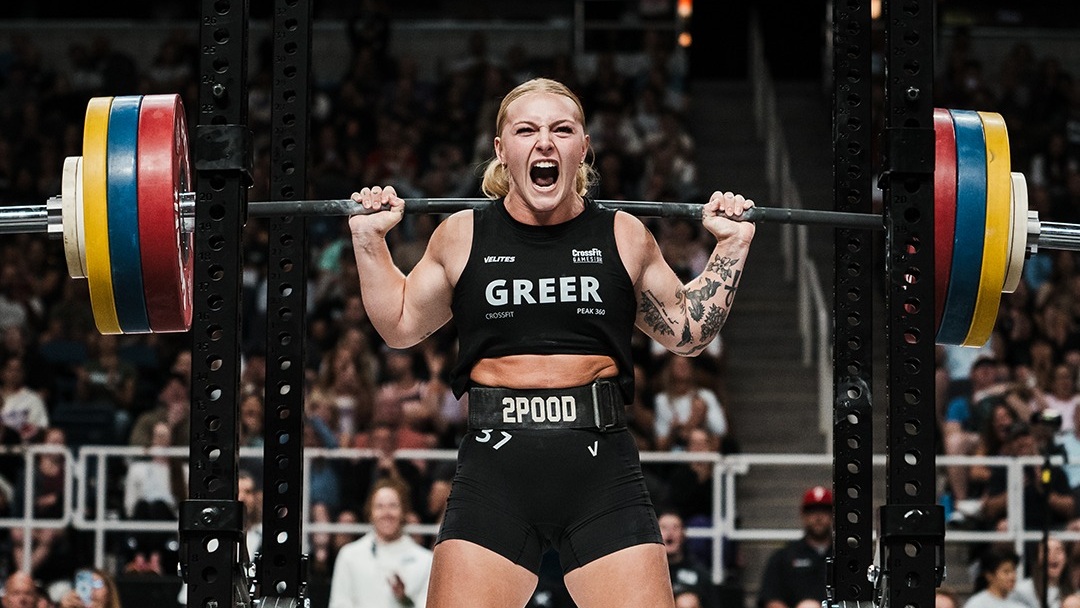
The squat is primarily a lower body exercise, although nearly every muscle contributes to some degree. The quadriceps perform much of the work during knee extension. The gluteus maximus becomes increasingly active as you rise from the bottom position. The hamstrings help stabilize the knee while the adductors contribute significantly during hip extension. Meanwhile, the core muscles work continuously to stabilize the spine under load.
The upper back also plays an important role by supporting the barbell throughout the movement. Electromyography studies consistently show high activation of the quadriceps and gluteal muscles during back squats, making them one of the most effective exercises for developing the thighs and hips.
What Muscles Does the Deadlift Work?
The deadlift recruits even more total muscle mass. Its primary movers include the gluteus maximus, hamstrings, spinal erectors, quadriceps, and adductors. In addition, the lats, traps, rhomboids, forearms, grip muscles, and abdominal muscles all contribute heavily throughout the lift.
How Many Push Ups Must You Be Able to Do Based on Your Age?
Unlike the squat, where the load rests on the shoulders, the deadlift requires the body to move the weight from the floor while maintaining spinal stability. This places enormous demands on the posterior chain, which includes the glutes, hamstrings, lower back, and upper back. Because so many muscles work simultaneously, many lifters can deadlift considerably more weight than they can squat.
Which Exercise Builds More Strength?
This depends on what kind of strength you want to develop.
Squat Strength
Squats excel at developing lower body strength through a large range of motion. The movement improves force production in the hips and knees while strengthening the muscles responsible for jumping, sprinting, climbing stairs, and standing from seated positions.
Research also shows that squat training significantly improves lower body power and athletic performance across numerous sports. Since the squat requires balance, coordination, and trunk stability, beginners often develop overall movement quality alongside muscular strength.

Deadlift Strength
Deadlifts are exceptional for developing whole body pulling strength. The exercise teaches efficient force production from the ground while strengthening nearly every muscle on the backside of the body.
Studies examining maximal force production show that deadlifts often produce greater overall loading than squats because the movement begins from a mechanically advantageous position without an eccentric lowering phase before the lift. This allows many athletes to expose their muscles and nervous system to extremely heavy loads. The result is substantial improvements in maximal strength.
The Winner for Pure Strength
If the goal is lifting the greatest possible weight, the deadlift has a slight advantage. It recruits enormous amounts of muscle mass, develops grip strength, challenges spinal stability, and trains full body force production. However, this advantage is relatively small. For beginners, both lifts produce remarkable increases in strength when performed consistently with progressive overload.
Which Exercise Builds More Muscle?
Muscle growth depends primarily on sufficient training volume, mechanical tension, recovery, and nutrition. Both squats and deadlifts satisfy these requirements. However, they emphasize muscle growth differently.
Squat Hypertrophy Benefits
Squats provide significant stimulus for the quadriceps and glutes. The large knee flexion angle increases quadriceps activation while the deep hip flexion recruits the glutes through a long range of motion. Since squats can usually be performed with more repetitions and less systemic fatigue than deadlifts, many lifters accumulate greater weekly training volume.
Higher quality training volume is one of the strongest predictors of muscle growth. This makes squats particularly effective for developing larger thighs and glutes.
Deadlift Hypertrophy Benefits
- Deadlifts create tremendous tension throughout the posterior chain.
- The hamstrings, glutes, spinal erectors, traps, forearms, and upper back all receive significant stimulation.
- However, deadlifts are extremely fatiguing.
- Heavy deadlift sessions often require longer recovery periods than squat sessions.
- For beginners, this means total weekly deadlift volume is usually lower.
Although deadlifts absolutely contribute to muscle growth, they may not always provide enough training volume for maximum hypertrophy unless supported by additional accessory exercises.
The Winner for Muscle Growth
For overall lower body muscle development, the squat generally has the advantage. The ability to perform more productive weekly volume with lower fatigue makes it highly effective for hypertrophy. Deadlifts remain outstanding for building the posterior chain, but squats often stimulate greater total leg development over time.
Which Exercise Is Easier for Beginners?
Neither exercise is inherently easy. Each presents different technical challenges.
Learning the Squat
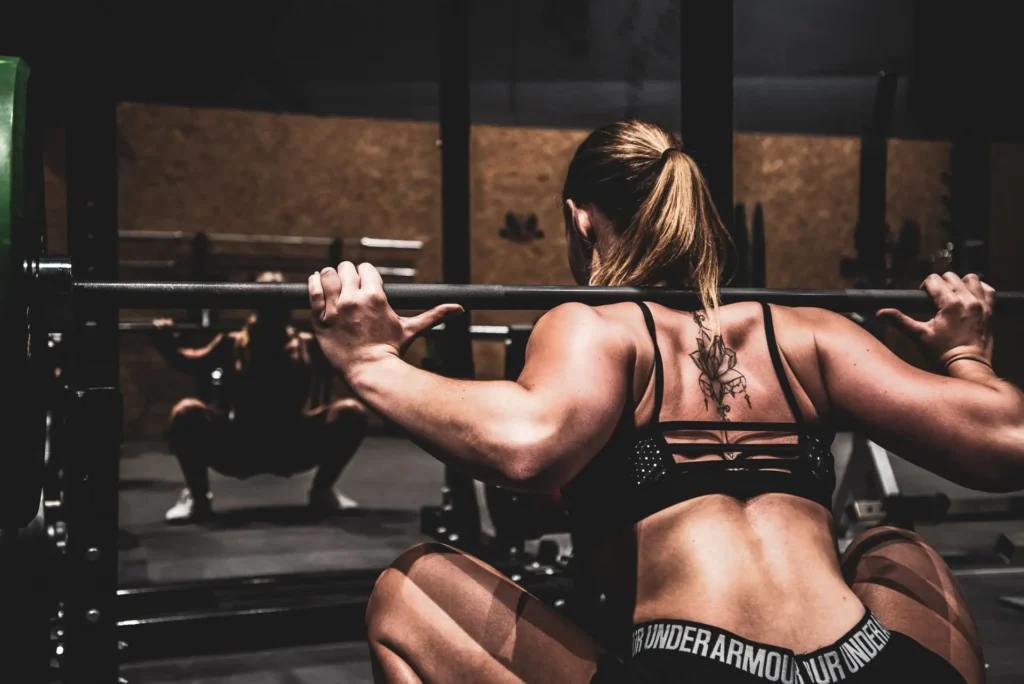
Many beginners struggle with squat depth, ankle mobility, hip mobility, and maintaining an upright torso. Common mistakes include allowing the knees to collapse inward, rounding the lower back, or lifting the heels from the floor. Fortunately, these problems often improve quickly through practice and mobility work. Goblet squats and bodyweight squats are excellent teaching progressions.
Learning the Deadlift
Deadlifts appear simpler because the movement starts from the floor. In reality, maintaining a neutral spine while coordinating hip and knee extension can be difficult for beginners. Common mistakes include rounding the back, allowing the bar to drift away from the legs, or pulling with the arms instead of driving through the hips.
Many beginners also start with weights that are too heavy. Proper coaching significantly improves deadlift technique and reduces injury risk.
Which Exercise Is Safer?
Neither exercise is dangerous when performed correctly. Most resistance training injuries occur because of excessive loading, poor technique, inadequate recovery, or attempting weights beyond current ability. Research consistently demonstrates that supervised resistance training has a relatively low injury rate compared with many recreational sports.
Squat Injury Considerations
Proper squat technique distributes forces safely across the hips, knees, and spine. Current evidence also challenges the outdated belief that deep squats are inherently harmful to healthy knees. For individuals without existing joint problems, full range squats are generally considered safe and beneficial.
Deadlift Injury Considerations
Deadlifts place higher compressive and shear forces on the spine than many other exercises. This does not make them unsafe. Instead, it means maintaining good technique becomes even more important. Keeping the spine neutral, bracing the core, and avoiding excessive fatigue all reduce injury risk substantially.
Which Exercise Transfers Better to Everyday Life?
Both movements have excellent real world carryover. Squats improve the ability to sit, stand, climb stairs, jump, and maintain independence throughout life. Deadlifts teach one of the most important movement patterns humans perform every day, safely lifting objects from the ground.
Many occupational therapists and strength coaches emphasize hip hinging because improper lifting mechanics remain one of the leading contributors to lower back injuries. Learning to deadlift properly can improve lifting mechanics outside the gym.
Can Beginners Perform Both?
Absolutely. In fact, this is usually the best solution. Squats and deadlifts complement each other remarkably well. Squats emphasize knee dominant movement while deadlifts emphasize hip dominant movement.
Together they develop balanced lower body strength, complete muscular development, and improved athletic performance. Many beginner programs successfully include both exercises each week with careful management of training volume. A simple approach might involve squatting twice weekly while deadlifting once weekly, allowing sufficient recovery between sessions.
The Final Verdict
Choosing between the deadlift and the squat is a bit like choosing between a hammer and a screwdriver. Both are excellent tools designed for slightly different jobs. If your only goal is maximizing whole body strength, the deadlift earns a narrow victory because of its unmatched ability to recruit nearly every major muscle group while allowing extremely heavy loading.
If your primary goal is building muscular legs and overall lower body size, the squat takes first place because it allows greater productive training volume while placing enormous emphasis on the quadriceps and glutes. For beginners who want both strength and muscle, the smartest answer is not choosing one over the other. Use both.
Squat regularly to build powerful legs, improve mobility, and increase overall muscle mass. Deadlift consistently to strengthen the posterior chain, improve grip strength, and develop full body power. Together they form the foundation of nearly every successful strength training program ever created.
The debate may continue in gyms around the world, but science offers a simple conclusion. You do not have to pick a winner. Your body benefits most when you learn to master both.
Key Takeaways
| Topic | Winner | Why |
|---|---|---|
| Pure strength | Deadlift | Allows heavier loading and recruits more total muscle mass |
| Lower body muscle growth | Squat | Greater training volume with strong quadriceps and glute stimulation |
| Posterior chain development | Deadlift | Superior activation of glutes, hamstrings, spinal erectors, and upper back |
| Quadriceps development | Squat | Greater knee extension demands produce higher quadriceps stimulus |
| Learning curve | Tie | Both require coaching and consistent practice |
| Everyday function | Tie | Squats improve standing and climbing while deadlifts improve lifting mechanics |
| Fat loss support | Tie | Both burn significant calories when included in challenging workouts |
| Best choice for beginners | Both | Combining squats and deadlifts produces the greatest overall strength and muscle gains |
References
- American College of Sports Medicine. (2009). Progression models in resistance training for healthy adults. Medicine and Science in Sports and Exercise, 41(3), 687–708.
- Escamilla, R.F. (2001). Knee biomechanics of the dynamic squat exercise. Medicine and Science in Sports and Exercise, 33(1), 127–141.
- Gentil, P., Fisher, J. and Steele, J. (2017). A review of the acute effects and long term adaptations of single joint and multi joint exercises during resistance training. Sports Medicine, 47(5), 843–855.
- Haff, G.G. and Triplett, N.T. (2016). Essentials of Strength Training and Conditioning. 4th ed. Human Kinetics.
- Król, H., Golas, A. and Sobota, G. (2010). Complex analysis of movement in evaluation of flat and deep squat performance. Acta of Bioengineering and Biomechanics, 12(2), 93–99.
- McGill, S.M. (2016). Low Back Disorders: Evidence Based Prevention and Rehabilitation. 3rd ed. Human Kinetics.
- Schoenfeld, B.J. (2010). The mechanisms of muscle hypertrophy and their application to resistance training. Journal of Strength and Conditioning Research, 24(10), 2857–2872.
- Schoenfeld, B.J., Ogborn, D. and Krieger, J.W. (2017). Dose response relationship between weekly resistance training volume and increases in muscle mass. Journal of Sports Sciences, 35(11), 1073–1082.
- Suchomel, T.J., Nimphius, S. and Stone, M.H. (2016). The importance of muscular strength in athletic performance. Sports Medicine, 46(10), 1419–1449.