Is the Kelso Shrug the Best Shoulder Exercise For an Attractive Physique?


The Kelso shrug is one of those exercises that often flies under the radar. While movements like lateral raises, overhead presses, and barbell shrugs dominate most shoulder workouts, the Kelso shrug quietly delivers benefits that many lifters overlook. It is not designed to build massive upper traps or create the illusion of broader shoulders through bigger deltoids. Instead, it targets the middle fibers of the trapezius and the muscles responsible for scapular retraction, helping create better posture, stronger upper back muscles, and a more balanced physique.
That raises an interesting question. Is the Kelso shrug actually one of the best shoulder exercises if your goal is an attractive physique?


The answer depends on what you mean by attractive. If you want wider shoulders, the exercise is not the most effective choice. If you want a strong, athletic upper body with improved posture and balanced muscle development, it deserves far more attention than it typically receives.
What Is the Kelso Shrug?
The Kelso shrug was popularized by powerlifting coach Paul Kelso. Unlike a traditional shrug, where the shoulders move upward toward the ears, the Kelso shrug focuses almost entirely on pulling the shoulder blades together.
The exercise is usually performed while lying chest supported on an incline bench using dumbbells or with a chest supported row machine. Instead of rowing the weight with the arms, the elbows stay nearly straight while the shoulder blades retract during the movement. This changes the emphasis dramatically.
Rather than targeting the upper trapezius, the movement shifts much of the work toward the middle trapezius and rhomboids. These muscles play a vital role in shoulder health, posture, and upper back thickness.
Understanding Shoulder Aesthetics

People often think attractive shoulders are simply large shoulders. In reality, several muscles contribute to an impressive upper body.
- The lateral deltoids create width.
- The rear deltoids add depth and roundness.
- The trapezius provides thickness and structure.
- The muscles between the shoulder blades improve posture, allowing the chest to appear larger and the shoulders to sit farther back.
Research consistently shows that posture significantly influences perceptions of physical attractiveness and confidence. An upright posture with retracted shoulders creates the appearance of greater upper body size even without additional muscle mass.
That means exercises improving scapular positioning may indirectly enhance your physique even if they do not directly increase shoulder circumference.
Which Muscles Does the Kelso Shrug Work?
Although many people classify it as a shoulder exercise, the Kelso shrug primarily trains the upper back.
Middle Trapezius
The middle trapezius is responsible for pulling the shoulder blades together. During the Kelso shrug, this muscle performs most of the work.
Electromyography research has consistently shown that scapular retraction exercises produce high activation of the middle trapezius compared to conventional shrugging movements.
Rhomboids
Located beneath the trapezius, the rhomboids stabilize and retract the scapula. Strong rhomboids improve shoulder mechanics during pressing, rowing, and overhead movements.
Lower Trapezius
The lower traps assist with scapular stability and help maintain proper shoulder positioning during arm movement. These muscles are frequently underdeveloped in people who spend long hours sitting or performing mostly pressing exercises.
Rear Deltoids
Although not the primary mover, the posterior deltoids assist throughout the exercise. This contributes modestly to shoulder development while reinforcing balanced muscular growth.
Why Middle Trap Development Matters
Most gym programs overemphasize pressing. Bench presses, shoulder presses, dips, and push ups all strengthen the muscles at the front of the body. Without enough pulling volume, muscular imbalances develop.
Research has demonstrated that balanced strength between the muscles controlling the shoulder blade improves shoulder function while reducing injury risk. A weak middle trapezius often contributes to rounded shoulders and poor scapular control. From an aesthetic perspective, rounded shoulders flatten the chest and make even well developed deltoids appear smaller.
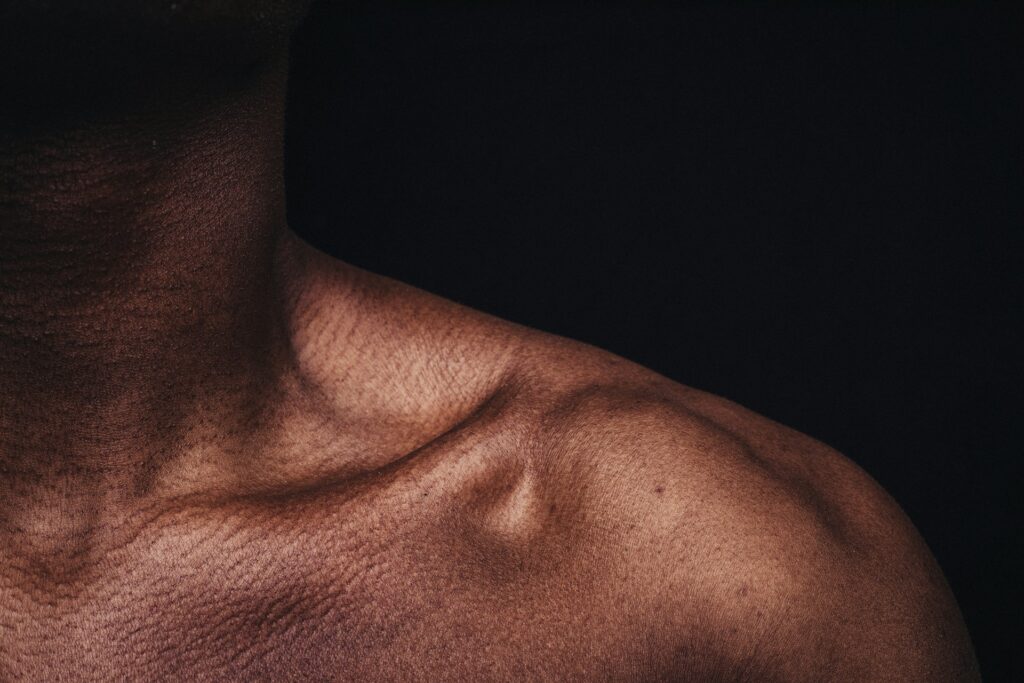
Improving middle trap strength helps position the shoulders farther back, producing a taller, broader appearance.
Does the Kelso Shrug Build Bigger Shoulders?
Not directly. If your goal is maximum shoulder size, other exercises outperform the Kelso shrug. Lateral raises remain one of the most effective movements for emphasizing the medial deltoid, which contributes the most to shoulder width.
Overhead pressing develops overall shoulder mass while also strengthening the triceps and upper chest. Rear delt flyes directly target the posterior deltoid, improving shoulder thickness. The Kelso shrug instead develops the muscular framework supporting the shoulder girdle.
Think of it as strengthening the foundation rather than decorating the exterior. Without that foundation, shoulder development may never reach its full potential.
Can Better Posture Improve Your Physique?
Absolutely. Posture changes how every muscle appears. Rounded shoulders shorten the appearance of the chest while making the upper body seem narrower. Retracted shoulders create greater chest projection, better shoulder alignment, and improved symmetry.
Several studies examining body language have found that upright posture influences perceptions of confidence, dominance, and attractiveness. Even without additional muscle gain, standing with improved posture changes how your physique is perceived. The Kelso shrug helps strengthen many of the muscles responsible for maintaining that posture throughout the day.
How to Perform the Kelso Shrug Correctly
Technique determines whether the correct muscles perform the work.
- Begin by setting an adjustable bench to roughly thirty to forty five degrees.
- Lie face down with the chest fully supported.
- Hold a dumbbell in each hand with the arms hanging naturally toward the floor.
- Keep the elbows almost completely straight throughout the movement.
- Without bending the elbows, squeeze the shoulder blades together as tightly as possible.
- Pause briefly at the top while maintaining control.
- Slowly return to the starting position.
- Avoid lifting the shoulders toward the ears.
The movement should feel like the shoulder blades sliding toward one another instead of upward. Using too much weight often causes the upper traps to dominate the exercise. Lighter loads performed with excellent control generally produce better muscle activation.
Common Mistakes
One of the biggest mistakes is turning the exercise into a row. If the elbows bend significantly, the latissimus dorsi and biceps begin performing much of the work.
Is the Deadlift the Perfect Back Exercise for Massive Strength and Muscle Gains?
Another common mistake is shrugging upward. This shifts emphasis toward the upper trapezius and defeats the purpose of the exercise. Many people also rush through the repetitions. The middle trapezius responds particularly well to controlled contractions with brief pauses at peak retraction.
The Best Exercises to Pair With the Kelso Shrug
The Kelso shrug works best as part of a complete shoulder program.
- Lateral raises remain essential for building shoulder width.
- Rear delt flyes develop the back portion of the shoulder.
- Overhead presses provide overall shoulder size and strength.
- Chest supported rows build additional upper back thickness.
- Face pulls reinforce external rotation and scapular stability.
Together these exercises develop every component contributing to broad, balanced shoulders. The Kelso shrug fills an important gap by strengthening muscles many lifters unintentionally neglect.
Who Benefits Most From the Kelso Shrug?
The exercise is especially valuable for bodybuilders, powerlifters, CrossFit athletes, office workers, and anyone spending large amounts of time sitting. These groups commonly develop rounded shoulders and relatively weak scapular retractors.
Athletes performing large volumes of pressing exercises may also benefit from improved muscular balance. Even beginners can safely learn the movement because it places relatively low stress on the shoulder joints while teaching proper scapular control.
So, Is the Kelso Shrug the Best Shoulder Exercise for an Attractive Physique?
Probably not if your definition of attractive revolves entirely around shoulder width. Lateral raises still hold that title because they directly target the medial deltoid, the muscle most responsible for creating broad shoulders. However, attractiveness involves much more than muscle size alone. Balanced development, good posture, upper back thickness, and healthy shoulder mechanics all contribute to a physique that looks athletic and proportionate.
The Kelso shrug excels in each of those areas. It strengthens neglected muscles, improves scapular control, reinforces better posture, and supports healthier long term training. Rather than replacing classic shoulder exercises, it complements them. For most lifters, the best shoulder routine combines lateral raises, overhead pressing, rear delt work, rowing variations, and Kelso shrugs.
That combination builds shoulders that are not only larger but also healthier, stronger, and visually more impressive from every angle.
Key Takeaways
| Topic | Takeaway |
|---|---|
| Primary muscles | The Kelso shrug primarily trains the middle trapezius, rhomboids, and lower trapezius rather than the upper traps. |
| Shoulder size | It is not the best exercise for increasing shoulder width because it does not directly target the lateral deltoids. |
| Physique benefits | Improved posture and upper back development can make the shoulders and chest appear larger and more balanced. |
| Shoulder health | Strong scapular retractors contribute to healthier shoulder mechanics and may reduce injury risk. |
| Best use | The Kelso shrug works best alongside lateral raises, overhead presses, face pulls, and rowing exercises rather than replacing them. |
| Training frequency | Two or three sessions per week with controlled repetitions is sufficient for most lifters. |
References
- Andersen, C.H., Zebis, M.K., Saervoll, C., Sundstrup, E., Jakobsen, M.D., Mortensen, O.S. and Andersen, L.L. (2014) ‘Scapular muscle activity from selected strengthening exercises performed at low and high intensities’, Journal of Strength and Conditioning Research, 28(4), pp. 999 to 1006.
- Cools, A.M., Dewitte, V., Lanszweert, F., Notebaert, D., Roets, A., Soetens, B., Cagnie, B. and Witvrouw, E. (2007) ‘Rehabilitation of scapular muscle balance: Which exercises to prescribe?’, American Journal of Sports Medicine, 35(10), pp. 1744 to 1751.
- Kibler, W.B., Ludewig, P.M., McClure, P.W., Michener, L.A., Bak, K. and Sciascia, A.D. (2013) ‘Clinical implications of scapular dyskinesis in shoulder injury’, British Journal of Sports Medicine, 47(14), pp. 877 to 885.
- Ludewig, P.M. and Reynolds, J.F. (2009) ‘The association of scapular kinematics and glenohumeral joint pathologies’, Journal of Orthopaedic and Sports Physical Therapy, 39(2), pp. 90 to 104.
- McLean, C.P., Miller, N.A. and Hope, D.A. (2010) ‘Mediators of the relationship between body posture and social anxiety’, Journal of Behavior Therapy and Experimental Psychiatry, 41(4), pp. 459 to 465.
- Page, P. (2011) ‘Shoulder muscle imbalance and subacromial impingement syndrome in overhead athletes’, International Journal of Sports Physical Therapy, 6(1), pp. 51 to 58.