






















3 Perfect Dumbbell Exercises Beginners Need for An Attractive V-Shaped Physique

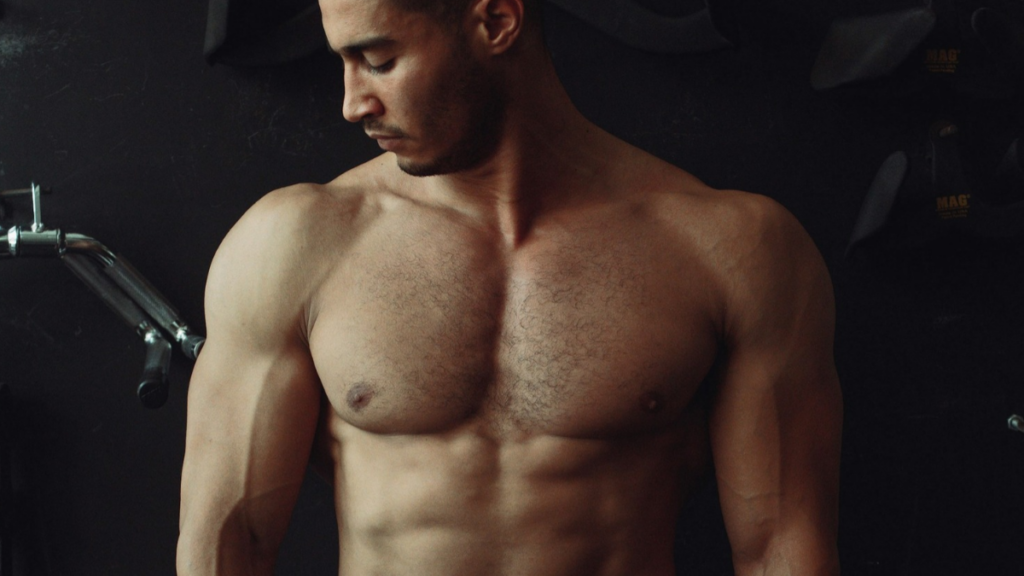
Want to build a better looking physique? Here are five exercises you should make sure you have in your training arsenal.
Smart Training Rules for Beginners Holding Dumbbells
When you are new to lifting, your biggest advantage is that your muscles adapt quickly to consistent mechanical tension, provided you do not rush into sloppy heavy weights. Jumping up in dumbbell load too soon often causes momentum swinging, neck tension, or shoulder irritation before your joints and coordination catch up. Controlled repetitions with moderate weights let you feel the target muscles working cleanly through a full, safe range of motion.
Research comparing resistance training loads shows that lighter and moderate weights can produce muscle growth comparable to heavier loads when sets are taken close to muscular failure. Additionally, systematic review and meta-analytic evidence on resistance training frequency indicates that training muscle groups twice per week supports greater hypertrophy than training them only once per week. Pairing sensible rep ranges with twice-weekly practice gives beginners a clear blueprint for steady visual progress without joint headaches.
Beginner Dumbbell Routine for a V-Shaped Upper Body
| Exercise | Primary Target | Sets | Reps | Rest | Key Execution Cue |
| Seated Dumbbell Lateral Raise | Lateral Deltoid | 3 | 12 to 15 | 90 sec | Sit tall, raise dumbbells slightly forward of the torso, and pause smoothly at shoulder height |
| Chest-Supported Dumbbell Row | Latissimus Dorsi and Mid-Back | 3 | 10 to 12 | 90 sec | Brace chest against an incline bench and pull dumbbells toward your hips without shrugging |
| Dumbbell Pullover | Latissimus Dorsi and Pectoralis Major | 3 | 10 to 15 | 90 sec | Keep a slight fixed bend in your elbows and lower under control until you feel a deep stretch |
The 3 Perfect Dumbbell Exercises for Beginners
Performing these three movements twice per week with at least forty-eight hours of rest between sessions covers the key width builders using basic equipment. Keep your lowering phase smooth and unhurried so your muscles stay under genuine tension rather than coasting on momentum.
1. Seated Dumbbell Lateral Raise
The lateral raise directly targets the middle deltoid head that pushes your outer shoulder line outward and creates immediate visual width from the front. Sitting on a bench eliminates lower-body bounce so your shoulders cannot cheat the weight upward with hip drive. Electromyographic investigations of lateral raise variations confirm that raising the arms outward and slightly forward in a controlled arc activates the shoulder musculature effectively while keeping setup simple for beginners.
2. Chest-Supported Dumbbell Row
A strong, wide back anchors the entire V-shape, and chest-supported dumbbell rows let you pull hard without lower-back fatigue taking over first. Resting your chest on an angled bench stabilizes your spine and allows you to focus on driving your elbows back toward your hips to engage the latissimus dorsi and upper-back stabilizers. Controlled rowing mechanics build thick, capable back muscles that widen your torso and support better posture throughout daily life.
3. Dumbbell Pullover
The dumbbell pullover challenges shoulder extension from a stretched overhead position, creating a strong lengthening stimulus across the torso while pairing nicely with rowing movements. Electromyographic research evaluating the pullover exercise shows that it recruits both the pectoralis major and the latissimus dorsi depending on arm path and external lever arm, making it a useful supplemental movement for upper-torso development.
Keep your ribs tucked down and stop the overhead stretch right before your lower back begins to arch so your shoulders stay safe and comfortable.
How to Progress Safely Week After Week
Beginners often stall or get sore in the wrong places because they treat every session like a max-effort test instead of building repeatable skill. A reliable method for dumbbell training is double progression, where you pick a weight you can handle cleanly for ten to twelve controlled repetitions with roughly one or two good reps remaining. Over consecutive workouts, add one or two reps per set until you hit the top of your target range across all sets, then step up to the next dumbbell pair and start near the bottom of the rep range again.
Is the Bayesian Cable Curl Better Than Regular Curls for Growing Your Biceps?
Staying consistent with two sessions per week gives your muscles frequent growth signals while giving your joints and connective tissues ample time to recover. Focus on clean posture, smooth tempo, and gradual repetition increases rather than chasing heavy ego weights that shorten your range of motion.
Key Takeaways
| Training Element | Practical Guideline | Why It Helps Beginners |
| Width Focus | Pair lateral raises with rows and pullovers | Targets the lateral deltoids and upper-back breadth that shape a V-taper |
| Load and Effort | Use moderate dumbbell weights taken near failure | Promotes muscle growth without forcing beginners into risky heavy lifts |
| Weekly Frequency | Train the routine twice per week with rest days between | Supports stronger hypertrophy outcomes than once-weekly training |
| Progression Method | Add reps first before increasing dumbbell size | Protects joint comfort and keeps form clean as strength builds |


References
- Coratella, G., Tornatore, G., Longo, S., Esposito, F. and Cè, E., 2020. An electromyographic analysis of lateral raise variations and frontal raise in competitive bodybuilders. International Journal of Environmental Research and Public Health, 17(17), p.6015.
- Marchetti, P.H. and Uchida, M.C., 2011. Effects of the pullover exercise on the pectoralis major and latissimus dorsi muscles as evaluated by EMG. Journal of Applied Biomechanics, 27(4), pp.380-384.
- Schoenfeld, B.J., Grgic, J., Ogborn, D. and Krieger, J.W., 2017. Strength and hypertrophy adaptations between low- vs. high-load resistance training: a systematic review and meta-analysis. Journal of Strength and Conditioning Research, 31(12), pp.3508-3523.
- Schoenfeld, B.J., Ogborn, D. and Krieger, J.W., 2016. Effects of resistance training frequency on measures of muscle hypertrophy: a systematic review and meta-analysis. Sports Medicine, 46(11), pp.1689-1697.
Ben Roberts
I first got into Crossfit from a background in powerlifting. I love that Crossfit trains everything and turns you into an all-round athlete: strong, fast, supple and skillful. I've been doing Crossfit now for 2.5 years and never looked back!
More from Ben Roberts