





















3 Best Kettlebell Exercises for a Jacked and Great Looking Upper Body

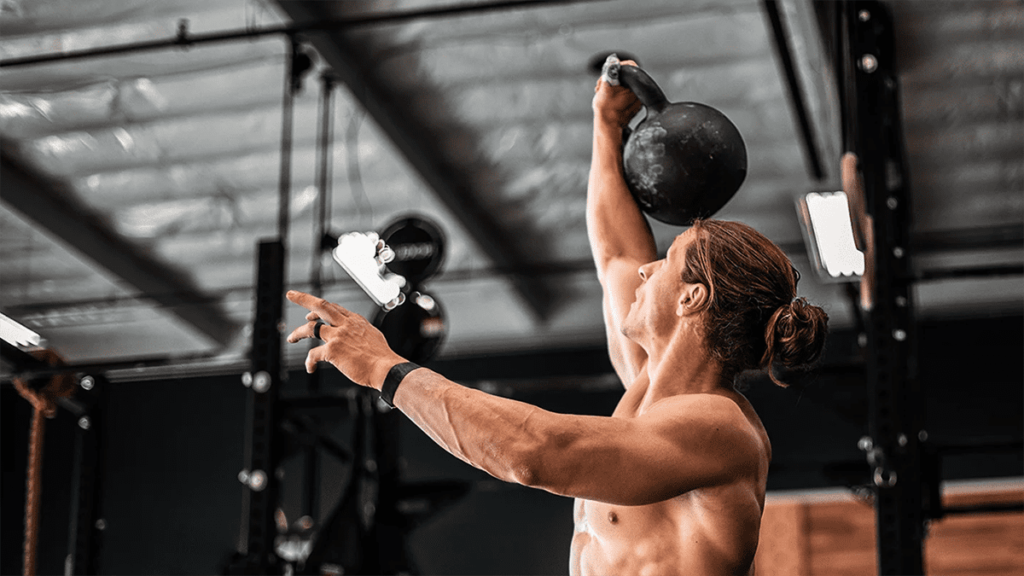
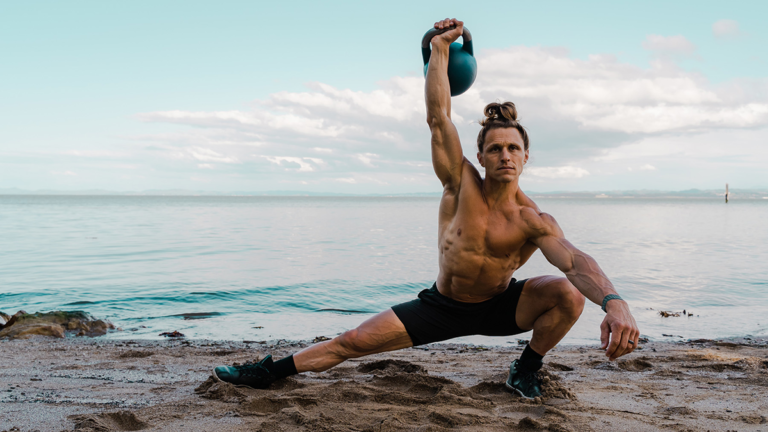
The kettlebell is one of the most underrated fitness tools on the planet. They offer a completely unique way to test and improve your body, so scroll through these three exercises and find out how to upgrade your fitness arsenal.
Why Kettlebell Mechanics Build Serious Upper-Body Muscle
Unlike a dumbbell where the weight sits directly in line with your grip, a kettlebell creates an offset center of mass that pulls backward and downward against your wrist and shoulder. This offset leverage forces your rotator cuff, upper back, and core stabilizers to fire harder just to keep the bell aligned through every inch of the lift. When your stabilizing musculature works overtime alongside your prime movers, you develop dense, athletic upper-body thickness that looks great from every angle.

Exercise science research comparing multi-joint compound exercises against single-joint isolation work shows that compound movements stimulate superior gains in strength and functional body composition.
Furthermore, landmark studies on training loads confirm that moderate weights lifted close to muscular failure generate the exact same muscle hypertrophy as very heavy weights. That means a pair of moderate kettlebells, pushed with strict control and high effort, provides more than enough mechanical tension to pack noticeable muscle onto your chest, shoulders, back, and arms.
The 3 Best Kettlebell Exercises for an Impressive Upper Body
To sculpt balanced upper-body proportions without needing a rack full of bells, anchor your upper-body sessions around the three movements detailed below. Perform this routine twice per week with at least forty-eight hours of recovery between workouts, lowering each repetition smoothly over three full seconds to maximize muscular tension.
Twice-Weekly Kettlebell Upper-Body Hypertrophy Routine
| Exercise | Primary Muscles Targeted | Sets | Reps | Rest | Key Execution Cue |
| Kettlebell Gorilla Row | Latissimus Dorsi, Rhomboids, and Rear Deltoids | 3 | 10 to 12 per side | 90 sec | Hinge forward with a flat back and row one bell at a time while pressing the other into the floor |
| Half-Kneeling Kettlebell Overhead Press | Deltoids, Triceps, and Upper Chest | 3 | 8 to 12 per side | 90 sec | Squeeze your glutes and ribs down, press smoothly overhead, and keep your wrist straight |
| Kettlebell Floor Press | Pectoralis Major, Triceps, and Anterior Deltoids | 3 | 10 to 15 | 90 sec | Let the bell rest behind your forearm, pause your triceps gently on the floor, and press explosively |
1. Kettlebell Gorilla Row
Nothing transforms the look of your upper torso faster than a wide, thick upper back that pulls your shoulders into proud posture and accentuates a trim waist.
The gorilla row places you in an athletic hip-hinge stance over two kettlebells, where you row one bell toward your hip while actively pushing the opposite bell down into the floor for stability. Electromyographic studies examining rowing variations show that bent-over and torso-supported rows elicit high activation across the latissimus dorsi, trapezius, and posterior deltoids.
2. Half-Kneeling Kettlebell Overhead Press
Clean overhead pressing is the gold standard for sculpting capped deltoids and thick triceps, and the kettlebell rack position naturally guides your shoulder into a joint-friendly pressing path.
Performing the press from a half-kneeling stance locks your pelvis in place so you cannot lean backward and turn the lift into an awkward incline press. Research analyzing overhead pressing mechanics demonstrates high deltoid and triceps recruitment alongside significant trunk stabilization demands, making this unilateral press an unmatched builder of upper-body width and core rigidity.
3. Kettlebell Floor Press
Because the round body of the kettlebell rests comfortably against the back of your forearm, the floor press offers a remarkably wrist-friendly way to overload your chest and triceps.
Pausing briefly when the backs of your upper arms touch the ground eliminates elastic bounce and forces your pectoralis major and triceps brachii to generate pure starting strength on every repetition. Biomechanical research comparing pressing variations confirms that horizontal pressing strongly activates the sternocostal pectorals and triceps while the floor stops your elbows safely before excessive anterior shoulder stretch occurs.
How to Progress Without Needing Dozens of Kettlebells
Since kettlebells typically jump in weight by four kilograms or roughly nine pounds at a time, you cannot simply add tiny micro-plates every week like you would on a barbell. Instead, rely on double progression by choosing a kettlebell you can lift cleanly for eight to ten repetitions with two solid reps left in reserve. Over consecutive sessions, add one or two controlled repetitions per set until you reach the upper end of the target range across all sets, then slow down your lowering tempo or graduate to the next bell size.
Meta-analytic research on resistance training frequency confirms that training each muscle group twice per week produces significantly superior muscle growth compared to once-weekly training. Combining twice-weekly kettlebell sessions with steady repetition progression, adequate daily protein, and consistent sleep ensures continuous visual improvements across your upper body.
Key Takeaways
| Training Element | Practical Application | Physiological Benefit |
| Offset Loading | Embrace the kettlebell rack and hanging center of mass | Increases rotator cuff, core, and stabilizer recruitment alongside prime movers |
| Core Exercise Trio | Combine gorilla rows, half-kneeling presses, and floor presses | Hits horizontal pulling, vertical pressing, and horizontal pressing for total balance |
| Effort and Tempo | Control a 3-second lowering phase and train close to failure | Drives full muscle hypertrophy even when using moderate kettlebell weights |
| Weekly Progression | Train twice per week and build reps before jumping bell sizes | Maximizes muscle protein synthesis while overcoming large kettlebell weight jumps |


References
- Fenwick, C.M., Brown, S.H. and McGill, S.M., 2009. Comparison of different rowing exercises: trunk muscle activation and lumbar spine motion, load, and stiffness. Journal of Strength and Conditioning Research, 23(5), pp.1408-1417.
- Paoli, A., Gentil, P., Moro, T., Marcolin, G. and Bianco, A., 2017. Resistance training with single vs. multi-joint exercises at equal total load volume: effects on body composition, cardiorespiratory fitness, and muscle strength. Frontiers in Physiology, 8, p.1105.
- Saeterbakken, A.H. and Fimland, M.S., 2013. Effects of body position and loading modality on muscle activity and strength in shoulder presses. Journal of Strength and Conditioning Research, 27(7), pp.1824-1831.
- Schoenfeld, B.J., Grgic, J., Ogborn, D. and Krieger, J.W., 2017. Strength and hypertrophy adaptations between low- vs. high-load resistance training: a systematic review and meta-analysis. Journal of Strength and Conditioning Research, 31(12), pp.3508-3523.
- Schoenfeld, B.J., Ogborn, D. and Krieger, J.W., 2016. Effects of resistance training frequency on measures of muscle hypertrophy: a systematic review and meta-analysis. Sports Medicine, 46(11), pp.1689-1697.
- Welsch, E.A., Bird, M. and Mayhew, J.L., 2005. Electromyographic activity of the pectoralis major and anterior deltoid muscles during three upper-body lifts. Journal of Strength and Conditioning Research, 19(2), pp.449-452.
Robbie Wild Hudson
Editor-In-Chief at BOXROX. I come from a background of rugby and weightlifting. Growing up in the English Lake District, I spent a great deal of time swimming in its stunning lakes and rivers. In 2015 my brothers and I became the first people to swim the 145km length of the River Eden, from source to mouth, in 9 days. We also swam the Corryvreckan whirlpool, the third largest in the world, and Crossfit is a huge part of my training for these events.
More from Robbie Wild Hudson