


























Adding More Reps vs Adding More Weight: How Should Beginners Progress?


When it comes to lifting weights, gaining strength and developing muscle, what are the best rep ranges and weights to work with? And what are the best choices for you?
Why Progressive Overload Matters for Beginners
Your body adapts to stress only when it has a clear reason to do so, which is why gradually increasing the challenge placed on your muscles over time drives lasting improvements in strength and size.
For a beginner, the first several weeks of lifting trigger rapid neuromuscular coordination alongside rising muscle protein synthesis as your body learns to recruit muscle fibers efficiently. Without steadily raising the bar in some measurable way over time, your muscles eventually stop needing to adapt further.
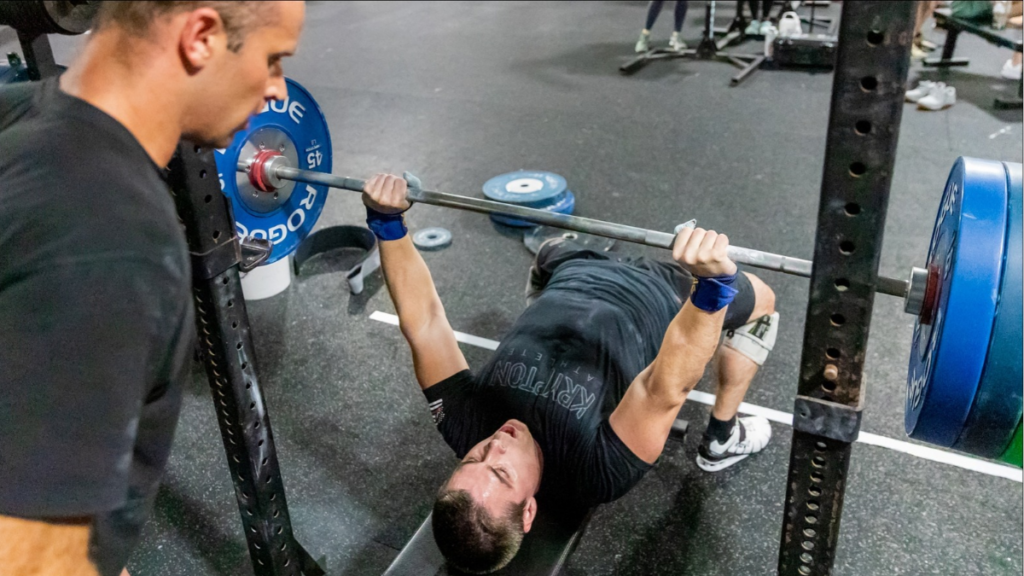
Exercise science research on resistance training progression demonstrates that consistent mechanical tension and progressive overload across weeks and months underpin muscle hypertrophy and strength development. You can apply that progressive demand by lifting slightly heavier weights, completing more clean repetitions with the same weight, improving movement control, or gradually adding quality working sets as your recovery allows. Understanding the distinct trade-offs between adding reps and adding weight helps beginners pick the right tool for each lift.
Adding More Reps: Strengths and Limits
Adding repetitions with the same weight is often the smoothest, lowest-friction way for beginners to progress on isolation lifts, bodyweight exercises, and movements where small weight jumps are not available. If you press twenty-pound dumbbells for eight controlled reps this week and manage ten clean reps next week with the exact same form, you have produced clear, measurable progress without straining your tendons abruptly. Higher-rep sets also build muscular endurance, metabolic stress, and movement confidence under fatigue.
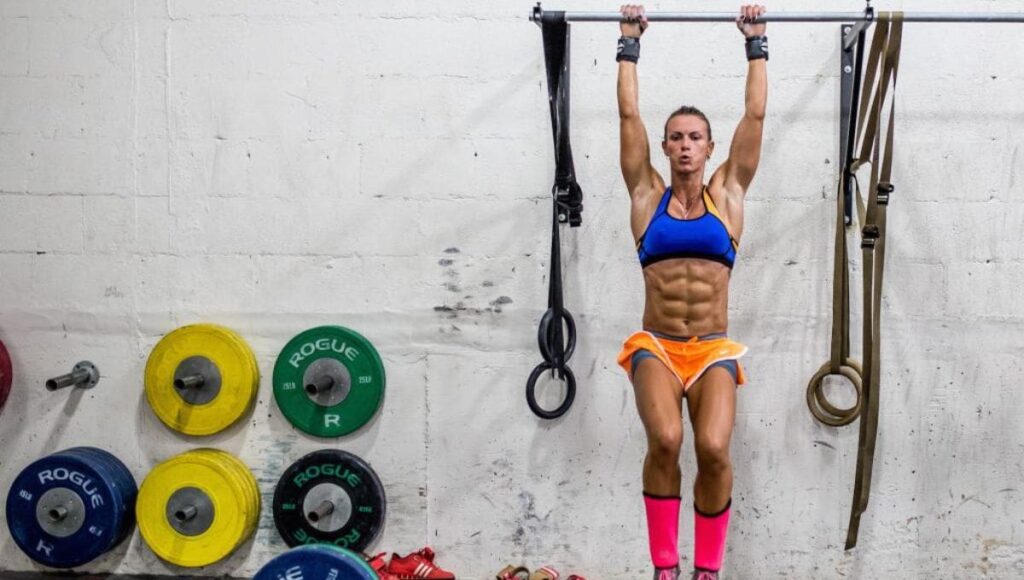
Resistance training load research confirms that moderate and higher repetition ranges taken close to muscular failure stimulate substantial muscle growth when effort is high. The main catch with relying exclusively on adding reps is that sets can become long, grueling, and heavily focused on endurance if you keep pushing rep counts sky-high instead of ever increasing load. Pushing a fifteen-rep set all the way to brutal exhaustion can also feel mentally draining compared to adding weight after hitting the top of a clean rep range.
Adding More Weight: Strengths and Limits
Adding weight on the bar, dumbbell rack, or cable stack increases external mechanical load directly, which places higher force demands on your muscles, bones, and connective tissues. When you step up from a fifty-pound barbell row to a fifty-five-pound row for the same controlled repetitions, your nervous system and working muscles must generate greater force from the very first rep. Heavy and moderate-heavy loads are especially valuable for building maximal strength on major compound lifts like squats, presses, hinges, and rows.
Walking Faster vs Walking Longer: Which Is Better for Your Heart?
Meta-analytic evidence comparing loading zones shows that heavier loads produce stronger maximal strength gains, while both heavy and moderate loads support muscle growth when sets are taken close to muscular failure. The pitfall for beginners is adding weight too aggressively before mastering clean technique, which can turn a controlled lift into a jerky, partial-range movement that taxes joints unnecessarily.
Comparing Rep Progression and Weight Progression for Beginners
| Progression Method | How It Works in Practice | Key Advantage for Beginners | Main Limitation to Watch |
| Adding More Reps | Lift the same weight for extra clean repetitions across sessions | Smooth, joint-friendly steps; ideal on isolation lifts and small dumbbells | Can make sets lengthy and endurance-heavy if pushed too far |
| Adding More Weight | Increase load by small increments once target reps are controlled | Directly raises mechanical force and builds maximal strength efficiently | Rushing load jumps too soon can compromise form and joint comfort |
| Double Progression (Both) | Build reps within a set range first, then add weight and reset reps | Combines safe control with steady, structured long-term overload | Requires tracking reps and loads consistently in a simple log |
How Beginners Should Progress Week to Week
For most beginners, combining both methods through a straightforward double progression approach is the cleanest, most reliable way to advance without guessing. You pick a target repetition range for an exercise, such as eight to twelve repetitions, and stay at a manageable weight until you can complete all prescribed sets cleanly near the top of that range. Once you hit that goal with solid control, you increase the weight slightly on your next session, drop back toward the bottom of the rep range, and build your reps back up again.
1. Use Double Progression on Most Core Exercises
Starting with a clear rep window keeps every workout focused and gives you an obvious target to chase even when you are not adding plates to the bar. If you perform three sets of goblet squats in the eight to twelve rep range, moving from eight reps per set to ten and then twelve shows clear progress before you bump up the dumbbell weight.
2. Take Smaller Jumps on Upper-Body and Isolation Lifts
Lower-body compound lifts can often handle slightly larger weight increases over time than shoulder raises, bicep curls, or triceps extensions, where small muscles and delicate joints prefer gradual steps. Using fractional plates, small dumbbell jumps, or extra clean reps keeps upper-body progress steady without forcing awkward technique.
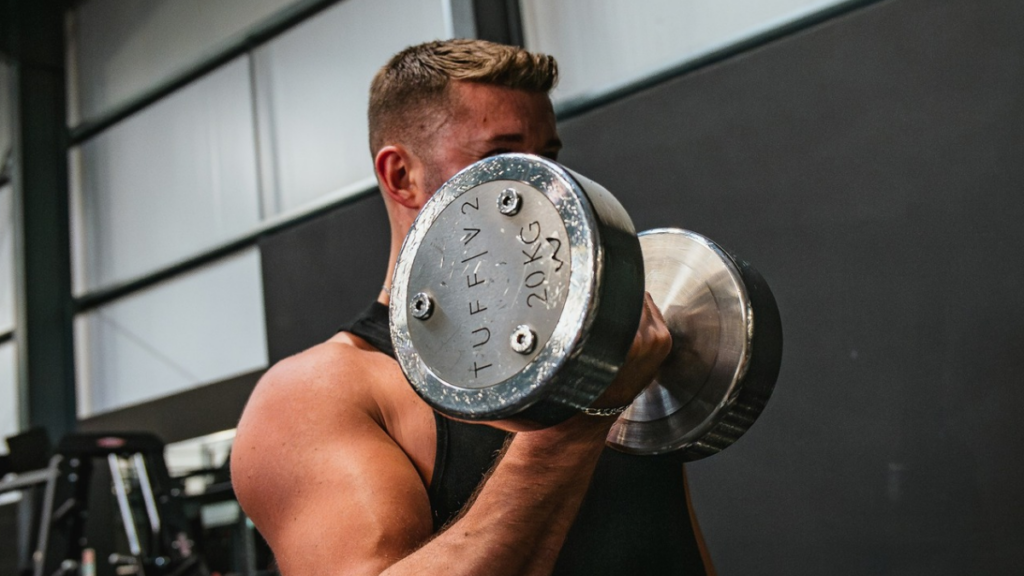
3. Stop Sets One to Two Reps Shy of Muscular Failure
Research on resistance training loads and effort indicates that taking sets reasonably close to muscular failure drives strong hypertrophy and strength adaptations while keeping fatigue manageable. Beginners do not need to grind every set to absolute collapse to grow, especially when learning new lifts where technical control matters just as much as hard effort.
Key Takeaways
| Decision Area | Evidence-Based Guidance | Why It Matters for Beginner Gains |
| Best Overall Strategy | Combine rep and weight progression using a clear target rep range | Delivers steady overload while protecting form and joint comfort |
| Rep Progression Role | Add reps with steady control before jumping to heavier weights | Builds muscular endurance, confidence, and clean movement patterns |
| Weight Progression Role | Add small weight increments once top target reps are achieved | Increases mechanical tension and supports strong maximal strength gains |
| Effort and Tracking | Log workouts and finish most sets 1 to 2 reps shy of failure | Keeps progression objective, sustainable, and aligned with recovery |
References
- American College of Sports Medicine, 2009. Progression models in resistance training for healthy adults. Medicine and Science in Sports and Exercise, 41(3), pp.687-708.
- Peterson, M.D., Rhea, M.R. and Alvar, B.A., 2005. Applications of the dose-response for muscular strength development: a review of meta-analytic efficacy and reliability for designing training prescription. Journal of Strength and Conditioning Research, 19(4), pp.950-958.
- Schoenfeld, B.J., Grgic, J., Ogborn, D. and Krieger, J.W., 2017. Strength and hypertrophy adaptations between low- vs. high-load resistance training: a systematic review and meta-analysis. Journal of Strength and Conditioning Research, 31(12), pp.3508-3523.
- Schoenfeld, B.J., Ogborn, D. and Krieger, J.W., 2016. Effects of resistance training frequency on measures of muscle hypertrophy: a systematic review and meta-analysis. Sports Medicine, 46(11), pp.1689-1697.
Robbie Wild Hudson
Editor-In-Chief at BOXROX. I come from a background of rugby and weightlifting. Growing up in the English Lake District, I spent a great deal of time swimming in its stunning lakes and rivers. In 2015 my brothers and I became the first people to swim the 145km length of the River Eden, from source to mouth, in 9 days. We also swam the Corryvreckan whirlpool, the third largest in the world, and Crossfit is a huge part of my training for these events.
More from Robbie Wild Hudson