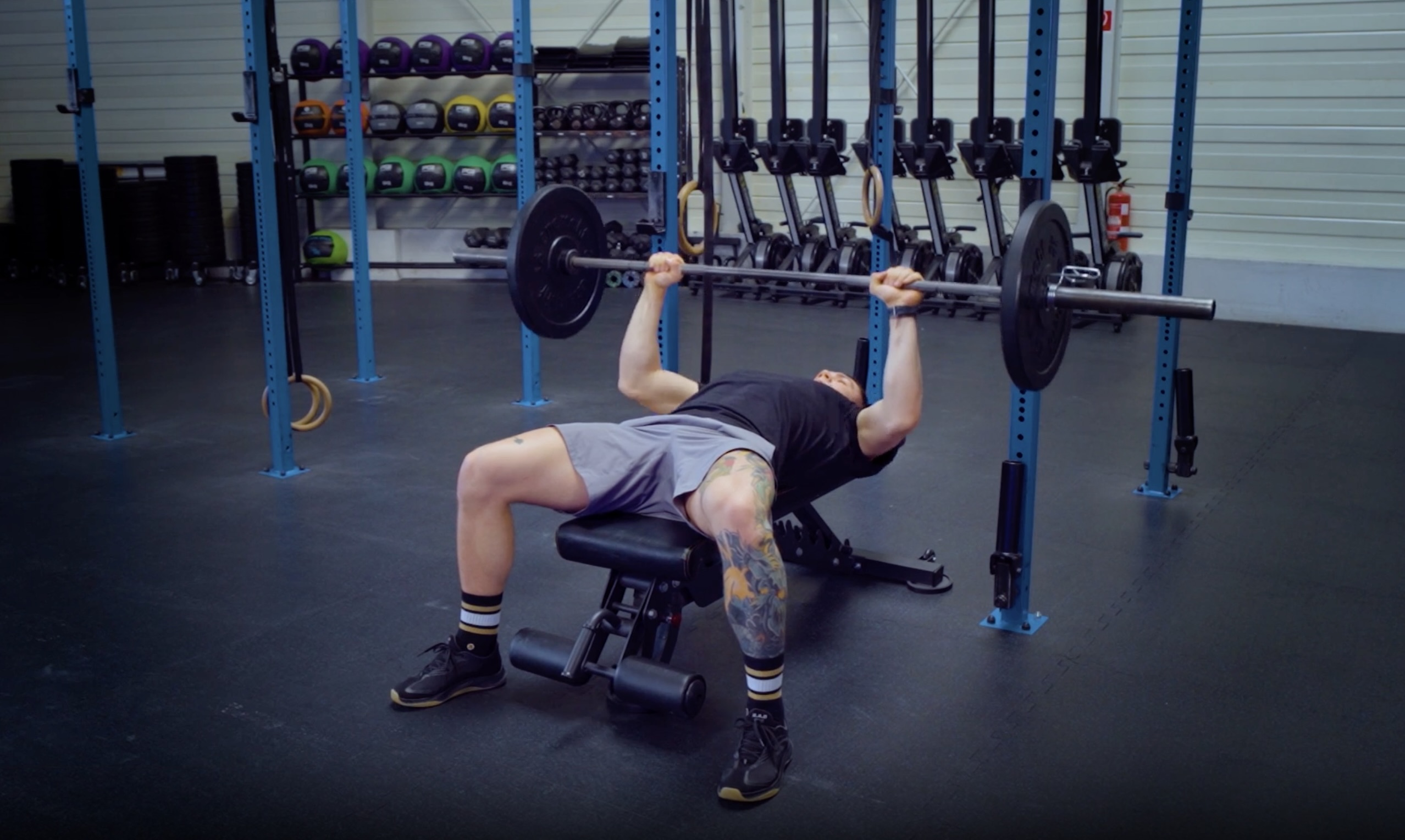


Walk into almost any commercial gym and you’ll eventually hear someone talking about the 100kg bench press.
For decades, it has been one of the most recognizable strength milestones in fitness. It sits at an interesting point on the strength spectrum. It is heavy enough to command respect, yet achievable enough that many dedicated lifters eventually reach it.


The question is whether a 100kg bench press is actually impressive. The answer depends on who you compare yourself to. Among the general population, a 100kg bench press is exceptionally rare. Among regular gym-goers, it is much more common. Among experienced strength athletes, it may be considered relatively ordinary.
Understanding where a 100kg bench press sits in the wider population can provide valuable perspective on your own strength levels and help determine whether your next goal should be to achieve it, or move beyond it.
Most People Cannot Bench Press 100kg
The first thing to understand is that most people do not lift weights. Globally, a large proportion of adults fail to meet basic physical activity guidelines, and resistance training participation rates remain relatively low. Research consistently shows that many adults do not engage in strength training at all, which means they have little opportunity to develop the muscular strength required for a significant bench press.
A 100kg bench press requires a combination of muscle mass, technical skill, neural adaptations, and consistent training. These qualities are not developed through everyday activities.
As a result, when compared to the general male population, a 100kg bench press is uncommon. When compared to the entire adult population, including women and non-lifters, it becomes even rarer.
This is an important point because many gym-goers compare themselves exclusively to other people who train. Doing so can distort perceptions of what is normal. Inside a gym environment, a 100kg bench press may seem ordinary. Outside that environment, it is far less common.
How Rare Is a 100kg Bench Press Among Men?
Estimating the exact percentage of men who can bench press 100kg is difficult because large-scale population data are limited. However, strength standards databases, coaching experience, and available performance data all suggest that a 100kg bench press places a man above average in terms of upper-body strength.
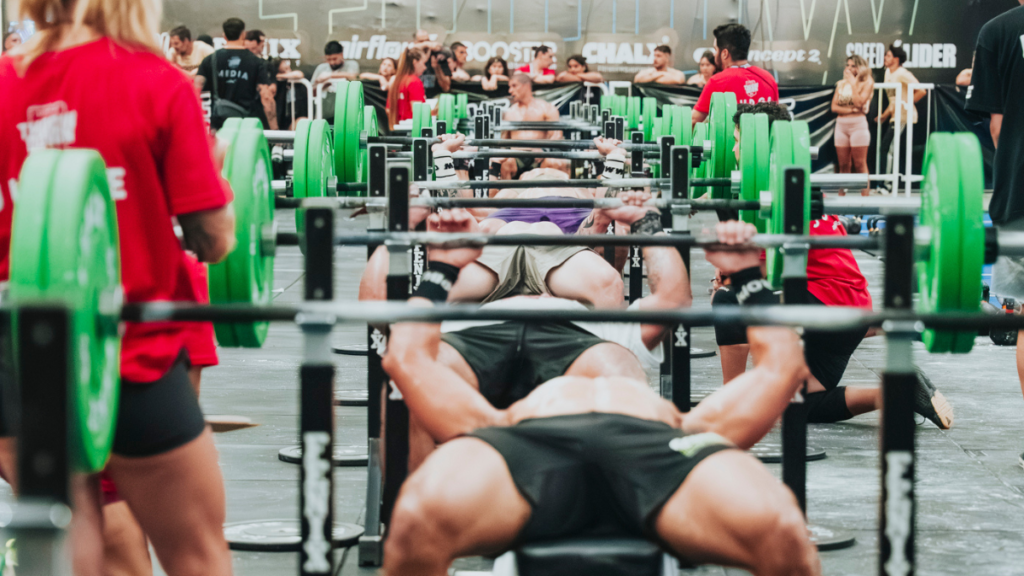
Many men never resistance train consistently enough to develop the muscle mass and movement skill necessary to reach this benchmark. Others train intermittently without following progressive overload principles that support long-term strength gains.
For healthy adult males who train regularly, a 100kg bench press is often considered an intermediate to advanced recreational strength standard. It represents a level of performance that typically requires months or years of dedicated effort. While not elite, it is certainly stronger than average.
How Rare Is a 100kg Bench Press Among Gym-Goers?
This is where the picture changes significantly. A gym environment creates selection bias. The people you see around the bench press are already more likely to be interested in strength training than the average person.
Even within gyms, however, many members struggle to reach a 100kg bench press.
Research examining resistance training progression shows that strength gains occur rapidly in beginners but slow considerably over time. As athletes become more experienced, increasing maximal strength requires greater training precision, higher-quality programming, and consistent recovery habits.
Many recreational lifters spend years training without ever reaching the 100kg milestone. Common reasons include inconsistent training, inadequate nutrition, poor exercise selection, and a lack of progressive overload.
Among men who train seriously and consistently, a 100kg bench press is relatively common. Among casual gym-goers, it remains a meaningful achievement.
Why the 100kg Benchmark Matters
The significance of the 100kg bench press extends beyond the number itself. Psychologically, milestones play an important role in long-term motivation. Research in sports psychology suggests that clearly defined goals can improve adherence and performance by providing athletes with tangible targets.
The 100kg bench press functions as one of those targets. It is heavy enough to require commitment but realistic enough that most healthy men can potentially achieve it with structured training. This balance makes it a powerful benchmark.
Unlike highly advanced goals that may only be attainable for a small percentage of athletes, the 100kg bench press sits within reach for many people willing to train consistently over time.

As a result, it has become one of the most widely recognized indicators of recreational strength.
How Long Does It Take to Bench Press 100kg?
The answer depends on several factors, including age, bodyweight, genetics, training history, and program quality.
Some larger athletes with previous sporting backgrounds may achieve a 100kg bench press within their first year of structured training. Others may require several years.
Research consistently shows that strength gains occur most rapidly during the novice stage, when neural adaptations contribute significantly to performance improvements. As training age increases, progress tends to become slower and more incremental.
For many recreational lifters, reaching a 100kg bench press within one to three years of consistent training represents a realistic expectation. The key word is consistency.
Most athletes who eventually bench 100kg do not achieve it through extraordinary workouts. They achieve it through hundreds of ordinary workouts performed over a long period of time.
Does Bodyweight Matter?
Absolutely. A 100kg bench press means very different things depending on the size of the athlete performing it.
For a 60kg lifter, benching 100kg represents exceptional relative strength. For a 110kg lifter, the achievement is still respectable but less extraordinary from a relative-strength perspective.
Research examining relative strength repeatedly demonstrates that body mass plays a major role in strength performance.
This is why many coaches evaluate both absolute strength and relative strength when assessing athletes.
A useful way to think about a 100kg bench press is not simply whether you can lift the weight, but how that weight compares to your bodyweight.
The smaller the athlete, the more impressive the achievement generally becomes.
So, How Rare Is a 100kg Bench Press?
Among the general population, a 100kg bench press is rare.
- Among all adults, it is very rare.
- Among recreational lifters, it is a meaningful strength milestone.
- Among serious strength athletes, it is respected but not unusual.
The answer ultimately depends on who you compare yourself to. What remains clear is that a 100kg bench press requires significantly more strength than most people ever develop. It demands structured training, progressive overload, adequate recovery, and long-term consistency.
For those reasons alone, it remains one of the most respected benchmarks in fitness.
Final Thoughts
A 100kg bench press occupies a unique position in strength training. It is heavy enough to distinguish serious lifters from the general population but achievable enough that many dedicated athletes can realistically pursue it. While it may not place you among elite powerlifters, it almost certainly places you above average in terms of upper-body strength.
If you can bench press 100kg, you have developed a level of strength that most people will never achieve. If you cannot bench 100kg yet, it remains one of the most worthwhile and motivating goals in recreational fitness.
Key Takeaways
| Category | Assessment | Why It Matters |
|---|---|---|
| General Population | Rare | Most adults do not resistance train consistently |
| Adult Men | Above Average | Requires significant strength development |
| Gym-Goers | Respectable Achievement | Many lifters never reach the milestone |
| Strength Athletes | Common | Often viewed as a baseline strength standard |
| Long-Term Value | High | Provides a meaningful and motivating benchmark |
References
• American College of Sports Medicine (2021) ‘ACSM’s Guidelines for Exercise Testing and Prescription’. 11th edn. Philadelphia: Wolters Kluwer.
• Kraemer, W.J. and Ratamess, N.A. (2004) ‘Fundamentals of Resistance Training: Progression and Exercise Prescription’, Medicine & Science in Sports & Exercise, 36(4), pp. 674–688.
• Schoenfeld, B.J. (2010) ‘The Mechanisms of Muscle Hypertrophy and Their Application to Resistance Training’, Journal of Strength and Conditioning Research, 24(10), pp. 2857–2872.
• Suchomel, T.J., Nimphius, S. and Stone, M.H. (2016) ‘The Importance of Muscular Strength in Athletic Performance’, Sports Medicine, 46(10), pp. 1419–1449.