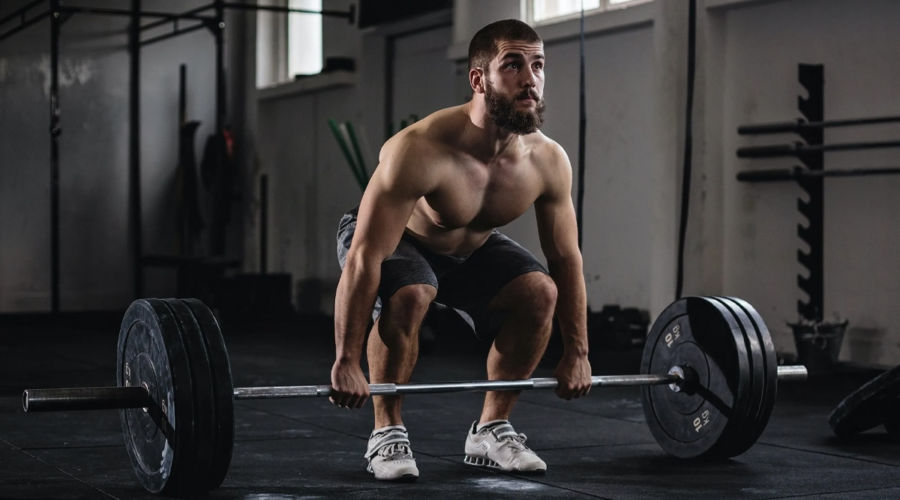


For many lifters, a 200kg deadlift is the ultimate strength milestone. It is the kind of number that instantly earns respect in any gym. Pulling 200kg from the floor requires far more than enthusiasm and a willingness to load plates onto a barbell. It demands a combination of muscle mass, technical skill, work capacity, grip strength, neural efficiency, and years of progressive training.
The problem is that many lifters chase the 200kg deadlift too early. They focus on testing maximal strength instead of developing the physical qualities that make a 200kg pull possible in the first place.


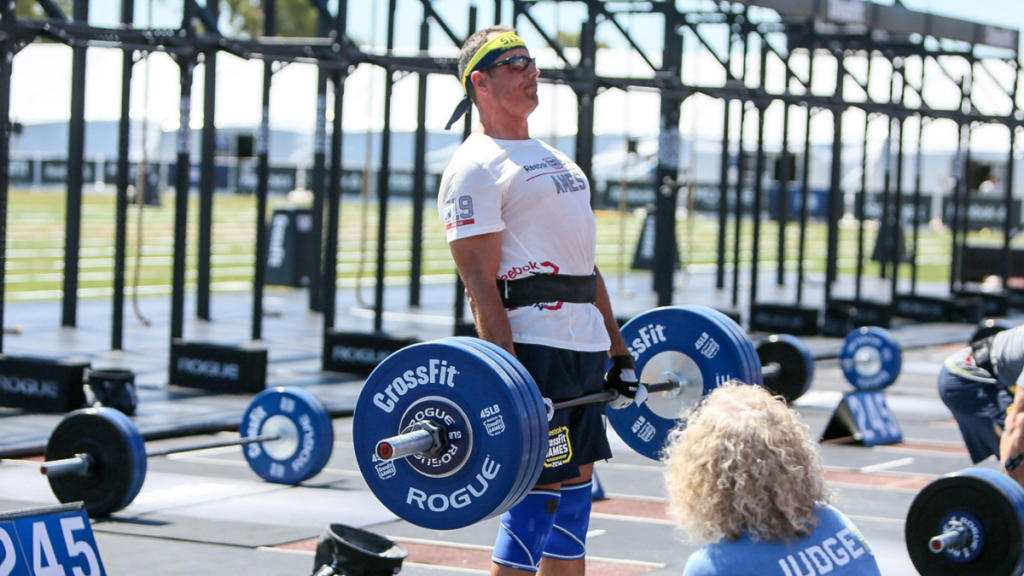
We recently highlighted four important benchmark lifts that often precede a successful 200kg deadlift:
• 140kg for 16 reps
• 160kg for 8 reps
• 180kg for 4 reps
• 190kg for 2 reps
These numbers are not random. They represent different stages of strength development. Together they demonstrate that a lifter possesses the endurance, muscle mass, technical consistency, and maximal strength needed to approach a 200kg pull.
But rather than focusing on specific numbers alone, it is more useful to ask a bigger question, what abilities must a lifter possess before they are truly ready for a 200kg deadlift? The answer can be simplified into three critical requirements. If you cannot do these three things, you are probably not ready to pull 200kg safely or successfully.
Why a 200kg Deadlift Is Such a Big Deal
The deadlift is one of the purest tests of strength in sport and fitness. Unlike many exercises, there is no stretch reflex, momentum, or assistance from specialized equipment. The bar starts motionless on the floor and must be moved entirely through muscular force.
Research consistently shows that the deadlift recruits enormous amounts of muscle mass across the posterior chain, including the glutes, hamstrings, spinal erectors, trapezius, and latissimus dorsi. Significant contributions also come from the quadriceps, forearms, and core musculature. A 200kg deadlift represents approximately 441 pounds. Depending on bodyweight, this may equal two to three times a person’s body mass.
For most recreational lifters, reaching this milestone requires years of structured training. Strength standards databases consistently place a 200kg deadlift in the advanced category for many male lifters and well above average for the general population. That is why it is important to understand what readiness actually looks like.
Factor 1: You Must Be Able to Handle Heavy Loads for High Reps
The first sign that someone is ready for a 200kg deadlift is not their one rep max. It is their ability to perform demanding sets with moderately heavy weights. This is where benchmarks such as 140kg for 16 repetitions become extremely valuable.
Strength Is Built on Work Capacity
Many lifters love heavy singles because they feel impressive. However, maximal strength is built on a foundation of training volume. Research shows that long term strength development depends heavily on sufficient training volume and muscular adaptation. Volume is one of the strongest predictors of hypertrophy, and larger muscles generally possess greater potential for force production.
If you cannot perform substantial work with moderate to heavy loads, you probably have not built enough muscle or work capacity to support a 200kg pull. High repetition deadlift sets challenge all of the following:
• Muscular endurance
• Grip endurance
• Technical consistency
• Cardiovascular conditioning
• Mental resilience
A set of 16 repetitions with 140kg is brutally demanding. It requires the ability to maintain proper mechanics despite fatigue. That matters because heavy deadlifts often fail when technique breaks down before strength runs out.
Muscle Size Still Matters
While neural adaptations play a huge role in maximal strength, muscle cross sectional area remains one of the strongest predictors of force production. Research has repeatedly demonstrated a strong relationship between muscle size and maximal strength.
The larger and stronger your glutes, hamstrings, spinal erectors, and upper back become, the greater your potential to produce force during a maximal pull. High volume work helps build those tissues. A lifter who struggles to complete challenging volume work is often trying to build a house without first pouring the foundation.

What This Looks Like in Practice
If your current training consists almost entirely of heavy triples, doubles, and singles, ask yourself:
- Can you deadlift approximately 70 percent of your estimated max for 12 to 16 quality repetitions?
- Can you maintain position and technique throughout the set?
- Can your grip survive the entire effort?
If the answer is no, your base may not yet be strong enough.
Factor 2: You Must Have a Grip That Never Becomes the Limiting Factor
The strongest posterior chain in the world means very little if you cannot hold onto the bar. One of the most overlooked requirements for a 200kg deadlift is elite grip strength. Many failed deadlift attempts have nothing to do with leg strength, back strength, or hip power. The bar simply slips from the hands.
Grip Strength Predicts Performance
Research has found strong relationships between grip strength and overall strength performance. Grip strength is often considered a marker of total body strength because it reflects both muscular capacity and neuromuscular efficiency. In the deadlift specifically, grip is unique because it serves as the final link between the body and the load. If that link fails, the lift fails.
The Simple Test
Before attempting 200kg, ask yourself:
- Can you comfortably hold 180kg for several seconds at lockout?
- Can you complete multiple heavy work sets without grip failure?
- Can you perform all warm up sets with a double overhand grip?
If grip is consistently limiting your training, it will almost certainly limit your 200kg attempt.
Factor 3: You Must Demonstrate Near Maximal Strength Below 200kg
This is where benchmarks like 180kg for four reps and 190kg for two reps become so useful. One of the most reliable ways to estimate one repetition maximum performance is through submaximal repetition testing. Research consistently demonstrates strong relationships between repetition performance and estimated maximal strength.
A lifter capable of performing:
• 180kg for four reps
• 190kg for two reps
Almost certainly possesses a one repetition maximum near or above 200kg. These benchmarks indicate that the necessary force production already exists. The final 200kg attempt simply becomes a matter of expressing that strength.
Neural Efficiency Matters
As loads become heavier, strength becomes increasingly dependent on the nervous system. Maximal deadlifting requires:
• High motor unit recruitment
• Rapid firing rates
• Intermuscular coordination
• Technical precision
Research shows that neural adaptations play a central role in maximal strength expression. This explains why some athletes with impressive muscle mass still struggle with maximal lifting. They have not trained their nervous system to coordinate force production efficiently.
Heavy doubles, triples, and singles teach the body to recruit more muscle fibers simultaneously. Without this adaptation, 200kg remains out of reach.
The Importance of Technical Consistency
Heavy weights expose technical weaknesses. At lighter loads, a poor starting position or weak brace may not matter. At 200kg, small errors become major problems.
Research examining resistance training technique consistently demonstrates that efficient movement patterns improve force production and reduce injury risk. Before attempting 200kg, your setup should be automatic.
You should not have to think through every cue. You should simply approach the bar and execute.
Questions Worth Asking
Before chasing 200kg, consider:
• Are you consistently sleeping seven to nine hours per night?
• Are you eating enough protein to support recovery?
• Are you recovering fully between heavy sessions?
• Are you managing fatigue appropriately?
Many plateaus are recovery problems disguised as programming problems.
How to Build Toward a 200kg Deadlift
If you cannot yet satisfy all three requirements, do not worry. The solution is straightforward.
Build Muscle First
Prioritize:
• Romanian deadlifts
• Rows
• Squats
• Split squats
• Hamstring curls
• Pull ups
Greater muscle mass creates a larger engine for future strength.
Train Multiple Rep Ranges
Research suggests that strength development benefits from exposure to both moderate and heavy loads. Include:
• High repetition work for muscle growth
• Moderate repetition work for strength accumulation
• Heavy work for neural adaptations
Strengthen Your Grip
Treat grip like any other muscle group. Train it intentionally. Farmer carries, static holds, and heavy deadlift work should become regular components of your program.
Practice Heavy Lifting
You cannot become proficient at heavy deadlifts without lifting heavy. Gradually expose yourself to heavier loads while maintaining excellent technique.
Key Takeaways
| Requirement | Why It Matters | Readiness Indicator |
|---|---|---|
| Heavy Load Endurance | Builds muscle mass, work capacity, and technical consistency | Around 140kg for 16 controlled reps |
| Grip Strength | Prevents grip from limiting maximal force production | Can confidently hold 180kg+ at lockout |
| Near Maximal Strength | Demonstrates sufficient force production for 200kg | Around 180kg x 4 or 190kg x 2 |
| Technical Mastery | Improves efficiency and reduces injury risk | Consistent setup and bar path under heavy loads |
| Recovery Capacity | Allows adaptation and continued progress | Consistent sleep, nutrition, and fatigue management |
References
• Ahtiainen, J.P., Pakarinen, A., Alen, M., Kraemer, W.J. and Häkkinen, K. (2003) ‘Muscle hypertrophy, hormonal adaptations and strength development during strength training in strength trained and untrained men’, European Journal of Applied Physiology, 89(6), pp. 555-563.
• Andersen, L.L., Magnusson, S.P., Petersen, J., Nielsen, P.K., Aagaard, P. and Madsen, P. (2008) ‘Influence of maximal muscle strength and intrinsic muscle contractile properties on contractile rate of force development’, European Journal of Applied Physiology, 96(1), pp. 46-52.
• Grgic, J., Lazinica, B., Mikulic, P., Krieger, J.W. and Schoenfeld, B.J. (2018) ‘The effects of short versus long interset rest intervals in resistance training on measures of muscle hypertrophy: A systematic review’, Sports Medicine, 48(1), pp. 137-151.
• Häkkinen, K. and Komi, P.V. (1983) ‘Electromyographic changes during strength training and detraining’, Medicine and Science in Sports and Exercise, 15(6), pp. 455-460.
• Kraemer, W.J. and Ratamess, N.A. (2004) ‘Fundamentals of resistance training: progression and exercise prescription’, Medicine and Science in Sports and Exercise, 36(4), pp. 674-688.
• Leong, D.P., Teo, K.K., Rangarajan, S., Lopez Jaramillo, P., Avezum, A., Orlandini, A., Seron, P., Ahmed, S.H., Rosengren, A. and Yusuf, S. (2015) ‘Prognostic value of grip strength: findings from the Prospective Urban Rural Epidemiology study’, The Lancet, 386(9990), pp. 266-273.
• Schoenfeld, B.J., Ogborn, D. and Krieger, J.W. (2017) ‘Dose response relationship between weekly resistance training volume and increases in muscle mass: A systematic review and meta analysis’, Journal of Sports Sciences, 35(11), pp. 1073-1082.