

The plank has become one of the most recognizable exercises in fitness. It looks simple because there is no movement involved, but anyone who has tried to hold a proper plank knows how quickly the challenge builds. Within seconds, your shoulders, abs, glutes, and legs begin working together to keep your body rigid against gravity.
Because it is so accessible, many people use the plank as a benchmark of core strength and muscular endurance. Social media is full of people competing for longer and longer holds, while gyms often include plank challenges as part of fitness assessments. That naturally raises one question. How long should you actually be able to hold a plank?



The answer depends on your age, training experience, body weight, and technique. More importantly, research shows that holding a plank for an extremely long time is not necessarily the best indicator of athletic performance. However, reaching certain time thresholds does reflect exceptional levels of muscular endurance.
So, can you hold a plank long enough to be considered elite?
What Makes the Plank So Challenging?
The standard forearm plank is an isometric exercise. That means your muscles produce force without changing length. Instead of lifting or lowering weight, your muscles contract continuously to prevent movement.
During a properly executed plank, the rectus abdominis, transverse abdominis, internal and external obliques, erector spinae, gluteus maximus, shoulders, quadriceps, and even the calves contribute to maintaining alignment. Unlike isolated abdominal exercises, the plank teaches the entire trunk to function as a stable unit. This is exactly what happens during athletic movements such as sprinting, jumping, lifting, and changing direction.

Research using electromyography consistently shows high activation of multiple core muscles during plank variations, particularly when instability or limb movements are added. This makes the plank an efficient exercise for improving trunk endurance and neuromuscular coordination.
Why Core Endurance Matters More Than Core Strength
Many people assume the plank is primarily a test of abdominal strength. In reality, it measures muscular endurance far more than maximal force production. Strength allows you to generate high levels of force for short periods. Endurance allows muscles to sustain lower levels of force for longer periods without fatigue. Athletes need both qualities.
Distance runners rely on trunk endurance to maintain posture during long races. Weightlifters need core stiffness during heavy lifts. Team sport athletes depend on trunk stability while accelerating, decelerating, and changing direction.
Is the Cheat Curl the Best Bicep Exercise You Aren’t Doing?
Researchers led by Stuart McGill have shown that endurance of the spinal stabilizing muscles is often more important than maximal strength for maintaining spinal health and reducing injury risk. This helps explain why coaches often use plank tests when evaluating athletes. They are assessing fatigue resistance rather than raw power.
What Is Considered a Good Plank Time?
Several organizations and fitness professionals have proposed benchmarks based on healthy adults.
- For beginners, holding a plank for twenty to thirty seconds with excellent technique is a solid starting point.
- Most recreationally active adults should eventually be capable of holding a proper plank for sixty to ninety seconds.
- A hold of two minutes demonstrates above average core endurance.
- Three minutes places someone well above the average recreational exerciser.
- Once someone reaches four minutes or more with perfect form, they are entering territory associated with exceptional muscular endurance.
The key phrase is perfect form. Allowing the hips to sag, lifting the hips too high, or shortening the lever by shifting body position dramatically reduces the difficulty. A three minute plank with poor technique is less impressive than a ninety second plank performed correctly.
So When Does a Plank Become Elite?
Elite depends on context. Elite endurance athletes, gymnasts, wrestlers, CrossFit competitors, military personnel, and professional athletes often possess outstanding trunk endurance because their sports demand it.
If you can maintain a technically correct plank for four to five minutes, you are demonstrating a level of muscular endurance that relatively few recreational exercisers can match. Once someone exceeds five minutes with excellent alignment, they have almost certainly developed exceptional trunk endurance through consistent training.
That does not automatically make someone an elite athlete. Elite athletes excel across multiple physical qualities including strength, power, speed, mobility, coordination, and sport specific skills. The plank represents only one piece of the puzzle.
Still, reaching the five minute mark with strict technique is a very impressive accomplishment and places someone among the highest performers in terms of core endurance.
World Records Do Not Represent Athletic Performance
The current world records for planking extend far beyond anything required for sport. Several record holders have maintained plank positions for more than eight hours. These incredible achievements showcase extraordinary mental toughness and muscular endurance, but they should not be viewed as ideal training goals.
Exercise science generally supports progressive overload with appropriate intensity rather than extremely prolonged static holds. After a certain point, the additional training benefits of simply holding a basic plank longer become very small. Instead of working toward hour long planks, athletes benefit more from increasing exercise complexity, adding resistance, or performing dynamic stability exercises.
Why Technique Matters More Than Time
The quality of your plank determines its effectiveness.
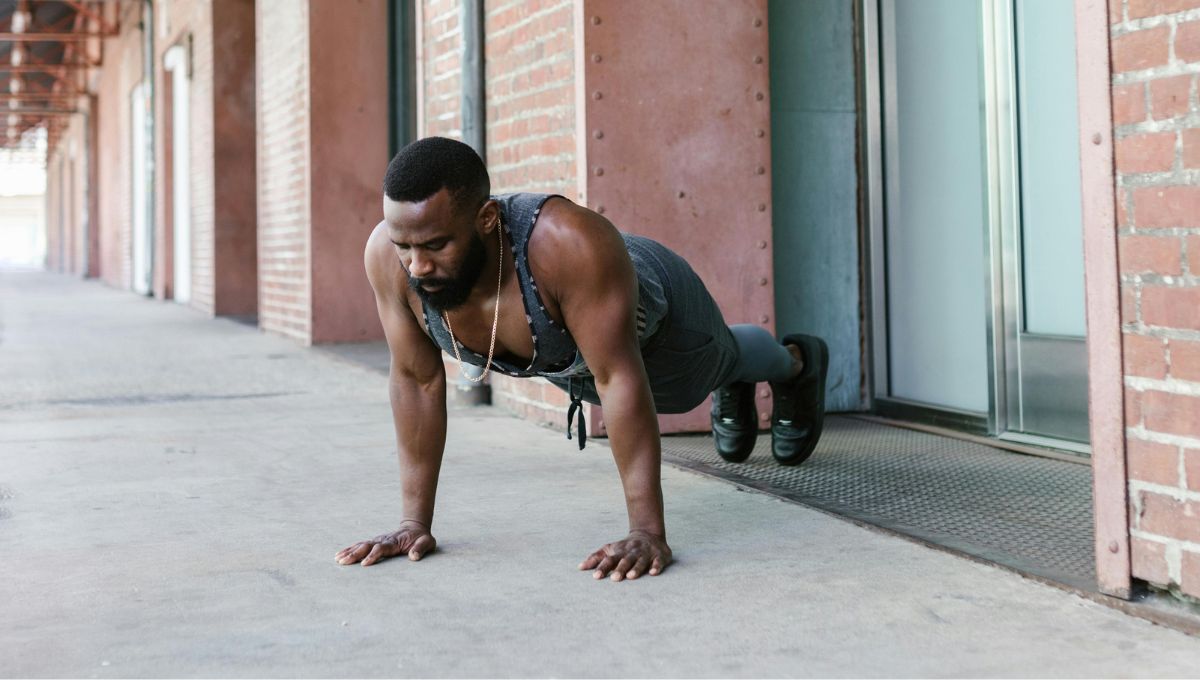
- A proper plank begins with the elbows directly beneath the shoulders.
- The body should form a straight line from head to heels.
- The abdominal muscles should brace as though preparing for a punch.
- The glutes should contract firmly.
- The legs should remain fully engaged throughout the hold.
- The neck should stay neutral with the eyes focused slightly ahead on the floor.
As fatigue develops, the first sign of failure is often excessive arching through the lower back. This increases spinal loading and reduces the effectiveness of the exercise.
Studies examining spinal biomechanics suggest that maintaining a neutral spine allows the stabilizing muscles to work efficiently while minimizing unnecessary stress on passive spinal structures. Stopping when technique deteriorates produces better long term results than chasing arbitrary time goals.
Should Everyone Aim for Five Minutes?

Probably not. If your goal is general health, maintaining a technically sound plank for one to two minutes is more than sufficient. If you compete in sports requiring high levels of trunk endurance, extending beyond three or four minutes may be worthwhile.
Beyond five minutes, the return on investment begins to diminish for most people. The extra time could often be spent developing strength, mobility, speed, conditioning, or sport specific skills that produce greater overall athletic improvement. Fitness is about balance rather than mastering a single exercise.
The Verdict
Holding a perfect plank for five minutes is an outstanding achievement that reflects exceptional core muscular endurance. Most healthy adults never reach this level because it requires consistent training, excellent technique, and considerable mental resilience.
That said, being able to hold a five minute plank does not automatically make someone an elite athlete. Elite performance depends on a combination of strength, speed, power, mobility, coordination, endurance, and technical skill that extends far beyond any single exercise.
The plank remains one of the best simple tests of trunk endurance available. If you can comfortably maintain excellent form for two minutes, you already possess above average core endurance. Reaching three or four minutes places you among highly trained individuals, while five minutes or more demonstrates elite muscular endurance even if it does not define elite athleticism by itself.
Ultimately, the best goal is not to chase endless minutes. Instead, focus on building a resilient, strong, and functional core that supports everything else you do inside and outside the gym.
Key Takeaways
| Benchmark | What It Means |
|---|---|
| 20 to 30 seconds | Good starting point for beginners |
| 60 to 90 seconds | Healthy level for most active adults |
| 2 minutes | Above average core endurance |
| 3 to 4 minutes | Excellent muscular endurance |
| 5 minutes or more | Elite core endurance, but not necessarily elite athletic performance |
| Perfect technique | More important than holding the longest possible time |
References
- Akuthota, V. and Nadler, S.F. (2004) Core strengthening. Archives of Physical Medicine and Rehabilitation, 85(Suppl. 3), S86 to S92.
- Behm, D.G., Drinkwater, E.J., Willardson, J.M. and Cowley, P.M. (2010) Canadian Society for Exercise Physiology position statement. The use of instability to train the core in athletic and non athletic conditioning. Applied Physiology, Nutrition, and Metabolism, 35(1), pp. 109 to 112.
- Ekstrom, R.A., Donatelli, R.A. and Carp, K.C. (2007) Electromyographic analysis of core trunk, hip, and thigh muscles during nine rehabilitation exercises. Journal of Orthopaedic and Sports Physical Therapy, 37(12), pp. 754 to 762.
- Hibbs, A.E., Thompson, K.G., French, D., Wrigley, A. and Spears, I. (2008) Optimizing performance by improving core stability and core strength. Sports Medicine, 38(12), pp. 995 to 1008.
- McGill, S.M. (2001) Low back stability. From formal description to issues for performance and rehabilitation. Exercise and Sport Sciences Reviews, 29(1), pp. 26 to 31.
- McGill, S.M., Childs, A. and Liebenson, C. (1999) Endurance times for low back stabilization exercises. Clinical targets for testing and training from a normal database. Archives of Physical Medicine and Rehabilitation, 80(8), pp. 941 to 944.
- Reed, C.A., Ford, K.R., Myer, G.D. and Hewett, T.E. (2012) The effects of isolated and integrated core stability training on athletic performance measures. Sports Medicine, 42(8), pp. 697 to 706.
- Snarr, R.L. and Esco, M.R. (2013) Electromyographical comparison of plank variations performed with and without instability devices. Journal of Strength and Conditioning Research, 27(11), pp. 3294 to 3301.