
























Resistance Bands vs Dumbbells: Which Builds More Muscle at Home?
Which is better for your goals?

BOXROX may earn a commission if you buy through links on this page.
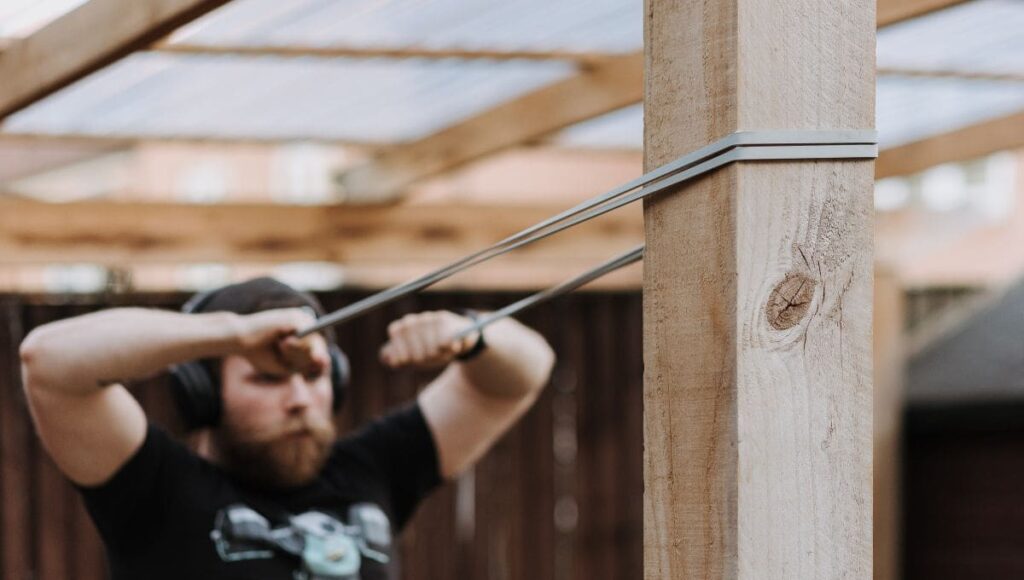
Home gyms can be tricky because often there isn’t enough space, and you need to choose carefully when it comes to buying your equipment.
Whether you train with bands, dumbbells or both, this article will help you take your progress and results to the next level.
How Resistance Bands And Dumbbells Load Your Muscles Differently
To understand which tool builds more muscle at home, you first have to look at the physics of how each piece of equipment creates resistance.
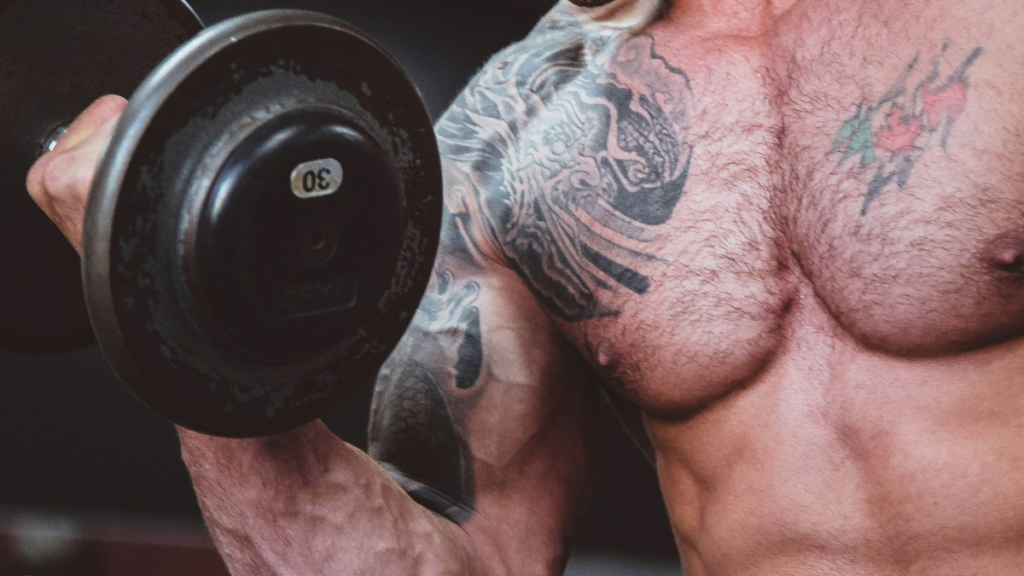
Dumbbells rely entirely on gravity, which means the mass of the dumbbell stays completely constant from the start of a repetition to the finish. However, because the angle of your limbs changes relative to the vertical pull of gravity as you move, the torque on your joints shifts throughout the stroke, often feeling heaviest at the bottom or mid-range of a lift and lighter near lockout.
Resistance bands work through elastic deformation rather than gravity, creating what biomechanists call ascending or variable resistance. When a band is slack at the beginning of a movement, tension is relatively low, and as you stretch the band further toward peak contraction, the resistive force climbs steadily higher.
That difference in resistance curves means dumbbells and resistance bands challenge your muscle fibers in opposite zones of the movement arc, which has direct consequences for muscle hypertrophy.
What Scientific Research Reveals About Muscle Growth
When sports scientists directly compare resistance band training against conventional free-weight and dumbbell training over multi-week programs, the results surprise many traditional gym purists. Systematic reviews and meta-analyses examining elastic resistance training versus conventional resistance equipment show that both tools produce remarkably similar gains in muscle strength and hypertrophy when sets are performed with comparable effort and pushed close to muscular failure. Your muscle fibers do not know whether tension comes from cast iron or stretched latex; they respond to mechanical tension, metabolic stress, and progressive overload.
Electromyographic studies comparing exercises like chest presses, rows, lateral raises, and curls performed with dumbbells versus elastic bands also reveal comparable levels of muscle activation across primary movers when resistance is matched. In several movements, elastic bands even increase stabilizer demand or peak-contraction activation because the resistance climbs sharply at the top of the repetition.
Where Dumbbells Still Hold A Practical Advantage
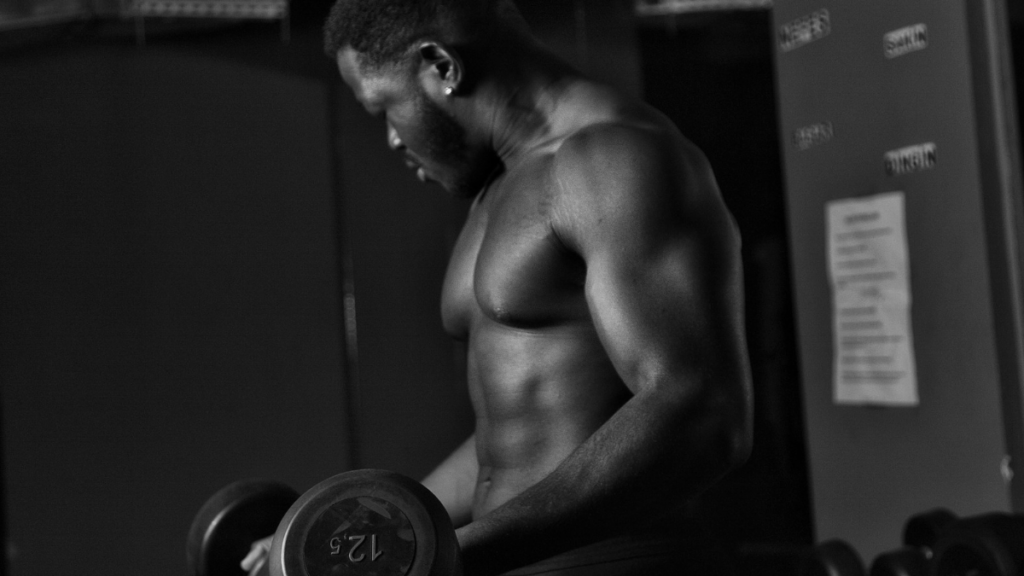
Even though controlled studies show similar hypertrophy when effort is matched, dumbbells still carry important real-world advantages for building muscle at home over the long term. Modern hypertrophy research consistently demonstrates that loading a muscle in its lengthened, stretched position is a potent trigger for muscle growth, and dumbbells provide strong, predictable tension right at the bottom stretch of presses, rows, curls, and Romanian deadlifts where bands often go slack.
In addition, tracking progressive overload is far simpler with dumbbells because a ten-kilogram weight always weighs ten kilograms, whereas band tension shifts depending on how far you stand from an anchor point or how worn the elastic becomes.
Comparing Resistance Bands and Dumbbells for Home Muscle Building
| Training Factor | Resistance Bands | Dumbbells |
| Resistance Profile | Ascending tension that peaks at full stretch | Constant mass governed by gravity and joint leverage |
| Lengthened-Position Tension | Often light at the start of the movement arc | Strong and consistent in the stretched bottom position |
| Progressive Overload Tracking | Harder to quantify exact load across sessions | Exact, repeatable weight increments every workout |
| Space and Portability | Ultra-compact, lightweight, and travel-friendly | Requires more storage space and higher upfront cost |
Which Tool Actually Builds More Muscle At Home
If you can only choose one tool and your primary goal is maximizing long-term muscle growth at home, adjustable dumbbells hold a slight practical edge over resistance bands alone. Dumbbells make it effortless to overload heavy lower-body hinges, squats, presses, and rows with exact weight progressions while maintaining strong mechanical tension in the crucial stretched portion of each lift. That combination makes progressive overload far more reliable once you move past the beginner stage.

However, if your budget, apartment space, or travel schedule keeps you limited to resistance bands, you can still build impressive muscle mass as long as you train close to muscular failure, remove slack at the start of every repetition, and progressively step up to thicker bands. Even better, pairing dumbbells and resistance bands together in the same home gym gives you the best of both worlds by matching heavy stretched-position loading with peak-contraction variable resistance.
Is the Zottman Curl the Perfect Missing Exercise for Bigger Biceps and Forearms?
How To Maximize Hypertrophy With Either Setup
Regardless of whether you train with bands, dumbbells, or both, muscle growth depends on how consistently you apply effort and progression across your weekly sessions.
Perform two to four working sets per exercise in the eight to fifteen repetition range, leaving one to two clean repetitions in reserve while controlling the lowering phase over two to three seconds. If you are using resistance bands, step slightly further away from your anchor point or choke up on the band so tension is already active before you start your first inch of movement, ensuring your muscles never waste energy on slack repetitions.
Key Takeaways for Building Muscle at Home
| Key Takeaway | Practical Application |
| Both Tools Stimulate Muscle Growth | Research shows similar hypertrophy from bands and free weights when effort is matched. |
| Resistance Curves Work Differently | Dumbbells challenge the stretched bottom position, while bands peak at full contraction. |
| Dumbbells Simplify Long-Term Progression | Exact weight increments and heavy bottom tension give dumbbells a slight edge for growth. |
| Eliminate Band Slack For Better Results | Pre-stretch resistance bands at the start of every set so tension stays constant throughout. |
| Combining Both Creates Complete Tension | Pair dumbbells and bands together at home to challenge muscles across the entire movement. |
References
- Aboodarda, S.J., Page, P.A. and Behm, D.G., 2016. Muscle activation comparisons between elastic and isoinertial resistance: a systematic review and meta-analysis. Clinical Biomechanics, 39, pp.52-61.
- Bergquist, R., Iversen, V.M., Mork, P.J. and Fimland, M.S., 2018. Muscle activity in upper-body single-joint resistance exercises with elastic resistance bands vs. free weights. Journal of Human Kinetics, 61, pp.5-13.
- Iversen, V.M., Mork, P.J., Vasseljen, O., Bergquist, R. and Fimland, M.S., 2017. Multiple-joint exercises using elastic resistance bands vs. conventional resistance-training equipment: a cross-over study. European Journal of Sport Science, 17(8), pp.973-982.
- Lopes, J.S.S., Machado, A.F., Micheletti, J.K., de Almeida, A.C., Cavina, A.P. and Pastre, C.M., 2019. Effects of training with elastic resistance versus conventional resistance on muscular strength: a systematic review and meta-analysis. SAGE Open Medicine, 7, pp.1-18.
- Schoenfeld, B.J., Ogborn, D.I. and Krieger, J.W., 2017. Dose-response relationship between weekly resistance training volume and increases in muscle mass: a systematic review and meta-analysis. Journal of Sports Sciences, 35(11), pp.1073-1082.
- Wolf, M., Androulakis-Korakakis, P., Wang, Y., Fisher, J.P. and Steele, J., 2023. Partial vs full range of motion resistance training: a systematic review and meta-analysis. International Journal of Strength and Conditioning, 3(1), pp.1-44.
Robbie Wild Hudson
Editor-In-Chief at BOXROX. I come from a background of rugby and weightlifting. Growing up in the English Lake District, I spent a great deal of time swimming in its stunning lakes and rivers. In 2015 my brothers and I became the first people to swim the 145km length of the River Eden, from source to mouth, in 9 days. We also swam the Corryvreckan whirlpool, the third largest in the world, and Crossfit is a huge part of my training for these events.
More from Robbie Wild Hudson