






















The 3 Types of Chest Exercises Every Beginner Should Understand


Chest training is a fun and important part of every beginner’s fitness journey. Here is how to get started, and what you need to understand in order to make solid progress.
How Your Chest Muscles Work Together
When people talk about building a stronger, fuller chest, they are primarily focusing on the pectoralis major, a large fan-shaped muscle covering the front of the upper torso that attaches to the clavicle, sternum, and upper ribs before converging onto the humerus.
Because its fibers angle in slightly different directions depending on whether they originate near the collarbone or lower ribcage, changing bench angle and arm path shifts how tension is distributed across the chest. Assisting muscles like the anterior deltoids and triceps brachii also play a major role whenever you push weight away from your body.

Electromyography and exercise science research on chest training show that bench incline, grip width, and movement path influence muscle recruitment across the pectoralis major, anterior deltoids, and triceps. Studies on resistance training loads and range of motion also confirm that muscles grow best when exposed to mechanical tension across generous ranges of motion and taken reasonably close to muscular failure. Understanding how the three main categories of chest exercises apply that tension helps beginners build balanced size safely.
The 3 Types of Chest Exercises Every Beginner Should Know
1. Flat and Incline Pressing Movements
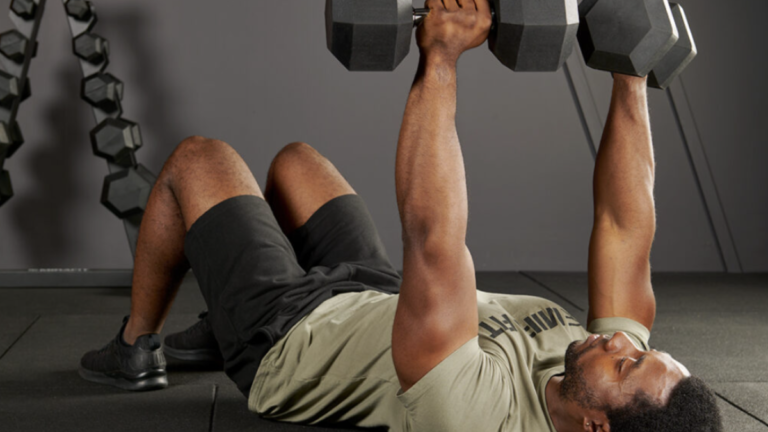
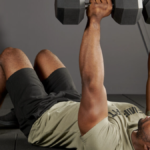
The first category consists of compound pressing exercises such as dumbbell bench presses, barbell bench presses, incline presses, and chest press machines, where you push resistance away from your torso by extending your elbows and flexing or horizontally adducting your shoulders. These lifts form the backbone of chest training because they let you handle meaningful loads and recruit large amounts of muscle across the chest, front shoulders, and triceps. Adjusting the bench to a slight incline places greater emphasis toward the upper chest fibers near the collarbone, while flat or machine presses offer steady, accessible progression.
Electromyography and hypertrophy research examining bench inclination and free-weight versus machine pressing shows that incline angles increase upper pectoralis involvement, while both free weights and machines support strong muscle and strength gains when taken close to failure. For beginners, starting with controlled dumbbell presses or a supportive chest press machine makes it easier to learn clean shoulder positioning and steady bar or handle control before pushing heavy weights.
2. Fly and Horizontal Adduction Movements
The second category includes chest flyes performed with dumbbells, cables, or a pec deck machine, where your elbows stay softly bent in a nearly fixed angle while your arms sweep inward across your body. Unlike compound presses that rely heavily on elbow extension through the triceps, flyes focus primarily on horizontal adduction of the shoulder joint, keeping steady tension on the pectoralis major throughout the arc. Cables and dumbbells are especially useful here because they allow a deep, controlled stretch across the chest fibers at the bottom of each repetition.
Sports science research on range of motion and muscle length demonstrates that training muscles through a full range of motion and emphasizing lengthened, stretched positions supports superior hypertrophy compared to cutting repetitions short. Because flyes isolate horizontal adduction without demanding heavy triceps lockout strength, beginners can use them with moderate weights and smooth control to feel the chest working cleanly.
3. Push-Ups and Bodyweight Pressing Progressions
The third category covers push-ups and bodyweight pressing progressions, which challenge your chest while simultaneously requiring core bracing and scapular stability against the floor or an elevated surface. Many beginners overlook push-ups once they touch dumbbells or machines, yet mastering clean push-ups teaches you how to control your shoulder blades, keep your torso aligned, and generate pushing force smoothly. If standard floor push-ups feel too tough at first, elevating your hands on a bench or smith machine lets you build strength gradually until you can perform crisp full-range reps.
Electromyography and training studies comparing push-ups and bench press variations confirm that loaded or progressively challenging push-up variations activate the pectoralis major effectively while recruiting trunk stabilizers. Using push-ups as a warm-up, a secondary volume builder, or a reliable bodyweight staple gives beginners a versatile option they can perform anywhere.
Comparing the 3 Types of Chest Exercises for Beginners
| Exercise Category | Primary Joint Action | Key Beginner Examples | Best Role in a Beginner Routine |
| Pressing Movements | Shoulder flexion and horizontal adduction with elbow extension | Dumbbell bench press, incline press, chest press machine | Main strength and mass builders using controlled loads near failure |
| Fly Movements | Shoulder horizontal adduction with a soft, steady elbow angle | Dumbbell flyes, cable flyes, pec deck machine | Isolation movements for a deep chest stretch and clean mind-muscle feel |
| Push-Up Progressions | Horizontal pushing combined with core and scapular stabilization | Incline push-ups, standard floor push-ups, weighted push-ups | Great for learning body control, warm-ups, and extra quality volume |
How Beginners Should Combine All 3 Types Weekly
You do not need a complicated chest workout to get great results from these three movement categories, because a simple combination covers heavy loading, stretched tension, and movement control efficiently. Meta-analytic evidence on resistance training frequency indicates that training a muscle group twice per week produces stronger hypertrophy outcomes than training it only once per week, while research on training loads shows that moderate weights in the eight to fifteen repetition range taken close to muscular failure build muscle effectively.
10 Bicep Curl Variations Every Beginner Needs to Know
A practical approach for beginners is to train chest twice per week, starting with one pressing movement and following it with either a fly variation or a push-up progression for two to three controlled sets each. Focus on lowering the weight smoothly over two to three seconds, keeping your shoulder blades gently retracted against the bench without shrugging toward your ears, and adding a clean rep or small weight increase over time.
Key Takeaways
| Decision Area | Evidence-Based Guidance | Why It Matters for Beginner Chest Growth |
| Three Core Categories | Combine pressing movements, fly variations, and push-up progressions | Covers heavy compound loading, stretched adduction, and body control |
| Bench Angle and Tools | Use incline angles for upper chest and machines or dumbbells for control | Helps beginners learn clean mechanics and push safely near failure |
| Stretch and Range of Motion | Lower weights under control through a full, comfortable range of motion | Lengthened positions and full excursion support stronger muscle growth |
| Weekly Schedule | Train chest twice per week with controlled reps close to muscular failure | Delivers stronger growth signals than once-weekly training with manageable fatigue |
References
- Lauver, J.D., Cayot, T.E. and Scheuermann, B.W., 2016. Influence of bench angle on upper extremity muscular activation during bench press exercise. European Journal of Sport Science, 16(3), pp.309-316.
- Marchetti, P.H. and Uchida, M.C., 2011. Effects of the pullover exercise on the pectoralis major and latissimus dorsi muscles as evaluated by EMG. Journal of Applied Biomechanics, 27(4), pp.380-384.
- Schoenfeld, B.J., Grgic, J., Ogborn, D. and Krieger, J.W., 2017. Strength and hypertrophy adaptations between low- vs. high-load resistance training: a systematic review and meta-analysis. Journal of Strength and Conditioning Research, 31(12), pp.3508-3523.
- Schoenfeld, B.J., Ogborn, D. and Krieger, J.W., 2016. Effects of resistance training frequency on measures of muscle hypertrophy: a systematic review and meta-analysis. Sports Medicine, 46(11), pp.1689-1697.
- Wolf, M., Androulakis-Korakakis, P., Fisher, J., Schoenfeld, B. and Steele, J., 2023. Partial vs full range of motion resistance training: a systematic review and meta-analysis. International Journal of Strength and Conditioning, 3(1), pp.1-15.
Robbie Wild Hudson
Editor-In-Chief at BOXROX. I come from a background of rugby and weightlifting. Growing up in the English Lake District, I spent a great deal of time swimming in its stunning lakes and rivers. In 2015 my brothers and I became the first people to swim the 145km length of the River Eden, from source to mouth, in 9 days. We also swam the Corryvreckan whirlpool, the third largest in the world, and Crossfit is a huge part of my training for these events.
More from Robbie Wild Hudson