

Resistance bands can be an excellent starting point for building a stronger, more muscular torso. They are portable, inexpensive, and easy to adjust by changing the band thickness, grip position, or distance from the anchor point. More importantly, resistance training can increase muscle size and strength when the sets are performed with sufficient effort and progressive overload, whether the load comes from free weights, machines, or elastic resistance.
For beginners, the goal is not to chase complicated workouts. It is to learn a few movements that train the chest, back, shoulders, and trunk with control. A well developed torso usually reflects a combination of muscular chest, broad upper back, rounded shoulders, and good posture. Your diet, sleep, and overall body fat level also influence how defined those muscles look, but training gives your body the stimulus to build them.


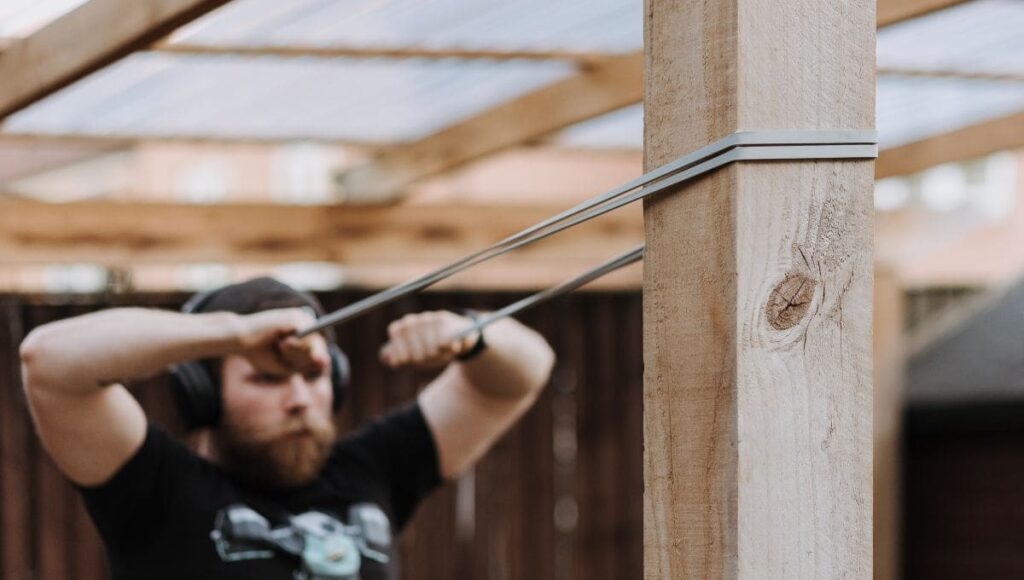
The three exercises below cover the major muscles that shape the upper body. They work best when you use a band that makes the final few repetitions challenging while still allowing clean technique. Research shows that training close to muscular fatigue can promote muscle growth across a wide range of loads, which makes bands especially useful when heavier equipment is not available.
Why Bands Work for Building a Better Torso
Bands create resistance as they stretch. This means the movement often becomes harder toward the end range, where the band is longest. That resistance pattern feels different from a dumbbell, but it can still create the mechanical tension needed to challenge muscle tissue.
Studies comparing elastic resistance with conventional weights have found broadly similar improvements in strength and muscle related outcomes when training programs are appropriately designed. The exact result depends on the exercise, training experience, effort, volume, and consistency, yet bands are clearly capable of producing meaningful training adaptations.
For beginners, bands also encourage a practical form of progression. You can begin with a lighter band, add repetitions over time, use a thicker band, step farther from the anchor, or slow the lowering phase. These small changes make the workout harder without requiring a fully equipped gym.
Train two or three times per week, leaving at least a day between sessions that train the same muscles hard. Aim for two or three working sets of each exercise. Most beginners can start with eight to fifteen controlled repetitions per set, stopping when they feel they could only perform one to three more good repetitions.
Exercise 1: Standing Banded Chest Press
What It Builds
The standing banded chest press primarily trains the pectoral muscles of the chest. It also involves the front of the shoulders and the triceps, which straighten the elbows during the press. Building these muscles can improve the muscular appearance of the chest and arms while teaching a useful pushing pattern.
Research using resistance training programs consistently shows that the chest, shoulders, and triceps respond to progressive loading. Pressing movements also provide a time efficient way to train several upper body muscles at once, which is useful for beginners who want a short and focused workout.
How to Do It
Anchor a resistance band securely behind you at about chest height. Hold one end in each hand and walk forward until the band has light tension. Take a staggered stance, brace your abdominal muscles, and keep your ribs from flaring upward.
Start with your hands beside your chest and your elbows slightly below shoulder height. Press your hands forward until your arms are nearly straight, then squeeze your chest briefly. Return slowly until your hands reach the starting position. Keep your shoulders down and avoid letting them roll forward aggressively at the end of the repetition.
Your body should remain steady throughout the exercise. If you are twisting, leaning, or arching your lower back, reduce the band tension and regain control. The press should come from your chest, shoulders, and triceps rather than momentum from your torso.
How to Progress It
When you can complete fifteen repetitions with smooth form, increase the challenge by using a thicker band or moving farther from the anchor. You can also pause for one second in the fully pressed position. This adds difficulty without changing the exercise.
Perform two or three sets of eight to fifteen repetitions. Rest for around one to two minutes between sets so you can maintain good pressing mechanics.
Exercise 2: Banded Seated Row
What It Builds
The banded seated row develops the muscles of the upper and middle back, including the latissimus dorsi, rhomboids, and middle trapezius. It also trains the biceps and rear shoulder muscles. A stronger back helps balance pressing work and contributes to the wider upper body shape many people associate with an athletic torso.
Resistance training improves strength in a task specific manner, which is why practicing a rowing pattern can make you more capable at pulling movements. Training the upper back may also support better shoulder function when it is part of a balanced program that includes both pushing and pulling exercises.
How to Do It
Sit on the floor with your legs extended in front of you. Loop the center of the band around the soles of both feet, holding one end in each hand. Sit tall with your chest open and your spine neutral. Bend your knees slightly if tight hamstrings make it difficult to sit upright.
Begin with your arms extended and the band under light tension. Pull your elbows back toward your sides while drawing your shoulder blades gently together. Your hands should move toward the lower part of your ribs or waist. Pause briefly, then extend your arms slowly until you return to the starting position.
Avoid rounding your back to reach forward. Also avoid turning the row into a shrug. Think about moving your elbows backward while keeping your shoulders away from your ears. This cue usually helps beginners feel their back muscles working rather than relying only on the arms.
How to Progress It
You can increase resistance by using a thicker band or holding the band closer to your feet. Holding the squeezed position for one or two seconds is another effective way to make a lighter band more demanding.
Perform two or three sets of ten to fifteen repetitions. Use a steady rhythm and make the lowering phase controlled, because a deliberate eccentric phase contributes to the total muscular work of the set.
Exercise 3: Banded Overhead Press
What It Builds
The banded overhead press trains the deltoid muscles of the shoulders, especially the front and side portions, along with the triceps and several muscles that stabilize the trunk. Developed shoulders can make the upper body appear broader and create a more defined transition between the arms and torso.
The overhead press also requires coordination. Your trunk must resist excessive backward leaning while your arms press upward. This makes the movement useful for developing strength that involves the shoulder complex and the core working together.
How to Do It
Stand on the center of a resistance band with both feet about hip width apart. Hold an end of the band in each hand and bring your hands to shoulder level, with your palms facing forward or slightly inward. Begin with a lighter band because the press becomes demanding quickly.
Tighten your abdominal muscles and squeeze your glutes lightly. Press both hands upward until your arms are nearly straight overhead. Keep your head neutral and allow your arms to finish beside your ears if your shoulder mobility permits it. Lower the handles slowly back to shoulder level.
Keep your ribs stacked over your pelvis. If your lower back arches dramatically, the band is too heavy or you are using too much tension. Reducing resistance and performing the movement with a smaller range is better than forcing a position you cannot control.
How to Progress It
Add repetitions first, then move to a thicker band. You can also stand wider on the band to create more starting tension, but make only one change at a time so you can judge whether your form remains solid.
Perform two or three sets of eight to twelve repetitions. Because the shoulders are smaller muscles than the back, prioritize smooth technique instead of using a band that forces you to lean backward.
How to Turn These Exercises Into a Simple Beginner Workout
Perform the standing chest press, seated row, and overhead press in that order. Complete two sets of each exercise during your first few weeks. Once you recover well and can keep good technique, progress to three sets.
Use a band resistance that makes the last repetitions feel difficult but does not make the movement sloppy. Training does not need to involve failure on every set. Evidence indicates that being reasonably close to fatigue can be effective for muscle growth, while consistently leaving many easy repetitions in reserve may provide too little stimulus.
As a simple starting target, complete two or three sessions each week. Write down the band used and the number of repetitions achieved. When you reach the top of the recommended repetition range for every set, increase the resistance slightly or add tension by changing your position.
Eat enough protein, sleep consistently, and give your body time to adapt. Resistance training stimulates muscle protein synthesis, but visible improvements in muscle size require repeated training sessions over weeks and months. Beginners often improve quickly because they are learning the exercises while their muscles and nervous system adapt to a new training stimulus.
Common Mistakes to Avoid
The most common mistake is choosing a band that is too heavy. If you cannot control the return phase, keep your torso stable, or move through a comfortable range, the resistance is excessive. Start lighter and make the exercise harder gradually.
Another mistake is treating every repetition like a race. Fast, uncontrolled repetitions make it harder to keep tension on the intended muscles and can make technique inconsistent. Use a smooth press or pull, pause briefly when the target muscle is shortened, and return with control.
Finally, do not train only the chest and shoulders. A balanced torso needs pulling work as well as pushing work. The seated row is not an optional extra. It is an essential counterbalance that trains the back and supports a more complete upper body program.
Key Takeaways
| Focus | Practical takeaway | Starting recommendation |
|---|---|---|
| Exercise selection | Train a horizontal push, a horizontal pull, and an overhead push for broad torso coverage. | Standing chest press, seated row, and overhead press |
| Training frequency | Repeated resistance training sessions drive muscular and strength adaptations. | Two to three sessions per week |
| Effort | Sets should become challenging while technique remains controlled. | Finish with roughly one to three good repetitions still possible |
| Progression | Gradually increasing training difficulty supports continued adaptation. | Add repetitions, band tension, or a thicker band |
| Technique | Controlled repetitions help keep the work on the intended muscles. | Use a slow return phase and a stable torso |
References
- American College of Sports Medicine (2009) ‘American College of Sports Medicine position stand: Progression models in resistance training for healthy adults’, Medicine & Science in Sports & Exercise, 41(3), pp. 687–708.
- Colado, J.C. and Triplett, N.T. (2008) ‘Effects of a short term resistance program using elastic bands versus weight machines for sedentary middle aged women’, Journal of Strength and Conditioning Research, 22(5), pp. 1441–1448.
- Figueiredo, V.C., de Salles, B.F. and Trajano, G.S. (2018) ‘Volume for muscle hypertrophy and health outcomes: The most effective variable in resistance training’, Sports Medicine, 48(3), pp. 499–519.
- Lasevicius, T., Ugrinowitsch, C., Schoenfeld, B.J., Roschel, H., Tavares, L.D., De Souza, E.O., Tricoli, V. and Teixeira, E.L. (2018) ‘Effects of different intensities of resistance training with equated volume load on muscle strength and hypertrophy’, European Journal of Sport Science, 18(6), pp. 772–780.
- Schoenfeld, B.J., Ogborn, D. and Krieger, J.W. (2017) ‘Dose response relationship between weekly resistance training volume and increases in muscle mass: A systematic review and meta analysis’, Journal of Sports Sciences, 35(11), pp. 1073–1082.
- Schwanbeck, S., Chilibeck, P.D. and Binsted, G. (2009) ‘A comparison of free weight squat to Smith machine squat using electromyography’, Journal of Strength and Conditioning Research, 23(9), pp. 2588–2591.
- Slysz, J., Stultz, J. and Burr, J.F. (2016) ‘The efficacy of resistance band exercise for muscular fitness in older adults: A systematic review and meta analysis’, Journal of Physical Activity and Health, 13(8), pp. 859–872.
- Wirth, K., Hartmann, H., Mickel, C., Szilvas, E., Keiner, M. and Sander, A. (2016) ‘Core stability in athletes: A critical analysis of current guidelines’, Sports Medicine, 47(3), pp. 401–414.