

Most beginners want an abdominal exercise that feels effective, is easy to learn, and actually contributes to thicker, more visible abs over time. Crunches and hanging leg raises are two common choices, but they ask different things from your body. One is simple and highly scalable. The other is more demanding, requires grip strength and a place to hang, and can be difficult to perform without turning it into a hip flexor exercise.
For most beginners, crunches are the better starting choice for building the rectus abdominis, which is the muscle that creates the visible rows of a six pack. That does not make hanging leg raises a bad exercise. When performed with control and progressed sensibly, they can be a valuable later addition. The key is understanding what each movement trains, how to perform it well, and why progressive overload matters more than choosing the most difficult looking exercise.
What Actually Makes Abs Look Better?
Your abdominal muscles respond to resistance training in much the same way as other muscles. They need enough mechanical tension, repeated hard efforts, and a progression in training challenge over time. The rectus abdominis runs vertically down the front of the torso and is divided by tendinous bands, which create the familiar segmented appearance when the muscle is developed and body fat is sufficiently low.
Exercise selection can help you build stronger and potentially thicker abs, but it cannot selectively remove fat from your stomach. Studies examining localized abdominal training have found that doing abdominal exercises alone does not meaningfully reduce abdominal fat in the trained area. Visible abs therefore depend on two connected goals: developing the abdominal muscles through training and managing overall body fat through nutrition, physical activity, and total energy balance.

That distinction matters because beginners often judge an ab exercise only by how much it burns. A movement can feel brutally difficult because of grip fatigue, swinging, or hip flexor effort without giving the rectus abdominis the best possible stimulus. The best exercise is the one you can control, load progressively, and perform consistently.
The Case for Crunches
Why Crunches Target the Abs Directly
A crunch is primarily a spinal flexion exercise. You lie on your back, bend your knees, and curl your rib cage toward your pelvis. The rectus abdominis shortens to create that motion, while the obliques help stabilize the torso and contribute to trunk flexion.
This makes the crunch relatively direct. Unlike a full sit up, the movement uses a shorter range of motion and avoids requiring the torso to rise all the way to the thighs. That can make it easier to keep the emphasis on the abdominal wall instead of allowing the hip flexors to take over.
Research using electromyography has consistently shown meaningful rectus abdominis activity during crunch variations. Electromyography measures electrical activity associated with muscle activation, although it does not directly measure long term muscle growth. It is useful for understanding which muscles are contributing to a movement, but it should not be treated as a ranking system that guarantees one exercise will build more muscle than another.
For a beginner, the main advantage of the crunch is that it makes learning the intended movement easier. You can move slowly, focus on curling the torso rather than yanking the neck forward, and stop the set when the abs begin to lose tension.
How to Perform a Better Crunch
Start on your back with your knees bent and feet comfortably planted. Cross your arms over your chest or place your fingertips lightly beside your head. Avoid pulling your head forward. Before you begin, exhale gently and brace your midsection as though preparing for someone to poke your stomach.
Curl your shoulder blades off the floor by bringing your rib cage toward your pelvis. Think about shortening the space between the bottom of your ribs and the front of your hips. Pause briefly when your abs are fully contracted, then lower under control until your shoulder blades are close to the floor again.
The range of motion does not need to be huge. A good crunch is not about sitting upright. It is about producing deliberate trunk flexion while keeping the movement in the abdominal muscles. If your lower back starts to arch aggressively or your neck begins doing the work, reduce the range and slow down.
How to Progress Crunches
The bodyweight crunch is usually enough when you are starting out, but it will eventually become too easy if you can complete high repetitions without getting close to muscular fatigue. Simply doing endless fast repetitions is not an efficient long term plan.
You can progress by slowing the lowering phase, adding repetitions within a sensible range, pausing at the top, or adding external load. Holding a light dumbbell, weight plate, or cable attachment against the chest can turn the crunch into a more challenging resistance exercise. This is important because muscle growth is supported by progressive overload, meaning the muscle must face a gradually greater training demand over time.
Loaded crunch variations are also easy to standardize. You can record the weight, repetitions, and quality of each set, then try to improve gradually. That clarity is a major benefit for beginners.
The Case for Hanging Leg Raises
Why Hanging Leg Raises Are More Demanding
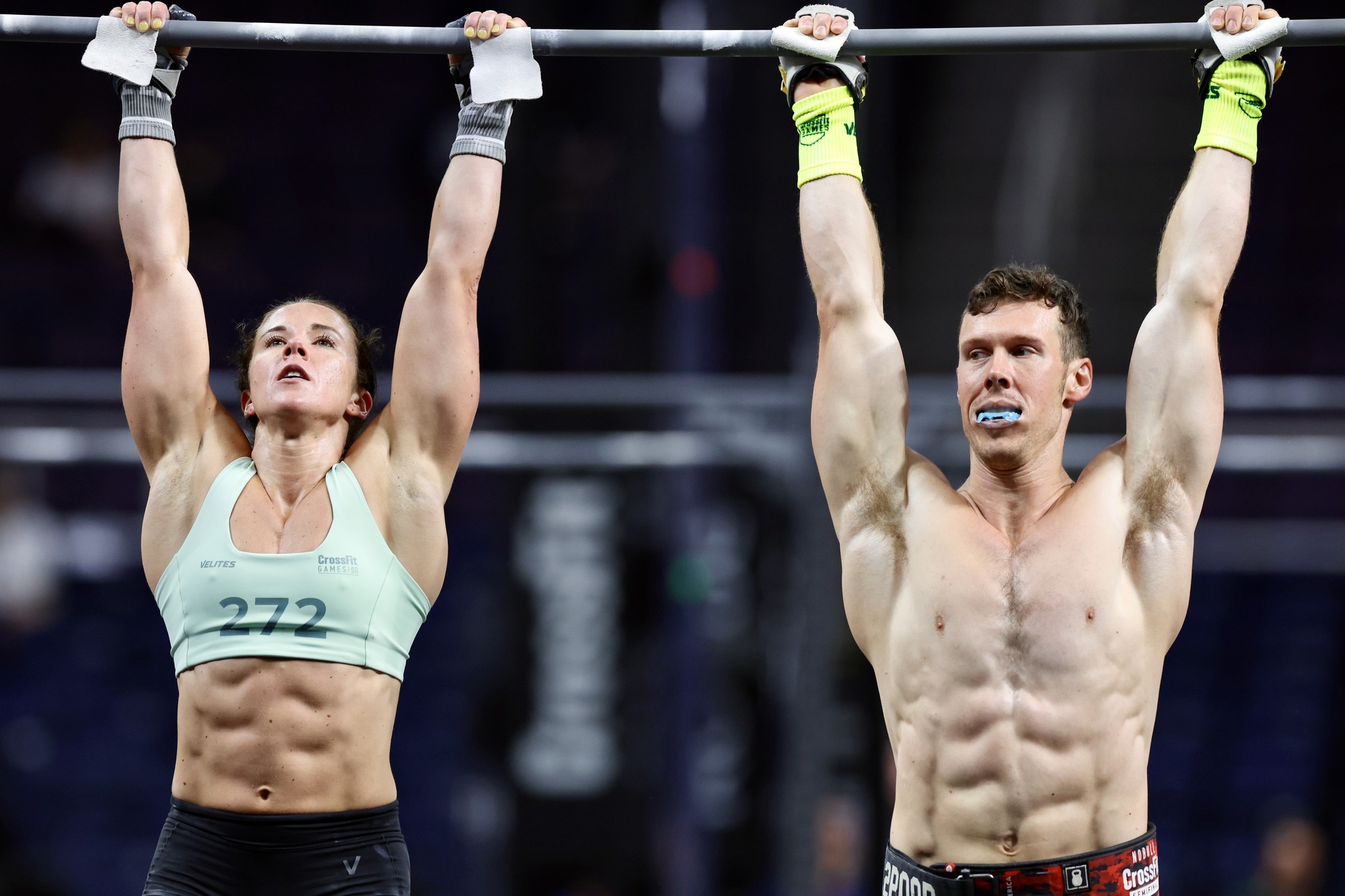
Hanging leg raises require you to hang from a pull up bar while lifting the legs. The exercise challenges the hands, forearms, shoulders, upper back, and trunk before the abs are even considered. This can make it a useful whole body core exercise, but it also makes it harder to isolate the abdominal muscles effectively.
The movement includes hip flexion, which is the action of bringing the thighs toward the torso. The iliopsoas and rectus femoris are major hip flexors, and research comparing sit up and leg raise patterns has found substantial hip flexor involvement during leg raises. This is not automatically a problem. Your hip flexors are meant to work during the movement. However, it means that simply raising the legs does not guarantee that the rectus abdominis is doing most of the work.
To increase abdominal contribution, the top of the repetition needs a pelvic curl. Instead of stopping when the thighs reach hip height, actively tuck the pelvis and bring it toward the rib cage. That final motion is where the abs contribute more to posterior pelvic tilt and trunk control.
The Common Beginner Problem
The most common hanging leg raise mistake is swinging. A beginner hangs from the bar, raises the legs quickly, swings backward, then uses momentum to repeat the next repetition. The exercise may feel difficult, but much of the difficulty comes from managing movement rather than creating controlled tension in the abs.
Another common issue is choosing a variation that is far too hard. Straight leg hanging raises demand considerable grip strength, shoulder stability, hip flexor strength, and control. If you cannot perform several smooth repetitions without swinging, your abs may not be the limiting factor. Your grip, hands, or shoulders may fail first.
This is why hanging knee raises are generally a more appropriate entry point. Bending the knees shortens the lever, reduces the challenge, and gives you a better chance of controlling the pelvis. You can then gradually progress toward straighter leg variations as your strength improves.
How to Perform a Hanging Knee Raise
Begin in a stable dead hang with your shoulders engaged rather than fully relaxed. Keep your ribs down and avoid letting the lower back overarch excessively. Lift your knees toward your chest without kicking or swinging.
As your knees approach the top position, gently curl your pelvis upward. Imagine trying to point your belt buckle toward your rib cage. Lower slowly, return to a controlled hang, and allow the swing to settle before beginning the next repetition.
If hanging bothers your shoulders or your grip fails too early, use a captain’s chair station, where your forearms are supported. This can make it easier to focus on the trunk and pelvis. It is not a lesser exercise. It is simply a variation that removes a limiting factor.
Crunches vs Hanging Leg Raises for Ab Growth
Which Exercise Is More Beginner Friendly?
Crunches win clearly for accessibility. They need no equipment, are easy to modify, and allow beginners to learn how to flex the torso without having to control a hanging body position. You can perform them on the floor, add resistance when they become easy, and stop immediately when form changes.
Hanging leg raises have a higher skill requirement. A beginner must manage body sway, hanging tolerance, grip endurance, shoulder position, hip flexion, and pelvic control. That is a lot to coordinate. The added complexity is not always a benefit when the goal is simply to train the abs well.

This does not mean beginners should never use hanging variations. It means the movement should be matched to current ability. A controlled hanging knee raise can be an excellent exercise. A swinging straight leg raise that causes shoulder discomfort is not.
Which Exercise Loads the Rectus Abdominis Better?
Neither exercise has a guaranteed advantage for hypertrophy because direct long term research comparing crunches and hanging leg raises for abdominal muscle growth is limited. Acute muscle activation research can show which muscles are active, but it cannot establish which exercise will produce the greatest growth after months of training.
In practical terms, crunches are easier to load progressively and easier to take close to technical failure. You can add a small amount of weight, perform a controlled set, and make gradual improvements. That makes them the more reliable choice for beginner hypertrophy training.
Hanging leg raises can become very challenging, but increasing difficulty is less precise. You may progress from bent knees to straighter knees and eventually straight legs, yet the limiting factor may remain grip or body control rather than abdominal strength. They work best as a complementary exercise once you can perform them with little or no swinging.
Do You Need to Train Upper and Lower Abs Separately?
The terms upper abs and lower abs are useful for describing what you feel during an exercise, but the rectus abdominis is one continuous muscle. Different movements may create regional differences in activation or muscle thickness changes, yet you cannot completely isolate one half while the other does nothing.
3 Best Exercises for Building a Bigger Bicep Peak
Crunches usually emphasize trunk flexion and may feel stronger in the upper portion of the rectus abdominis. Hanging knee raises and leg raises may produce more sensation in the lower abdominal area because of the pelvic position and hip flexion demands. Both can belong in a balanced program, but beginners do not need a complicated routine built around trying to isolate every segment.
A Smart Beginner Plan
Start by making crunches your primary direct abdominal exercise. Perform two or three sessions per week, with a few hard sets each session. Choose a repetition range that allows controlled movement and brings you close to the point where another clean repetition would be difficult. For many beginners, that will be roughly eight to twenty repetitions, depending on the variation and load.
Once bodyweight crunches become easy, add resistance or use a cable crunch if you have gym access. Keep your technique strict and increase the challenge gradually. You should feel the abs working hard without needing to rush, hold your breath excessively, or strain the neck.

Add hanging knee raises later if you can hang comfortably and control the movement. Begin with bent knees and short sets. The goal is not to get your knees as high as possible. The goal is to control the pelvis and avoid swinging. If you cannot do that yet, supported knee raises or reverse crunches are useful alternatives.
Train the abs as you would any other muscle group. Use exercises you can perform well, make them progressively harder, recover adequately, and stay consistent long enough to see results.
The Verdict
Crunches are the better ab building exercise for most beginners because they are easier to learn, easier to load, and easier to keep focused on the rectus abdominis. A weighted crunch can remain effective for a long time because it offers a straightforward path for progressive overload.
Hanging leg raises are a strong secondary option, especially after you have developed the grip, shoulder control, and pelvic awareness to perform them without momentum. For beginners, hanging knee raises are usually a more sensible starting point than straight leg raises.
The best approach is not to treat this as an all or nothing decision. Build your foundation with controlled crunches, then introduce hanging knee raises when you are ready. Over time, you can use both to train your abs through different challenges while keeping your technique honest.
Key Takeaways
| Key takeaway | What it means for beginners |
|---|---|
| Crunches are the better starting exercise | They are simpler to learn, require no equipment, and make it easier to focus on trunk flexion. |
| Progressive overload drives results | Add load, repetitions, control, or a more difficult variation as your current exercise becomes easier. |
| Hanging leg raises are not automatically better | They challenge grip, shoulders, and hip flexors, which can limit the quality of abdominal training. |
| Start with hanging knee raises | Bent knees reduce the lever length and make it easier to control the pelvis without swinging. |
| Abs cannot spot reduce stomach fat | Ab exercises develop the muscles, while visible definition also depends on overall body fat levels. |
| Form matters more than exercise difficulty | A controlled crunch or knee raise is more useful than a hard variation performed with momentum. |
References
- Escamilla, R.F., Babb, E., DeWitt, R., Jew, P., Kelleher, P., Burnham, T., Busch, J., D’Anna, K., Mowbray, R. and Imamura, R. (2006) ‘Electromyographic analysis of traditional and nontraditional abdominal exercises: Implications for rehabilitation and training’, Physical Therapy, 86(5), pp. 656–671.
- Kim, K., Kim, Y.M. and Lee, D.K. (2016) ‘Comparison of muscular activities in the abdomen and lower limbs while performing sit ups and leg raises’, Journal of Physical Therapy Science, 28(2), pp. 491–494.
- Kinsella, R., Linsdell, M., Wesselink, R., Dunbar, P. and LeBlanc, P.J. (2023) ‘Diagnostic ultrasound shows preferential activation of rectus abdominis segments with exercises targeting upper versus lower segments’, International Journal of Exercise Science, 16(1), pp. 1077–1086.
- Kubo, K., Ikebukuro, T. and Yata, H. (2011) ‘Effects of abdominal training on abdominal fat thickness and body composition’, Journal of Strength and Conditioning Research, 25(5), pp. 1279–1284.
- Schoenfeld, B.J., Grgic, J., Van Every, D.W. and Plotkin, D.L. (2021) ‘Loading recommendations for muscle strength, hypertrophy, and local endurance: A re examination of the repetition continuum’, Sports, 9(2), 32.
- Schoenfeld, B.J., Grgic, J., Ogborn, D. and Krieger, J.W. (2017) ‘Strength and hypertrophy adaptations between low versus high load resistance training: A systematic review and meta analysis’, Journal of Strength and Conditioning Research, 31(12), pp. 3508–3523.
- Vieira, A.F., Umpierre, D., Teodoro, J.L., Lisboa, S.C., Baroni, B.M., Izquierdo, M. and Cadore, E.L. (2015) ‘Effects of resistance training performed to failure or not to failure on muscle strength, hypertrophy, and power output: A systematic review with meta analysis’, Journal of Strength and Conditioning Research, 35(4), pp. 1165–1175.