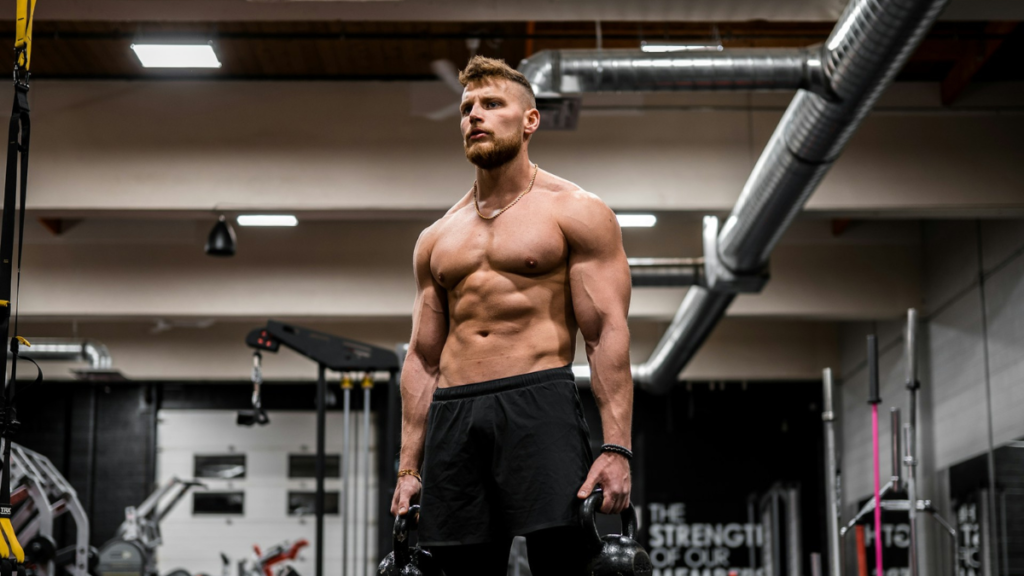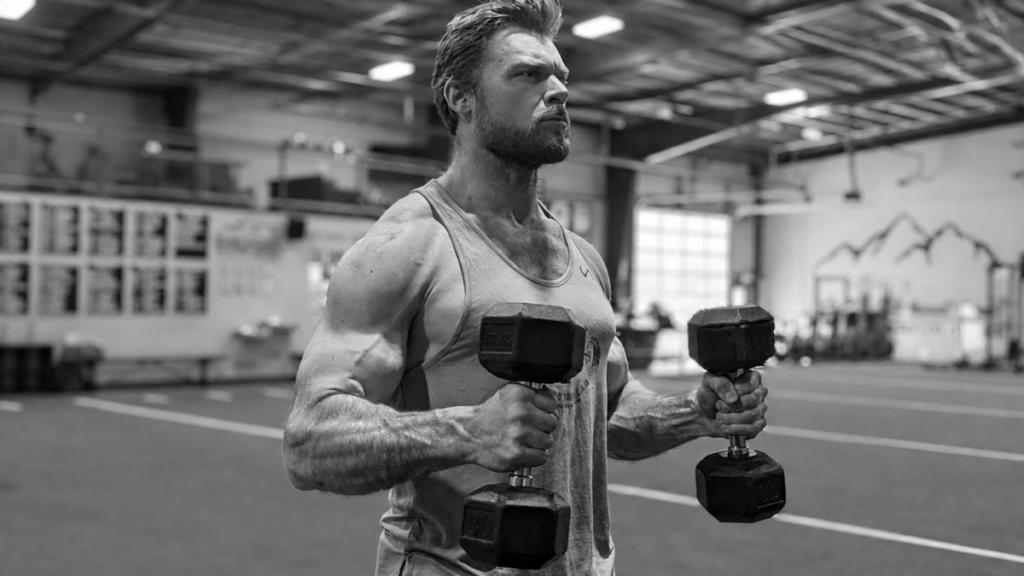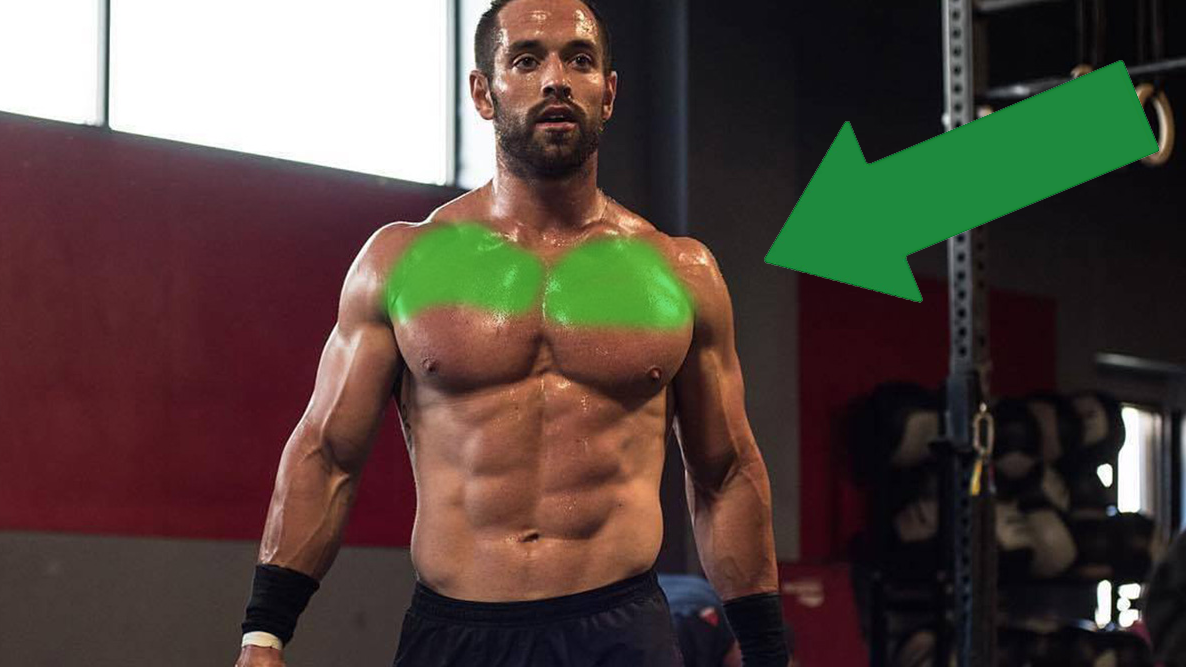


Building a fuller upper chest is not about finding one magical angle or trying to isolate a tiny piece of muscle. The upper portion of the pectoralis major, often called the clavicular head, works with the rest of the chest, front shoulders, and triceps during pressing and fly movements. Good exercise selection can place more emphasis on that region, but consistent progressive training is what actually builds muscle.
For beginners, the most productive approach is to use exercises that are stable, comfortable, and easy to progress. You need enough resistance to make the chest work hard, but you also need a setup that lets you learn good technique. Trying to copy advanced lifters with very steep incline pressing or heavy fly variations is usually a poor trade.


Best 3 Kettlebell Exercises for Beginners to Get a Jacked Upper Body
The three exercises in this article are the low incline dumbbell press, the low to high cable fly, and the incline pushup. They provide a mix of pressing strength, chest focused isolation work, and scalable bodyweight training. Together, they give beginners a practical route to building stronger and more muscular upper pecs.
Research shows that muscle growth is driven largely by resistance training volume, sufficient effort, and progressive overload. The exact exercise matters, but the best exercise is still one that you can perform consistently, load gradually, and recover from well.
What the Upper Chest Actually Is
The pectoralis major is the large chest muscle that attaches to the upper arm. It has fibers that originate from the collarbone and fibers that originate from the sternum and ribs. The fibers that begin near the collarbone are commonly called the upper chest or clavicular portion of the pectoralis major.
These fibers contribute to moving the upper arm forward and across the body. They work during many chest exercises, including flat pressing, incline pressing, pushups, and cable fly variations. No movement completely shuts off one area of the chest while training another. The goal is to choose angles that may increase the contribution of the clavicular fibers while still allowing strong, controlled training.

Studies using muscle activity measurements suggest that moderate incline pressing can produce more activation in the clavicular portion of the chest than flat pressing. Muscle activity in one workout does not prove that a specific exercise will create greater long term growth. It does, however, provide a sensible reason to include moderate incline pressing when upper chest development is a priority.
The angle matters. A very steep bench can shift more work to the front deltoids. For most beginners, a low incline is more useful than an aggressively upright bench. An angle of roughly 15 to 30 degrees is often a practical starting point because it preserves a chest focused pressing pattern without making the movement feel like a shoulder press.
1. Low Incline Dumbbell Press
The low incline dumbbell press is the best primary exercise for beginners who want to build their upper chest. It provides a stable base, allows each arm to work independently, and can be progressed gradually for years.
Set an adjustable bench to a low incline. Sit with a dumbbell in each hand resting on your thighs, then use your legs to guide the weights into position as you lie back. Start with the dumbbells near the outside of your upper chest, with your wrists stacked over your elbows.
Press the dumbbells upward and slightly toward each other until your elbows are straight. Lower them with control until you feel a comfortable stretch through the chest. Keep your shoulder blades gently pulled back against the bench and keep your feet firmly connected to the floor.
Research comparing press angles indicates that low incline pressing can increase activation of the upper chest relative to flat pressing. The dumbbell version also allows a natural arm path, which some beginners find more comfortable than a fixed barbell path.
The front shoulders and triceps will contribute to every pressing repetition. That is normal. Your goal is not to remove those muscles from the movement. Your goal is to make the chest a major contributor by using a low incline, controlled range of motion, and a load that you can manage without bouncing or excessive arching.
How to Progress the Low Incline Dumbbell Press
Start with two or three sets of six to twelve repetitions. Pick a load that makes the final few repetitions challenging while allowing you to keep the dumbbells stable and the elbows controlled.
When you can complete all sets at the top of the repetition range with good form, increase the load slightly. Small increases are enough. You can also add one repetition per set over time before moving to heavier dumbbells.
Rest for one to two minutes between sets. This gives the chest, triceps, and shoulders enough time to recover so that later sets remain productive.
Common Low Incline Dumbbell Press Errors
The most common mistake is using too steep an incline. If the bench is nearly upright, the front shoulders will usually become the limiting factor. Lower the bench angle if you want more chest emphasis.
Another mistake is lowering the dumbbells without control. Use a smooth descent and stop at a range that feels comfortable for your shoulders. A deep stretch is not useful if it causes discomfort or makes you lose position.
2. Low to High Cable Fly
The low to high cable fly is a useful accessory exercise for the upper chest because it allows you to train the chest through a long and controlled range of motion. The cables provide resistance throughout the movement, unlike some free weight fly variations where resistance changes substantially across the range.
Set the cable handles at the lowest setting. Stand in the middle of the machine with one handle in each hand. Take a small step forward and use a stable split stance. Begin with your arms slightly behind your torso and your elbows softly bent.
Bring your hands upward and inward until they meet around upper chest or collarbone height. Keep your elbows in the same gentle bend throughout the repetition. Pause briefly when your hands come together, then return slowly to the start position.
The direction of the movement follows the line of the upper chest fibers more closely than a flat fly. Direct long term research comparing cable fly paths for upper chest hypertrophy is limited, so this should not be treated as a guaranteed upper chest isolator. It is a practical way to add chest focused work after your primary press.
Research on resistance training supports using multiple exercises for a muscle group when they can be performed with enough effort and progression. The cable fly complements pressing because it adds chest volume without requiring the triceps to be the main limiting factor.
How to Progress the Low to High Cable Fly
Start with two or three sets of ten to fifteen repetitions. Use a light to moderate load and move slowly enough to feel the chest controlling both the upward and return phases.
When you can perform fifteen controlled repetitions without leaning backward, add a small amount of resistance. You can also pause for one second when your hands meet, but do not force them far across the body.
Keep your shoulders down and your rib cage controlled. If you feel the movement mostly in your neck or front shoulders, reduce the load and shorten the range slightly.
Common Low to High Cable Fly Errors
The most common error is turning the movement into a press. Your elbows should stay softly bent but relatively fixed. If the elbows bend and straighten substantially, reduce the weight and focus on moving the arms across the body.
Another mistake is using momentum by leaning backward as the hands rise. Keep a quiet torso and let the chest create the movement. The cable fly is more effective when every repetition is deliberate.
3. Incline Pushup
The incline pushup is one of the best beginner chest exercises because it is easy to scale. Place your hands on a sturdy bench, countertop, box, or bar, then perform a pushup with your body in a straight line. The higher the hands are, the less bodyweight you need to press.
Stand facing the support and place your hands slightly wider than shoulder width. Walk your feet back until your body forms a straight line from head to heels. Bend your elbows and lower your chest toward the support, then press yourself away until your arms are extended.
Incline pushups train the chest, triceps, front shoulders, and trunk. They do not emphasize the upper chest as specifically as a low incline dumbbell press, but they build the basic pressing strength and control needed to make more advanced chest training productive.
Research comparing pushups and bench press variations shows that pushups can create substantial chest and triceps activity when the relative load is appropriate. For beginners, the incline version makes it possible to select a manageable bodyweight percentage and use a full, controlled range of motion.
The incline pushup also allows simple progression. Lower the hand support over time to increase the amount of bodyweight you press. Eventually, move to floor pushups, then add resistance if needed.
How to Progress the Incline Pushup
Begin with two or three sets of eight to fifteen repetitions. Choose a hand height that allows you to keep your body straight without the hips sagging or rising.
When you can perform three sets of fifteen controlled repetitions, lower the support slightly. A smaller change in height can make the exercise noticeably harder, so progress in small steps.
Keep the descent slow and let your chest come close to the support. Cutting the range short may let you perform more repetitions, but it reduces the amount of useful chest training in each set.
Common Incline Pushup Errors
The most common mistake is allowing the hips to drop toward the floor. Lightly tighten your glutes and abdominal muscles so your body moves as one unit.
Another mistake is flaring the elbows straight out to the sides. Keep the elbows angled slightly toward your torso. This often creates a more controlled and comfortable pressing position.
How to Program These Exercises for Upper Chest Growth
Train your chest two or three times per week. Start each session with the low incline dumbbell press while you are fresh. Follow it with low to high cable flies, then use incline pushups to add controlled volume.
A simple beginner session could include three sets of low incline dumbbell presses, two sets of low to high cable flies, and two sets of incline pushups. That is enough work to build skill and create a useful muscle building stimulus without overwhelming recovery.
Research indicates that total weekly resistance training volume influences hypertrophy. Beginners can begin with a modest amount of direct chest work and add volume only when they are recovering well and progressing. More is not automatically better if your shoulders, elbows, or overall recovery cannot keep up.
Aim to finish most sets with one to three good repetitions left in reserve. This lets you train close enough to fatigue to stimulate adaptation while preserving technique. If the final repetitions become uncontrolled, the set has gone too far for a beginner focused muscle building program.
Train your upper back at least as consistently as your chest. Rows, pullups, pulldowns, and rear shoulder work help create a balanced upper body program and give the shoulder blades the strength needed to support pressing.
Nutrition and the Upper Chest Look
Training builds the chest muscles, but nutrition affects how visible they become. If your goal is a more muscular appearance, you need enough energy and protein to support training and recovery. If your goal is more definition, your overall body fat level will also matter.

Muscle growth is gradual. You will usually notice improved strength and better control before major visual changes. Track your loads, repetitions, and bodyweight training progress so you can see whether your program is moving forward.
Avoid changing your exercise plan every week. Give the three movements enough time to work. Consistent training, steady progression, and sufficient recovery are more important than searching for an even more specialized exercise.
Final Thoughts
The low incline dumbbell press, low to high cable fly, and incline pushup are three excellent beginner exercises for building stronger and more muscular upper pecs. The dumbbell press provides your main progressive strength movement. The cable fly adds chest focused work through a controlled range. The incline pushup builds pressing skill and offers an easy bodyweight progression.
No exercise can completely isolate the upper chest, and no single angle guarantees dramatic growth. Use these movements consistently, train with controlled effort, and add load or repetitions gradually. That is how beginners build an upper chest that looks jacked because it is genuinely stronger and more muscular.
Key Takeaways
| Exercise | Main role | Starting recommendation | Main technique priority |
|---|---|---|---|
| Low incline dumbbell press | Primary upper chest focused press | Two or three sets of six to twelve repetitions | Use a low incline and lower the weights with control |
| Low to high cable fly | Chest focused accessory work | Two or three sets of ten to fifteen repetitions | Keep a quiet torso and bring the hands upward and inward |
| Incline pushup | Scalable bodyweight pressing | Two or three sets of eight to fifteen repetitions | Keep the body straight and lower the chest close to the support |
| Weekly structure | Chest muscle development | Train chest two or three times weekly | Increase load, repetitions, or volume gradually |
References
- American College of Sports Medicine (2009) ‘American College of Sports Medicine position stand: Progression models in resistance training for healthy adults’, Medicine and Science in Sports and Exercise, 41(3), pp. 687 to 708.
- Calatayud, J., Borreani, S., Colado, J.C., Martin, F., Flandez, J., Page, P. and Andersen, L.L. (2015) ‘Bench press and pushup at comparable levels of muscle activity results in similar strength gains’, Journal of Strength and Conditioning Research, 29(1), pp. 246 to 253.
- Lauver, J.D., Cayot, T.E. and Rothe, M.R. (2015) ‘Influence of bench angle on upper extremity muscular activation during bench press exercise’, European Journal of Sport Science, 16(3), pp. 309 to 316.
- Rodriguez Ridao, D., Antequera Soler, E., Martin Fuentes, I. and Muyor, J.M. (2020) ‘Effect of different bench angles on the muscle activation of upper and lower pectoralis major’, International Journal of Environmental Research and Public Health, 17(9), 3088.
- Schoenfeld, B.J., Grgic, J., Ogborn, D. and Krieger, J.W. (2017) ‘Strength and hypertrophy adaptations between low versus high load resistance training: A systematic review and meta analysis’, Journal of Strength and Conditioning Research, 31(12), pp. 3508 to 3523.
- Schoenfeld, B.J., Ogborn, D. and Krieger, J.W. (2017) ‘Dose response relationship between weekly resistance training volume and increases in muscle mass: A systematic review and meta analysis’, Journal of Sports Sciences, 35(11), pp. 1073 to 1082.