

Building a stronger lower body is one of the smartest things a beginner can do. Strong legs and hips improve athletic performance, make daily activities easier, reduce the risk of injury, and support healthy aging. Whether your goal is to lift heavier weights, run faster, jump higher, or simply move without discomfort, developing lower body strength should be a priority.
The good news is that beginners do not need dozens of complicated exercises or advanced training methods. Research consistently shows that a small number of well chosen compound movements can deliver outstanding improvements in muscle strength, coordination, balance, and overall fitness.



The three exercises below stand out because they train multiple muscle groups at once, teach fundamental movement patterns, and can be adjusted for almost any fitness level. They also have extensive scientific support demonstrating their effectiveness for increasing muscle strength and improving functional performance.
Why Lower Body Strength Matters
The muscles of the lower body include the quadriceps, hamstrings, glutes, calves, and hip muscles. Together they generate force for walking, climbing stairs, sprinting, jumping, lifting objects, and maintaining balance.
Resistance training is one of the most effective ways to improve lower body strength. Large scientific reviews have shown that regular strength training increases muscle size, improves force production, enhances bone density, and supports metabolic health. These benefits are seen in young adults, older adults, and complete beginners.
Lower body training also burns a significant amount of energy because the legs contain some of the largest muscles in the body. Working these muscles increases energy expenditure during exercise and contributes to long term improvements in body composition when combined with good nutrition.
3 Best Six Pack Bodyweight Exercises for Men Aged 30+ that Want Great Abs
Perhaps most importantly for beginners, stronger leg muscles improve movement quality. Learning to squat, step, and hinge correctly develops coordination that carries over into sports and everyday life.
What Makes a Great Beginner Exercise?
Not every exercise is equally valuable for someone new to strength training. The best beginner exercises share several important characteristics.
They teach natural movement patterns that people use every day. They work several muscles at the same time instead of isolating a single muscle. They can be progressed gradually as strength improves. They also have a relatively low learning curve compared with highly technical lifts. These qualities allow beginners to build strength safely while developing confidence in the gym.
Exercise 1. Goblet Squat
The goblet squat is one of the best lower body exercises for beginners because it teaches proper squat mechanics while strengthening nearly every major muscle in the legs.

Why the Goblet Squat Works
During the goblet squat, the weight is held close to the chest. This position naturally encourages an upright torso, making it easier for beginners to maintain good posture throughout the movement.
The primary muscles involved include the quadriceps and gluteus maximus. The hamstrings, calves, abdominal muscles, and spinal stabilizers also contribute to controlling the movement.
Biomechanical research has shown that squatting activates multiple lower body muscles simultaneously while improving coordination between the hips, knees, and ankles. This makes it one of the most efficient exercises available.
Studies comparing different resistance exercises consistently show that squats are highly effective for increasing lower body strength and muscle mass when performed regularly with progressive overload.
How to Perform the Goblet Squat
Stand with your feet about shoulder width apart while holding a dumbbell or kettlebell against your chest. Keep your elbows pointing down and brace your core before starting the movement.
Push your hips backward slightly before bending your knees. Lower yourself until your thighs are approximately parallel to the floor or as low as your mobility allows while keeping your chest tall.
Drive through your entire foot to return to the starting position. Focus on standing tall by fully extending your hips and knees.
Move under control throughout the exercise rather than rushing each repetition.
Common Mistakes
One common mistake is allowing the knees to collapse inward. Keeping the knees tracking in line with the toes helps distribute force more effectively through the lower body.
Another mistake is rounding the lower back. Maintaining a neutral spine reduces unnecessary stress on the lumbar spine while allowing the hips and legs to produce most of the movement.
Many beginners also cut the range of motion short. Squatting deeper within a comfortable range generally recruits more muscle fibers and improves mobility over time.
Exercise 2. Romanian Deadlift
The Romanian deadlift teaches one of the most important movement patterns in strength training, the hip hinge. Unlike the squat, which emphasizes knee movement, the Romanian deadlift focuses on moving from the hips while maintaining a stable spine.
Why the Romanian Deadlift Works
The Romanian deadlift primarily targets the hamstrings and glutes while also strengthening the lower back, upper back, forearms, and core.
Many beginners have weak posterior chain muscles because modern lifestyles involve prolonged sitting. Strengthening these muscles improves posture, athletic performance, and lifting mechanics.
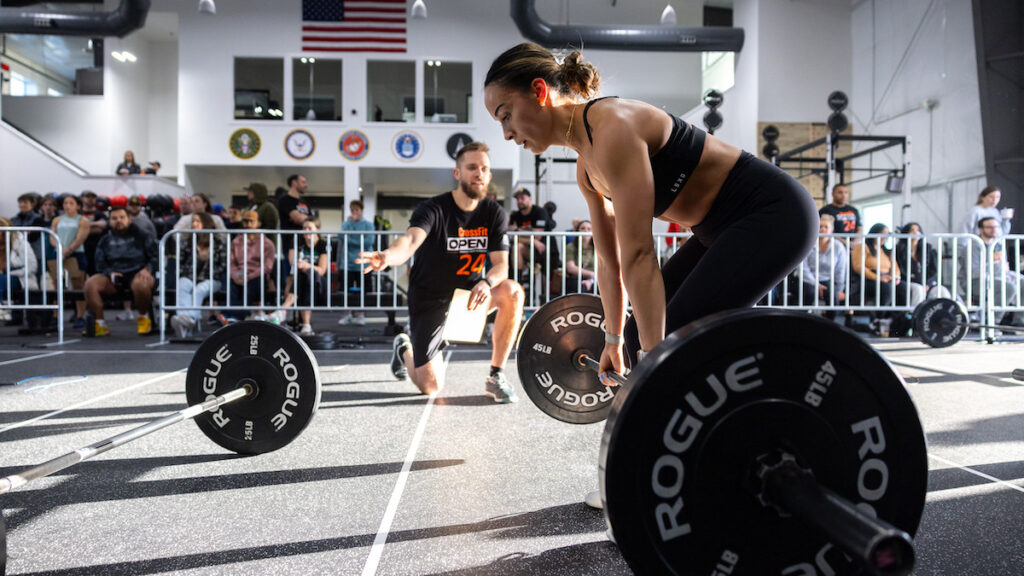
Research using electromyography has consistently found high levels of hamstring and glute activation during Romanian deadlifts. Strong posterior chain muscles also contribute to sprinting speed, jumping performance, and reduced injury risk in athletic populations.
Unlike conventional deadlifts, Romanian deadlifts begin from a standing position and use a controlled lowering phase, making them easier for beginners to learn.
How to Perform the Romanian Deadlift
- Stand holding a pair of dumbbells in front of your thighs with your feet about hip width apart.
- Keep a slight bend in your knees throughout the exercise.
- Push your hips backward while lowering the weights close to your legs. Maintain a neutral spine and keep your chest open.
- Lower the weights until you feel a stretch in your hamstrings without losing spinal position.
- Drive your hips forward to return to standing while squeezing your glutes at the top.
- The movement should come primarily from the hips rather than excessive bending at the knees.
Common Mistakes
Many beginners squat the weight instead of hinging at the hips. This shifts the exercise away from the hamstrings and glutes. Another mistake is allowing the weights to drift away from the body. Keeping them close reduces unnecessary stress on the lower back. Some people also hyperextend the spine at the top. Standing tall is enough. There is no need to lean backward.
Exercise 3. Step Up
The step up is often overlooked, but it is one of the most functional lower body exercises available.
Unlike many bilateral exercises, the step up trains one leg at a time, helping improve balance, coordination, and muscular symmetry.
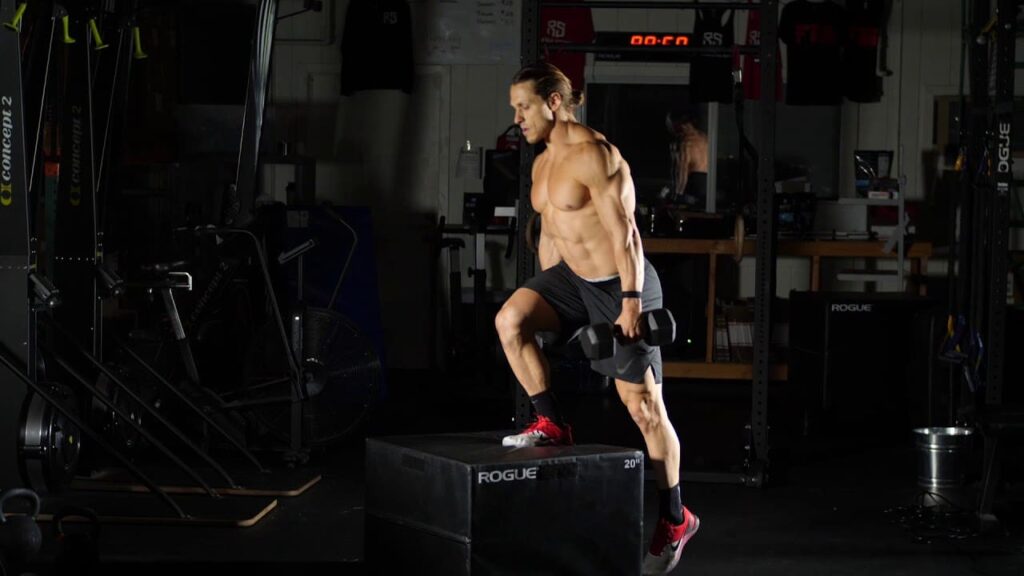
Why the Step Up Works
Everyday activities such as climbing stairs, hiking, and stepping onto curbs involve movements similar to the step up.
The exercise strengthens the quadriceps, glutes, hamstrings, and calves while requiring significant hip stability.
Research comparing single leg and bilateral exercises suggests that unilateral movements improve balance, coordination, and movement efficiency while helping identify strength differences between legs.
The step up also places relatively low stress on the spine because heavy external loading is not required to produce an effective training stimulus.
How to Perform the Step Up
- Stand facing a sturdy box or bench approximately knee height or lower.
- Place one foot firmly on the platform.
- Push through the working foot and stand completely on the box without pushing excessively with the trailing leg.
- Step back down slowly and under control before repeating.
- Complete all repetitions on one side before switching legs or alternate sides depending on your preference.
Common Mistakes
One common mistake is pushing off too much with the lower foot. The working leg should perform most of the effort. Another mistake is using a platform that is too high. Beginners should choose a height that allows smooth movement without excessive forward leaning.
Dropping quickly during the lowering phase also reduces muscle engagement. Lowering under control increases training effectiveness.
How to Progress Safely
Progressive overload is the key to getting stronger. This simply means gradually asking your muscles to do more work over time. For beginners, this can involve increasing the weight slightly once all repetitions are completed with good technique. Another option is adding one or two repetitions before increasing resistance.
Research consistently shows that progressive overload is one of the primary drivers of long term strength and muscle gains. Most beginners make excellent progress by performing these exercises two or three times per week while allowing at least one day of recovery between sessions.
Each workout should begin with a brief warm up that includes light cardiovascular activity and dynamic movements for the hips, knees, and ankles. Warming up increases muscle temperature, improves joint mobility, and prepares the nervous system for exercise.
How Many Sets and Repetitions Should Beginners Do?
Current resistance training guidelines recommend performing multiple sets for each major muscle group every week. For most beginners, performing two or three sets of eight to twelve repetitions works very well. This range allows enough practice to improve technique while providing an effective stimulus for muscle growth and strength development.
The final few repetitions should feel challenging while still allowing proper form. Stopping one or two repetitions before complete muscular failure is generally sufficient for beginners.
Rest for approximately one to two minutes between sets. This allows partial recovery without making the workout unnecessarily long.
Final Thoughts
Building stronger legs does not require complicated workout programs or advanced gym equipment. Beginners can achieve impressive results by focusing on a few highly effective exercises performed consistently with good technique.
The goblet squat develops total lower body strength while reinforcing proper squat mechanics. The Romanian deadlift strengthens the posterior chain and teaches an essential hip hinge pattern. The step up improves single leg strength, balance, and functional movement.
Together, these three exercises provide a well rounded foundation for long term progress. As strength improves, heavier loads and more advanced variations can gradually be introduced. The key is consistency, proper technique, and progressive overload. These principles have been repeatedly supported by decades of exercise science and remain the foundation of successful strength training.
Key Takeaways
| Exercise | Primary Benefits | Main Muscles Worked | Beginner Tip |
|---|---|---|---|
| Goblet Squat | Builds overall lower body strength and teaches squat mechanics | Quadriceps, glutes, hamstrings, core | Keep the chest tall and knees tracking over the toes |
| Romanian Deadlift | Strengthens the posterior chain and improves hip hinge mechanics | Hamstrings, glutes, lower back, core | Push the hips backward while keeping the spine neutral |
| Step Up | Improves single leg strength, balance, and coordination | Quadriceps, glutes, hamstrings, calves | Drive through the working foot and lower under control |
| Training Frequency | Supports steady progress and recovery | Entire lower body | Train two or three sessions each week |
| Progressive Overload | Drives long term strength gains | Entire body | Increase weight or repetitions gradually while maintaining good form |
References
- American College of Sports Medicine. (2009). Progression models in resistance training for healthy adults. Medicine & Science in Sports & Exercise, 41(3), pp. 687 to 708.
- Bird, S.P., Tarpenning, K.M. and Marino, F.E. (2005). Designing resistance training programmes to enhance muscular fitness. Sports Medicine, 35(10), pp. 841 to 851.
- Borde, R., Hortobágyi, T. and Granacher, U. (2015). Dose response relationships of resistance training in healthy old adults. Sports Medicine, 45(12), pp. 1693 to 1720.
- Escamilla, R.F. (2001). Knee biomechanics of the dynamic squat exercise. Medicine & Science in Sports & Exercise, 33(1), pp. 127 to 141.
- Franchi, M.V., Reeves, N.D. and Narici, M.V. (2017). Skeletal muscle remodeling in response to eccentric versus concentric loading. Frontiers in Physiology, 8, Article 447.
- Grgic, J., Schoenfeld, B.J., Orazem, J. and Sabol, F. (2022). Effects of resistance training performed to repetition failure or non failure on muscular strength and hypertrophy. Journal of Sport and Health Science, 11(2), pp. 202 to 211.
- Kraemer, W.J. and Ratamess, N.A. (2004). Fundamentals of resistance training. Medicine & Science in Sports & Exercise, 36(4), pp. 674 to 688.
- Lesinski, M., Prieske, O. and Granacher, U. (2016). Effects and dose response relationships of resistance training on physical performance in youth athletes. British Journal of Sports Medicine, 50(13), pp. 781 to 795.