


























10 Secrets for Beginners to Get Wider Biceps Faster

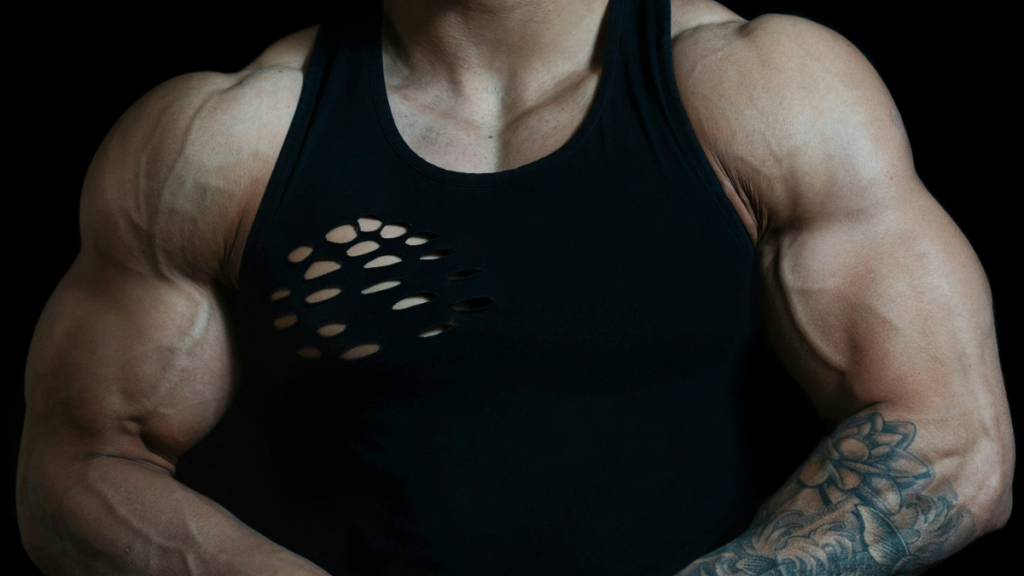
Want to get bigger, wider and stronger arms? You need to get these tips into your training.
Why Arm Width Takes More Than Endless Curls
When people picture big biceps, they usually think of the classic peak on the front of the upper arm, yet visual width comes from multiple muscles working together around the elbow and humerus.
The biceps brachii has two heads that sit on the front of the arm, while the brachialis sits underneath the biceps and pushes the entire muscle belly outward as it grows. Training only one angle or swinging weights up with momentum leaves major portions of those muscles under-stimulated, which keeps your arms looking narrow even when your scale weight creeps upward.
Beginners also possess a unique physiological advantage known as the beginner effect, where muscles respond rapidly to mechanical tension and novel movement patterns. Research shows that untrained individuals experience rapid increases in muscle cross-sectional area during the first several weeks of structured resistance training when they apply progressive overload consistently.
Full Range vs Partial Reps: Which Builds Bigger Muscles?
Pairing smart exercise selection with disciplined recovery lets beginners tap into that fast early growth without wasting months on ineffective routines.
Biceps Width Strategy
| Focus Area | Common Beginner Mistake | Smarter Approach | Primary Benefit |
| Muscle Target | Only doing standard curls | Include hammer and incline curls | Builds brachialis and long head width |
| Repetition Tempo | Swinging weights up fast | Control eccentric lowering phase | Increases mechanical tension safely |
| Training Frequency | Training arms once a week | Hit biceps two to three times weekly | Maximizes muscle protein synthesis |
| Load Progression | Staying on the same weight | Add reps or weight gradually | Sustains continuous adaptation |
The 10 Secrets to Wider Biceps
Secret 1: Target the Brachialis With Neutral-Grip Curls
Most newcomers ignore the brachialis because it hides beneath the visible biceps, yet growing it pushes the biceps outward and adds genuine thickness to the upper arm.
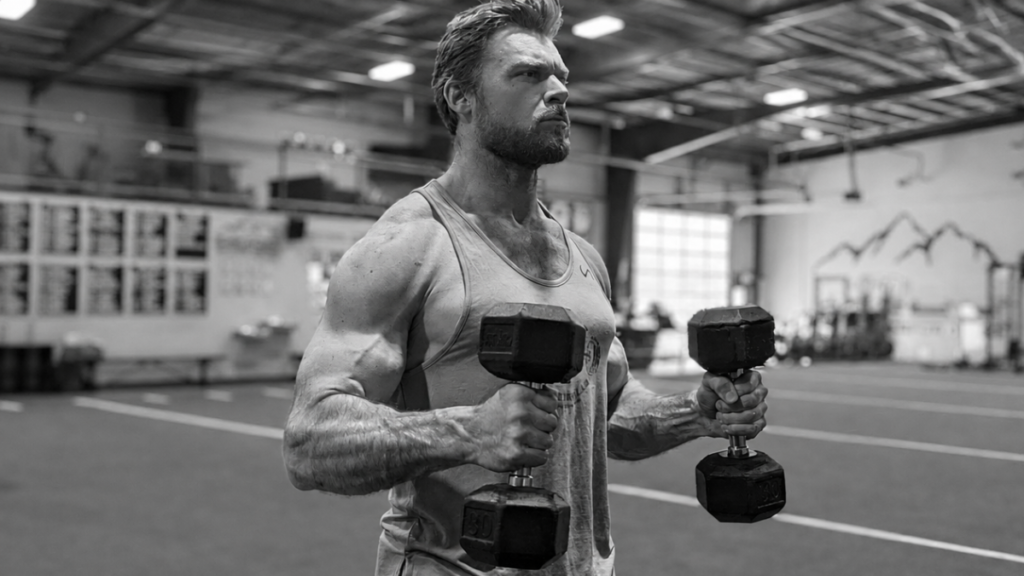
Neutral-grip movements like hammer curls place mechanical demand on the brachialis and brachioradialis while taking rotational stress off the wrist joint. Adding controlled hammer curls early in your routine builds structural width that standard supinated curls alone cannot match.
Secret 2: Stretch the Long Head on Incline Benches
The long head of the biceps forms the outer contour of the arm and contributes heavily to how full your arms look from behind and the side. Performing incline dumbbell curls allows your shoulder to stay slightly extended behind your torso, creating a deeper stretch on the long head at the bottom of each repetition.
Scientific evidence indicates that training muscles at longer muscle lengths can produce greater hypertrophy than training them only at shorter lengths.
Secret 3: Slow Down the Lowering Phase of Every Rep
Rushing through the lowering portion of a curl lets gravity do the work and robs your muscle fibers of valuable time under tension. Controlled eccentric contractions generate high mechanical tension within muscle sarcomeres and serve as a potent stimulus for muscle growth.
Taking roughly two to three seconds to lower the weight on every repetition helps beginners feel the working muscle instead of relying on momentum.
Secret 4: Train Biceps More Than Once a Week
Many beginners copy bodybuilder split routines that train biceps only once every seven days, leaving long stretches of time where muscle protein synthesis has already returned to baseline. Studies on resistance training frequency suggest that training a muscle group twice per week often supports superior hypertrophy compared to once per week when total weekly volume is equated. Spreading your biceps sets across two sessions per week gives you fresher joints and more frequent growth signals.
Secret 5: Master Strict Form Before Chasing Heavy Weights
Ego lifting turns a biceps curl into a full-body swing involving the lower back, hips, and front shoulders while leaving the target muscle under-loaded. Electromyography research shows that strict technique increases targeted muscle activation compared to sloppy momentum-driven repetitions that shift tension away from the biceps. Keeping your elbows pinned near your sides ensures the biceps actually do the heavy lifting.
Secret 6: Take Sets Close to Muscular Failure Safely

Stopping a set when you still have six or seven comfortable repetitions left in the tank often fails to provide enough stimulus for rapid growth. Research demonstrates that training closer to muscular failure recruits higher-threshold motor units that are essential for maximizing hypertrophy across moderate to higher repetition ranges.
Beginners do not need reckless max-effort grinding on every set, yet pushing within one to two clean repetitions of failure makes a noticeable difference.
Secret 7: Use Moderate Repetitions for Clean Tension
Beginners often swing heavy weights for four or five messy reps or do light sets of thirty reps that burn without challenging tension. Working mostly within the eight to fifteen repetition range allows you to handle meaningful resistance while maintaining strict control and solid mind-muscle connection. Meta-analyses show that moderate load ranges reliably drive hypertrophy while keeping joint strain manageable for newer lifters.
Secret 8: Do Not Neglect Compound Pulling Movements
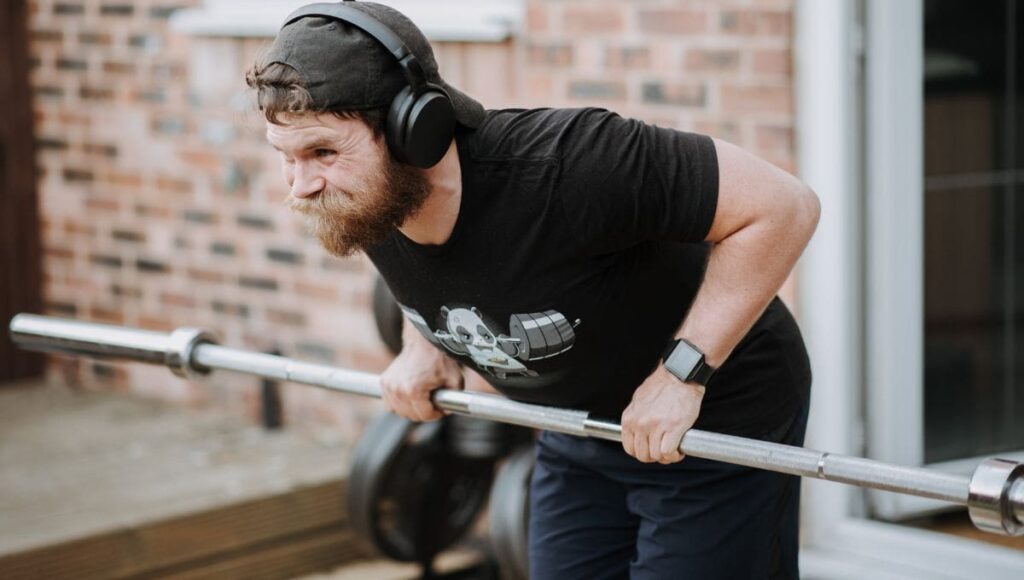
Every biceps curl matters, yet heavy rows and pulldowns place substantial mechanical load on the elbow flexors as supporting muscles throughout back training. Compound pulling exercises allow you to handle heavier overall loads that contribute to systemic adaptation and arm development over time. Counting heavy back rows alongside dedicated curl sets helps beginners avoid overdoing direct arm volume.
Secret 9: Track Your Numbers Every Single Session
Wandering over to the dumbbell rack and picking whatever weight feels convenient leads to accidental stagnation within a few weeks. Progressive overload requires gradually increasing mechanical demand over time, whether by adding a repetition, improving control, or stepping up a notch in weight. Keeping a simple log of your sets, reps, and weights turns guesswork into steady, measurable arm progress.
Secret 10: Fuel Muscle Repair With Protein and Sleep

Lifting weights creates the stimulus for growth, while food and sleep supply the raw materials and recovery window that actually build new tissue. Consuming sufficient daily protein supports muscle protein synthesis after resistance exercise, especially when combined with consistent training. Prioritizing seven to eight hours of quality sleep each night helps regulate recovery hormones and keeps your energy high for every workout.
Putting Your Biceps Plan Into Action
Combining these ten habits does not require spending hours in the gym or complicating your routine with gimmicky exercises. A beginner can pick two complementary curl variations, train them twice a week with controlled form, and push close to failure while steadily tracking progress. Consistency over eight to twelve weeks turns small weekly improvements into unmistakable changes in arm fullness and strength.
Key Takeaways for Wider Biceps
| Principle | Action Step | Expected Outcome |
| Exercise Variety | Pair incline curls with hammer curls | Broader arm look and stronger elbow flexors |
| Movement Control | Lower weights smoothly in two to three seconds | Higher mechanical tension and better muscle feel |
| Weekly Frequency | Train biceps twice per week with clean form | More frequent muscle protein synthesis triggers |
| Recovery Habits | Hit daily protein targets and sleep well | Faster tissue repair and steadier strength gains |
References
- Damas, F., Phillips, S.M., Lixandrão, M.E., Vechin, F.C., Libardi, C.A., Roschel, H., Tricoli, V. and Ugrinowitsch, C. (2016) ‘Early resistance training-induced increases in muscle cross-sectional area are concomitant with edema-induced muscle swelling’, European Journal of Applied Physiology, 116(1), pp. 49–56.
- Maeo, S., Wu, Y., Huang, M., Sakurai, H., Kusagawa, Y., Sugiyama, T., Kanehisa, H. and Isaka, T. (2023) ‘Greater elbow flexor muscle hypertrophy but similar strength gain after training at long vs. short muscle lengths’, Medicine & Science in Sports & Exercise, 55(4), pp. 746–756.
- Morton, R.W., Murphy, K.T., McKellar, S.R., Schoenfeld, B.J., Henselmans, M., Helms, E., Aragon, A.A., Devries, M.C., Banfield, L., Krieger, J.W. and Phillips, S.M. (2018) ‘A systematic review, meta-analysis and meta-regression of the effect of protein supplementation on resistance training-induced gains in muscle mass and strength in healthy adults’, British Journal of Sports Medicine, 52(6), pp. 376–384.
- Robinson, Z.P., Pelland, J.C., Remmert, J.F., Refalo, M.C., Jukic, I., Steele, J. and Zourdos, M.C. (2024) ‘Exploring the dose-response relationship between estimated proximity to failure, strength gains, and muscle hypertrophy: A series of meta-regressions’, Sports Medicine, 54(9), pp. 2209–2231.
Robbie Wild Hudson
Editor-In-Chief at BOXROX. I come from a background of rugby and weightlifting. Growing up in the English Lake District, I spent a great deal of time swimming in its stunning lakes and rivers. In 2015 my brothers and I became the first people to swim the 145km length of the River Eden, from source to mouth, in 9 days. We also swam the Corryvreckan whirlpool, the third largest in the world, and Crossfit is a huge part of my training for these events.
More from Robbie Wild Hudson