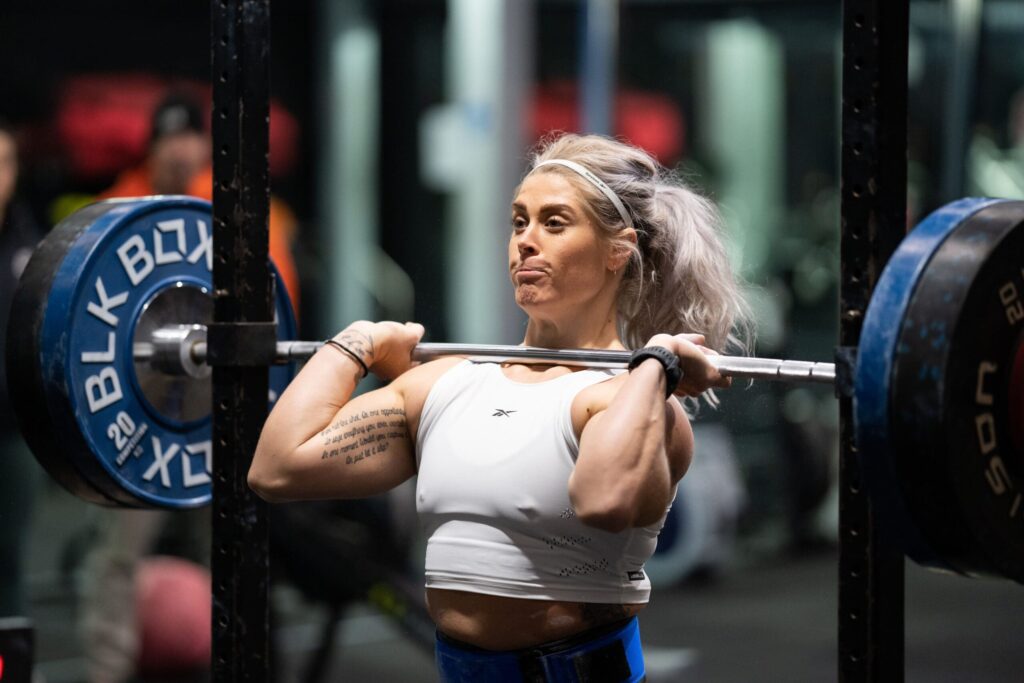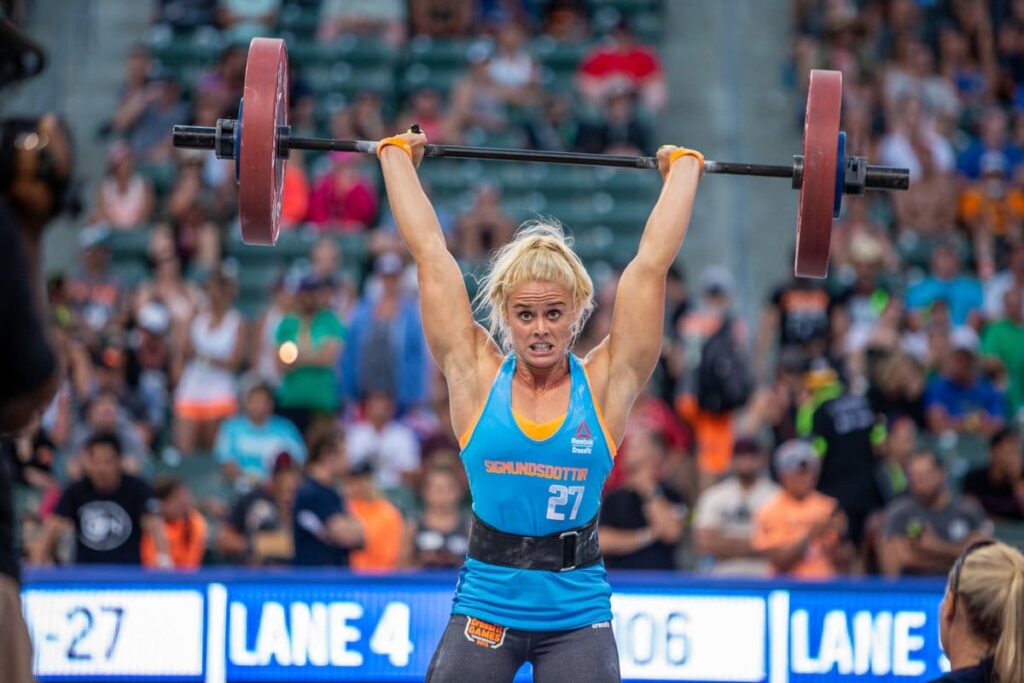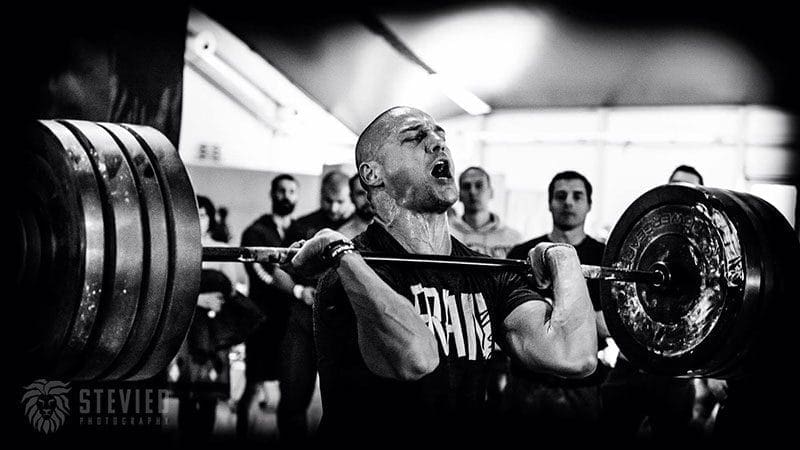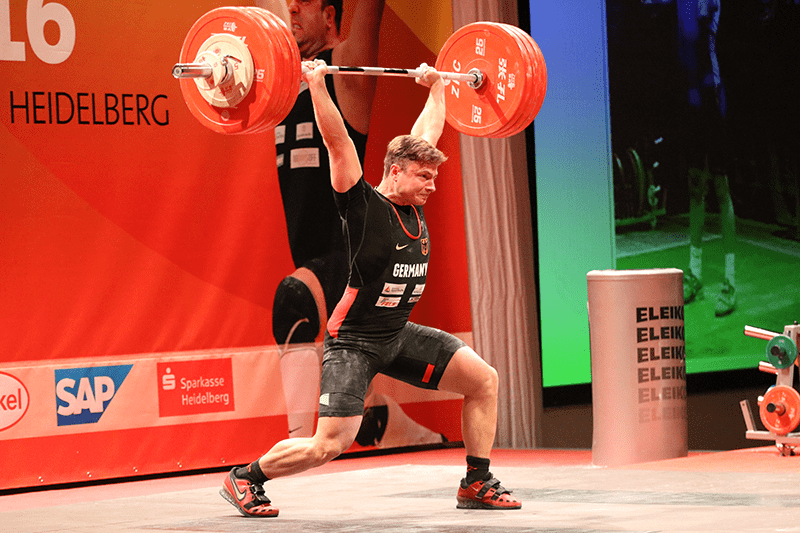


The jerk is one of the most explosive movements in sport. Whether you are a CrossFit athlete, Olympic weightlifter, thrower, or field sport competitor, the ability to transfer force from the lower body through the torso and into the upper extremities is a defining performance quality.
The split jerk is one of the most effective tools to develop that quality.


In Olympic weightlifting competition, the vast majority of elite lifters use the split jerk rather than the power jerk or squat jerk. That trend is not random. It reflects biomechanics, force production demands, and motor control realities that favor the split stance under maximal loads.
For athletes outside weightlifting, the split jerk is often underutilized or replaced with simpler overhead pressing variations. But the science supports its inclusion. When coached correctly, the split jerk develops explosive strength, enhances unilateral stability, and allows athletes to safely handle heavier loads overhead compared to alternative jerk styles.
Here are three evidence-based reasons why athletes should split jerk.
1. The Split Jerk Maximizes Force Production and Power Transfer
Explosive sport performance depends on the ability to generate high levels of force quickly and transmit that force efficiently through the kinetic chain. The split jerk directly trains this ability.
The Jerk Trains Triple Extension at High Velocity
The dip and drive phase of the jerk closely resembles other explosive movements: rapid knee and hip extension, plantarflexion at the ankle, and vertical force application. This “triple extension” pattern is central to sprinting, jumping, and many field and court sport skills.
Research comparing Olympic weightlifting derivatives to traditional strength exercises shows that weightlifting movements produce significantly higher peak power outputs. Peak power during the jerk and other weightlifting movements often exceeds that seen in back squats and presses performed at comparable relative intensities. This is due to the combination of moderate-to-heavy loads and high movement velocities.
Studies measuring barbell velocity and ground reaction forces demonstrate that Olympic lifts and their derivatives produce high rates of force development (RFD). RFD is critical in sport, where force must be applied within very short time windows. Improvements in RFD are strongly associated with better sprint acceleration and jump performance.
The jerk specifically emphasizes force transmission from lower body to upper body. During the drive phase, force generated by the legs is transferred through the torso into the barbell. This intermuscular coordination mirrors sporting actions such as tackling, blocking, throwing, and striking, where lower-body power must be expressed through the upper body.
Split Position Allows Heavier Loads Overhead
A key reason the split jerk is so widely used in competition is simple: it allows athletes to lift more weight. Biomechanically, the split stance increases the base of support in the sagittal plane and lowers the center of mass relative to the bar.
When an athlete splits their legs forward and backward, they increase the distance between their feet, which improves stability against forward and backward bar displacement. This larger base of support reduces the torque demands at the shoulder and trunk needed to stabilize the load.
Research in biomechanics consistently shows that increasing base of support improves balance and load tolerance. In overhead lifting, where small errors in bar path can lead to large balance disruptions, this added stability is critical.
Comparative analyses of jerk techniques show that the split jerk enables greater successful lifts at higher percentages of one-repetition maximum compared to power or squat jerk techniques in most athletes. The power jerk requires symmetrical landing and greater vertical displacement of the bar, while the squat jerk demands exceptional mobility and balance. The split jerk offers a more forgiving and mechanically efficient solution.
For athletes, this means one thing: more overload. Greater overload stimulates greater neuromuscular adaptation. Progressive overload is a fundamental principle of strength development. By allowing athletes to train with heavier loads overhead, the split jerk creates stronger stimulus for upper body stabilization, trunk stiffness, and lower body power.
Stronger Power Output Transfers to Performance
Multiple training studies show that Olympic weightlifting and its derivatives improve sprint performance, vertical jump height, and overall power output in trained and untrained populations.
In team sport athletes, incorporating weightlifting movements has been shown to improve countermovement jump height and short sprint times. These improvements are likely due to enhanced RFD and improved neuromuscular coordination.
The jerk, particularly when trained with moderate-to-heavy loads, contributes to these adaptations by reinforcing rapid force production and efficient force transfer. Unlike slower strength exercises, the jerk demands high acceleration and precise timing.
The split jerk, by allowing heavier loading without sacrificing technical success, maximizes these adaptations. It enables athletes to train at intensities high enough to drive strength gains while preserving the speed component essential for power development.
2. The Split Jerk Builds Unilateral Stability and Athletic Balance
Sport is rarely symmetrical. Athletes cut, pivot, land, and accelerate in staggered or single-leg positions. The split jerk uniquely develops these qualities.
Asymmetrical Stance Enhances Neuromuscular Coordination
When performing a split jerk, the athlete lands with one foot forward and one foot back. This staggered stance requires independent control of each limb and dynamic stabilization of the pelvis and trunk.
Research on unilateral training shows that single-leg or staggered stance exercises increase activation of stabilizing musculature, particularly in the gluteus medius and deep hip stabilizers. These muscles are essential for maintaining pelvic alignment during high-speed movement.
Electromyography studies demonstrate increased trunk muscle activation during asymmetrical lifting tasks compared to symmetrical ones. The split jerk challenges the trunk to resist rotational and lateral forces, promoting anti-rotation strength.
Anti-rotation strength is critical for athletes in contact sports and rotational sports alike. A stable trunk allows efficient force transfer between lower and upper extremities. Without it, energy leaks occur, reducing performance and increasing injury risk.
The split jerk forces the athlete to control the bar overhead while stabilizing in a split stance. This integrated demand builds coordination between lower body, trunk, and upper body in a way that traditional bilateral pressing cannot.
Dynamic Balance Under Load
Balance is not just standing still. In sport, balance is the ability to control the center of mass over a changing base of support, often under high load or high speed.
Studies on postural control show that increasing base of support length in the sagittal plane enhances anteroposterior stability. However, this only holds if the athlete can control weight distribution effectively between front and rear legs.
The split jerk trains this control dynamically. After the drive phase, the athlete must rapidly reposition the feet and absorb load in the split stance. This rapid transition from bilateral to staggered support mimics many sport scenarios, such as deceleration into a lunge or cutting maneuver.
Landing mechanics research emphasizes the importance of eccentric strength and proper joint alignment in reducing injury risk. The split jerk reinforces proper knee and hip alignment under load. The front leg must control knee flexion without excessive valgus, while the rear leg provides stability and balance.
By repeatedly practicing stable landings under load, athletes improve proprioception and joint control. Proprioceptive training has been linked to reduced injury incidence, particularly in lower extremity injuries such as ankle sprains and ACL injuries.
While the split jerk is not a rehabilitation exercise, its demand for controlled landing in a staggered stance provides a performance-oriented method of improving dynamic stability.
Addressing Limb Dominance
Many athletes exhibit limb asymmetries. Over time, asymmetries can contribute to performance limitations and increased injury risk. Unilateral and staggered exercises are commonly used to address these imbalances.
The split jerk naturally exposes asymmetries. Athletes typically prefer one foot forward. Coaches can program alternating split stances to ensure balanced development.
Research indicates that unilateral training can reduce interlimb strength asymmetries and improve bilateral performance. By training each side of the split position, athletes improve symmetry in force production and stabilization.
This has implications for sprinting and change-of-direction performance. Studies show that strength asymmetries can negatively affect sprint speed and agility. By incorporating the split jerk with both lead legs, athletes build balanced strength and coordination.
3. The Split Jerk Enhances Overhead Strength Safely and Efficiently
Overhead strength is vital in many sports, from football and rugby to baseball, volleyball, and CrossFit. However, overhead training must balance strength development with shoulder health.
The split jerk offers a powerful, joint-friendly way to train overhead strength when performed with proper technique.
Reduced Shoulder Pressing Demands
Unlike strict pressing movements, the jerk uses leg drive to propel the bar overhead. This significantly reduces the relative load placed on the shoulder musculature during the initial phase of the lift.
Biomechanical analysis shows that during the jerk, the legs generate the majority of vertical impulse required to move the bar. The shoulders and arms primarily stabilize and lock out the bar rather than press it from a dead stop.
This division of labor allows athletes to train overhead with heavier loads than they could strict press, without proportionally increasing shoulder joint stress.
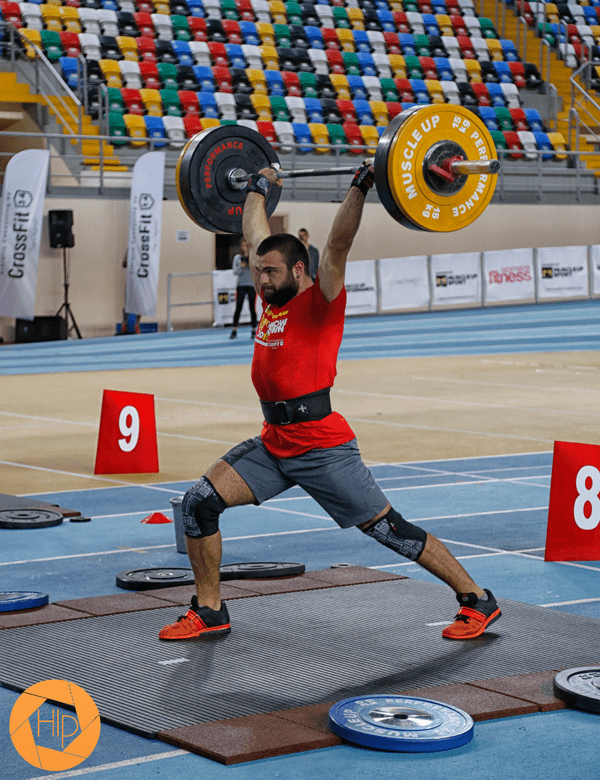
Overhead pressing at very high intensities can increase compressive and shear forces at the glenohumeral joint. While these forces are not inherently harmful, excessive volume at high intensities can contribute to overuse issues.
The split jerk allows athletes to train overhead strength at high loads while distributing the mechanical demand across the entire kinetic chain.
Promoting Scapular Stability and Thoracic Extension
Successful overhead lifting requires adequate thoracic spine extension and scapular upward rotation. Deficits in these areas are associated with shoulder dysfunction.
Research in shoulder biomechanics highlights the importance of coordinated scapulothoracic movement during overhead tasks. Upward rotation, posterior tilt, and external rotation of the scapula create space in the subacromial region and reduce impingement risk.
During the split jerk, athletes must actively elevate and stabilize the scapulae to support the bar overhead. The locked-out position reinforces proper scapular mechanics under load.
In addition, maintaining an upright torso in the split stance encourages thoracic extension. Thoracic mobility is frequently limited in athletes due to prolonged sitting or repetitive flexion-based movements. Weightlifting movements that demand upright posture can help maintain thoracic extension strength.
When coached properly, the split jerk reinforces optimal overhead alignment: bar over midfoot, arms locked, scapulae elevated and upwardly rotated, ribs down, and pelvis neutral.
Training at High Intensities With Lower Volume
Strength and power adaptations are influenced by both intensity and volume. High-intensity loading is particularly important for maximal strength development.
The split jerk allows athletes to train at high intensities without requiring high repetition volume. Because each repetition is neurologically demanding, sets are typically low in reps. This reduces cumulative fatigue and repetitive stress.
Research on resistance training programming shows that heavy, low-repetition training can effectively increase maximal strength with lower total volume compared to moderate-load, high-volume approaches.
For athletes in-season, minimizing unnecessary fatigue is critical. The split jerk provides a high-intensity stimulus in a relatively low-volume format. This makes it suitable for power-focused sessions where the goal is neural activation rather than hypertrophy.
Technical Mastery Enhances Motor Learning
Complex movements like the split jerk improve motor learning and intermuscular coordination. Skill acquisition research shows that practicing complex, high-velocity movements enhances neural efficiency and coordination patterns.
The split jerk requires precise timing between dip, drive, foot split, and lockout. This sequencing reinforces rapid coordination across multiple joints.
Improved intermuscular coordination contributes to more efficient movement patterns in sport. Athletes who train complex lifts often demonstrate improved movement economy and coordination.
While the split jerk requires coaching and progression, its technical demands are a feature, not a flaw. When taught systematically, it becomes a powerful tool for developing athleticism.
Practical Considerations for Athletes
To maximize the benefits of the split jerk:
- Prioritize technical instruction.
- Develop front rack mobility and thoracic extension.
- Strengthen the dip position with front squats.
- Train both split stances.
- Use low rep sets (1–3 reps) with full recovery.
- Emphasize aggressive but controlled footwork.
Athletes should master the push press before progressing to the split jerk. Adequate shoulder mobility and trunk stability are prerequisites.
When implemented correctly, the split jerk becomes more than a weightlifting skill. It becomes a comprehensive athletic development tool.
Conclusion
The split jerk stands out as one of the most effective exercises for athletes seeking to develop explosive power, unilateral stability, and overhead strength.
It maximizes force production by allowing heavier loads and high rates of force development. It enhances athletic balance and coordination through its staggered stance and dynamic landing. It strengthens the shoulders and trunk efficiently by distributing load across the entire kinetic chain.
Science consistently supports the inclusion of Olympic weightlifting movements in athletic training programs. Among jerk variations, the split jerk offers the best combination of load tolerance, stability, and transfer to sport performance for most athletes.
For athletes serious about becoming more powerful, more stable, and more resilient, the split jerk deserves a permanent place in training.
References
- Cormie, P., McBride, J.M. and McCaulley, G.O., 2007. The influence of body mass on calculation of power during lower-body resistance exercises. Journal of Strength and Conditioning Research, 21(4), pp.1042–1049.
- Cormie, P., McBride, J.M. and McCaulley, G.O., 2009. Power-time, force-time, and velocity-time curve analysis during the jump squat: impact of load. Journal of Applied Biomechanics, 25(2), pp.117–124.
- Garhammer, J., 1993. A review of power output studies of Olympic and powerlifting: methodology, performance prediction, and evaluation tests. Journal of Strength and Conditioning Research, 7(2), pp.76–89.
- Haff, G.G., Whitley, A., Potteiger, J.A., Fry, A.C., Kraemer, W.J., Stone, M.H., Logan, P. and Pierce, K.C., 2001. A brief review: explosive exercises and sports performance. Strength and Conditioning Journal, 23(3), pp.13–20.
- Lake, J.P., Mundy, P.D. and Comfort, P., 2014. Power and impulse applied during push press exercise. Journal of Strength and Conditioning Research, 28(9), pp.2552–2559.
- McBride, J.M., Haines, T.L. and Kirby, T.J., 2011. Effect of loading on peak power of the bar, body, and system during power cleans, squats, and jump squats. Journal of Sports Sciences, 29(11), pp.1215–1221.
- Myer, G.D., Ford, K.R., Brent, J.L. and Hewett, T.E., 2006. The effects of plyometric versus dynamic stabilization and balance training on lower extremity biomechanics. American Journal of Sports Medicine, 34(3), pp.445–455.
- Paine, R.M. and Voight, M., 2013. The role of the scapula. International Journal of Sports Physical Therapy, 8(5), pp.617–629.