

Pull ups are one of the most respected upper body exercises for a reason. They demand strength, coordination, and control across multiple muscle groups. Yet for many people, achieving their first strict pull up can feel frustratingly slow. That is where assistance methods come in.
Resistance bands, eccentric or negative reps, and machines are the three most common tools used to bridge the gap between zero pull ups and full bodyweight mastery. But which one actually works best? More importantly, which method builds pull ups faster?


Why Pull Ups Are So Hard
Pull ups require a high relative strength to body weight ratio. Unlike exercises such as rows or lat pulldowns, you cannot easily adjust the load. You must lift your entire body mass.
The primary muscles involved include:
- Latissimus dorsi
- Biceps brachii
- Brachialis and brachioradialis
- Trapezius and rhomboids
- Core stabilizers
Electromyography studies show that pull ups produce high activation in the lats and biceps compared to machine based pulling exercises. This makes them extremely effective, but also demanding.
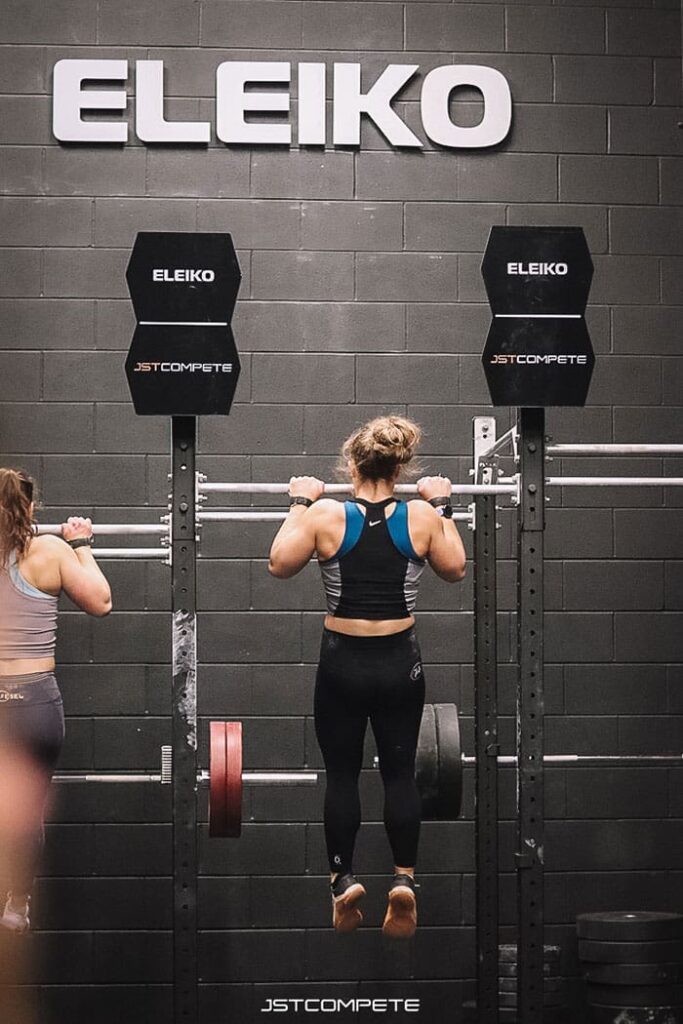
Strength limitations are only part of the challenge. Coordination and scapular control also play a major role. Beginners often lack the ability to properly initiate the pull with their back muscles, relying too heavily on the arms.
This combination of high strength demand and technical complexity is why assistance methods matter.
The Three Main Assistance Methods
Resistance Bands
Bands reduce the effective body weight by providing upward assistance. The more the band stretches, the more help it provides.
Negative Reps
Negatives involve jumping or stepping to the top position and lowering yourself slowly. This focuses on the eccentric phase of the movement.
Machines
Machines such as assisted pull up machines or lat pulldowns reduce the load or guide the movement pattern. Each method has unique advantages and limitations. Understanding how they affect strength development is key.
What Science Says About Strength Development
Before comparing methods, it is important to understand how strength improves.
Strength gains come from:
- Neural adaptations
- Muscle hypertrophy
- Improved motor coordination
Early strength gains are mostly neural. The nervous system becomes better at recruiting muscle fibers and coordinating movement.
Research shows that movement specificity is critical. Strength improvements are greatest when training closely matches the target movement pattern. This is known as the specificity principle. Load also matters. Training with higher relative loads produces greater strength gains, as long as technique is maintained.
Eccentric training has been shown to produce greater force output and muscle damage, which can accelerate strength gains when programmed correctly. With this in mind, we can evaluate each method.

Resistance Bands: Do They Help or Hurt?
How Bands Work
Bands assist most at the bottom of the movement, where they are stretched the most. As you pull higher, the assistance decreases. This creates a variable resistance curve that does not match the natural strength curve of a pull up.
Pros of Band Training
- Allows full range of motion
- Builds confidence in the movement
- Can scale difficulty easily
- Encourages higher volume training
Studies on assisted training show that reducing load while maintaining movement pattern can improve motor learning and coordination. Bands allow beginners to practice the full pull up movement, which supports neural adaptations.
Cons of Band Training
- Assistance is not constant
- Can reduce activation at key points
- May reinforce poor mechanics if overused
Research suggests that variable assistance can alter muscle activation patterns. This may lead to reliance on the band rather than true strength development. In some cases, individuals become stuck using bands without progressing to unassisted reps.
What the Evidence Suggests
Band training is effective for learning the movement pattern, but may not be optimal for maximizing strength gains alone. It works best as a supplementary method rather than the primary driver of progress.
Negative Reps: The Underrated Power Tool
What Are Negatives?
Negatives focus on the eccentric phase, where the muscles lengthen under tension. Humans are stronger eccentrically than concentrically. This means you can control loads during the lowering phase that you cannot lift.
Why Eccentric Training Works
Eccentric contractions produce higher force levels and greater muscle damage compared to concentric contractions. This leads to:
- Faster strength gains
- Increased muscle hypertrophy
- Improved tendon stiffness
Studies show that eccentric training can significantly improve strength, even when concentric ability is limited.
Benefits of Negative Pull Ups
- Builds real strength in the exact movement
- Improves control and coordination
- Strengthens connective tissue
- Transfers directly to full pull ups
Unlike bands, negatives maintain full body weight. This aligns closely with the specificity principle.
Drawbacks
- Can be physically demanding
- Requires proper control to avoid injury
- May not provide enough volume for beginners alone
Despite these limitations, eccentric training consistently shows strong results in both trained and untrained individuals.
What the Evidence Suggests
Negative reps are one of the most effective ways to build pull up strength quickly. They provide high tension and movement specificity.
Machines: Controlled but Limited?

Types of Machines
- Assisted pull up machines
- Lat pulldown machines
Both reduce the load, but in different ways.
Advantages of Machines
- Adjustable resistance
- Stable and controlled movement
- Good for beginners with very low strength
- Allows higher training volume
Machines can help beginners build baseline strength, especially when they cannot yet control their body weight.
Limitations of Machines
- Reduced stabilizer activation
- Different movement mechanics
- Lower transfer to real pull ups
Electromyography studies show that lat pulldowns activate similar muscles, but not to the same extent as pull ups. Assisted pull up machines are closer to the real movement, but still reduce the need for stabilization.
What the Evidence Suggests
Machines are useful for building general pulling strength, but less effective for directly improving pull up performance. They should not be the primary focus if the goal is to achieve strict pull ups quickly.
Direct Comparison: Which Builds Pull Ups Faster?
Strength Transfer
- Negatives: Highest transfer
- Bands: Moderate transfer
- Machines: Lowest transfer
Negatives mimic the exact movement with full load, making them highly specific.
Muscle Activation
- Negatives: High activation across all key muscles
- Bands: Variable activation
- Machines: Lower stabilizer activation
Higher activation leads to better strength adaptations.
Progression Speed
- Negatives: Fastest progress
- Bands: Moderate progress
- Machines: Slower progress
Eccentric overload accelerates neural and muscular adaptations.
Injury Risk
- Negatives: Moderate if uncontrolled
- Bands: Low
- Machines: Low
Proper technique is essential with negatives to avoid excessive strain.
Skill Development
- Negatives: High
- Bands: High
- Machines: Moderate
Both negatives and bands allow practice of the actual movement pattern.
The Winning Method: Negatives Come Out on Top
Based on current evidence, negative pull ups are the most effective method for building pull ups quickly.
They combine:
- High load
- Movement specificity
- Strong muscle activation
This makes them ideal for rapid strength development. However, that does not mean bands and machines are useless. The best approach combines methods strategically.
How to Use All Three Methods Together
Step 1: Build a Strength Base
If you cannot control your body weight at all, start with machines. Focus on:
- Lat pulldowns
- Assisted pull up machines
Train in the 8 to 12 rep range to build initial strength.
Step 2: Introduce Negatives Early
As soon as possible, begin negative pull ups. Guidelines:
- Jump to the top position
- Lower for 3 to 8 seconds
- Perform 3 to 5 reps per set
- Rest adequately between sets
This is where real progress happens.
Step 3: Use Bands for Volume
Bands can be used to increase training volume without excessive fatigue. Use them for:
- Higher rep sets
- Technique practice
- Warm ups
Choose lighter bands over time to reduce assistance.
Step 4: Combine Methods in a Session
A simple structure:
- Start with negatives
- Follow with band assisted reps
- Finish with machine work or rows
This approach targets strength, skill, and volume.
Common Mistakes That Slow Progress
Relying Only on Bands
Bands feel easier, but they can limit strength development if overused.
Avoiding Negatives
Many beginners skip negatives because they are challenging. This is a mistake.
Using Machines Too Long
Machines should be a stepping stone, not a long term solution.
Poor Technique
Key cues:
- Initiate with the lats
- Keep shoulders down and back
- Avoid excessive swinging
Proper form ensures better muscle activation and reduces injury risk.
Programming for Faster Results
Weekly Structure
Train pull ups 2 to 4 times per week.
A sample plan:
Day 1:
- Negative pull ups
- Band assisted pull ups
- Rows
Day 2:
- Lat pulldown or machine
- Core work
Day 3:
- Negative pull ups
- Band assisted reps
- Isometric holds
Progressive Overload

To improve:
- Increase eccentric duration
- Reduce band assistance
- Add more total reps
Progress must be gradual but consistent.
How Long Does It Take to Get Your First Pull Up?
This depends on:
- Body weight
- Training frequency
- Starting strength
Research and coaching data suggest:
- Beginners can achieve their first pull up in 4 to 12 weeks with proper training
Negatives significantly shorten this timeline compared to band only or machine only approaches.
Final Verdict
If your goal is to build pull ups as fast as possible, negative reps are the most effective method. Bands are useful for practice and volume. Machines help build a base but should not dominate your training. The fastest path is not choosing one method, but using each tool for its strength while prioritizing eccentric training.
Key Takeaways
| Method | Effectiveness | Best Use | Limitation |
|---|---|---|---|
| Negatives | Highest | Strength and skill development | Physically demanding |
| Bands | Moderate | Volume and technique | Variable resistance |
| Machines | Lower | Beginner strength base | Limited transfer |
References
- Aagaard, P., Simonsen, E.B., Andersen, J.L., Magnusson, P. and Dyhre-Poulsen, P. (2002). Increased rate of force development and neural drive of human skeletal muscle following resistance training. Journal of Applied Physiology, 93(4), pp.1318-1326.
- Douglas, J., Pearson, S., Ross, A. and McGuigan, M. (2017). Eccentric exercise: physiological characteristics and acute responses. Sports Medicine, 47(4), pp.663-675.
- Gentil, P., Soares, S. and Bottaro, M. (2015). Single vs multi-joint resistance exercises: effects on muscle strength and hypertrophy. Asian Journal of Sports Medicine, 6(2).
- Lundberg, T.R., Fernandez-Gonzalo, R., Gustafsson, T. and Tesch, P.A. (2013). Aerobic exercise alters skeletal muscle molecular responses to resistance exercise. European Journal of Applied Physiology, 113(9), pp.2183-2193.
- Schoenfeld, B.J. (2010). The mechanisms of muscle hypertrophy and their application to resistance training. Journal of Strength and Conditioning Research, 24(10), pp.2857-2872.