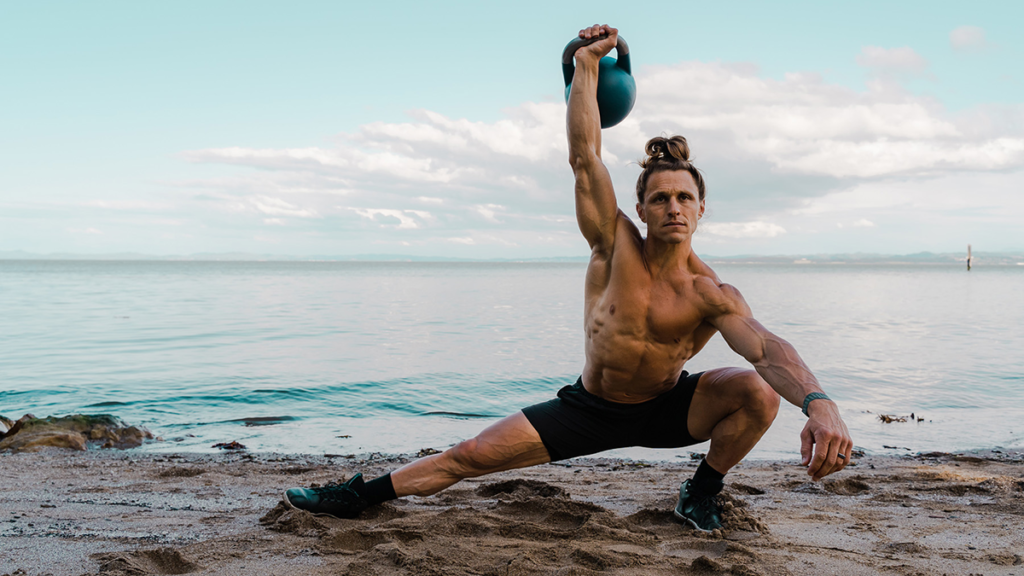
Jeff Cavaliere from Athlean X recently put four people (including himself), through a series of exercises to determine whether or not they were aging too quickly.
7 Exercises to Find Out if You’re Aging Too Quickly
Here are all the exercises, explained by Jeff himself.


TEST 1: SINGLE LEG WALL SIT
The first test is the single leg wall sit — a measure of lower body strength, hip stability, and muscular endurance. The standard is 30 seconds per leg with your knee at 90 degrees and your back flat against the wall. If your hips shift, your knee caves, or you can’t hold the full time, you have a stability deficit that directly impacts performance and injury risk. This is the same assessment used in sports physical therapy to evaluate ACL injury risk.
TEST 2: WALL SPLAT TEST
Next is the wall splat test — one of the most revealing mobility assessments you can perform. Stand with your toes close to the wall, arms overhead, and squat below parallel without losing position. To do this correctly, you need ankle mobility, hip mobility, thoracic extension, and overhead shoulder mobility — all working together. If your heels lift, your arms drop, or your lower back takes over, your mobility is directly limiting your strength and movement efficiency.
TEST 3: HAND RELEASE PUSH-UP
From there, we move into the hand release push-up — a true test of upper body strength, core stability, and muscular endurance. The standards are 40 reps for men in their 40s and 30 reps for women, with a gradual 5–10% decline per decade. If your hips sag, your range of motion shortens, or your tempo breaks down before you hit the mark, your strength and stability are not where they need to be.
TEST 4: DEAD ARM HANG
The dead arm hang is one of the best tests of grip strength, scapular stability, and total body control. The standard is 2 minutes for men in their 40s and 1 minute 15 seconds for women, with a one-second reduction per year after 40. Most people don’t fail because their hands give out — they fail because their shoulders lose position and their core loses tension first. Grip strength is one of the most reliable predictors of long-term health outcomes, but this test shows far more than grip alone.
TEST 5: SIDE PLANK LEG LIFT
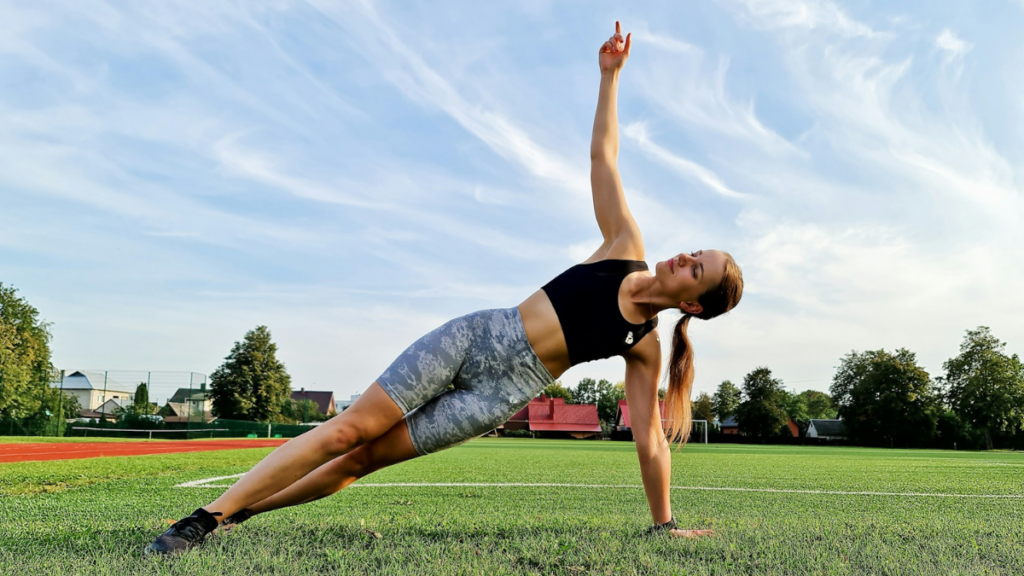
The side plank leg lift tests lateral core strength, hip abductor function, and the ability to resist movement under load. The standard is 30 seconds per side in perfect alignment — for all ages, men and women. If your hips drop, your torso rotates, or your top leg drifts forward to compensate, your lateral stability is breaking down. On this one, quality matters as much as time. Just making it 30 seconds does not mean you passed.
TEST 6: THE OLD MAN TEST
The old man test is one of the simplest yet most telling assessments in this entire lineup. Stand on one leg and put on your sock and shoe without letting your foot touch the ground — no wall, no grab, no reset. This tests single-leg balance, ankle stability, hip control, and proprioception. If you struggle here, it is not an age issue. It is a training issue.
TEST 7: PULL-UPS
The pull-up is the king of upper body pulling exercises and the ultimate test of strength relative to bodyweight. The standard is 15 clean, unbroken reps for men in their 40s and 7 for women — full extension at the bottom, chin clearly over the bar at the top, no kipping. If you cannot meet this standard, it exposes weaknesses in pulling strength, scapular control, grip endurance, and body composition all at once.
These benchmarks are not meant to discourage you. They are meant to direct you. Every test points to something specific — a weakness you can address, a limitation you can improve, a gap you can close. When you close those gaps, you don’t just get better at the test. You move better, feel better, and live better.
UNSEEN FOOTAGE: The Moment Strongman Luke Stoltman Broke His Leg