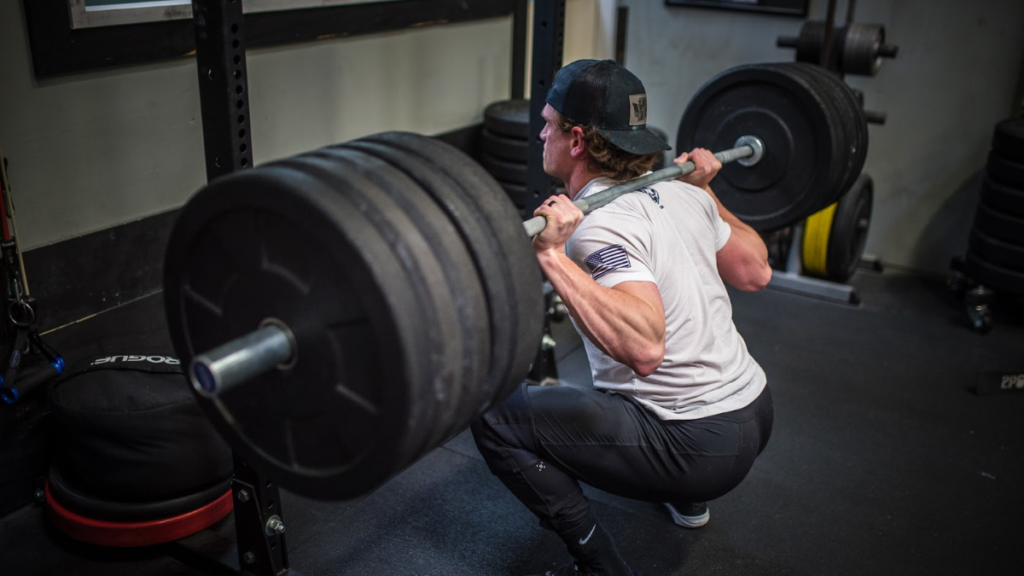
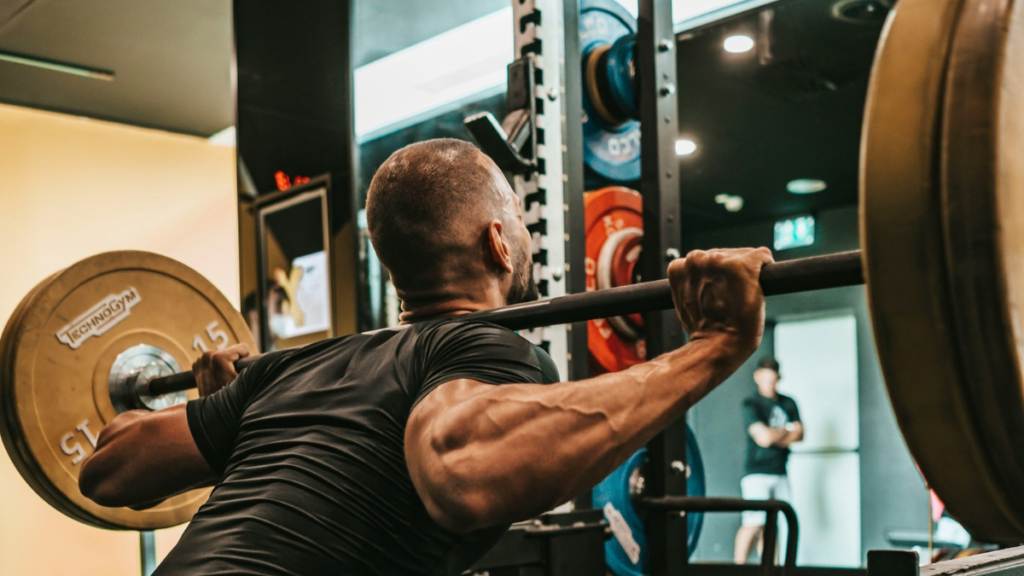
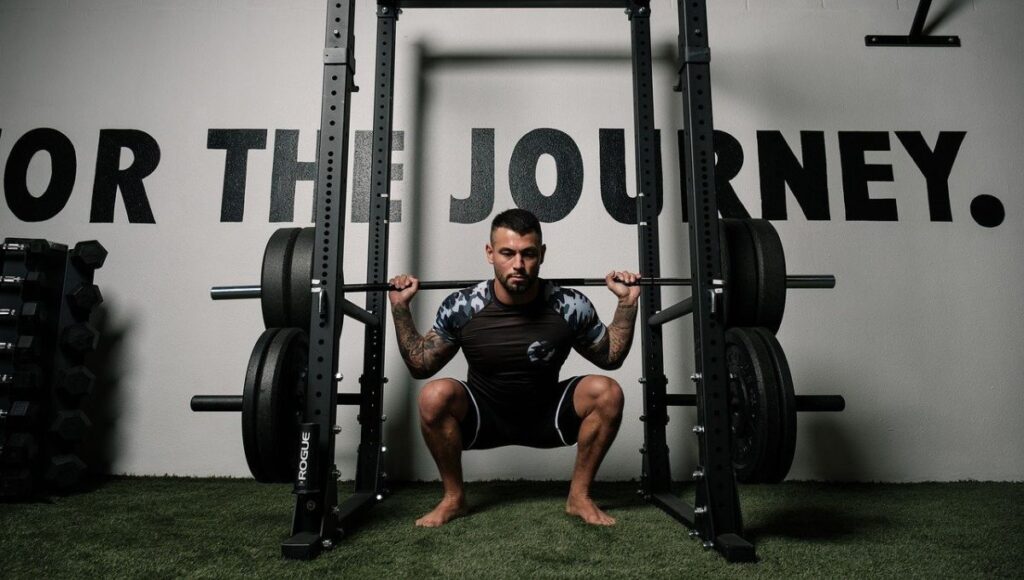
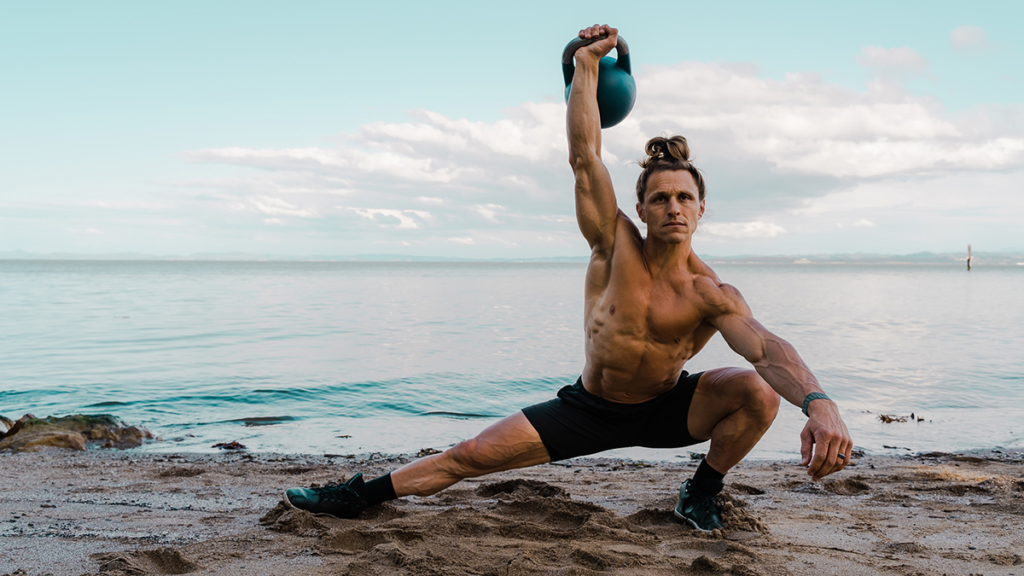
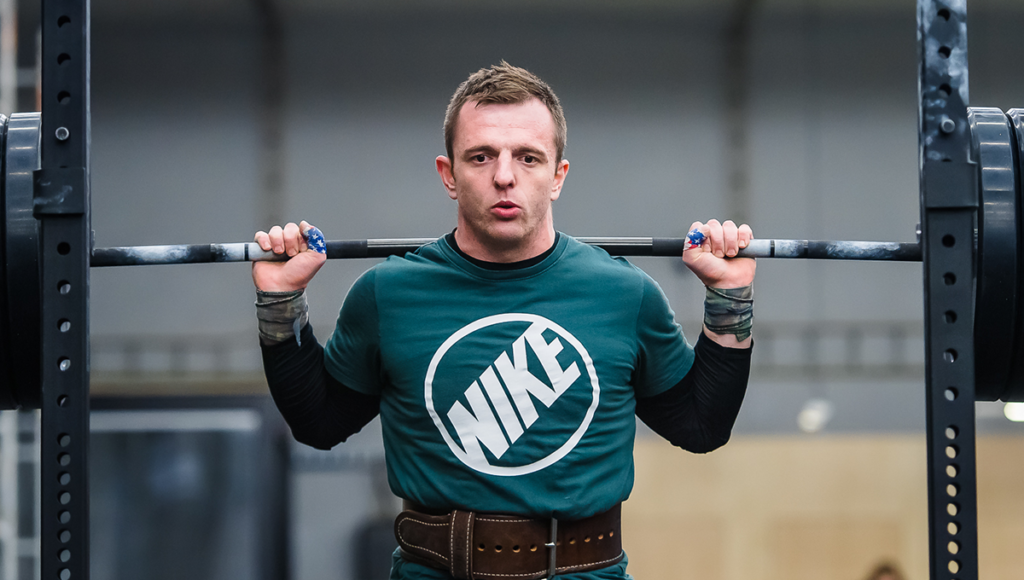
Squats deserve their reputation. They build strength, muscle, athleticism, and lower body power. But if you have been squatting for years, chances are you are also a little tired of them. Some people struggle with knee discomfort during squats. Others simply stop seeing progress because their bodies adapt to the same movement pattern.
The good news is that you do not need to rely on endless back squats to build strong and well developed glutes. Research on muscle growth consistently shows that variety, exercise selection, range of motion, and targeted muscle tension all play major roles in hypertrophy and strength development.


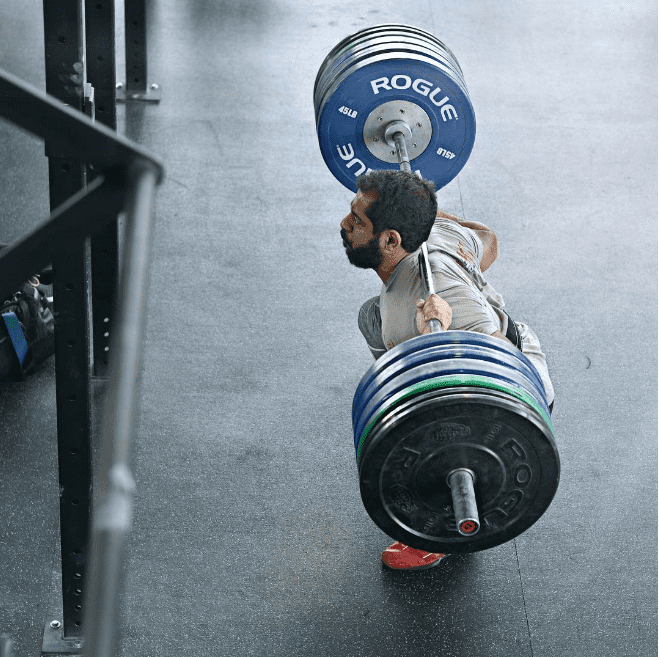
The glute muscles are complex. The gluteus maximus is the largest and most powerful muscle in the human body. The gluteus medius and minimus help stabilize the pelvis, support balance, and improve movement efficiency during walking, sprinting, jumping, and lifting. Training these muscles effectively requires more than one movement pattern.
Many people default to squats because they are familiar and effective. However, several lesser known exercises can challenge the glutes in ways traditional squats cannot. Some place the muscles under greater tension at longer muscle lengths. Others emphasize hip extension or pelvic stability more directly. In many cases, these unusual exercises also create less spinal loading and joint stress.
Why Your Glutes Need More Than Squats
Squats train the glutes effectively, especially when performed deeply. However, they are not perfect for everyone. The glutes have several important functions:
• Hip extension
• Hip external rotation
• Pelvic stabilization
• Force production during sprinting and jumping
• Controlling movement during walking and running
A squat mainly trains hip and knee extension simultaneously. That means the quadriceps often dominate the movement, especially in lifters with long femurs or limited hip mobility.
Electromyography studies comparing glute activation across exercises show that hip thrusts, step ups, lunges, deadlift variations, and single leg exercises can produce equal or greater glute activation than traditional squats.
Research also shows that muscle growth depends heavily on mechanical tension and sufficient training volume. You can create this tension through different movement patterns, not just barbell squats.
Another important point is muscle length. Recent hypertrophy research suggests that exercises loading muscles in a stretched position may promote greater growth. Some glute focused exercises create significant tension when the hips are flexed, which may stimulate muscle adaptation differently than squats.
Variety also helps prevent overuse problems and mental burnout. If you dread lower body day because of endless squats, changing your exercise selection can improve motivation and consistency. The following exercises target the glutes from different angles while challenging strength, stability, and muscle recruitment.
Exercise 1: The Frog Pump
The frog pump looks unusual at first glance, but it is one of the best exercises for creating a strong glute contraction with minimal equipment.
What Is the Frog Pump?
The frog pump is a variation of the glute bridge. Instead of keeping your feet flat on the floor, you place the soles of your feet together and allow the knees to open outward. This position reduces hamstring involvement and increases the emphasis on the gluteus maximus. The movement was popularized by strength coach Bret Contreras, who has published extensive research on glute training.
Why It Works
One challenge during traditional glute bridges is that many people feel the movement mostly in the hamstrings. The frog pump changes the hip position to reduce this issue.
By externally rotating and abducting the hips, the glutes become more mechanically involved. The shortened hamstring position decreases their contribution to hip extension. This creates a stronger mind muscle connection with the glutes. The frog pump also allows high repetition training with relatively low joint stress. That makes it useful for:
• Muscle growth
• Warm ups
• Finisher sets
• Home workouts
• Recovery sessions
Studies examining glute activation during hip extension exercises consistently show high activation during bridge and thrust variations.
How to Perform the Frog Pump
- Lie on your back with your knees bent.
- Bring the soles of your feet together.
- Let your knees fall outward naturally.
- Keep your core braced.
- Drive your hips upward explosively.
- Squeeze your glutes hard at the top.
- Lower slowly and repeat.
Avoid arching your lower back aggressively. The movement should come primarily from hip extension.
Common Mistakes
Many people rush the movement and lose tension. Avoid:
• Bouncing repetitions
• Using excessive lumbar extension
• Allowing the ribs to flare upward
• Losing tension at the top position
A slow eccentric and strong peak contraction work best.
Best Rep Range
The frog pump responds well to moderate and high repetitions. Try:
• 2 to 4 sets
• 15 to 30 repetitions
• Short rest periods
You can also add resistance using:
• Dumbbells
• Resistance bands
• Barbell plates
Exercise 2: The Deficit Reverse Lunge
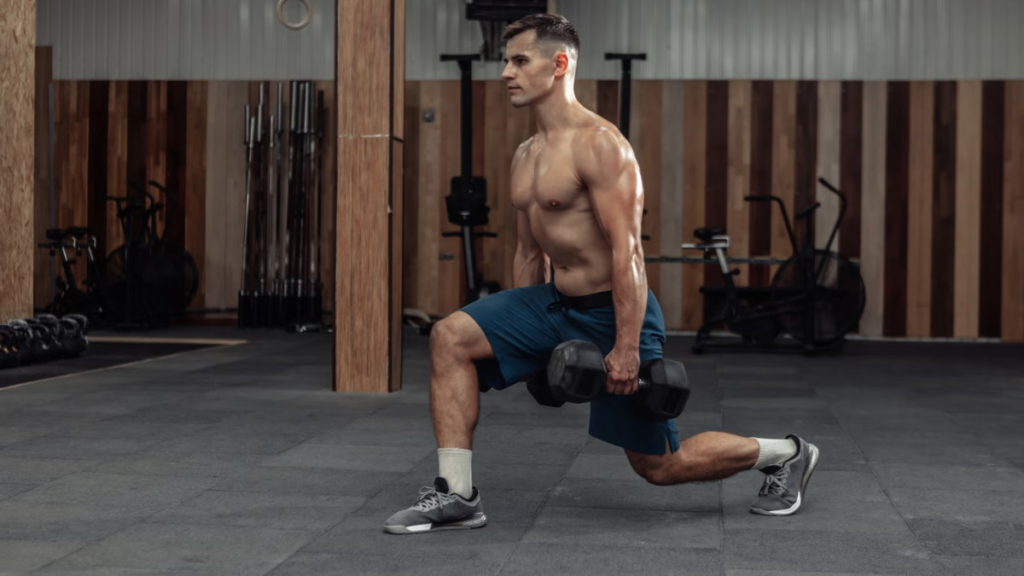
Reverse lunges are already excellent for glute development. Adding a deficit increases the range of motion and places the glutes under greater stretch. This exercise may look simple, but it creates a huge stimulus for muscle growth and single leg stability.
Why the Deficit Matters
When you stand on a low platform or bumper plate, your working leg travels through greater hip flexion during the lowering phase. This increases tension on the gluteus maximus at longer muscle lengths. Research on hypertrophy increasingly supports the idea that loaded stretch positions can enhance muscle growth. Unlike bilateral squats, the deficit reverse lunge also challenges:
• Balance
• Pelvic control
• Hip stability
• Coordination
• Unilateral force production
Single leg exercises can help reduce strength imbalances while improving athletic movement quality. Reverse lunges are often easier on the knees compared with forward lunges because the backward stepping pattern reduces forward knee stress.
Why It Targets the Glutes So Well
The glutes work hardest when extending the hip from a flexed position. During a deep reverse lunge, the front hip reaches substantial flexion. Driving back to standing requires strong glute contraction. Leaning the torso slightly forward increases the hip extension demand further. Compared with standard squats, many people feel the glutes more directly during reverse lunges because each leg works independently.
How to Perform the Deficit Reverse Lunge
- Stand on a small platform or weight plate.
- Hold dumbbells at your sides.
- Step one leg backward slowly.
- Lower until the front thigh approaches parallel.
- Maintain a slight forward torso lean.
- Push through the front heel.
- Return to the starting position.
- Repeat before switching sides.
A platform height of two to four inches is usually enough.
Common Mistakes
Avoid these errors:
• Taking excessively short steps
• Pushing primarily through the toes
• Allowing the front knee to collapse inward
• Losing balance from rushing repetitions
• Remaining overly upright
The slight forward lean is important because it shifts more load toward the posterior chain.
Best Rep Range
For glute growth and strength:
• 3 to 5 sets
• 8 to 12 repetitions per leg
• Controlled tempo
• Moderate to heavy loads
Programming Tips
The deficit reverse lunge pairs well with:
• Hip thrusts
• Romanian deadlifts
• Step ups
• Sprint training
Because it creates high local muscular fatigue, you do not need extremely heavy weights for this exercise to work.
Exercise 3: The B Stance Romanian Deadlift
The B stance Romanian deadlift combines the stability of a bilateral lift with the unilateral challenge of a single leg movement. It is one of the most underrated posterior chain exercises for glute development.
What Is the B Stance Romanian Deadlift?
In a B stance setup, most of your body weight stays on the front leg while the rear leg acts as a kickstand for balance. The rear foot lightly assists stability but contributes very little force. This creates a unilateral loading effect without the balance limitations of a pure single leg Romanian deadlift.
Why It Works
Romanian deadlifts already produce high glute and hamstring activation because of the hip hinge pattern. The B stance variation increases the load demand on one side at a time. This provides several advantages:
• Greater glute recruitment
• Improved hip stability
• Better balance between limbs
• More manageable technique than full single leg deadlifts
• Increased time under tension per side
Hip hinge exercises train the glutes differently from squats because they emphasize horizontal hip displacement rather than vertical torso movement. This distinction matters. Research on resistance training biomechanics shows that combining squat patterns and hinge patterns produces more complete lower body development.
The Importance of Hip Hinges for Glute Growth
Many gym goers squat frequently but neglect proper hinging patterns. Hip hinges train the glutes in a stretched position while emphasizing eccentric loading. Eccentric muscle actions create high mechanical tension and muscle damage, both of which contribute to hypertrophy.
The B stance Romanian deadlift also improves pelvic control and anti rotational stability. These qualities transfer well to athletic performance and injury prevention.
How to Perform the B Stance Romanian Deadlift
- Stand holding dumbbells or a barbell.
- Place one foot slightly behind the other.
- Keep about 80 to 90 percent of your weight on the front leg.
- Maintain a soft bend in the front knee.
- Hinge at the hips while keeping the spine neutral.
- Lower until you feel a deep stretch in the glutes and hamstrings.
- Drive the hips forward to stand tall.
- Complete all repetitions before switching sides.
The rear foot should function mainly as a stabilizer.
Best Rep Range
The B stance Romanian deadlift works well with moderate repetitions.
Try:
• 3 to 4 sets
• 8 to 10 repetitions per side
• Slow eccentric lowering
• Moderate to heavy resistance
Can These Exercises Replace Squats Completely?
For general fitness and glute development, yes, they can. Squats are valuable, but they are not mandatory. Research consistently shows that muscle growth can occur through many different resistance training exercises as long as the muscles experience sufficient tension and progressive overload. Some people even experience better glute development after reducing squat volume and focusing more on hip hinges, thrusts, and unilateral movements.
This is especially true for lifters whose anatomy causes squats to become highly quad dominant. Athletes may still benefit from squatting for broader lower body strength and sports performance. However, using these unusual glute exercises alongside or instead of squats can create fresh progress while reducing monotony.
Final Thoughts
If you are bored of squats, you are not alone. The good news is that effective glute training does not require endless barbell back squats.
The frog pump, deficit reverse lunge, and B stance Romanian deadlift each challenge the glutes differently through unique combinations of hip extension, stretch tension, stability, and unilateral control. These exercises are supported by biomechanics research and modern hypertrophy science. They can help improve muscle growth, movement quality, athleticism, and training enjoyment.
The key is consistency and progressive overload. Train hard, recover properly, and use enough variety to keep your glutes challenged. Over time, these unusual movements may become the exercises you look forward to most.
Key Takeaways
| Exercise | Primary Benefit | Best Rep Range | Key Glute Focus |
|---|---|---|---|
| Frog Pump | High glute activation with low joint stress | 15 to 30 reps | Peak contraction and glute isolation |
| Deficit Reverse Lunge | Deep stretch and unilateral strength | 8 to 12 reps | Hip flexion and glute loading |
| B Stance Romanian Deadlift | Stretch tension and hip hinging | 8 to 10 reps | Eccentric glute and hamstring loading |
References
• Andersen, V., Fimland, M.S., Brennset, O., Haslestad, L.R., Lundteigen, M.S., Skalleberg, K., Saeterbakken, A.H. and Saeterbakken, M.L. (2018) ‘Muscle activation and strength in squat and hip thrust exercises’, Journal of Strength and Conditioning Research, 32(10), pp. 2934 to 2941.
• Contreras, B., Vigotsky, A.D., Schoenfeld, B.J., Beardsley, C. and Cronin, J. (2015) ‘A comparison of gluteus maximus, biceps femoris, and vastus lateralis electromyography amplitude in the back squat and barbell hip thrust exercises’, Journal of Applied Biomechanics, 31(6), pp. 452 to 458.
• Fonseca, R.M., Roschel, H., Tricoli, V., de Souza, E.O., Wilson, J.M. and Ugrinowitsch, C. (2014) ‘Changes in exercises are more effective than in loading schemes to improve muscle strength’, Journal of Strength and Conditioning Research, 28(11), pp. 3085 to 3092.
• Kubo, K., Ikebukuro, T. and Yata, H. (2019) ‘Effects of squat training with different depths on lower limb muscle volumes’, European Journal of Applied Physiology, 119(9), pp. 1933 to 1942.
• McCurdy, K., Langford, G., Doscher, M., Wiley, L. and Mallard, K. (2005) ‘The effects of short term unilateral and bilateral lower body resistance training on measures of strength and power’, Journal of Strength and Conditioning Research, 19(1), pp. 9 to 15.