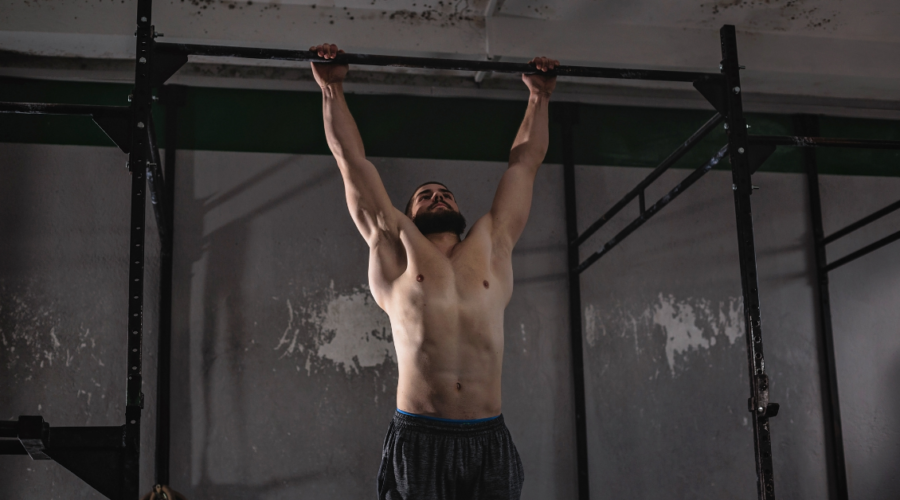


Ten strict pull-ups sounds simple. Until you actually try to do them.
For most people, strict pull-ups are one of the hardest bodyweight movements to master consistently. They demand a rare combination of relative strength, grip endurance, upper-back development, core control, and technical efficiency. That is why so many gym-goers stall at:


- 2 reps
- 5 reps
- or endless ugly half-reps
But athletes who can perform 10 clean strict pull-ups usually have a few things in common. Before you hit double digits, there are four key boxes you need to tick first.
The 4 Things You Need to Do First
Before you can perform 10 strict pull-ups, you should focus on:
- Building sufficient pulling strength
- Improving your body composition
- Developing grip and core endurance
- Mastering strict pull-up technique
These four qualities work together. Miss one of them, and pull-up progress slows dramatically. Build all four properly, and 10 strict reps becomes far more achievable.
1. Build Real Pulling Strength
This is the biggest limiter for most people. Strict pull-ups are not just an arm exercise, they are a full upper-body pulling movement that heavily depends on:
- Lats
- Upper back
- Biceps
- Rear delts
- Core
- Grip
If those muscles are weak, pull-ups feel impossible. One of the best indicators that you are strong enough for 10 pull-ups is your rowing strength. As a rough benchmark, many athletes capable of 10 strict pull-ups can also:
- Barbell row around 70–90% of bodyweight
- Perform controlled lat pulldowns above bodyweight
- Complete heavy chest-supported rows with solid form
Accessory work matters massively here. Exercises that help include:
- Barbell rows
- Ring rows
- Lat pulldowns
- Chin-ups
- Dumbbell rows
- Face pulls
The stronger your pulling muscles become, the lighter your body feels hanging from the bar.
2. Improve Your Strength-to-Weight Ratio
Pull-ups are relative strength. That means your bodyweight matters. You are literally lifting your own mass through space. Someone with strong lats but excessive body fat may struggle more than a lighter athlete with less absolute strength.
This is why improving body composition often unlocks pull-up progress extremely quickly. You do not necessarily need to become “shredded,” but reducing unnecessary bodyweight can dramatically improve pulling performance. Every extra kilogram has to travel from a dead hang to chin-over-bar height on every single rep. Athletes who achieve 10 strict pull-ups usually have a strong balance between:
- Lean muscle mass
- Relative strength
- Bodyweight efficiency
3. Build Grip and Core Endurance
Many people fail pull-ups long before their lats actually fatigue. Instead, their:
- Grip gives out
- Core loses tension
- Swinging increases
- Positioning collapses
Strict pull-ups require full-body tension. Your abs, glutes, and spinal stabilisers all work to keep your body controlled throughout the movement. Without that stability, energy leaks everywhere. Grip strength matters too. A weak grip often creates early fatigue and makes maintaining proper pulling mechanics much harder.
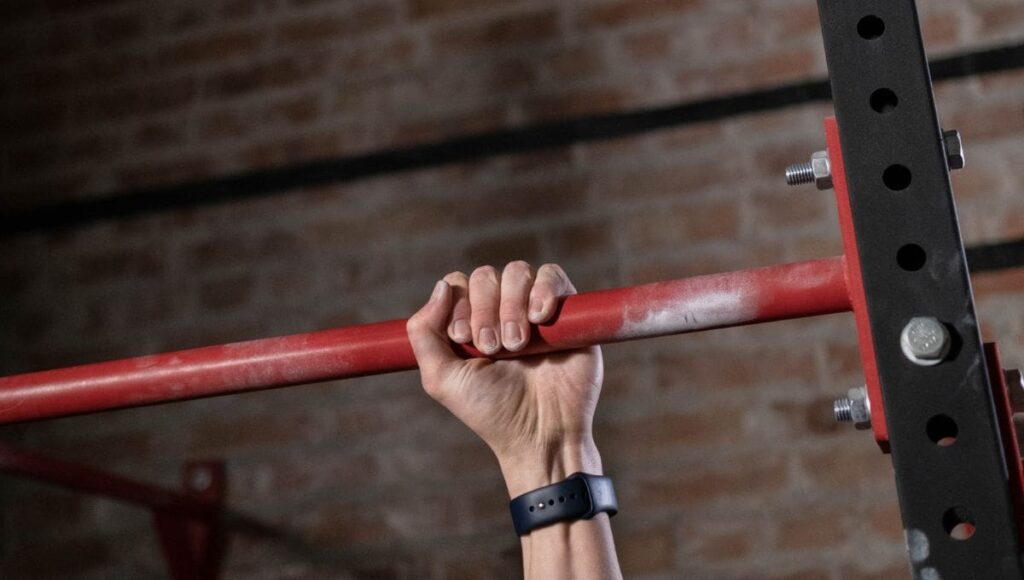
Simple exercises that help include:
- Dead hangs
- Farmer carries
- Hollow holds
- Hanging knee raises
- Toes-to-bar progressions
The more stable and connected your body feels on the bar, the more efficient your pull-ups become.
4. Master Strict Pull-Up Technique
Many people think they are doing strict pull-ups. They are not. Common mistakes include:
- Half reps
- Excessive kipping
- Shrugged shoulders
- Loose core positioning
- Poor range of motion
A true strict pull-up means:
- Full dead hang at the bottom
- Chin clearly over the bar
- No leg drive
- Controlled movement throughout
Technique matters massively because efficient movement saves energy. Small improvements in positioning can instantly add reps. Key technical cues include:
- Keep the ribs down
- Brace the core hard
- Pull elbows toward the ribs
- Drive the chest toward the bar
- Keep shoulders active at the bottom
Good pull-up mechanics make every rep smoother and more repeatable.
Why Most People Stall at 5 Pull-Ups
Five pull-ups is often where beginner gains end and real training begins. At this stage, weaknesses become exposed. Usually the problem is one of the following:
- Poor recovery
- Lack of pulling volume
- Weak grip
- Excess bodyweight
- Inconsistent technique
The athletes who eventually hit 10 strict reps are usually the ones who stay patient long enough to improve all of those areas simultaneously.

The Biggest Mistakes People Make
1. Training Pull-Ups Once Per Week
Pull-ups respond well to frequency. Most successful athletes practice them multiple times per week with manageable volume.
2. Only Doing Max Sets
Constantly training to failure often destroys quality. Submaximal volume usually works better long term.
3. Ignoring Eccentrics
Controlled negatives build massive pulling strength. Slow eccentric pull-ups are one of the fastest ways to improve.
4. Relying on Bands Forever
Resistance bands can help beginners initially, but many athletes become dependent on them. Eventually, you need real bodyweight exposure.
Why 10 Strict Pull-Ups Matter
Ten strict pull-ups represents a very high level of relative upper-body strength for the average gym-goer.
It demonstrates:
- Strong lats and upper back
- Good body control
- Excellent relative strength
- Solid muscular endurance
It is also one of the clearest signs that your training is producing genuinely athletic strength — not just machine-based gym strength.

Final Thoughts
Ten strict pull-ups are not built through random attempts. They are earned through developing:
- Pulling strength
- Relative strength
- Grip and core endurance
- Efficient technique
Build those four qualities consistently, and double-digit pull-ups become far more realistic. Stay patient, train intelligently, and remember, the strongest pull-up athletes build their foundation long before they ever hit rep number ten.
Want to Deadlift 200kg? Here are 4 Numbers You Need to Hit First