

Everyone knows sit ups. They have been part of fitness programs for decades and remain one of the most common abdominal exercises in gyms and military training. The problem is that they are not necessarily the best choice if your goal is to build visible, strong abdominal muscles.
A defined six pack comes from two main factors. First, you need enough muscle development in the rectus abdominis and surrounding core muscles. Second, you need a low enough body fat percentage for those muscles to become visible. Endless sit ups mainly train muscular endurance and often stop providing enough overload to stimulate significant muscle growth. Research consistently shows that muscles grow best when they are challenged with progressively increasing resistance, trained through large ranges of motion, and worked close to fatigue. The abdominal muscles follow exactly the same rules as your chest, back, or legs.


That means some unusual exercises can outperform traditional sit ups because they create more tension, greater muscle activation, and better overall core stability. These movements may look strange at first, but there is solid science behind why they work.
Here are five weird abs exercises that deserve a place in your training program.
Why Sit Ups Are Not the Gold Standard
The sit up mainly involves spinal flexion while also heavily recruiting the hip flexors. As fatigue builds, many people end up pulling with their neck, swinging their arms, or relying on momentum instead of keeping tension on the abdominal muscles.
Studies examining abdominal muscle activation have found that exercises requiring greater stabilization, anti extension, or increased resistance often produce higher activation levels than traditional sit ups.

Another issue is progressive overload. Once you can perform dozens of sit ups without difficulty, the exercise becomes less effective for building muscle unless resistance is added.
That is why many coaches now prioritize exercises that challenge the abs in multiple ways, including resisting movement, controlling rotation, and producing force through a larger range of motion.
The Science Behind Six Pack Development
The rectus abdominis is responsible for flexing the spine, but it also plays an important role in stabilizing the torso during movement. The deeper transverse abdominis acts like a natural weight belt by increasing abdominal pressure and stabilizing the spine. The internal and external obliques rotate and resist rotation while helping transfer force between the upper and lower body.
Research has shown that combining dynamic movement with stability based exercises develops a stronger and more functional core than relying on one movement pattern alone. Visible abdominal muscles also require sufficient muscle thickness. Resistance training increases muscle protein synthesis and stimulates hypertrophy when exercises are performed with adequate intensity and volume.
Exercise One: Body Saw
The body saw looks simple, but most people discover how challenging it is within a few seconds.
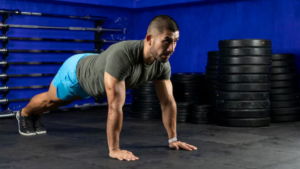
Begin in a forearm plank with your feet placed on sliders, towels, or suspension trainer straps. Keeping your body perfectly straight, slowly push yourself backward by moving your feet behind you. Then pull yourself forward to the starting position without allowing your hips to sag.
Unlike a normal plank, this movement dramatically increases the lever arm acting on your abdominal muscles. The farther you move backward, the harder your rectus abdominis and transverse abdominis must work to prevent your spine from extending.
Electromyography studies have found that increasing instability and lever length substantially increases abdominal muscle activation during plank variations.
The movement also teaches your core to resist extension, which is one of the primary functions of the abdominal wall during heavy lifting and athletic performance. Aim for slow repetitions lasting two to four seconds in each direction while maintaining perfect body alignment.
Exercise Two: Hanging Windshield Wipers
This exercise looks more like a gymnastics movement than a traditional ab workout, but it delivers an enormous challenge. Hang from a pull up bar with your legs extended. Raise your legs until they are roughly parallel with the floor or higher. Keeping your legs straight, slowly rotate them from side to side like windshield wipers. This exercise combines hip flexion, anti extension, and rotational control in one movement.
The obliques work extremely hard to control the movement while the rectus abdominis prevents excessive swinging. Your grip, shoulders, and lats also contribute, making this a highly integrated exercise.
If the full version is too difficult, bend your knees or reduce the range of motion until you develop the required strength. Controlled movement is far more important than speed. Swinging removes tension from the abdominal muscles and shifts the workload elsewhere.
Exercise Three: Dragon Flag
Bruce Lee helped make the dragon flag famous, and it remains one of the toughest abdominal exercises ever created. Lie on a bench and grip the edge behind your head. Lift your body until only your shoulders remain in contact with the bench. Slowly lower your body while keeping it perfectly straight from shoulders to ankles.
How Much Must You Be Able to Bench Press?
This movement places tremendous eccentric loading on the abdominal muscles because they must resist gravity throughout the lowering phase. Research consistently shows that eccentric muscle actions create powerful stimuli for strength gains and muscle growth.

The dragon flag also requires the entire anterior core to function as one unit. The rectus abdominis, transverse abdominis, obliques, hip flexors, and spinal stabilizers all contribute to maintaining body position.
Beginners should start with bent knees or perform only the lowering phase before progressing to full repetitions.
Exercise Four: Stability Ball Stir the Pot
The name sounds unusual, but the exercise is backed by strong evidence. Begin in a forearm plank with your elbows resting on a stability ball. Instead of holding still, slowly move your forearms in small circular patterns as though stirring a large pot. The moving ball constantly changes the direction of force, forcing your abdominal muscles to react every second.
Research led by Stuart McGill demonstrated that this exercise produces exceptionally high activation across the abdominal wall while minimizing unnecessary spinal loading. The movement develops endurance, coordination, and stability simultaneously. Keep your hips level throughout the movement. Small circles performed under control are far more effective than large, uncontrolled movements. Complete circles in both directions to challenge your muscles evenly.
Exercise Five: Ab Wheel Rollout
The ab wheel is often overlooked because it appears too simple. In reality, it is one of the most demanding abdominal exercises available. Begin kneeling with both hands gripping the wheel. Slowly roll forward while maintaining a straight line from shoulders to knees. Extend as far as you can without allowing your lower back to arch. Pull yourself back using your abdominal muscles instead of your hips.
Research comparing abdominal exercises has repeatedly shown that the rollout generates very high activation in the rectus abdominis and external obliques.
As you move farther away from your knees, the lever becomes longer and the demand on your core increases dramatically. The rollout also trains anti extension strength, one of the most important qualities for lifting heavy weights and protecting the lower back. Advanced athletes can eventually progress to standing rollouts, which are among the most difficult core exercises ever performed.
Why These Exercises Can Build Abs Faster Than Sit Ups
These exercises are not magical shortcuts, but they generally create stronger muscle building stimuli than standard sit ups. Each movement increases mechanical tension, which is one of the primary drivers of hypertrophy. Mechanical tension occurs when muscles produce force under load through meaningful ranges of motion.

Many of these exercises also involve longer lever arms, greater instability, or both. These factors increase the workload placed directly on the abdominal muscles without requiring hundreds of repetitions. Another important advantage is progressive overload.
You can gradually increase the difficulty by extending the range of motion, slowing the lowering phase, increasing training volume, or progressing to harder variations. Sit ups become repetitive quite quickly unless external weight is added.
Final Thoughts
The best abdominal exercises are not always the most popular ones. While sit ups have their place, they are no longer considered the most effective option for building a strong, muscular midsection. Exercises such as the body saw, hanging windshield wipers, dragon flag, stability ball stir the pot, and ab wheel rollout challenge your core through greater tension, larger demands for stability, and more complete muscle recruitment.
Combined with progressive overload, consistent resistance training, and a nutrition plan that supports fat loss, these exercises can help build thicker abdominal muscles and reveal a stronger, more athletic physique.
If your workouts have consisted of endless sets of sit ups without much progress, replacing them with these more demanding movements could be the change your training needs.
Key Takeaways
| Takeaway | Why It Matters |
|---|---|
| Sit ups are not the best muscle building ab exercise | They mainly develop endurance unless additional resistance is added |
| Progressive overload matters | The abdominal muscles grow using the same principles as every other skeletal muscle |
| Anti extension exercises are highly effective | Body saws and ab wheel rollouts create high levels of abdominal tension |
| Stability improves muscle recruitment | Exercises like stir the pot force the entire core to work together |
| Nutrition determines visibility | Building abdominal muscle is only part of achieving a visible six pack. Low body fat is equally important |
References
- Acevedo, E.O. and Stanforth, D., 2014. ACSM’s Advanced Exercise Physiology. Lippincott Williams and Wilkins.
- Behm, D.G., Drinkwater, E.J., Willardson, J.M. and Cowley, P.M., 2010. Journal of Strength and Conditioning Research, 24(1), pp.285 to 293.
- Calatayud, J., Borreani, S., Colado, J.C., Martin, F., Rogers, M.E. and Andersen, L.L., 2014. Journal of Strength and Conditioning Research, 28(9), pp.2559 to 2564.
- Escamilla, R.F., Lewis, C., Pecson, A., Imamura, R. and Andrews, J.R., 2010. Journal of Orthopaedic and Sports Physical Therapy, 40(5), pp.265 to 276.
- Grgic, J., Schoenfeld, B.J. and Latella, C., 2019. Sports Medicine, 49(2), pp.233 to 240.
- Hibbs, A.E., Thompson, K.G., French, D., Wrigley, A. and Spears, I., 2008. Sports Medicine, 38(12), pp.995 to 1008.
- McGill, S.M., 2010. Strength and Conditioning Journal, 32(3), pp.33 to 46.
- Schoenfeld, B.J., 2010. Journal of Strength and Conditioning Research, 24(10), pp.2857 to 2872.
- Schoenfeld, B.J., Ogborn, D. and Krieger, J.W., 2017. Journal of Strength and Conditioning Research, 31(12), pp.3508 to 3523.
- Warden, S.J., 2014. British Journal of Sports Medicine, 48(13), pp.1027 to 1028.