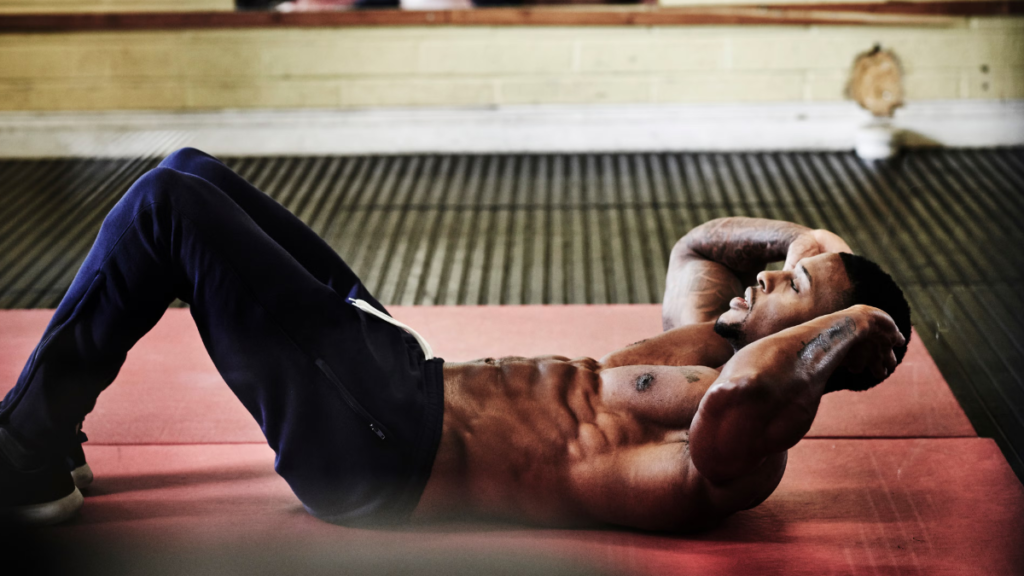
Static holds are simple: you get into position and keep your body still while your muscles work. That does not mean they are easy. A well performed plank, side plank, or hollow hold can challenge your abs and the muscles around your trunk without requiring equipment or lots of space.
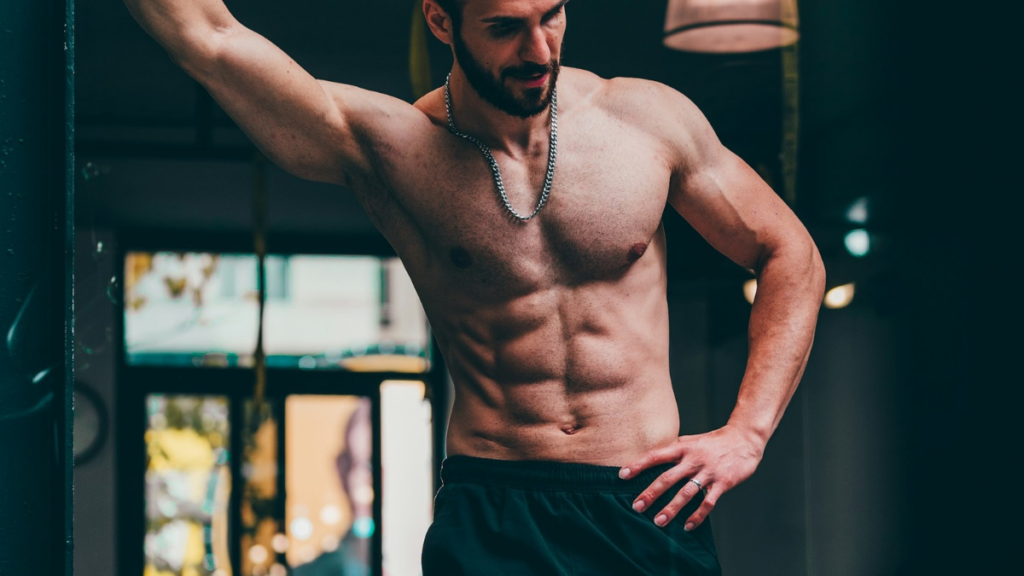
These exercises can help you build core strength and muscular endurance. They can also help you practice keeping your trunk steady while your arms and legs move. But no static hold can guarantee a visible six pack. Your abdominal muscles need to be developed, and whether they show depends partly on how much body fat covers them, as well as your individual fat distribution.



A small study found that six weeks of abdominal exercises improved participants’ curl up endurance but did not significantly change their body fat or abdominal measurements. That is a useful reminder: train your abs to make them stronger, and approach fat loss as a broader goal rather than expecting one exercise to remove fat from your stomach.
What Makes a Static Hold Effective?
A static hold works when you create enough tension to challenge the target muscles while maintaining a controlled position. That means choosing a version you can perform with good form, then making it harder over time. You might increase the hold by a few seconds, use a more demanding variation, or add resistance.
Longer holds are not automatically better. If your hips sag, your back arches, or you start holding your breath just to last longer, the exercise has become a test of how long you can tolerate poor form. End the hold when you can no longer keep the position steady.
Static training can improve strength and, under appropriate training conditions, contribute to muscle growth. However, a plank is not the only kind of abdominal training worth doing. If your goal includes building more muscle, combine holds with exercises that move your trunk or legs through a controlled range of motion, such as a weighted crunch or a hanging knee raise.
1. Forearm Plank
The forearm plank is a straightforward way to train your abs to resist your lower back arching. Your shoulders, glutes, and other trunk muscles also help you maintain the position. Research measuring muscle activity during plank variations shows that planks involve multiple trunk muscles, although changing the setup does not necessarily make every abdominal muscle work harder.
How to Do It
Start on your forearms and knees. Place your elbows under your shoulders, then step your feet back one at a time. Keep your body in a straight line from your head to your heels. Gently squeeze your glutes, brace your abdomen as if preparing for a light punch, and press your forearms into the floor.
Keep breathing normally. Think about drawing your ribs toward your pelvis without rounding your upper back. Your hips should stay level, rather than dropping toward the floor or lifting high in the air. Hold the position until you can no longer keep your shape.
If a full plank is too difficult, keep your knees on the floor and maintain a straight line from your head to your knees. This reduces the amount of your body weight you need to support while still giving you practice bracing your trunk.
How to Make It Harder
Once you can hold a solid plank for several short sets, try making the hold more challenging rather than simply extending it indefinitely. You can lift one foot a few inches while keeping your hips level, or move your elbows slightly farther forward to increase the challenge. These changes make it harder to resist movement, so use them only if your back stays comfortable and your position remains controlled.
Try two or three sets of 15 to 30 seconds. Rest between sets, and stop each hold before your form breaks down. These times are a practical starting point, not a special threshold that guarantees results.
2. Side Plank
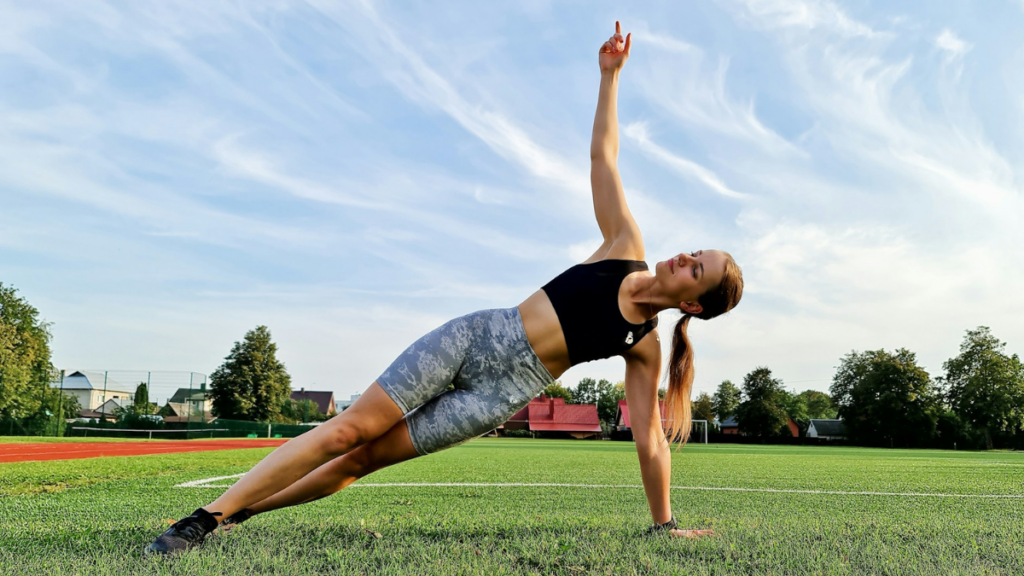
The side plank trains your trunk to resist bending sideways. It also challenges the muscles along the sides of your abdomen, including the obliques. Because the exercise is performed one side at a time, it gives you a chance to notice whether one side feels less steady than the other.
Laboratory studies have measured activity in the obliques and other trunk muscles during side bridge exercises. The findings support the side plank as a way to challenge those muscles, but muscle activity measurements do not prove that one version will build more visible muscle than another.
How to Do It
Lie on your side with your elbow beneath your shoulder. Stack your legs, or place your top foot slightly in front of your bottom foot for more balance. Lift your hips so your body forms a straight line from your head to your feet. Keep your shoulders facing forward and your hips stacked, rather than rolling your chest toward the floor.
If the full version is too demanding, bend your knees and support yourself on your forearm and lower knee. Keep your hips lifted and your body aligned from your head to your knees. The goal is a steady hold, not a painful squeeze in your shoulder.
Perform the same number of sets and similar hold times on both sides. If one side feels weaker, keep the exercise controlled and build it gradually. Do not use longer holds on the stronger side just because you can.
How to Make It Harder
When you can maintain the full side plank with good alignment, you can raise your top leg a short distance or support yourself on your hand with your arm straight. Both options increase the balance and strength challenge. Move to a harder variation only when you can keep your hips lifted without rotating or sagging.
Start with two or three holds of 10 to 25 seconds per side. Short, controlled sets are more useful than a long hold where your shoulder, hips, or trunk lose position.
3. Hollow Body Hold
The hollow body hold is common in gymnastics and bodyweight training. It asks you to keep your lower back gently pressed toward the floor while holding your arms and legs away from your body. That makes it a direct challenge for your abdominal muscles, especially when you extend your legs farther from your torso.
A major part of the exercise is choosing a position you can control. If your lower back lifts away from the floor, reduce the difficulty by bending your knees or bringing your arms closer to your sides.
How to Do It
Lie on your back with your knees bent and feet on the floor. Gently brace your abdomen and press your lower back toward the floor. Lift your head and shoulders a little, then raise your feet so your knees are bent above your hips. Hold this position while breathing steadily.
To progress, extend one leg at a time. If you can keep your lower back down, extend both legs farther away from you. You can also reach your arms overhead. The farther your arms and legs move from your torso, the more demanding the position becomes.
Beginner versions should feel controlled, not like a struggle to keep your back from arching. Stop the set if your back starts lifting or you feel discomfort. Try two or three sets of 10 to 20 seconds, choosing a variation that lets you maintain your position.
How to Make It Harder
Progress one step at a time. First, reach your arms farther overhead or extend one leg more fully. Later, extend both legs while keeping them closer to the floor. You can also add a light medicine ball between your hands, but only if you can maintain the position without your back lifting.
How to Put These Holds Into a Workout
You can train these three holds two or three times per week, with at least a day between challenging sessions if your abs are still sore. Start with two sets of each exercise. Use a version that lets you hold your position with steady breathing, then add time or difficulty gradually as it becomes manageable.
For example, you might perform a forearm plank, a side plank on each side, and a hollow body hold. Rest for about 30 to 60 seconds between sets, or longer if you need it to maintain good form. Keep the workout challenging but controlled. Your goal is not to survive the longest possible hold; it is to repeat strong, consistent holds and progress over time.
Heavy Bench Press vs High-Rep Push-Ups: Which Builds Bigger Pecs?
Static exercises can be a useful part of an abdominal routine, but they do not need to be the whole routine. Dynamic exercises can train the abdominal muscles through movement and make it easier to add resistance. A balanced program can include both types, along with strength training for the rest of your body.
The Bottom Line
The forearm plank, side plank, and hollow body hold are three practical ways to train your abs and improve your ability to brace your trunk. Choose the version you can perform with good form, keep each hold controlled, and make the exercise gradually harder as you get stronger.
A stronger six pack comes from training the muscles consistently. Whether those muscles become visible also depends on factors beyond static holds, including body fat levels and individual fat distribution. Treat these exercises as useful tools for building strength, rather than a shortcut to a particular look.
Key Takeaways
| Exercise | Main challenge | Starting point |
|---|---|---|
| Forearm plank | Resisting an arch in the lower back | 2 or 3 holds of 15 to 30 seconds |
| Side plank | Resisting sideways bending | 2 or 3 holds of 10 to 25 seconds per side |
| Hollow body hold | Keeping the lower back gently pressed toward the floor | 2 or 3 holds of 10 to 20 seconds |
| Progression | Maintain your position as you add time or difficulty | End each hold when your form starts to change |
| Visible abs | Static holds strengthen abdominal muscles, but do not guarantee visible abs | Combine training with broader nutrition and activity habits |
References
- Brobakken, M.F., Krogsæter, I., Helgerud, J., Wang, E. and Hoff, J. (2023) ‘Abdominal aerobic endurance exercise reveals spot reduction exists: A randomized controlled trial’, Physiological Reports, 11(22), e15853.
- Calatayud, J., Casaña, J., Martín, F., Jakobsen, M.D., Colado, J.C., Gargallo, P., Juesas, A., Muñoz, V. and Andersen, L.L. (2017) ‘Trunk muscle activity during different variations of the supine plank exercise’, Musculoskeletal Science and Practice, 28, pp. 54–58.
- García-Jaén, M., Cortell-Tormo, J.M., Hernández-Sánchez, S. and Tortosa-Martínez, J. (2020) ‘Influence of abdominal hollowing maneuver on the core musculature activation during the prone plank exercise’, International Journal of Environmental Research and Public Health, 17(20), 7410.
- Oranchuk, D.J., Storey, A.G., Nelson, A.R. and Cronin, J.B. (2019) ‘Isometric training and long-term adaptations: Effects of muscle length, intensity, and intent: A systematic review’, Scandinavian Journal of Medicine & Science in Sports, 29(4), pp. 484–503.
- Vispute, S.S., Smith, J.D., LeCheminant, J.D. and Hurley, K.S. (2011) ‘The effect of abdominal exercise on abdominal fat’, Journal of Strength and Conditioning Research, 25(9), pp. 2559–2564.
- Youdas, J.W., Boor, M.M.P., Darfler, A.L., Koenig, M.K., Mills, K.M. and Hollman, J.H. (2014) ‘Surface electromyographic analysis of core trunk and hip muscles during selected rehabilitation exercises in the side-bridge to neutral spine position’, Sports Health, 6(6), pp. 416–421.