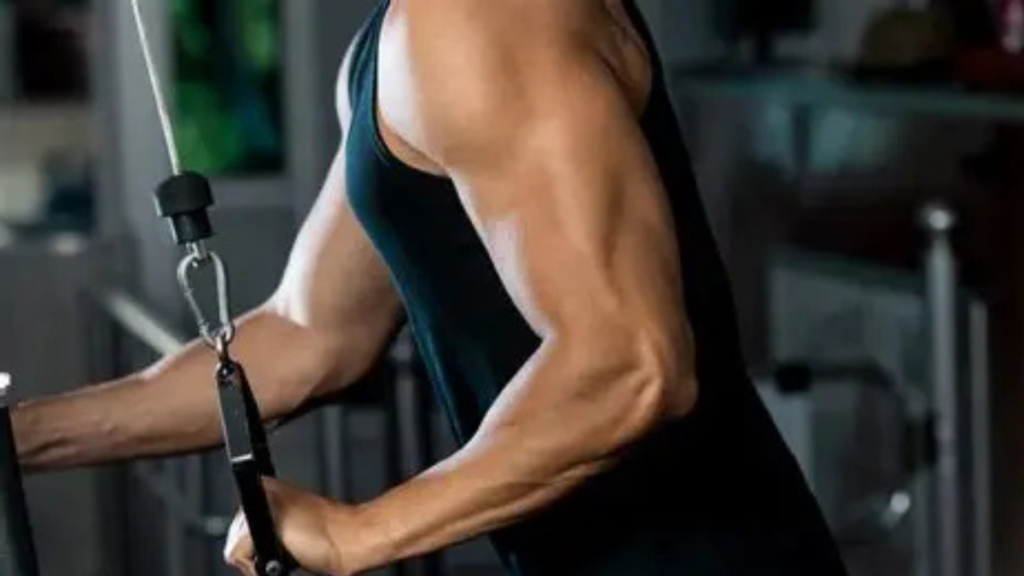


A strong core is about much more than getting visible abs. Your core muscles stabilize your spine, help transfer force between your upper and lower body, improve balance, and support almost every movement you perform throughout the day. While traditional floor exercises like crunches have their place, standing core exercises offer an effective and beginner friendly alternative that closely matches how your body actually moves in real life.
Standing exercises train your abdominal muscles alongside your hips, glutes, back, and shoulders. This creates better coordination and functional strength while also improving posture and reducing unnecessary stress on the lower back. For beginners, they are often easier to learn and more comfortable than exercises that require getting on the floor.



Although no exercise can directly burn belly fat or reveal a six pack on its own, strengthening the abdominal muscles while following a healthy nutrition plan and regular resistance training program can help develop the muscles that become visible once body fat levels decrease.
Here are three of the best standing core exercises for beginners that want stronger abs and a more stable, athletic body.
Why Standing Core Exercises Work
The abdominal muscles were designed primarily to resist movement rather than create endless repetitions of spinal flexion. The rectus abdominis, which forms the visible six pack, works alongside the internal and external obliques, transverse abdominis, multifidus, diaphragm, and pelvic floor muscles to stabilize the torso during movement.
Research has consistently shown that exercises requiring the trunk to resist rotation, extension, or side bending produce high levels of core muscle activation while also improving functional stability. Standing exercises naturally challenge balance and coordination because gravity continuously attempts to pull the body out of alignment.
Another important advantage is that standing exercises often recruit muscles throughout the kinetic chain. Instead of isolating the abs, they teach the body to generate and control force through multiple joints at once. This makes them highly relevant for sports performance, lifting, and daily activities.
For beginners, standing movements are also easier to progress because resistance can gradually be increased with dumbbells, resistance bands, or cables without dramatically changing technique.
Can Standing Exercises Build a Six Pack?
A stronger six pack depends on two major factors.
- The first is increasing the size and strength of the abdominal muscles through progressive overload.
- The second is reducing body fat enough for those muscles to become visible.
Scientific evidence clearly shows that spot reduction does not work. Training only the abdominal muscles does not selectively burn fat from the stomach. Instead, fat loss occurs across the entire body through a calorie deficit created by nutrition and physical activity.
That means standing core exercises should be viewed as one piece of the puzzle. Combined with strength training, cardiovascular exercise, adequate protein intake, and quality sleep, they can help develop stronger abdominal muscles that eventually become visible.
Exercise 1: Standing Pallof Press
The Pallof Press has become one of the most respected core exercises among strength coaches because it teaches the abdominal muscles to resist rotation rather than produce movement.
How to Perform It
Attach a resistance band or cable at chest height. Stand sideways to the anchor point with your feet about shoulder width apart. Hold the handle against your chest with both hands.
Brace your core, squeeze your glutes, and press your hands straight forward until your elbows are fully extended. Pause briefly while resisting the pull of the band. Slowly bring your hands back toward your chest before repeating. Complete all repetitions before turning around to train the opposite side.
Why It Works
As the resistance attempts to rotate your body, your obliques, transverse abdominis, and rectus abdominis must work together to maintain a stable torso.
Electromyography studies have shown that anti rotation exercises like the Pallof Press create substantial activation throughout the core while placing relatively low stress on the spine. This makes them an excellent choice for beginners who want to build strength safely.
The exercise also improves trunk stiffness, which is important for lifting heavier weights during squats, deadlifts, overhead presses, and athletic movements.
Beginner Tips
Keep your ribs stacked over your hips throughout the movement. Avoid leaning toward or away from the resistance. Move slowly because rushing reduces the challenge placed on the core.
If the exercise feels easy, step farther away from the anchor point instead of speeding up the repetitions.
Exercise 2: Standing Knee Drive with Overhead Reach
This exercise combines balance, hip flexion, and abdominal bracing while forcing the core to stabilize the body on one leg.
How to Perform It
Stand tall with your feet hip width apart and your arms extended overhead.
Brace your core before lifting one knee toward your chest while simultaneously pulling your elbows down toward the knee. Return under control before repeating on the opposite side.
Move slowly without swinging your body.
Why It Works
Single leg exercises naturally increase the demand on the stabilizing muscles of the trunk because the body’s center of gravity constantly shifts.
The rectus abdominis and obliques help prevent excessive movement while the glutes stabilize the pelvis. This creates an integrated movement pattern that closely resembles walking, running, climbing stairs, and many athletic skills.
Research examining balance training has shown that challenging postural stability improves neuromuscular coordination and increases activation throughout the core musculature.

For beginners, this movement also develops body awareness and balance without requiring external equipment.
Beginner Tips
Focus on maintaining an upright posture instead of leaning backward when lifting your knee. Exhale as the knee rises because proper breathing can improve abdominal activation through increased engagement of the deep core muscles.
Once balance improves, hold a light medicine ball or dumbbell overhead to increase the challenge.
Exercise 3: Standing Wood Chop
The Standing Wood Chop develops rotational strength while teaching the core to generate and control force across multiple planes of motion.
How to Perform It
- Hold a resistance band, cable handle, or light dumbbell with both hands.
- Begin with the weight positioned above one shoulder.
- Rotate your torso and bring the weight diagonally across your body toward the opposite hip while pivoting your back foot naturally.
- Control the movement as you return to the starting position before completing all repetitions on one side.
- Repeat on the opposite side.
Why It Works
Daily activities and sports rarely occur only in straight lines. Rotational movements are involved in throwing, swinging, punching, lifting, and changing direction.
The Wood Chop trains the obliques, rectus abdominis, shoulders, hips, and glutes together, improving coordination between the upper and lower body.
Research on rotational training has demonstrated improvements in trunk muscle function and movement efficiency when exercises involve coordinated multi joint actions rather than isolated abdominal work.
This movement also develops power production and deceleration, both of which rely heavily on the core’s ability to control rotational forces.
Beginner Tips
Rotate through your hips and upper back rather than twisting excessively through your lower back. Use controlled repetitions instead of trying to move as fast as possible. Light resistance is usually enough because proper technique matters far more than heavy loading.
How Often Should Beginners Train Their Core?
Like any muscle group, the abdominal muscles respond best to consistent training followed by adequate recovery.
Most beginners will benefit from performing focused core exercises two or three times each week. This provides enough stimulus for adaptation while allowing muscle recovery between sessions.
Each workout can include these three exercises for two or three sets of eight to fifteen controlled repetitions per side where appropriate.
Progressive overload remains essential. As technique improves, gradually increase resistance, repetitions, or time under tension rather than performing endless high repetition workouts.
Research on resistance training consistently demonstrates that muscles become stronger when training demands gradually increase over time.
Common Mistakes Beginners Should Avoid
Many beginners mistakenly believe that doing hundreds of abdominal repetitions each day will produce visible abs faster. In reality, muscle development depends on progressive resistance, while fat loss depends largely on maintaining an appropriate energy balance. Another common mistake is rushing through repetitions. The core functions primarily to control movement, so slower, more deliberate repetitions often provide greater muscular challenge.

Poor posture is another issue. Excessive arching of the lower back reduces abdominal involvement and may increase spinal stress. Keeping the ribs stacked over the pelvis throughout each movement helps maintain proper alignment.
Finally, beginners often forget to breathe correctly. Exhaling during the hardest part of each repetition increases abdominal tension and supports spinal stability while allowing the deep core muscles to contribute more effectively.
The Bottom Line
Standing core exercises offer beginners an effective way to build stronger abdominal muscles while improving balance, posture, and full body stability.
The Standing Pallof Press teaches the core to resist unwanted rotation, the Standing Knee Drive with Overhead Reach develops balance and coordinated trunk stability, and the Standing Wood Chop builds rotational strength that transfers well to everyday life and sports. While these exercises can strengthen and develop the muscles that form the six pack, visible abs ultimately require a combination of progressive resistance training, sound nutrition, regular physical activity, and a healthy body fat percentage.
Train consistently, focus on quality movement, gradually increase the challenge over time, and remember that a stronger core benefits far more than appearance alone. It improves how you move, lift, perform, and protect your spine throughout every stage of life.
Key Takeaways
| Topic | Key Point |
|---|---|
| Best Exercise | The Standing Pallof Press is one of the most effective beginner exercises for developing anti rotation core strength. |
| Balance Training | Standing Knee Drives improve abdominal strength while enhancing balance and coordination. |
| Rotational Strength | Standing Wood Chops train the core to generate and control rotational force safely. |
| Six Pack Development | Strong abs require resistance training, while visible abs also require reducing body fat through nutrition and overall physical activity. |
| Training Frequency | Beginners should train their core two to three times per week with progressive overload. |
| Biggest Mistake | Performing endless repetitions without increasing resistance or improving technique limits progress. |
References
- American College of Sports Medicine. (2022) ACSM’s Guidelines for Exercise Testing and Prescription. 11th ed. Philadelphia: Wolters Kluwer.
- Behm, D.G., Drinkwater, E.J., Willardson, J.M. and Cowley, P.M. (2010) ‘Canadian Society for Exercise Physiology position stand: The use of instability to train the core in athletic and non athletic conditioning’, Applied Physiology, Nutrition, and Metabolism, 35(1), pp. 109 to 112.
- Clark, D.R., Lambert, M.I. and Hunter, A.M. (2018) ‘Trunk muscle activation in the Pallof press and other anti rotation exercises’, Journal of Strength and Conditioning Research, 32(9), pp. 2518 to 2525.
- Escamilla, R.F., Lewis, C., Bell, D., Bramblet, G., Daffron, J., Lambert, S., Pecson, A., Imamura, R., Paulos, L. and Andrews, J.R. (2010) ‘Core muscle activation during Swiss ball and traditional abdominal exercises’, Journal of Orthopaedic and Sports Physical Therapy, 40(5), pp. 265 to 276.
- McGill, S.M. (2010) Ultimate Back Fitness and Performance. 4th ed. Waterloo: Backfitpro Inc.
- Schoenfeld, B.J. (2010) ‘The mechanisms of muscle hypertrophy and their application to resistance training’, Journal of Strength and Conditioning Research, 24(10), pp. 2857 to 2872.
- Schoenfeld, B.J. and Aragon, A.A. (2018) ‘How much protein can the body use in a single meal for muscle building? Implications for daily protein distribution’, Journal of the International Society of Sports Nutrition, 15(10).
- Vispute, S.S., Smith, J.D., LeCheminant, J.D. and Hurley, K.S. (2011) ‘The effect of abdominal exercise on abdominal fat’, Journal of Strength and Conditioning Research, 25(9), pp. 2559 to 2564.
- Willardson, J.M. (2007) ‘Core stability training: Applications to sports conditioning programs’, Journal of Strength and Conditioning Research, 21(3), pp. 979 to 985.
- Zazulak, B.T., Hewett, T.E., Reeves, N.P., Goldberg, B. and Cholewicki, J. (2007) ‘Deficits in neuromuscular control of the trunk predict knee injury risk’, American Journal of Sports Medicine, 35(7), pp. 1123 to 1130.