

Building a more muscular chest is not about finding a secret lower chest exercise. It is about getting stronger in pressing patterns, completing enough challenging work each week, and choosing movements that you can perform safely and consistently. The lower portion of the chest is part of the large sternocostal region of the pectoralis major. It contributes strongly when you press your upper arm toward the middle of your body, particularly from positions where your hands begin slightly below chest level.

Beginners can make excellent chest progress without advanced equipment or highly technical variations. Push ups, a flat dumbbell press, and an assisted or bodyweight dip can all develop the sternocostal fibers of the pectoralis major when they are performed through a controlled range of motion and progressed over time. The aim is not to isolate one narrow strip of muscle, because the pectoralis major works as a whole. The aim is to give the chest a reason to adapt while building the skill and confidence to train hard.


What People Mean by the Lower Chest
The pectoralis major has a clavicular portion near the collarbone and a much larger sternocostal portion that attaches across the sternum and ribs. Both portions join onto the upper arm, which means they work together in most chest exercises. Your genetics, ribcage shape, muscle insertions, and overall body fat level affect how the lower edge of your chest looks. Training can make the chest larger and stronger, but it cannot completely redraw its natural outline.
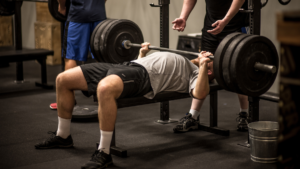
This matters because social media often turns lower chest training into an isolation problem. In reality, evidence from bench press research shows that bench angle can alter pectoralis major muscle activity, but every pressing variation still involves several muscles and both regions of the chest contribute. A slight decline may favor the sternocostal portion for some lifters, while a flat press remains an effective, practical choice. Beginners should use angle as a useful tool, not a reason to abandon basic pressing.
The exercises below are selected because they are simple to learn, easy to progress, and capable of loading the chest meaningfully. Start with a load and range of motion that you can control. A smooth repetition is more useful than a heavy repetition that shifts stress into your shoulders or elbows.
Exercise 1: Push Ups
Why Push Ups Deserve a Place in Your Program
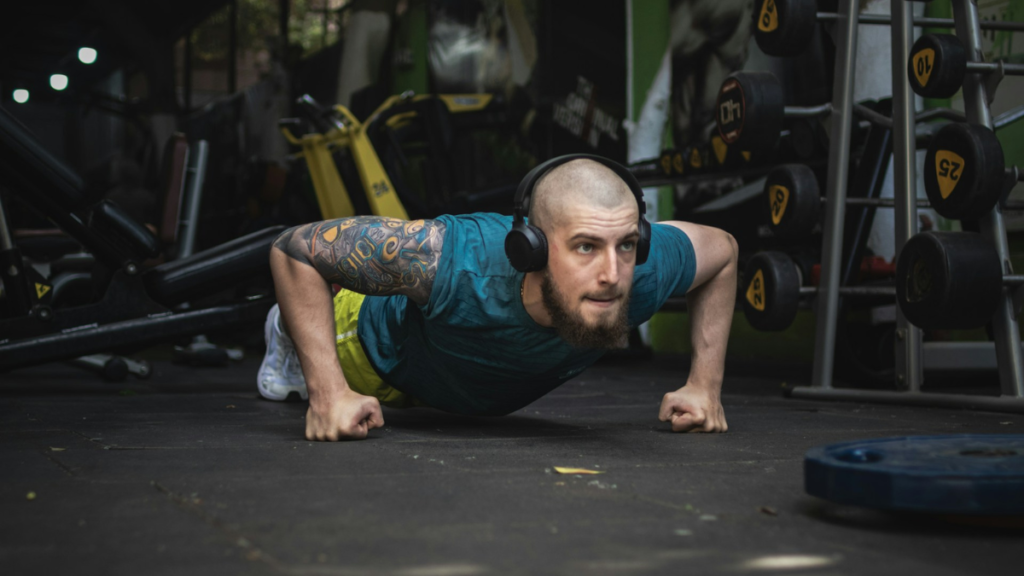
The push up is one of the best entry points for chest training because it teaches a stable pressing position while allowing you to use your bodyweight as resistance. In an eight week study, push up training performed at a load comparable to a light bench press produced similar improvements in chest muscle thickness and pressing strength. That is especially useful for beginners who do not yet have a full home gym or who need time to gain confidence with free weights.
Standard push ups work the pectoralis major, triceps, and front deltoids. The chest helps bring the upper arm inward as you press away from the floor, and the sternocostal portion is heavily involved. You do not need to force an extreme decline angle to make the movement a lower chest exercise. A full range of motion, consistent effort, and gradual progression are far more important.
How to Perform Them
Place your hands just outside shoulder width, with fingers spread comfortably. Set your body in a straight line from head to heel, squeeze your glutes lightly, and brace your stomach as if preparing for a gentle punch. Lower your chest toward the floor by bending the elbows at an angle that feels natural, usually somewhere between close to your sides and about 45 degrees away from your torso. Press the floor away until your elbows are straight without letting the shoulders shrug toward your ears.
3 Best Cable Back Exercises for a More Attractive V Shaped Torso
If a full push up is too difficult, elevate your hands on a stable bench, bar, or countertop. This reduces the percentage of bodyweight you must move while keeping the same basic pattern. As you become stronger, lower the height of the support until you can perform floor push ups. Once regular sets become comfortable, add repetitions, slow the lowering phase, wear a weighted vest, or use a resistance band across your upper back.
Avoid letting your hips sag or racing through partial repetitions. Both mistakes reduce the useful challenge for the chest and can make the lower back or shoulders feel uncomfortable. Finish most sets when you believe you could complete one to three more clean repetitions.
Exercise 2: Flat Dumbbell Bench Press
Why Dumbbells Work So Well for Beginners
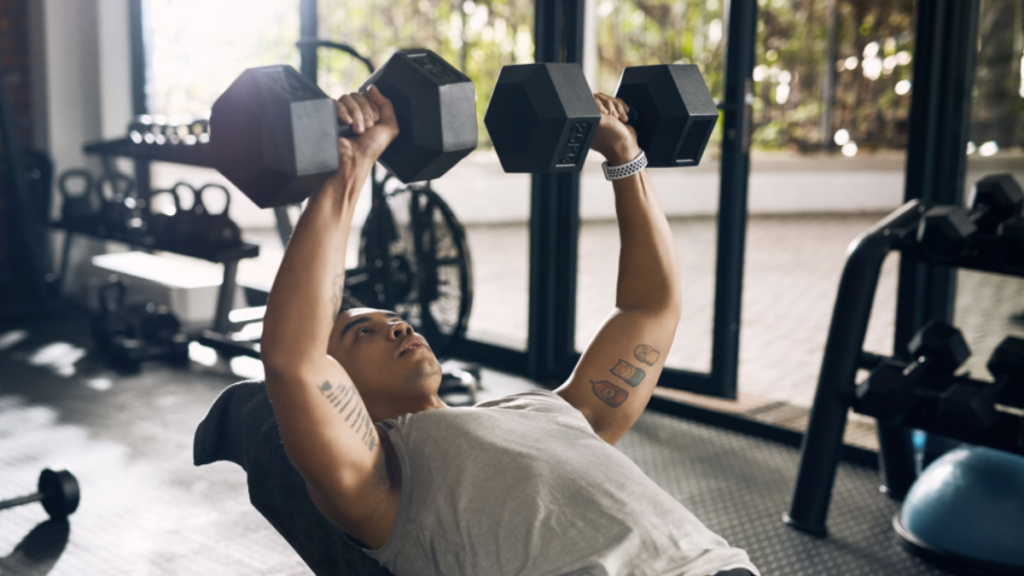
A flat dumbbell bench press is a highly effective way to add external load to the chest without needing a barbell. Each arm moves independently, which can help you notice side to side differences and find a pressing path that suits your shoulders. The flat bench angle also makes it a direct way to train the large sternocostal portion of the pectoralis major.
Research comparing bench press angles has found that pectoralis major activity changes with the incline or decline of the bench. The flat press remains a strong all purpose option because it loads the chest effectively without requiring the setup or confidence needed for a decline bench. A separate comparison of free weight and machine pressing also shows that both approaches can train the pectoralis major, so beginners should choose the version they can control and progress reliably.
How to Perform It
Sit on the end of a flat bench with a dumbbell on each thigh. Lie back while guiding the dumbbells to either side of your chest. Place your feet firmly on the floor, keep a small natural arch in your lower back, and pull your shoulder blades gently down and back against the bench. Begin with the dumbbells near the lower to middle chest, with your forearms nearly vertical.
Press the dumbbells upward and slightly inward until your elbows are straight. You do not need to bang the weights together. Lower them slowly until your upper arms reach a comfortable depth that gives the chest a stretch without the shoulders rolling forward. Keep the wrists stacked over the forearms and do not allow the elbows to drift dramatically behind the body if that causes shoulder discomfort.
Use a load that lets you complete roughly eight to fifteen controlled repetitions. Moderate and lighter loads can both support hypertrophy when sets are performed with sufficient effort, while heavier loads can be useful for building strength. For a beginner, the smartest choice is usually the load that lets technique remain consistent from the first repetition to the last.
Exercise 3: Assisted Dips or Parallel Bar Dips
Why Dips Can Add a Different Chest Stimulus
Dips involve pressing your body upward while your arms move behind the torso. With a modest forward lean, the chest can contribute substantially alongside the triceps and front deltoids. Dips are an excellent later beginner exercise when you can already perform controlled push ups and pain free pressing. They can provide a useful variation after the push up and dumbbell press have established your foundation.
Evidence comparing dip variations confirms that the movement changes joint positions and muscle activity depending on whether it is performed on parallel bars, rings, or a bench. That is a reminder to treat the dip as a skill, not a test of toughness. Parallel bar dips and assisted machine dips are usually more appropriate for chest development than bench dips, which place the shoulder in a deeper extension position and are often less comfortable for beginners.
How to Perform Them
Use an assisted dip machine if you cannot yet control your full bodyweight. Hold the handles, begin with your elbows straight, and create a slight forward torso lean. Lower under control until your upper arms are approximately parallel to the floor or until your shoulders tell you that you have reached a comfortable limit. Press back to the start by driving the handles down and thinking about bringing your upper arms toward your chest.
Do not chase maximum depth. The right range is the deepest position you can own without a pinch in the front of the shoulder, an abrupt loss of control, or the shoulders rolling forward. Gradually reduce assistance over several weeks. When bodyweight dips are comfortable, add a small amount of external weight only after you can complete clean sets with the same range of motion every time.
How to Build Muscle With These Exercises
Muscle growth requires repeated exposure to training that is challenging enough to create adaptation. Research consistently supports resistance training for increasing muscle size, with larger volumes generally producing greater gains until recovery becomes the limiting factor. This does not mean a beginner should immediately perform a huge number of chest sets. Start with about six to ten hard chest focused sets per week across two sessions, then add work only when you are recovering well and progressing.

For example, one session could include three sets of push ups and three sets of dumbbell presses. A second session could include three sets of dumbbell presses and two or three sets of assisted dips. Rest long enough to keep your repetitions productive, usually around two minutes for demanding presses. Quality sets matter more than squeezing an exercise into a rushed circuit.
Progressive overload can mean adding weight, adding repetitions, improving range of motion, using less dip assistance, or performing the same work with better control. Keep a simple record of your exercises, load, assistance level, repetitions, and sets. When you reach the top of your chosen repetition range with solid technique, make the exercise slightly harder at the next session.
Nutrition and recovery also matter. A large meta analysis found that protein supplementation can produce small additional improvements in resistance training related gains in lean mass and strength, particularly when total dietary protein would otherwise be inadequate. You do not need a supplement to build a stronger chest. Regular protein rich meals, enough total calories to support your goal, and adequate sleep will make consistent training more productive.
Common Lower Chest Training Mistakes
The first mistake is searching for isolation when you have not yet mastered basic pressing. A beginner who gets stronger at push ups and dumbbell presses will usually make more progress than someone who changes exercise every week looking for a perfect lower chest sensation. Learn the movement, train it hard enough, and give it time.
The second mistake is turning every set into a shoulder exercise. Keep your shoulder blades stable on bench presses, control the bottom of push ups, and avoid forcing a dip deeper than your mobility allows. Chest training should feel demanding in the chest, triceps, and front shoulders, but sharp pain, repeated pinching, or instability are signals to stop and adjust the exercise.
The final mistake is treating soreness as proof of success. Soreness can happen when you start a new movement, but it is not a reliable measure of muscle growth. Better signs of progress are more repetitions with the same load, more load with the same technique, improved control, and gradual changes in chest size over months.
The Bottom Line
The best beginner exercises for a more muscular lower chest are not exotic. Push ups teach the pattern and can build muscle. The flat dumbbell bench press makes progressive loading straightforward. Assisted dips provide a challenging third option once your shoulders and technique are ready. Train these movements consistently, use a comfortable full range of motion, and make small measurable improvements over time. That is the evidence based route to a bigger, stronger chest.
References
- Coratella, G., Tornatore, G., Longo, S., Esposito, F. and Cè, E. (2020) ‘Specific prime movers’ excitation during free weight bench press variations and chest press machine in competitive bodybuilders’, European Journal of Sport Science, 20(4), pp. 571 to 579.
- Kubo, K., Ikebukuro, T. and Yata, H. (2018) ‘Effects of push up training and bench press training on muscle thickness and strength’, Journal of Strength and Conditioning Research, 32(12), pp. 3376 to 3384.
- Lasevicius, T., Schoenfeld, B.J., Silva Batista, C., et al. (2018) ‘Muscle failure promotes greater muscle hypertrophy in low load but not in high load resistance training’, Journal of Strength and Conditioning Research, 36(2), pp. 346 to 351.
- Schoenfeld, B.J., Ogborn, D. and Krieger, J.W. (2017) ‘Dose response relationship between weekly resistance training volume and increases in muscle mass: A systematic review and meta analysis’, Journal of Sports Sciences, 35(11), pp. 1073 to 1082.
- Schoenfeld, B.J., Grgic, J., Van Every, D.W. and Plotkin, D.L. (2021) ‘Loading recommendations for muscle strength, hypertrophy, and local endurance: A re examination of the repetition continuum’, Sports, 9(2), 32.
- Stastny, P., Gołas, A., Blazek, D., et al. (2017) ‘A systematic review of surface electromyography analyses of the bench press movement task’, PLoS One, 12(2), e0171632.
- Wackerhage, H., Schoenfeld, B.J., Hamilton, D.L., Lehti, M. and Hulmi, J.J. (2019) ‘Stimuli and sensors that initiate skeletal muscle hypertrophy following resistance exercise’, Journal of Applied Physiology, 126(1), pp. 30 to 43.
- Morton, R.W., Murphy, K.T., McKellar, S.R., et al. (2018) ‘A systematic review, meta analysis and meta regression of the effect of protein supplementation on resistance training induced gains in muscle mass and strength in healthy adults’, British Journal of Sports Medicine, 52(6), pp. 376 to 384.
Key Takeaways
| Priority | What to do | Why it matters |
|---|---|---|
| Start with the basics | Train push ups and flat dumbbell presses consistently | Both movements can load the sternocostal chest effectively and are easy to progress |
| Add dips gradually | Use assisted parallel bar dips before full bodyweight dips | Assistance lets you develop the skill while controlling shoulder comfort |
| Progress deliberately | Add repetitions, load, range of motion, or reduce assistance over time | Progressive overload is the key training signal for muscle growth |
| Train enough, not endlessly | Begin with six to ten challenging chest sets each week | This gives beginners productive volume without making recovery unnecessarily difficult |
| Protect technique | Use a controlled range of motion and stop if pain is sharp or persistent | Good form keeps the target muscles working and makes training sustainable |