























Walking Lunges vs Reverse Lunges: Which Is Better for Building Stronger Legs?

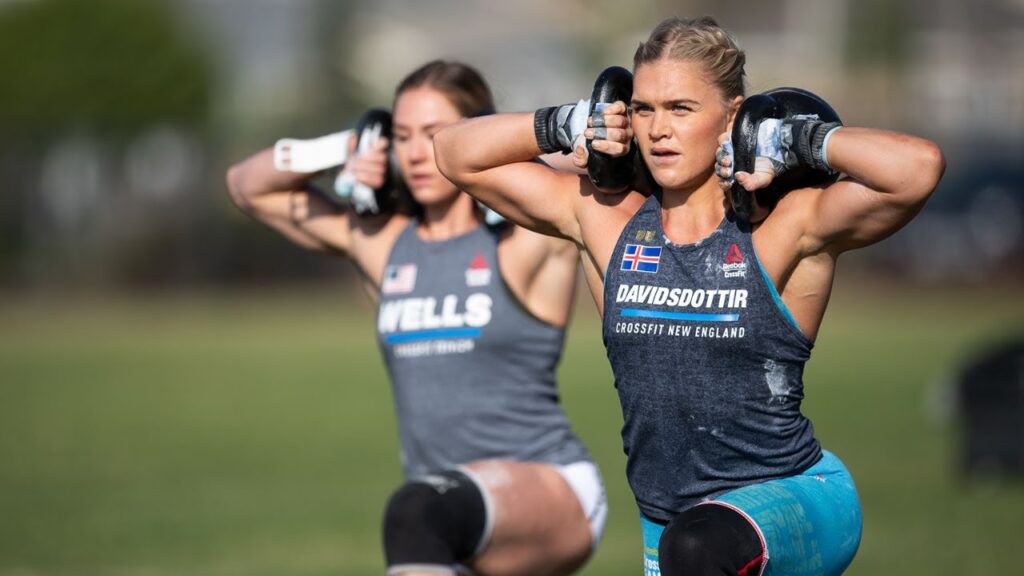
Lunges are a fantastic way to grow and develop your legs, but which variation is right for you and your goals?
Why Single-Leg Lunges Are Essential for Leg Strength
Heavy bilateral lifts like barbell back squats and leg presses are fantastic for piling on raw lower-body mass, yet training on two legs at once can sometimes hide subtle strength imbalances between your left and right sides.
Unilateral lunge variations force each leg to stabilize your pelvis, control knee alignment, and produce vertical and horizontal propulsion entirely on its own. That single-leg demand strengthens your gluteus medius, hip abductors, and trunk stabilizers alongside your quadriceps and gluteus maximus.
Exercise science research comparing unilateral and bilateral resistance training demonstrates that single-leg exercises produce substantial gains in lower-body strength and muscle hypertrophy while requiring lower spinal loading than heavy bilateral squats. Studies examining lower-limb biomechanics during lunges also show that step direction, torso inclination, and stride length meaningfully shift mechanical demand between the hip extensors and knee extensors.
Looking closely at how walking lunges and reverse lunges handle those forces reveals why they feel so different under load.
How Walking Lunges Challenge Your Legs
During a walking lunge, you step forward into open space, decelerate your body weight plus whatever dumbbells or barbell you are holding, and then drive upward and forward into the next stride without pausing at the top. Because your center of mass travels forward into every step, your front quadriceps and hip extensors must absorb horizontal braking forces as your foot strikes the floor before reversing direction. That continuous, rhythmic forward locomotion creates intense metabolic stress, cardiovascular demand, and athletic coordination.
Biomechanical investigations of forward and walking lunge mechanics show that stepping forward generates higher anterior knee shear forces and patellofemoral joint stress during the initial braking phase compared to stationary or backward stepping variations. At the same time, taking a slightly longer stride with a subtle forward torso lean recruits the gluteus maximus and hamstrings heavily alongside the quadriceps.
The main practical limitation of walking lunges is that you need a clear stretch of gym floor, and balance fatigue can sometimes limit how heavily you load the movement.
How Reverse Lunges Challenge Your Legs
Reverse lunges begin from a stable standing posture where you step one foot backward onto the ball of your foot, lower your back knee smoothly toward the floor, and push forcefully through your stationary front leg to return to the start. Because your front foot stays planted firmly on the floor before you initiate the descent, you eliminate the abrupt forward braking impact that occurs when landing a forward step. Keeping your front shin relatively vertical during the descent also reduces forward knee translation and keeps joint forces smooth and predictable.
Electromyography and kinematic research comparing lunge variations indicates that reverse lunges elicit strong activation of the gluteus maximus, hamstrings, and quadriceps while placing noticeably lower compressive and shear forces on the front knee joint. Furthermore, because you remain in one spot right inside a squat rack or beside a dumbbell rack, you can safely load reverse lunges with a heavy barbell or hefty dumbbells and push sets close to muscular failure without worrying about stumbling down a crowded turf lane.
Comparing Walking Lunges and Reverse Lunges for Lower-Body Strength
| Training Factor | Walking Lunges | Reverse Lunges | Best Practical Application |
| Knee Joint Stress | Higher anterior braking and patellofemoral stress on forward landing | Lower knee shear due to stationary front foot and vertical shin angle | Choose reverse lunges if your knees feel cranky during forward lunges |
| Loading and Strength Potential | Moderate to high, limited slightly by continuous balance and turf space | Very high, easily loaded with a barbell in a rack or heavy dumbbells | Use reverse lunges as your primary heavy unilateral strength builder |
| Glute and Quad Recruitment | Strong quad braking work plus high glute stretch on longer strides | High glute and hamstring drive paired with smooth quad tension | Both build impressive leg muscle when taken close to muscular failure |
| Conditioning and Coordination | High continuous work density and dynamic locomotion challenge | Controlled, repeatable rhythm with easy balance recovery between reps | Use walking lunges for athletic conditioning and high-rep leg finishers |
Which Lunge Is Better for Building Stronger Legs?
When you weigh walking lunges directly against reverse lunges for building maximum lower-body strength, reverse lunges hold a slight practical edge for most lifters because their stationary front-foot stability lets you handle heavier loads safely while sparing your knees unnecessary braking stress. At the same time, walking lunges remain an outstanding tool for building athletic work capacity, dynamic balance, and lower-body hypertrophy when you have open floor space and healthy knees.

Meta-analytic evidence on resistance training adaptations confirms that mechanical tension and progressive overload close to muscular failure drive strength and muscle growth across both heavy and moderate loading schemes. You do not need to banish either variation from your training plan, because pairing heavy reverse lunges on one lower-body day with moderate-load walking lunges on a second leg day gives you the best of both worlds.
1. Prioritize Reverse Lunges for Heavy Unilateral Overload
Place three to four working sets of barbell or dumbbell reverse lunges in the six to ten repetition range per leg early in your lower-body workout. Focus on planting your front foot flat, lowering your back knee under control over two to three seconds, and driving straight up through your front midfoot and heel without pushing off your trailing toes.
2. Use Walking Lunges for Conditioning and Hypertrophy Finishers
When you want a brutal lower-body pump and athletic conditioning stimulus, perform two to three sets of twelve to fifteen walking lunges per leg using moderate dumbbells. Keep your torso steady, take consistent stride lengths, and avoid slamming your back knee into the floor as fatigue builds toward the end of the track.
Walking Faster vs Walking Longer: Which Is Better for Your Heart?
3. Train Legs Twice Weekly for Optimal Recovery and Growth
Meta-analytic research on resistance training frequency shows that training lower-body muscle groups twice per week supports superior hypertrophy and steady strength progression compared to once-weekly marathon leg sessions. Spacing your unilateral lunge work across two weekly workouts keeps soreness manageable and lets you progress loads cleanly.
Key Takeaways
| Decision Area | Evidence-Based Guidance | Why It Matters for Stronger Legs |
| Strength Winner | Reverse lunges take the slight edge for pure heavy leg strength | Stationary front-foot stability allows heavier loading with less balance loss |
| Knee Joint Health | Reverse lunges reduce anterior braking forces compared to walking lunges | Protects sensitive knees while keeping high tension on quads and glutes |
| Walking Lunge Role | Excels at dynamic coordination, metabolic stress, and athletic conditioning | Continuous forward movement builds work capacity and muscle endurance |
| Weekly Programming | Train legs twice weekly and progress reps or loads near muscular failure | Drives consistent unilateral hypertrophy and strength without excessive soreness |
References
- Bezerra, E.S., Diefenthaeler, F., Nunes, J.P., Sakugawa, R.L., Heberle, I., Moura, B.M., Moro, A.R.P., Marcolin, G. and Paoli, A., 2021. Influence of trunk position during three lunge exercises on muscular activation in trained women. International Journal of Exercise Science, 14(1), pp.202-210.
- Riemann, B.L., Lapinski, S., Smith, L. and Davies, G., 2012. Biomechanical analysis of the anterior lunge during 4 external-load conditions. Journal of Athletic Training, 47(4), pp.372-378.
- Schoenfeld, B.J., Grgic, J., Ogborn, D. and Krieger, J.W., 2017. Strength and hypertrophy adaptations between low- vs. high-load resistance training: a systematic review and meta-analysis. Journal of Strength and Conditioning Research, 31(12), pp.3508-3523.
- Schoenfeld, B.J., Ogborn, D. and Krieger, J.W., 2016. Effects of resistance training frequency on measures of muscle hypertrophy: a systematic review and meta-analysis. Sports Medicine, 46(11), pp.1689-1697.
- Speirs, D.E., Bennett, M.A., Finn, C.V. and Turner, A.P., 2016. Unilateral vs. bilateral squat training for strength, sprints, and agility in academy rugby players. Journal of Strength and Conditioning Research, 30(2), pp.386-392.
Robbie Wild Hudson
Editor-In-Chief at BOXROX. I come from a background of rugby and weightlifting. Growing up in the English Lake District, I spent a great deal of time swimming in its stunning lakes and rivers. In 2015 my brothers and I became the first people to swim the 145km length of the River Eden, from source to mouth, in 9 days. We also swam the Corryvreckan whirlpool, the third largest in the world, and Crossfit is a huge part of my training for these events.
More from Robbie Wild Hudson