

Weighted pull ups are one of the clearest ways to build serious upper body pulling strength. They load the lats, elbow flexors, upper back, forearms, and trunk while demanding that your shoulders stay organized through a long range of motion. They can also expose weak links very quickly.
That is why adding a plate to a belt should not be your first goal. A weighted pull up increases the total load your body must accelerate and control. If your basic pull up pattern is still inconsistent, extra weight can turn a small technique problem into a larger training problem. Resistance training research consistently shows that strength gains come from applying appropriate overload while maintaining the quality of the movement and recovering well enough to repeat the work.


The three benchmarks below are practical readiness standards, not a competition or a test of worth. They help you establish a reliable base before you begin adding external load. If you can meet them with controlled technique, weighted pull ups become a logical progression rather than a gamble.
Why Weighted Pull-Ups Need a Foundation
A pull up is more than a lat exercise. During the movement, your shoulder blade, shoulder joint, elbow, wrist, and trunk must work together. Research comparing pull ups and chin ups has found substantial activation in the latissimus dorsi, biceps brachii, and multiple muscles around the shoulder blade. That broad contribution is useful for strength, but it also means that fatigue or poor control in one area can alter the whole rep.
External load raises the demand on every part of that system. Your grip has to hold more weight, your elbow flexors have to produce more force, and your shoulder blade muscles have to keep the shoulder in a useful position as you pull. Progressive resistance training is effective because the body adapts to increasing demands, but the load needs to match your current ability.
Cardio vs Strength Training – Which Is More Important After 40?
A common mistake is treating bodyweight pull ups as a beginner exercise and weighted pull ups as an entirely separate advanced exercise. They are the same basic movement, with different total resistance. The goal is to make your bodyweight pull up strong, repeatable, and controlled enough that a small added load does not change your movement.
Benchmark 1: Complete 8 Strict Bodyweight Pull-Ups
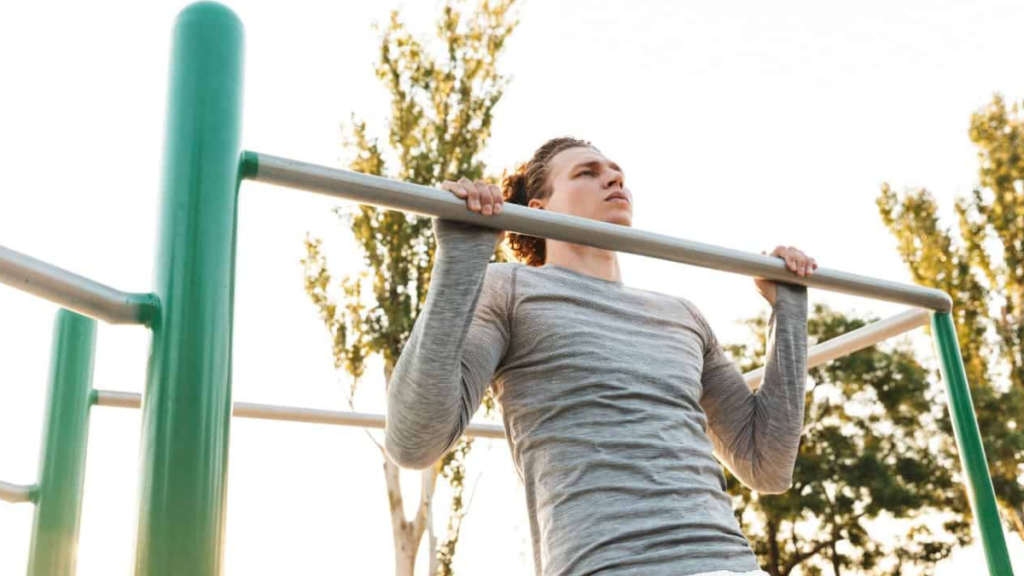
The first benchmark is eight strict bodyweight pull ups performed in one set. Start from a controlled hang with your elbows straight, pull until your chin clearly passes the bar, and return under control to the same bottom position. Each rep should look similar.
Eight is not a magic scientific cutoff. It is a useful coaching standard because it gives you enough repetitions to demonstrate basic pulling endurance, technical consistency, and tolerance for the movement. A person who can only complete one or two hard reps may be strong enough to pull their bodyweight once, but they have very little room for technique to deteriorate before the set ends. With eight controlled reps, you can show that the pattern is not dependent on a single all out effort.
Research on resistance training supports using multiple repetitions and progressive loading to develop muscular strength and endurance. For newer lifters, moderate loads and higher repetition practice can build the technical skill and work capacity needed before heavier loading becomes the focus. This does not mean you need to wait until bodyweight pull ups feel easy. It means you should own the basic movement before trying to make it heavier.
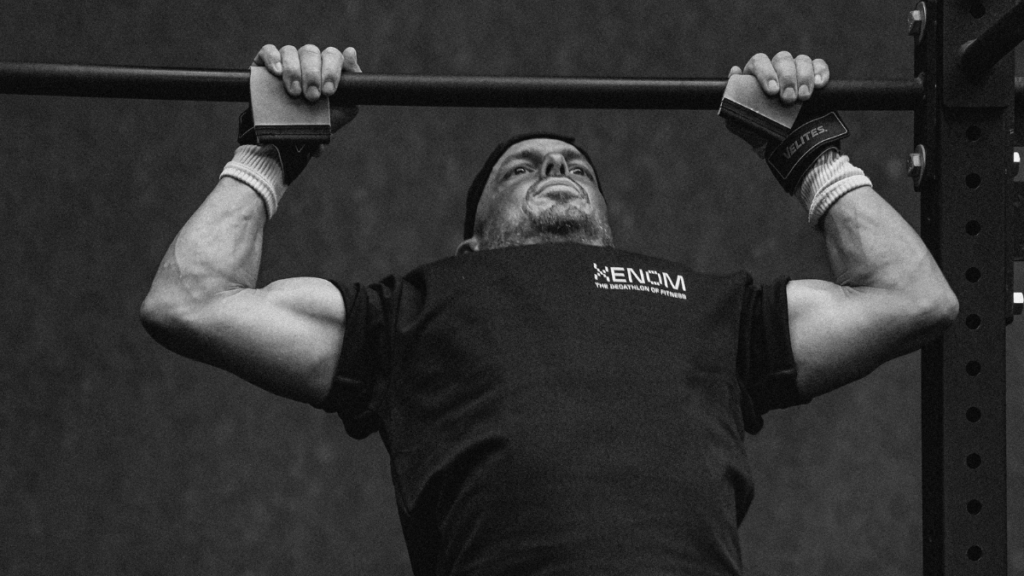
Strict means that the bar does not move because you kick, swing aggressively, or shorten the range of motion. A small amount of natural body movement is normal, especially near hard reps, but it should not become the main source of momentum. If you need to throw your chest backward and your legs forward to get over the bar, the set has stopped measuring controlled pulling strength.
If you can only do three to seven clean reps, keep building. Use assisted pull ups, slow lowering phases, rows, pulldowns, and manageable sets of bodyweight reps. Training the lowering phase can be particularly useful because eccentric muscle actions can produce high forces and can contribute meaningfully to strength development. Just increase eccentric work gradually, since unfamiliar eccentric training can create substantial soreness.
How to Test Your Eight Reps
Choose a standard overhand grip that feels comfortable on your shoulders and use it every time you test. Begin from a dead hang only if your shoulders can tolerate that position comfortably. Keep your ribs from flaring excessively, squeeze your glutes lightly, and pull your elbows down toward your sides.
Stop the set when you cannot reach the same top position, cannot return to a controlled bottom position, or need a large swing to continue. Rest for several minutes before trying again only if you are practicing, not testing. Your benchmark is the best clean set, not the total number of messy reps you can force out.
Benchmark 2: Control the Full Range of Motion Without Shoulder Pain
The second benchmark is the ability to perform your bodyweight pull ups through a comfortable, repeatable range of motion with no shoulder, elbow, or wrist pain. You should be able to hang with straight elbows, initiate the pull without a sharp pinch, reach the top position, and lower without losing control.
This standard matters because pull ups place the upper limb in an overhead position while the shoulder muscles and shoulder blade muscles manage load. Studies of shoulder function show that the shoulder blade has an important role in positioning the arm and supporting efficient shoulder mechanics. Fatigue can also change movement patterns around the shoulder. Adding weight to an already irritated or poorly controlled pattern is unlikely to solve the issue.
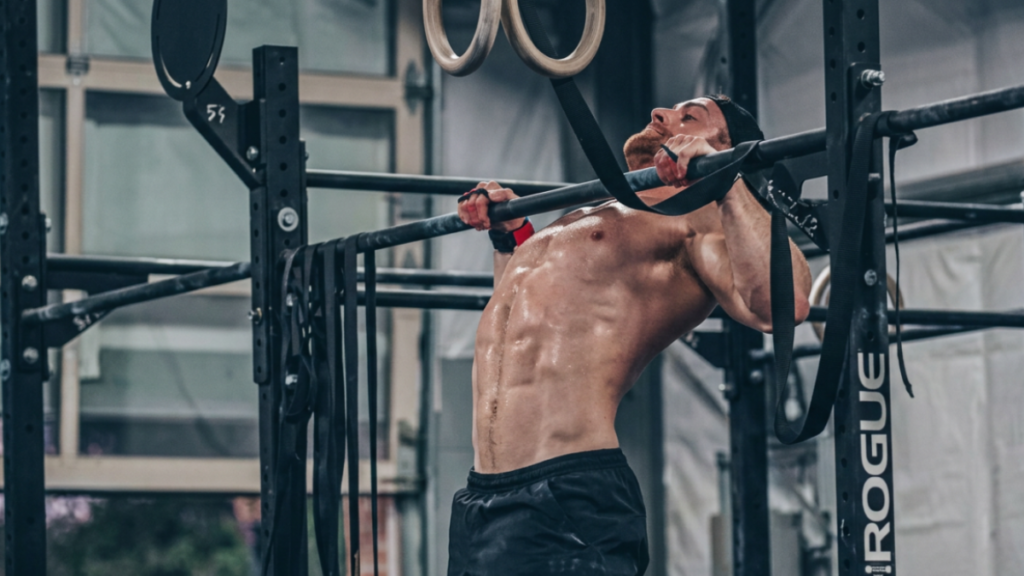
This does not mean every rep must look perfectly still. Your shoulder blades naturally move as your arms move, and individual anatomy affects what a comfortable pull up looks like. The key is consistency. At the bottom, avoid abruptly dropping into the hang. At the top, avoid cranking your neck forward to create a false chin over bar position. On the way down, do not collapse through the shoulders or lose your rib position.
A practical check is to film one set from the side and one from the front. Look for a smooth start, a similar path on each repetition, and an absence of visible shrugging or twisting that gets worse as the set continues. Video cannot diagnose an injury, but it can reveal whether your technique is stable enough for progression.
Pain deserves a different response than ordinary muscular effort. A hard set can create fatigue in the lats, forearms, and arms. Sharp pain, catching, numbness, or symptoms that linger after training should not be treated as a normal part of getting stronger. Consult a qualified health professional when symptoms are persistent, severe, or associated with weakness or loss of function.
Build Better Control Before Adding Load
If the bottom position feels unstable, use lower effort practice. Scapular pull ups, in which you keep the elbows straight and move only through the shoulder blades, can help you learn a controlled start. Rows and pulldowns can also build pulling volume while using a load that lets you maintain a cleaner position.
You can use paused pull ups as well. Pause briefly near the bottom, at the middle, and near the top of a rep. The pauses make momentum less useful and make it easier to identify the part of the range where control breaks down. When those positions feel stable across repeated sessions, you are closer to being ready for external load.
Benchmark 3: Hold an Active Hang for 30 Seconds
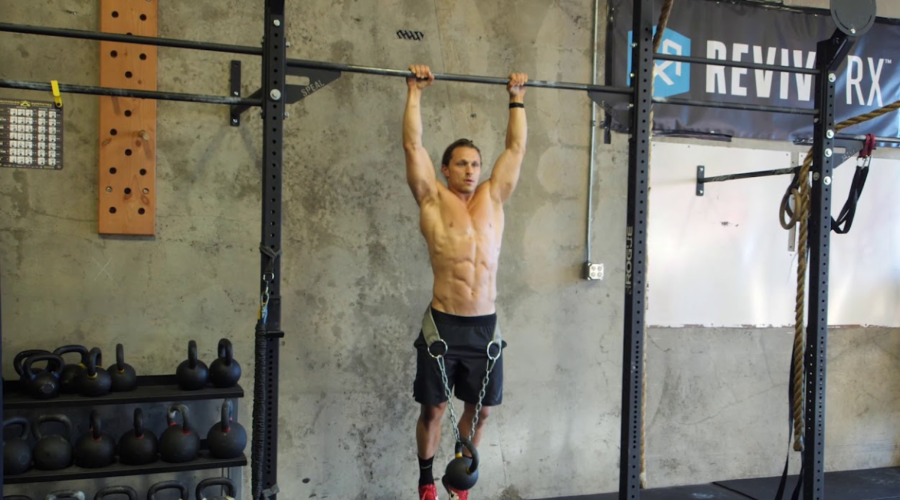
The third benchmark is a 30 second active hang. Hang from the bar with a comfortable grip, straight elbows, and a gently engaged shoulder position. Your shoulders should not be forced dramatically down, but you should feel that you are supporting yourself rather than passively dropping into the joints.
This benchmark is not intended to replace a formal grip test. It is a simple way to assess whether your hands, forearms, trunk, and shoulders can tolerate uninterrupted time under your bodyweight. Grip strength is linked with general upper body strength and physical function in research, while forearm and core training can improve pull up repetition performance. Since weighted pull ups ask your grip to manage more than bodyweight, a controlled hang is a sensible prerequisite.
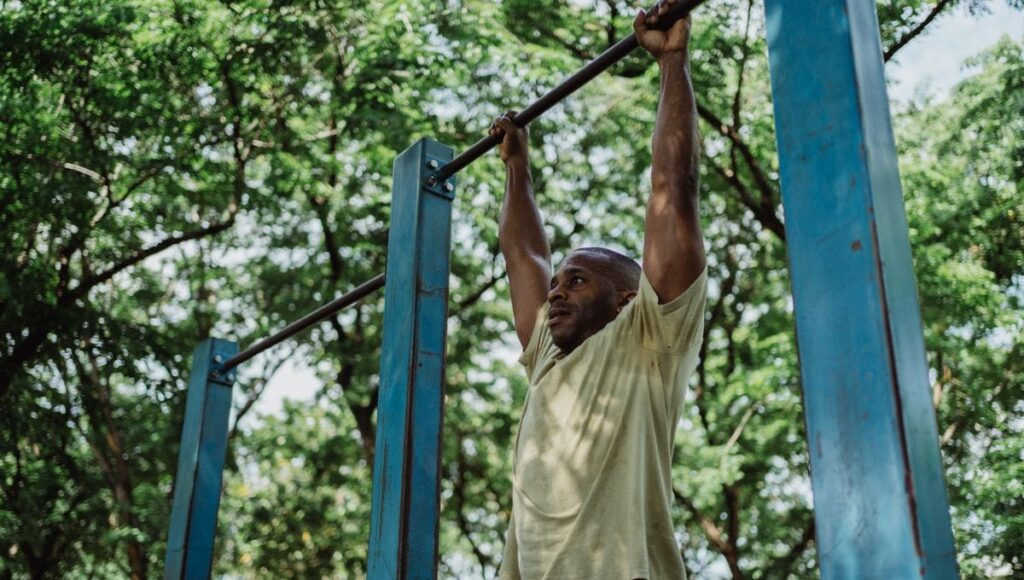
The active hang also reveals whether you can maintain whole body tension. If your hands begin to fail quickly, if your shoulders rise uncontrollably toward your ears, or if your trunk swings from side to side, external load is likely to amplify the limitation. You do not need to make the hang a maximal test. The point is to hold a stable position long enough to show that the supporting structures can handle the demand.
Use chalk if your gym allows it and if you would use it for weighted pull ups. Your readiness test should resemble your normal training conditions. Do not use lifting straps for this benchmark, because straps can hide a grip limitation that will matter when you hang from a bar with extra weight.
What to Do if the Hang Is the Weak Link
Build hang time with several submaximal sets. For example, if 30 seconds is currently difficult, perform multiple sets that are well below your limit and accumulate quality time. Farmer carries, rows, and controlled pull up volume can support the same goal, but they do not perfectly duplicate hanging from a bar.
Avoid repeatedly taking every hang to failure. Grip and elbow tissues often respond better when you add volume gradually and leave enough recovery between demanding sessions. As with any resistance exercise, progression works best when you increase one variable at a time, such as total hang time, number of sets, or external load.
How to Start Weighted Pull-Ups Safely
Once you meet all three benchmarks, begin with a very small load. For many lifters, that means 2.5 to 10 pounds, depending on body size, training history, and the equipment available. The first few sessions are not about proving how much you can lift. They are about confirming that the same controlled bodyweight pattern remains intact when resistance increases.
Perform three to five sets of two to five clean reps, rest long enough to keep the reps crisp, and stop before technique changes substantially. Lower the load if you lose your bottom position, cannot reach the bar consistently, or feel joint pain. Resistance training guidelines support gradual load increases once the current workload can be completed with good form.
Keep bodyweight pull ups in your program even after you begin loading. They provide useful practice volume and give you an easy way to notice whether added weight is affecting your movement quality. If your bodyweight reps suddenly feel less controlled, you may need more recovery, less loading, or a smaller jump in weight.
Weighted pull ups are a rewarding exercise because progress is easy to measure. The most durable progress comes from earning the load first. Build eight strict reps, control your full range without pain, and hold an active hang for 30 seconds. Then add weight patiently and let clean repetitions guide the process.
Key Takeaways
| Benchmark | What to demonstrate | Why it matters | Next step if you miss it |
|---|---|---|---|
| Eight strict bodyweight pull ups | Full range, controlled reps, no large swing | Shows a repeatable pulling pattern and useful work capacity | Build repetitions with assisted work, rows, pulldowns, and controlled lowering phases |
| Comfortable full range of motion | Smooth hanging, pulling, and lowering without joint pain | Helps confirm that added load will not be layered onto an irritated or unstable pattern | Reduce difficulty, practice paused reps, and seek clinical guidance for persistent symptoms |
| Thirty second active hang | Stable grip, shoulders, and trunk under bodyweight | Tests the supporting capacity that weighted hanging demands | Accumulate submaximal hanging time and develop grip gradually |
| Small first load | Two to five clean reps with unchanged technique | Lets you apply progressive overload while protecting movement quality | Reduce the load or add repetitions only when all reps remain controlled |
References
- American College of Sports Medicine (2009) ‘American College of Sports Medicine position stand. Progression models in resistance training for healthy adults’, Medicine and Science in Sports and Exercise, 41(3), pp. 687 to 708.
- Dickie, B., Snarr, R.L., Suneja, M. and Esco, M.R. (2017) ‘A comparison of muscle activation during the pull up and the lat pull down exercises’, Journal of Strength and Conditioning Research, 31(11), pp. 3182 to 3187.
- Grgic, J., Schoenfeld, B.J. and Mikulic, P. (2022) ‘Effects of resistance training performed to repetition failure or non failure on muscular strength and hypertrophy: A systematic review and meta analysis’, Journal of Sport and Health Science, 11(2), pp. 202 to 211.
- Krol, P., Sobota, G. and Nawrat, S. (2018) ‘Effects of the type and size of muscle contraction on pull up performance in rock climbers’, Journal of Human Kinetics, 64, pp. 111 to 121.
- Lundberg, T.R. and Fernandez Gonzalo, R. (2022) ‘Muscle damage and adaptation from eccentric exercise: A review’, Sports Medicine, 52(6), pp. 1217 to 1237.
- Ludewig, P.M. and Reynolds, J.F. (2009) ‘The association of scapular kinematics and glenohumeral joint pathologies’, Journal of Orthopaedic and Sports Physical Therapy, 39(2), pp. 90 to 104.
- Mok, N.W., Yeung, E.W. and Cho, J.C.Y. (2015) ‘A comparison of the kinematics of the pull up and lat pull down exercises’, Journal of Strength and Conditioning Research, 29(5), pp. 1377 to 1385.
- Siewe, J., Rudat, J., Röllinghoff, M., Schlegel, U., Eysel, P. and Michael, J.W.P. (2011) ‘Injuries in crossfit: A prospective epidemiological study’, International Journal of Sports Medicine, 35(1), pp. 60 to 64.
- Youdas, J.W., Budach, B.D., Ellerbusch, J.V., Stucky, C.M., Wait, K.R. and Hollman, J.H. (2010) ‘Comparison of muscle activation levels during the pull up and chin up exercises’, Journal of Strength and Conditioning Research, 24(12), pp. 3404 to 3414.