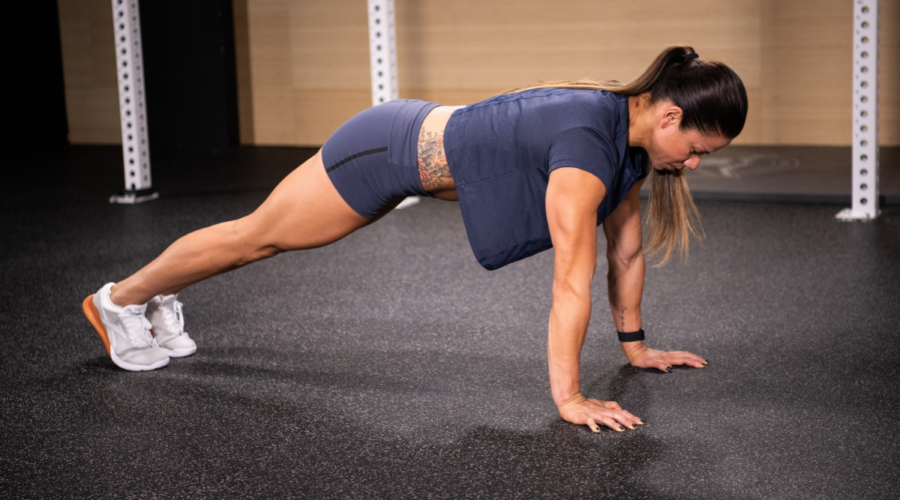


For most beginners, regular push-ups are the better starting point for building chest muscle. They allow you to use a comfortable range of motion, keep your wrists and shoulders in a natural position, and gradually build strength. Wide push-ups can still train your chest, but placing your hands farther apart does not automatically make the exercise more effective.
Studies that compare push-up hand positions have measured muscle activity during individual repetitions. In those studies, wide hand positions generally produced less activity in the pectoralis major than shoulder-width or narrower positions. That is useful information about how the exercise feels to the working muscles, but it does not prove that regular push-ups build more chest muscle over time. There is limited direct research comparing long-term chest growth from wide and regular push-ups.


The practical choice is to use the version that lets you complete controlled, challenging repetitions with good technique. For most beginners, that means starting with regular push-ups and treating wide push-ups as an optional variation. The main drivers of progress are consistent training, enough challenging sets, and making the exercise harder as your strength improves.
What counts as a regular or wide push-up?
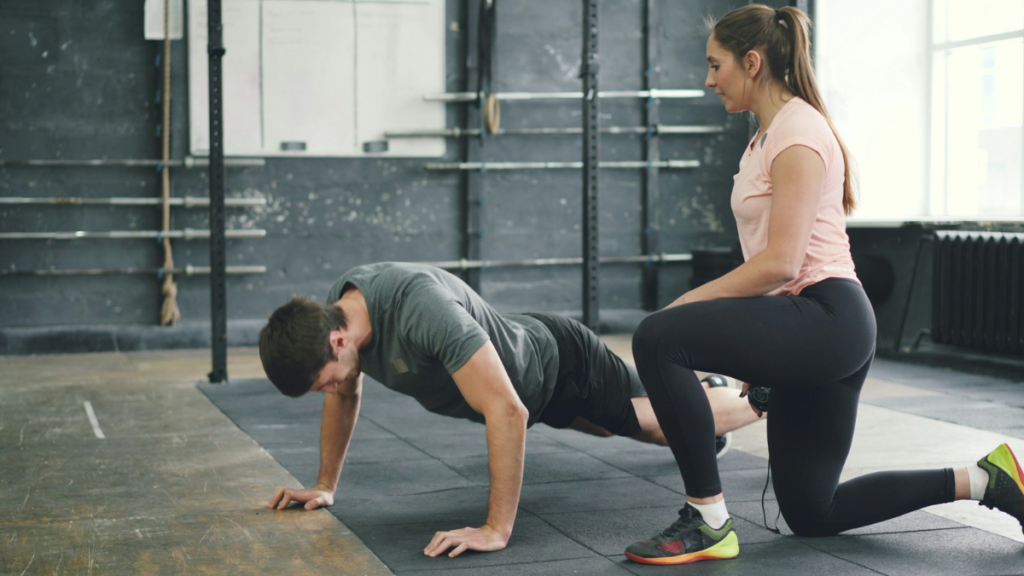
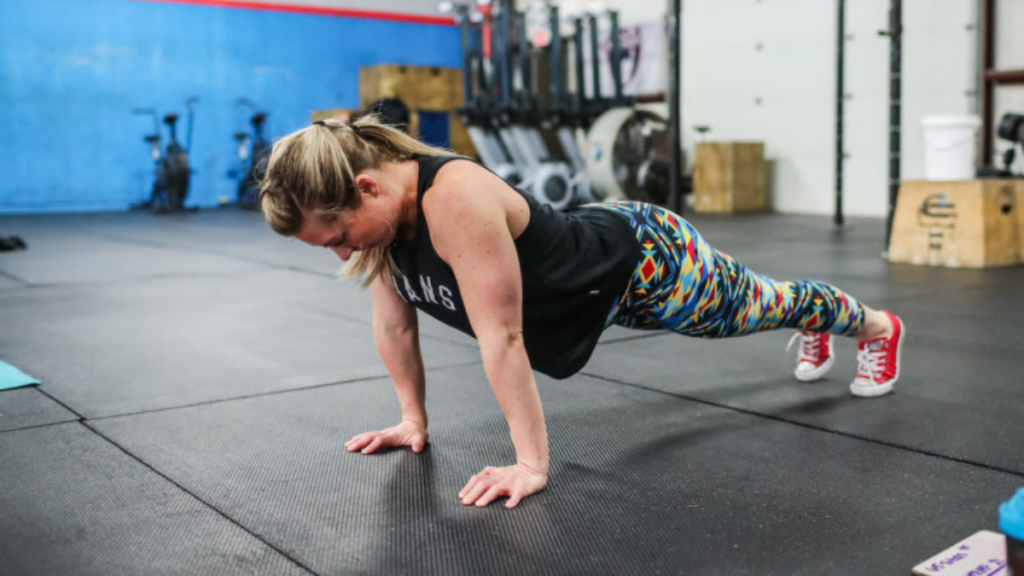
In a regular push-up, your hands are usually placed around shoulder width apart, or a little wider, with your fingers pointing forward or slightly outward. As you lower yourself, your elbows travel diagonally away from your torso rather than pointing straight out to the sides or being pressed tightly against your ribs.
In a wide push-up, your hands are set farther apart than in a regular push-up. There is no single hand spacing that everyone uses, so the amount of extra width can vary. The farther apart your hands are, the more your shoulder position changes. This can affect how comfortable the bottom of the repetition feels and how much range of motion you can use.
Both versions use the pectoralis major, the large muscle across the chest. They also involve the triceps and muscles around the shoulders and shoulder blades. A push-up is a multi-joint exercise, so it is not possible to isolate the chest completely by changing hand position. You are still asking several muscles to work together to move and stabilize your body.
What the research says about hand width
Researchers have compared muscle activity in push-ups performed with different hand positions. In one study, participants performed push-ups with narrow, shoulder-width, and wide hand spacing. The pectoralis major showed more activity with the narrow and shoulder-width positions than with the wide position. Another hand-width study found a similar pattern: chest muscle activity was higher in the neutral and narrower positions than in the widest position tested.
These studies measured electromyography, often shortened to EMG. EMG records electrical activity in a muscle during an exercise. It can help researchers compare how much a muscle is activated during a particular movement, but it does not directly measure muscle growth. A single workout or laboratory test cannot tell us exactly which variation will produce the most chest growth after months of training.
That distinction matters because a variation that produces more muscle activity in a test is not automatically the best choice for every person. Muscle growth depends on the training stimulus over time, including how challenging the sets are, how many productive sets you complete, and whether you keep progressing. Comfort, technique, and the ability to train consistently also affect whether an exercise works well for you.
A small training study found that push-ups could produce muscle growth and strength gains comparable to low-load bench presses when the exercises used a similar load and were trained over eight weeks. That supports the idea that push-ups can help build muscle when they are sufficiently challenging. It does not establish that wide push-ups and regular push-ups produce the same results, or that one hand position is superior for long-term chest growth.
Why regular push-ups are usually the better starting point
Regular push-ups give most beginners a good balance of range of motion and control. With your hands around shoulder width or slightly wider, you can generally lower your chest between your hands while keeping your elbows at a comfortable angle. A controlled descent and a consistent depth make it easier to repeat the same movement from one workout to the next.
The regular position also gives you a straightforward way to adjust the difficulty. If a floor push-up is too difficult, you can place your hands on a sturdy elevated surface, such as a bench or counter. This reduces the amount of your body weight you need to move. As you get stronger, you can lower the surface gradually until you can perform the exercise on the floor.
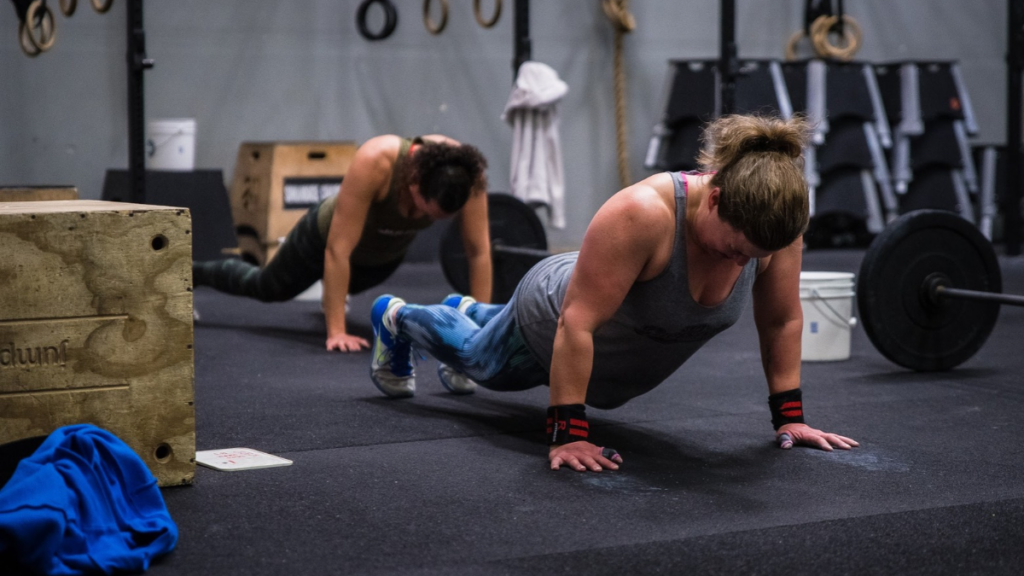
If the floor version is already easy, you can make the exercise more demanding by increasing the number of controlled repetitions, slowing the lowering phase, or using a harder variation. A backpack with a secure, modest load is another option for people who can already perform stable push-ups. Add difficulty gradually so that you can maintain control and full, comfortable repetitions.
Do wide push-ups have a place in your training?
Wide push-ups can be useful if they feel comfortable and you want to vary your workout. Some people prefer the sensation of a wider hand position, while others find it awkward or feel limited at the bottom of the movement. There is no requirement to use wide push-ups to build a bigger chest.
Avoid placing your hands so far apart that you cannot lower yourself under control or that your shoulders feel uncomfortable. A wider position is not a shortcut to a broader chest, and you do not need to force your elbows straight out to the sides. Choose a hand spacing that allows you to keep your body steady and complete the repetition without pain.
You can try both variations with a small number of repetitions and compare your range of motion, comfort, and control. If wide push-ups make your shoulders uncomfortable, return to regular push-ups or use an easier incline version. Exercise discomfort is not a reliable sign that a movement is building more muscle, so do not treat pain as a goal.
How beginners can make push-ups build muscle
A set should be challenging enough that the final repetitions require effort while your form remains consistent. You do not need to reach the point where you cannot move at all. Stop when you are close to losing your body position, shortening your range of motion, or turning the repetition into a different movement.
A simple starting point is to perform two or three sets of push-ups in a session, choosing a variation that lets you complete a manageable number of controlled repetitions. Train your chest regularly, then allow time to recover before repeating a hard session. As the sets become easier, add repetitions or move to a slightly harder variation. The aim is to increase the training challenge over time, rather than to chase a particular hand position.
Keep your head, torso, and hips in line as you lower and press. Brace your midsection so your hips do not sag, and use a depth that feels comfortable while letting you move through a consistent range. Lower under control, then press the floor away until your elbows are extended without snapping them into a hard lockout.
If you cannot yet perform floor push-ups with control, start with your hands elevated. This is a useful way to practice the same basic movement while reducing the load. When you can complete your sets comfortably, lower the hand support a little. Progressing through manageable steps is more useful than repeatedly attempting a variation that prevents good technique.
Which one should you choose?
Choose regular push-ups if you are a beginner deciding where to start. They are easy to scale, provide a useful range of motion, and are supported by acute muscle-activity research that does not show a clear chest activation advantage for wide hand placement. Once regular push-ups are comfortable, you can include wide push-ups if they feel good and help you enjoy your training.
3 Best Isolation Exercises for Wider Biceps
For chest growth, a well-performed push-up that you can progressively challenge is more valuable than a hand position chosen because it sounds more targeted. Keep your repetitions controlled, use a comfortable depth, and make the exercise harder as your strength improves. Regular push-ups should be your foundation; wide push-ups are an optional variation.
Key takeaways
| Topic | Takeaway |
|---|---|
| Best starting choice | Regular push-ups are a practical foundation for most beginners. |
| Wide push-ups | They can be used as a variation if they feel comfortable, but wider hands do not guarantee more chest growth. |
| Research limits | Studies of hand width mainly measure muscle activity during a repetition, not long-term chest growth. |
| Building muscle | Use controlled, challenging sets and gradually increase the difficulty as you get stronger. |
| Technique | Keep your body steady, use a comfortable range of motion, and stop if the movement causes pain. |
References
- American College of Sports Medicine, 2009. Progression models in resistance training for healthy adults. Medicine & Science in Sports & Exercise, 41(3), pp. 687–708.
- Cogley, R.M., Archambault, T.A., Fibeger, J.F., Koverman, M.M., Youdas, J.W. and Hollman, J.H., 2005. Comparison of muscle activation using various hand positions during the push-up exercise. Journal of Strength and Conditioning Research, 19(3), pp. 628–633.
- Kim, Y.S., Kim, D.Y. and Ha, M.S., 2016. Effect of the push-up exercise at different palmar width on muscle activities. Journal of Physical Therapy Science, 28(2), pp. 446–449.
- Kikuchi, N. and Nakazato, K., 2017. Low-load bench press and push-up induce similar muscle hypertrophy and strength gain. Journal of Exercise Science & Fitness, 15(1), pp. 37–42.
- Schoenfeld, B.J., Ogborn, D. and Krieger, J.W., 2017. Dose-response relationship between weekly resistance training volume and increases in muscle mass: A systematic review and meta-analysis. Journal of Sports Sciences, 35(11), pp. 1073–1082.