

Casual gym talk loves simple rules, like pulling twice your body weight to prove you are strong, yet those quick formulas often ignore how human bodies actually scale force across different sizes.
Comparing two lifters by dividing weight on the bar by scale weight sounds tidy on paper, but biomechanics and exercise physiology tell a far more interesting story.
Time to learn more.
Why Simple Bodyweight Ratios Can Mislead You
For years, lifters have relied on simple bodyweight ratios to judge whether a deadlift is impressive, average, or lagging behind. Saying that someone deadlifts twice or three times their body weight gives an instant mental snapshot, yet it treats strength as if it rises in a neat straight line alongside scale weight.
Exercise science research on allometric scaling shows that maximal strength generally increases with body mass using a fractional power rather than a one-to-one ratio, meaning heavier lifters typically lift more total weight while lighter lifters often achieve higher relative ratios per pound of body weight.
This happens in part because body volume and mass expand faster than muscle cross-sectional area when a person grows larger across three dimensions. In addition, deadlift performance is not purely a measure of muscle size on the scale, because limb lengths, torso proportions, grip security, and starting hip height strongly influence leverage from the floor. Relying solely on a basic weight-per-pound ratio can flatter smaller athletes while making taller or heavier lifters look artificially underpowered even when their force production is right where it should be.
What Actually Drives Your Deadlift Numbers
Stepping on the scale gives you a starting number, yet two lifters at the exact same weight can have vastly different deadlift capacities. Skeletal muscle mass across the posterior chain, including the glutes, hamstrings, spinal erectors, adductors, and upper back, provides the contractile force needed to break the bar off the floor and lock it out cleanly. Research examining strength performance and body composition indicates that lean body mass is closely tied to maximal lifting output, whereas extra body fat adds scale weight without contributing contractile force to the pull.
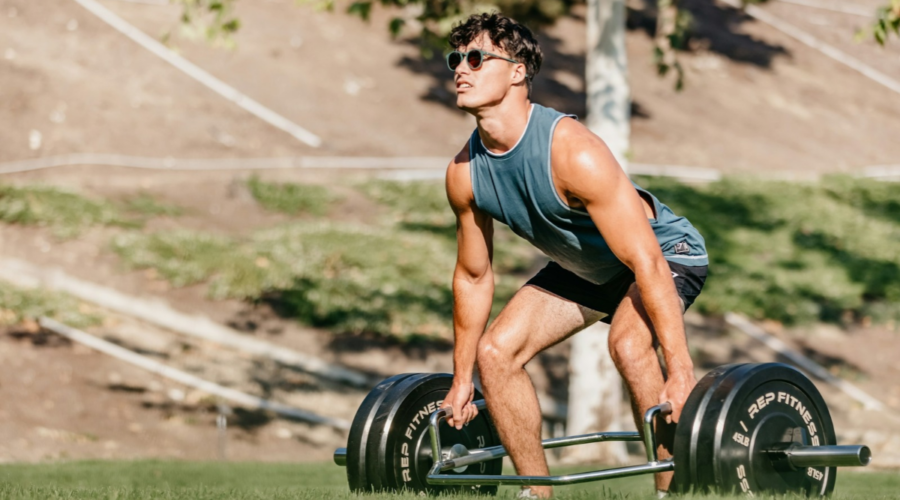
Anthropometry and training background also shape how much weight you can realistically move from the floor. Studies on deadlift biomechanics and powerlifting performance show that joint moments at the hips, knees, and lower back vary with segment lengths and stance setup, which alters how mechanical load is shared across muscle groups. Furthermore, consistent exposure to heavy resistance training drives neural adaptations, motor unit recruitment, and structural growth that take months and years to mature.
How Deadlift Benchmarks Scale Across Bodyweights
Even though individual anatomy and training history create wide natural variation, structured strength benchmarks still offer a practical way to see where you stand and map out sensible milestones. Treating a chart as a helpful reference point rather than a strict verdict keeps you focused on steady progression rather than unnecessary comparison. Whether you weigh 145 pounds or 225 pounds, your training age and consistency shape which tier fits you best right now.
Deadlift Reference Guide for Adult Men
| Bodyweight | Beginner (1RM) | Novice (1RM) | Intermediate (1RM) | Advanced (1RM) |
|---|---|---|---|---|
| 145 lbs (66 kg) | 135 lbs (61 kg) | 185 lbs (84 kg) | 245 lbs (111 kg) | 315 lbs (143 kg) |
| 165 lbs (75 kg) | 155 lbs (70 kg) | 215 lbs (98 kg) | 285 lbs (129 kg) | 365 lbs (166 kg) |
| 185 lbs (84 kg) | 175 lbs (79 kg) | 245 lbs (111 kg) | 325 lbs (147 kg) | 415 lbs (188 kg) |
| 205 lbs (93 kg) | 195 lbs (88 kg) | 275 lbs (125 kg) | 360 lbs (163 kg) | 455 lbs (206 kg) |
| 225 lbs (102 kg) | 215 lbs (98 kg) | 300 lbs (136 kg) | 395 lbs (179 kg) | 495 lbs (224 kg) |
Deadlift Reference Guide for Adult Women
| Bodyweight | Beginner (1RM) | Novice (1RM) | Intermediate (1RM) | Advanced (1RM) |
|---|---|---|---|---|
| 115 lbs (52 kg) | 75 lbs (34 kg) | 105 lbs (48 kg) | 145 lbs (66 kg) | 190 lbs (86 kg) |
| 135 lbs (61 kg) | 90 lbs (41 kg) | 125 lbs (57 kg) | 170 lbs (77 kg) | 220 lbs (100 kg) |
| 155 lbs (70 kg) | 105 lbs (48 kg) | 145 lbs (66 kg) | 195 lbs (88 kg) | 250 lbs (113 kg) |
| 175 lbs (79 kg) | 115 lbs (52 kg) | 160 lbs (73 kg) | 215 lbs (98 kg) | 275 lbs (125 kg) |
| 195 lbs (88 kg) | 125 lbs (57 kg) | 175 lbs (79 kg) | 235 lbs (107 kg) | 300 lbs (136 kg) |
Look closely at how the progression behaves as body weight increases across both tables. Total pounds lifted climbs steadily with body size, while the ratio of deadlift to body weight softens slightly at heavier weights, reflecting nonlinear scaling rather than a flaw in the lifter. For most lifters, moving steadily from one tier to the next over structured training blocks delivers far better results than chasing a random number just to impress someone else at the gym.
Practical Ways to Build a Stronger Deadlift for Your Frame
Knowing where your numbers sit only pays off when it guides smart training choices over the coming weeks and months. Exercise science research on resistance training loading shows that heavier loads, commonly around eighty percent or more of your one-repetition maximum for lower-repetition sets, are especially effective for building maximal strength, while moderate loads taken close to failure also support hypertrophy across working muscles.
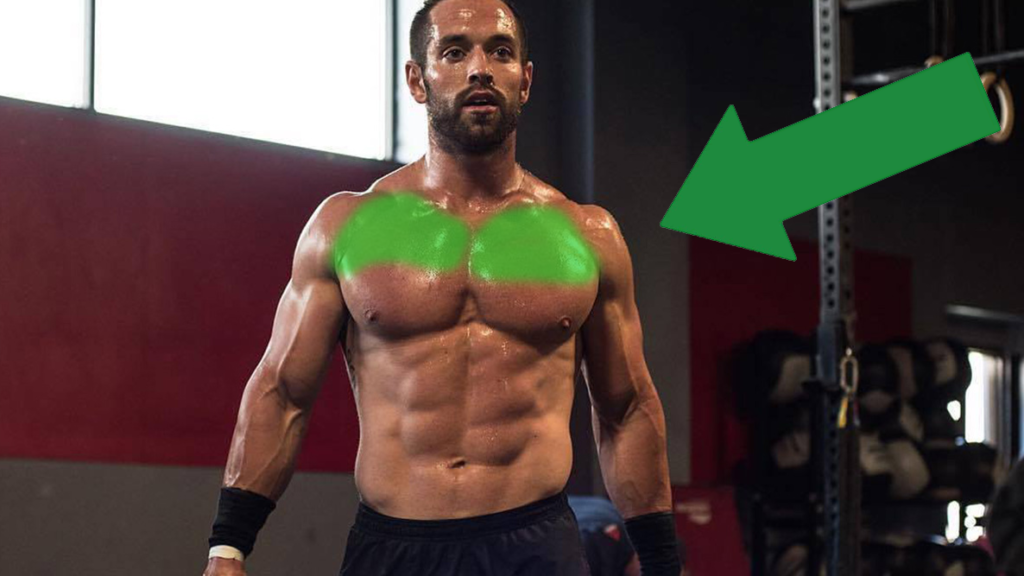
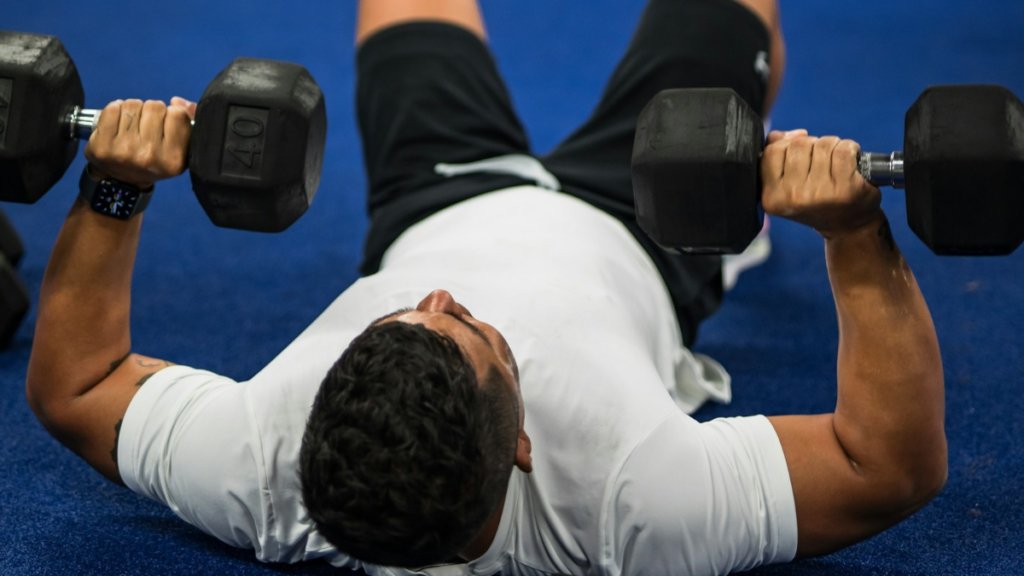
3 Perfect Exercises for Building the Lower Pecs Beginners Often Overlook
Combining heavy primary pulls with targeted accessory work for the hamstrings, glutes, upper back, and core helps you build both raw force and structural resilience.
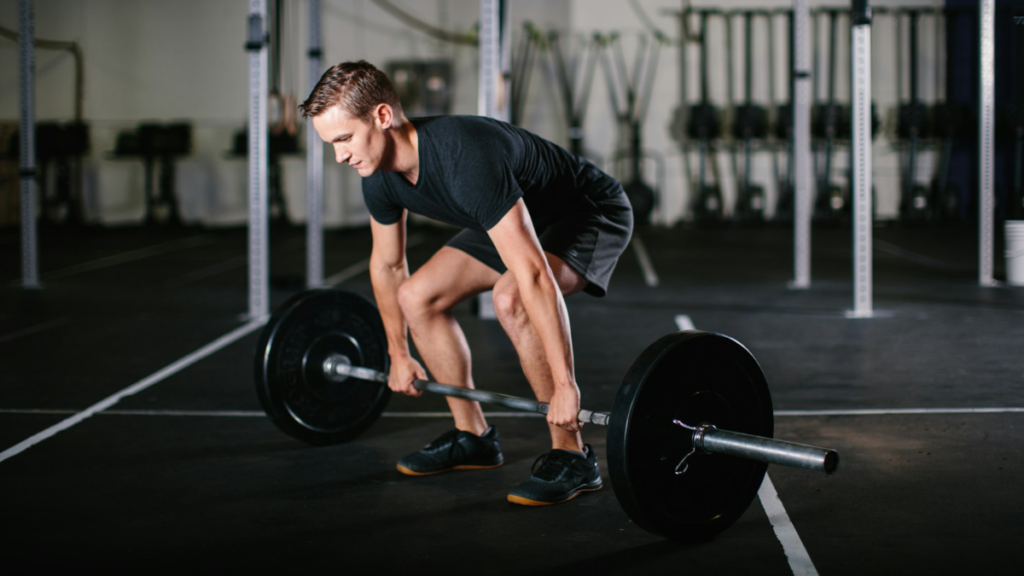
Technique and recovery matter just as much as the weight on the plates when you want your pull to grow safely. Bracing your midsection firmly, keeping the bar close to your body without letting your lower back round under load, and respecting recovery between heavy pulling sessions let you progress week after week without burning out.
Over time, small, repeatable improvements in bar speed, technique, and working weight will carry your deadlift much further than comparing yourself to another lifter on the floor.
Key Takeaways
| Topic | Main Takeaway |
|---|---|
| Bodyweight Ratios | Simple bodyweight ratios can mislead because strength scales nonlinearly with body mass and depends on frame proportions. |
| Body Composition | Lean muscle mass drives pulling force, whereas extra body fat raises scale weight without adding contractile strength. |
| Anatomy and Training Age | Limb lengths, torso leverage, and consistent resistance training experience strongly influence deadlift benchmarks. |
| Smart Progression | Heavy compound pulls, targeted posterior-chain accessories, and clean technique drive steady long-term deadlift gains. |
References
- Cholewa, J.M., Ruiz, R.J., Santiago, A. and Zanchi, N.E., 2019. Anthropometrics and powerlifting performance: The influence of body composition and segment lengths. Journal of Human Kinetics, 68(1), pp.197-206.
- Dooman, C.S. and Vanderburgh, P.M., 2000. Allometric modeling of the bench press and squat: Who is the strongest regardless of body mass? Journal of Strength and Conditioning Research, 14(1), pp.32-36.
- Schoenfeld, B.J., Grgic, J., Van Every, D.W. and Plotkin, D.L., 2021. Loading recommendations for muscle strength, hypertrophy, and local endurance: A re-examination of the repetition continuum. Sports, 9(2), p.32.
- Solberg, P., Paulsen, G., Sjøberg, N.S. and Rønnestad, B.R., 2023. Association of strength performance in bench press and squat with anthropometric variables in resistance-trained men and women. Sports, 11(1), p.19.
- Swinton, P.A., Stewart, A.D., Agouris, I., Keogh, J.W.L. and Lloyd, R., 2011. A biomechanical analysis of straight and hexagonal barbell deadlifts using submaximal loads. Journal of Strength and Conditioning Research, 25(7), pp.2000-2009.