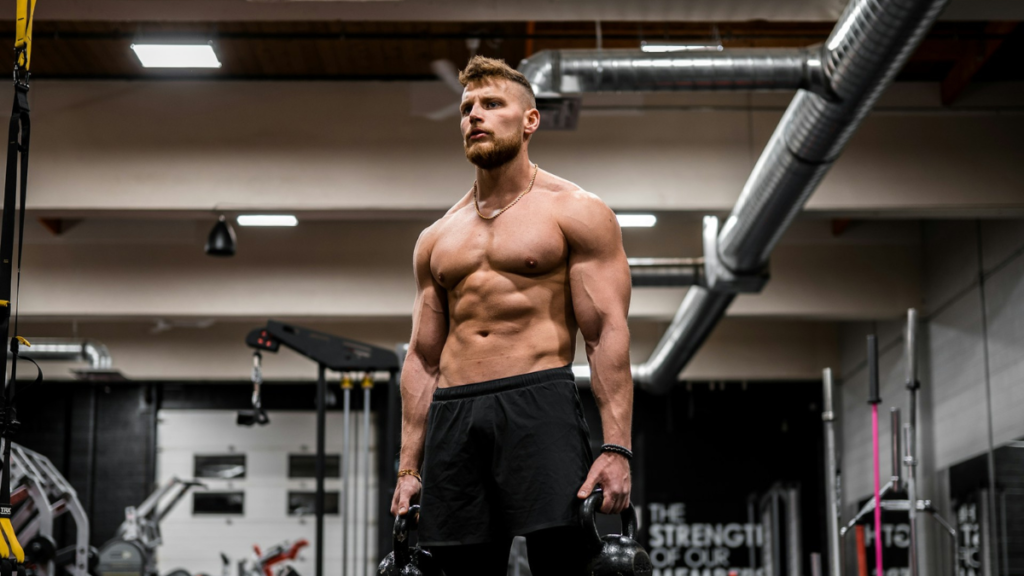
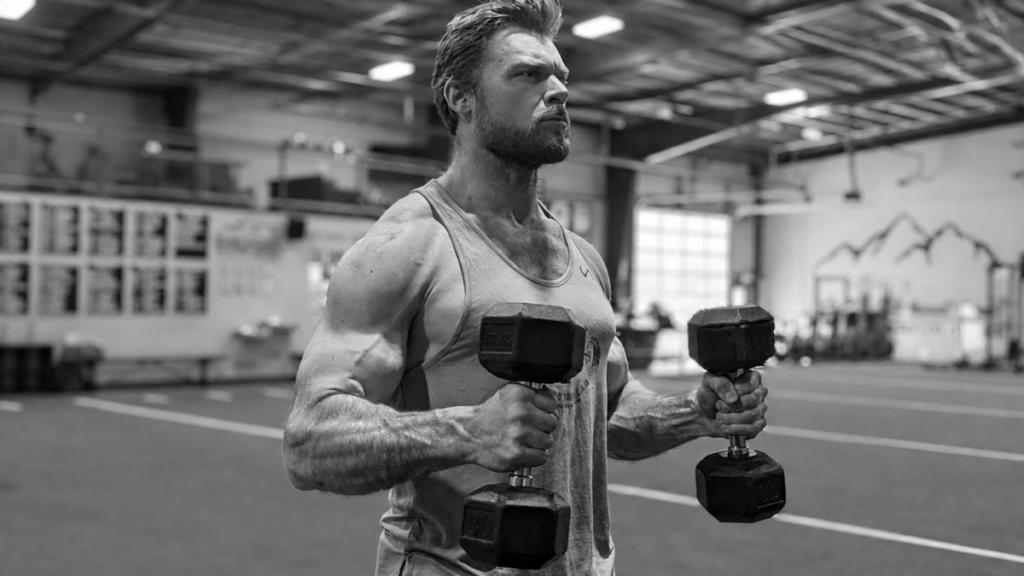
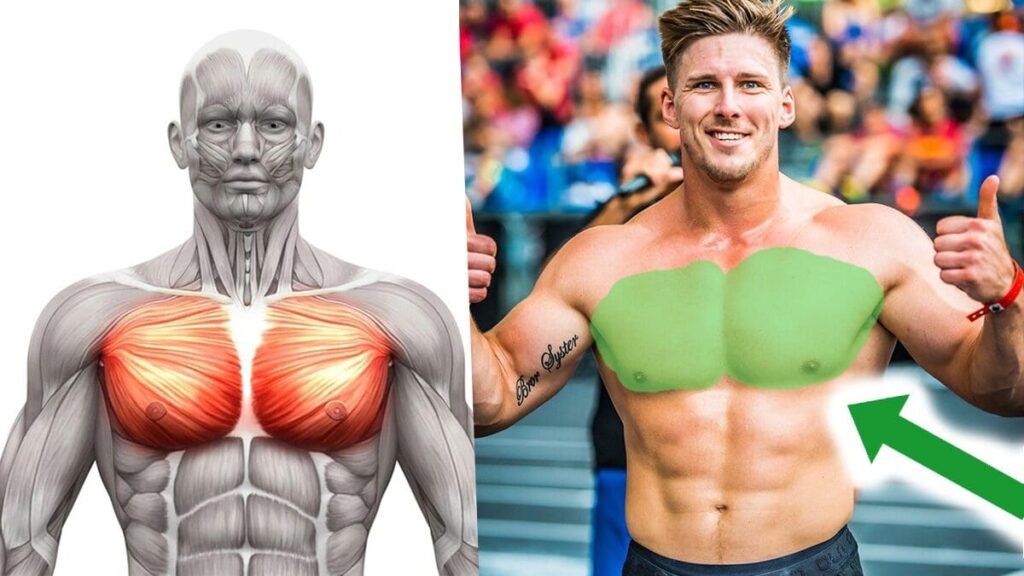
A jacked V shaped torso comes from adding size to the muscles that create upper body width, especially the lats, shoulders, upper chest, and upper back, while keeping the waist proportionately smaller. For beginners, the obvious question is whether machines or free weights build that look faster.
The science gives a reassuring answer. Both machines and free weights can build muscle very effectively. The best choice is not the tool with the most gym cred. It is the tool that lets you train the target muscles hard, with good form, enough weekly volume, and steady progression.


For most beginners chasing a V shaped torso, machines are the easiest place to start. They reduce the coordination demands of lifting, make it simpler to train close to a challenging effort, and allow a new lifter to focus on feeling the right muscles work. Free weights are still valuable, particularly for building skill and strength in movements such as rows, presses, and pull ups. The most productive long term route is usually a machine led program with selected free weight exercises added as technique improves.
What the Research Actually Says
The largest direct comparison between machines and free weights is much less dramatic than gym arguments make it sound. A 2023 systematic review and meta analysis examined 13 studies with more than 1,000 participants. It found no meaningful difference between machine based and free weight training for overall muscle hypertrophy when the methods were compared directly.
That finding matters because muscle growth is the main goal here. A beginner does not need to earn the right to use machines, and they do not need to avoid free weights out of fear that they are somehow inferior. Both can create enough mechanical tension to stimulate growth when exercises are performed through a useful range of motion and with sufficient effort.

Strength improvements followed a more specific pattern. People tended to get better at the type of exercise they practiced. Free weight training improved performance on free weight tests a little more, while machine training tended to improve machine specific strength. This is the principle of specificity in action. If you want a bigger barbell bench press, bench pressing with a barbell deserves a place in your training. If your main goal is a better physique, the important question is whether the exercise effectively loads the muscle you want to grow.
The evidence also needs a sensible caveat. The available studies are generally short, often lasting between six and 12 weeks, and hypertrophy data are less extensive than strength data. That means no honest coach should claim that one tool has permanently settled the muscle building debate. Still, the current evidence strongly supports a practical conclusion: neither machines nor free weights have a built in hypertrophy advantage for beginners.
Why Machines Often Win the Beginner Phase
Less Skill Demand Means More Productive Reps
A machine guides the load along a fixed or mostly fixed path. That reduces the balance and coordination demands compared with a barbell or dumbbell exercise. For a novice, this is useful because the limiting factor is less likely to be uncertainty about the movement and more likely to be the target muscle working hard.
Take a chest press machine. You can set the seat, control the handles, lower the load, and press with a stable torso. The same beginner may spend the first several weeks of dumbbell pressing trying to keep both weights level, find a comfortable path, and avoid losing control near the bottom. That skill work is not worthless, but it can reduce how much high quality chest training the person gets in a limited session.
Machines also make it easier to stop a set safely. You can train close to the point where another repetition would be difficult without worrying about being pinned under a barbell. Training close to failure is a practical way to ensure the working set is challenging enough, although reaching absolute failure is not required for hypertrophy.
They Make Targeting the V Taper Simple
The visual priorities for a wider looking torso are straightforward. You need vertical pulling for the lats, rowing for the upper back, pressing and isolation work for the deltoids, and enough chest training to build the upper body as a whole. Machines provide simple choices for all of these jobs.
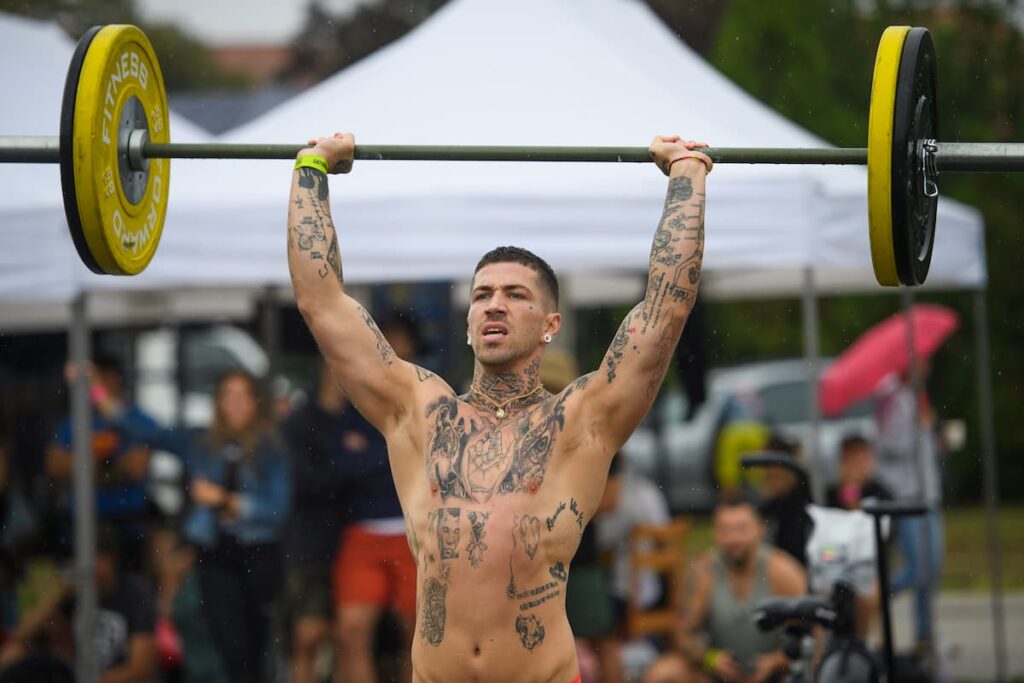
A neutral grip lat pulldown gives a beginner a stable way to train the lats and upper back. A chest supported row removes much of the lower back and balance demand, so the lifter can focus on pulling the elbows back. A machine shoulder press provides a clear vertical pressing pattern. A lateral raise machine can load the side delts without the technique errors that often turn dumbbell lateral raises into a trap exercise.
This does not mean machines isolate a muscle perfectly perfectly. No exercise can completely remove every assisting muscle. It means the setup is usually predictable enough that beginners can repeatedly train the intended area with less technical noise.
Progression Is Easy to Track
Muscle growth needs progressive overload over time. In practical terms, you need to gradually perform more repetitions, use more load, improve control, or add productive sets while maintaining good technique. Pin loaded machines make this especially easy to monitor.
If you performed 10 controlled repetitions with 70 pounds on a pulldown last week and 12 this week, you have clear evidence of progress. When you can reach the top of your planned repetition range, add the smallest available weight increase and build again. This is simple, repeatable, and exactly what a beginner needs.
Where Free Weights Earn Their Place
Free Weights Build Movement Skill
Free weight exercises require you to control the path of the load. A dumbbell row, barbell row, dumbbell press, or barbell overhead press asks more from the stabilizing muscles and from your coordination. That can be a disadvantage when the movement is completely new, but it becomes valuable once you can perform it consistently.
Free weights also offer more freedom to adjust your grip, stance, and path to suit your body. Some lifters feel excellent on a plate loaded chest press while others find a machine’s fixed path uncomfortable. Dumbbells may offer a more natural path for those people. Comfort matters because an exercise that aggravates a joint is not a productive long term choice.
The goal is not to force every classic lift into your program. The goal is to gradually become competent with free weight patterns you enjoy and can perform safely. Two or three well chosen exercises can give you the benefits without turning every workout into a balance test.
They Are Useful for Strength Specific Goals
If you want to become strong at barbell bench pressing, overhead pressing, squatting, or rowing, practice those movements. The research consistently shows that strength gains are partly specific to the exercise performed. A leg press can make your legs stronger and more muscular, but it will not teach you to coordinate a barbell squat in exactly the same way.
For a physique focused beginner, this is not a reason to abandon machines. It is a reason to decide whether barbell strength is one of your personal goals. If it is, put a manageable amount of free weight practice near the start of your sessions, when you are fresh enough to learn. Then use machines to accumulate the bulk of your hypertrophy work.
The Best Answer for a V Shaped Torso
The best method for most beginners is neither an all machine plan nor an all free weight plan. Start with machines for most of your upper body volume, then add free weights selectively as your confidence and technique improve.
A strong first program can include a lat pulldown, chest supported row, machine chest press, machine shoulder press, lateral raise machine, and a cable or machine rear delt movement. You can later add dumbbell pressing, dumbbell rows, pull ups, or a barbell overhead press if they fit your goals and you can perform them with control.
Weekly training volume has a clearer relationship with hypertrophy than the machine versus free weight decision. Research indicates that higher weekly set volumes generally produce greater muscle growth, up to an individual limit where recovery and workout quality begin to suffer. Beginners do not need huge volumes. They need enough hard, technically sound sets that they can recover from and improve on.
A practical starting point is to train the back, shoulders, and chest two or three times per week. Begin with roughly six to 10 challenging weekly sets for each major area, then adjust based on progress, soreness, performance, and recovery. Keep most sets in a moderate repetition range that you can control, such as eight to 15 repetitions. Different loads can build muscle effectively when sets are sufficiently challenging, but moderate loads are usually the most time efficient and comfortable option for new lifters.
Rest long enough to repeat quality effort. Very short rests can make the next set feel hard because of fatigue rather than because the target muscle is receiving good loading. Around two minutes is a sensible starting point for compound exercises, while one to two minutes often works well for simpler isolation movements.
How to Make Either Method Work
Use a Controlled Range of Motion
Lower the weight under control and use the largest pain free range you can own. For a pulldown, let the shoulders reach upward without losing control, then pull the elbows toward your sides. For a chest press, lower until you feel a strong chest stretch that remains comfortable, then press without bouncing or shrugging.
A larger usable range of motion can help hypertrophy, but chasing depth or stretch through joint pain is not productive. The best range is the one you can repeat with stable technique and a clear sense of the working muscle.
Keep Effort High Without Making Every Set a Grind
Your working sets should feel demanding. A good beginner benchmark is to finish most sets with roughly one to three repetitions still possible with clean form. This provides a hard enough stimulus while leaving room to practice technique and recover.
If a set ends because you lose position, shorten the range dramatically, or start swinging the weight, it is no longer a high quality set. Reduce the load, slow the repetition, and rebuild. Good training is not about making every exercise look brutally difficult. It is about repeating effective effort week after week.
Choose Exercises You Can Progress
The best program is one you can use for months. If a movement feels awkward despite sensible setup adjustments, choose another version that trains the same muscle. Swap a barbell row for a chest supported row, a painful machine press for dumbbell pressing, or a straight bar pulldown for a neutral grip option. Exercise selection should serve progression, not ego.
The Verdict
Machines are the best starting method for most beginners who want to build a jacked V shaped torso. They make training easier to learn, easier to load, and easier to push close to productive effort. They are not a lesser form of lifting, and the best available evidence does not show that free weights build more muscle overall.
Free weights are still worth learning because they develop exercise specific strength and give you useful options as you become more experienced. The smartest approach is to use machines as a reliable base, add free weights you genuinely want to master, and judge the plan by measurable progress in performance, body composition, and confidence.
Build your lats, upper back, shoulders, and chest with controlled hard sets. Track your repetitions and loads. Add weight or repetitions gradually. Stay patient enough to let months of consistent training do what no piece of equipment can do in a few weeks.
Key Takeaways
| Question | Best practical answer |
|---|---|
| Which builds more muscle? | Current direct evidence finds no meaningful overall hypertrophy advantage for either machines or free weights. |
| What should a beginner use first? | Machines are usually the simplest starting point because they reduce coordination demands and make progression easy to track. |
| Are free weights necessary? | No, but they are useful if you want strength and skill in specific barbell or dumbbell movements. |
| What grows the V taper? | Consistent progressive training for lats, upper back, side delts, rear delts, chest, and shoulders. |
| What matters more than the equipment choice? | Sufficient hard weekly sets, controlled technique, recovery, and progressive overload. |
| What is the best long term setup? | A machine led program with selected free weight exercises that suit your goals and technique. |
References
- Aerenhouts, D. and D’Hondt, E. (2020) ‘Using machines or free weights for resistance training in novice males? A randomized parallel trial’, International Journal of Environmental Research and Public Health, 17, 7848.
- Grgic, J., Schoenfeld, B.J., Orazem, J. and Sabol, F. (2022) ‘Effects of resistance training performed to repetition failure or nonfailure on muscular strength and hypertrophy: A systematic review and meta analysis’, Journal of Sport and Health Science, 11, pp. 202 to 211.
- Grgic, J., Lazinica, B., Mikulic, P., Krieger, J.W. and Schoenfeld, B.J. (2017) ‘The effects of short versus long inter set rest intervals in resistance training on measures of muscle hypertrophy: A systematic review’, European Journal of Sport Science, 17, pp. 983 to 993.
- Haugen, M.E., Vårvik, F.T., Larsen, S., Haugen, A.S., van den Tillaar, R. and Bjørnsen, T. (2023) ‘Effect of free weight versus machine based strength training on maximal strength, hypertrophy and jump performance: A systematic review and meta analysis’, BMC Sports Science, Medicine and Rehabilitation, 15, 103.
- Heidel, K.A., Novak, Z.J. and Dankel, S.J. (2021) ‘Machines and free weight exercises: A systematic review and meta analysis comparing changes in muscle size, strength, and power’, Journal of Sports Medicine and Physical Fitness, 62, pp. 439 to 448.
- Ratamess, N.A., Alvar, B.A., Evetoch, T.K., Housh, T.J., Kibler, W.B., Kraemer, W.J. and Triplett, N.T. (2009) ‘American College of Sports Medicine position stand. Progression models in resistance training for healthy adults’, Medicine and Science in Sports and Exercise, 41, pp. 687 to 708.
- Schoenfeld, B.J., Grgic, J., Ogborn, D. and Krieger, J.W. (2017) ‘Strength and hypertrophy adaptations between low load versus high load resistance training: A systematic review and meta analysis’, Journal of Strength and Conditioning Research, 31, pp. 3508 to 3523.
- Schoenfeld, B.J., Ogborn, D. and Krieger, J.W. (2017) ‘Dose response relationship between weekly resistance training volume and increases in muscle mass: A systematic review and meta analysis’, Journal of Sports Sciences, 35, pp. 1073 to 1082.