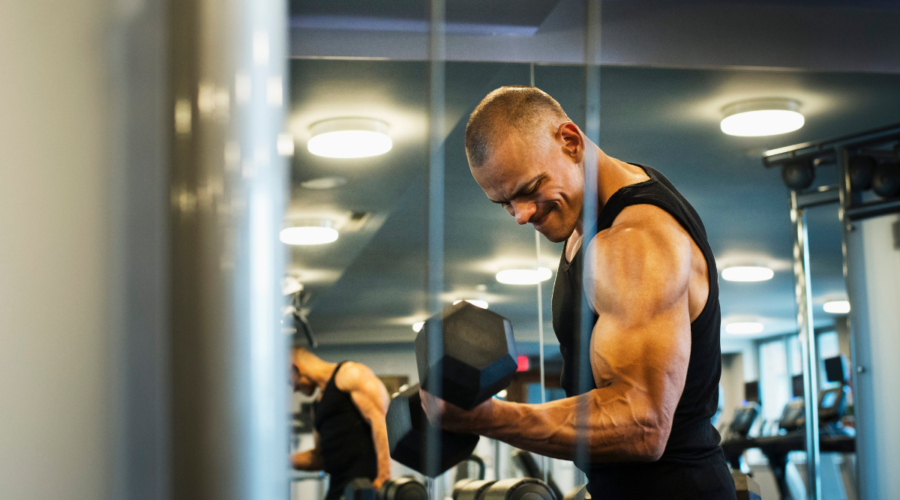


Great looking arms are built by developing more than just your biceps. The triceps make up the largest share of upper arm muscle mass, while the biceps and brachialis help create the front arm thickness that looks impressive in a T shirt. Beginners often make the mistake of doing endless curls while neglecting the muscles on the back of the arm, or they choose so many exercises that they cannot learn any of them properly.
You do not need a complicated arm day to make progress. You need a few reliable movements, consistent effort, and a plan to gradually make those movements harder. Resistance training can increase muscle size and strength in untrained adults, especially when exercises are performed consistently over several weeks. The best starting point is to choose movements that are easy to learn, comfortable for your joints, and simple to progress.


The three exercises below cover the main muscles that give your arms their shape. They also teach useful movement patterns that will make future training easier. Focus on controlled reps, use a weight you can manage with good technique, and aim to improve gradually rather than chasing heavy weights too soon.
Why Beginners Should Train Both Biceps and Triceps
Your biceps sit on the front of the upper arm and bend the elbow. They are most noticeable when you flex your arm, but they are not the only muscles responsible for a fuller arm. The brachialis sits underneath the biceps and contributes to arm thickness, while the brachioradialis gives the upper forearm a stronger appearance.
The triceps sit at the back of the upper arm and straighten the elbow. Because the triceps contain three muscle heads and make up a substantial amount of upper arm size, ignoring them can limit how muscular your arms look. Training both the biceps and triceps also supports stronger pressing and pulling in exercises such as push ups, rows, presses, and pull ups.
Cable vs Dumbbell Lateral Raises – Which Builds Wider Shoulders for Beginners?
Beginners tend to progress quickly because even modest training volumes are a new stimulus. You do not need to destroy your arms with every workout. A few challenging sets performed with good form, repeated consistently, can deliver meaningful results. Resistance training works best when it is progressive, meaning you gradually add repetitions, load, or control over time.
Exercise 1: Incline Dumbbell Curl
The incline dumbbell curl is one of the best beginner biceps exercises because it is simple, easy to load gradually, and places the biceps in a stretched position at the bottom of each repetition. Research suggests that training muscles through a large range of motion, particularly when they are lengthened, can support muscle growth.
Sit on an incline bench set to a comfortable angle. Hold a dumbbell in each hand with your arms hanging down by your sides. Keep your chest against the bench and allow your elbows to remain slightly behind your torso. Curl the dumbbells toward your shoulders without swinging your body or letting your elbows travel forward excessively. Squeeze the biceps near the top, then lower the weights under control until your elbows are straight again.
The bench reduces the chance of using momentum. This matters because beginners often turn curls into a whole body movement by rocking backward and driving the weight upward with their hips. When the torso stays supported, the biceps have to do more of the work.
Choose a weight that allows you to complete eight to 15 controlled repetitions. The final few reps should feel challenging, but your posture should stay stable and your wrists should remain neutral. If you need to lift your shoulders toward your ears or swing the dumbbells, the weight is too heavy.
A slow lowering phase can help you maintain control and understand the movement. You do not need to make every rep extremely slow, but avoid dropping the dumbbells. Lower them smoothly, pause briefly in the stretched position, and begin the next rep without bouncing.
How to Make the Incline Dumbbell Curl Work Better
Think about bending your elbow rather than simply lifting the dumbbell. Keep your upper arm quiet and allow the forearm to move. Your palms can gradually rotate upward as you curl, finishing with the palm facing toward your shoulder. This position is often comfortable and allows the biceps to contribute strongly to the movement.
Start with two or three sets. Leave roughly one or two repetitions in reserve on most sets, meaning you could have completed one or two more good repetitions if you had to. Training all the way to failure is not essential for muscle growth, and stopping slightly before form breaks can make training more sustainable for a beginner.
Exercise 2: Overhead Dumbbell Triceps Extension
The overhead dumbbell triceps extension is an excellent exercise for building the back of the upper arm. It trains the triceps through elbow extension while the arms are raised overhead. This position can place the long head of the triceps under a substantial stretch, which is useful because the long head crosses both the shoulder and elbow joints.
You can perform this exercise seated or standing. A seated position is often easier for beginners because it reduces the temptation to lean backward. Hold one dumbbell with both hands above your head, keeping your hands under the top end of the dumbbell. Your elbows should point generally forward rather than flaring wide to the sides.
Slowly lower the dumbbell behind your head by bending your elbows. Lower it only as far as you can while keeping your shoulders comfortable and your ribs under control. Then straighten your elbows to return the dumbbell to the starting position. Your upper arms should remain as still as possible while your forearms move.
This exercise gives direct work to the triceps, which may not receive enough stimulus from pushing movements alone. Push ups and presses are excellent exercises, but adding a focused triceps movement can help beginners build more balanced arm development.
How to Keep Your Shoulders Comfortable
Start lighter than you think you need. Overhead exercises can feel awkward at first because they require shoulder mobility and control. Use a weight that lets you lower the dumbbell smoothly without arching your lower back or forcing your elbows into an uncomfortable position.
Keep your ribs down and gently brace your stomach as you perform each rep. If your lower back arches heavily, reduce the weight, sit down, or limit the range of motion until you have more control. You should feel the effort in the back of your upper arms, not sharp pain in your elbows or shoulders.
Aim for two or three sets of 10 to 15 repetitions. When you can perform all sets with clean technique at the top end of the rep range, increase the dumbbell weight by the smallest available amount. Small progressions add up quickly when you train consistently.
Exercise 3: Close Grip Push Up
The close grip push up is a highly useful beginner exercise because it trains the triceps, chest, and front of the shoulders without requiring equipment. It also teaches full body tension, which transfers well to many gym exercises. Compared with a very narrow hand position, a moderately close grip is generally more comfortable for beginners and still places a strong demand on the triceps.
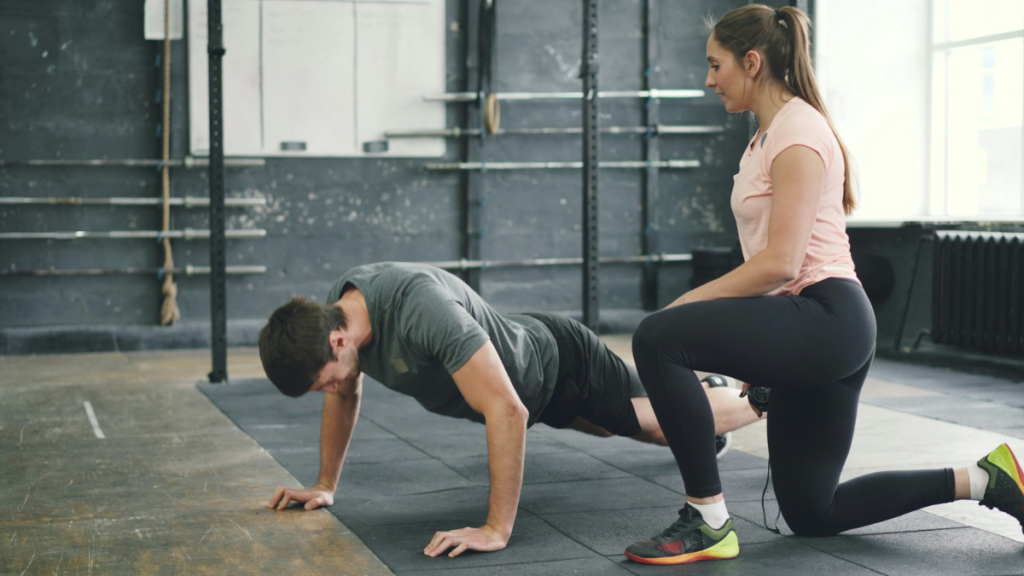
Begin in a high plank with your hands slightly narrower than shoulder width. Your hands do not need to touch each other. Place them where you can lower your body without wrist pain or shoulder discomfort. Keep your body in a straight line from head to heels, squeeze your glutes, and gently tighten your stomach.
Lower your chest toward the floor by bending your elbows. Keep the elbows closer to your sides than in a wide push up. Press the floor away and return to the top position, finishing with straight elbows without aggressively locking them out.
If a full push up is currently too difficult, perform the movement with your hands elevated on a bench, sturdy box, or bar in a rack. The higher your hands are, the less body weight you have to press. This makes elevated close grip push ups a smart way to build strength while still practicing the same pattern.
Why Push Ups Belong in an Arm Routine
Push ups are not only chest exercises. They require the triceps to straighten the elbow during every repetition, and they allow beginners to build pressing strength without needing to balance heavy dumbbells or barbells. They also train the core and shoulder stabilizers to hold a strong body position.
As you get stronger, you can make the movement more difficult by lowering the height of the surface you use, adding repetitions, slowing the lowering phase, or eventually wearing a weighted vest. This makes the exercise useful far beyond the beginner stage.
Perform two or three sets of six to 15 repetitions. Choose a variation that allows you to keep your body in one straight line. If your hips sag toward the floor or your lower back arches, use a higher surface and build strength there first.
How to Structure These Exercises
You can perform these three exercises twice per week, leaving at least one day between sessions. For example, train them on Monday and Thursday after your main upper body exercises, or use them as a short standalone arm session.
Begin with the close grip push up because it is the most demanding full body movement. Follow it with the incline dumbbell curl, then finish with the overhead dumbbell triceps extension. Rest long enough between sets that you can maintain good technique. Around one to two minutes is a sensible starting point for most beginners.
Your initial goal is not to make every session feel brutal. Your goal is to perform quality work and gradually improve. Keep a simple note of the weight, repetitions, and sets you complete. When you can reach the top of your target rep range with clean form, make one small change to increase the challenge.
Muscle growth also depends on recovery. Eat enough overall food to support training, include sufficient protein across the day, sleep well, and give sore muscles time to recover. You do not need perfect conditions to get stronger, but consistency matters much more than finding a supposedly perfect exercise.
Common Mistakes That Slow Arm Growth
The first mistake is choosing weights that are too heavy. If you need momentum to curl a dumbbell or arch your back dramatically during an extension, the target muscle is no longer doing the job effectively. Use a weight you can control, then earn the right to go heavier.

The second mistake is rushing through repetitions. Fast, uncontrolled reps make it harder to keep tension on the intended muscle and increase the chance of irritating your joints. Use a smooth tempo, particularly as you lower the weight.
The third mistake is constantly changing exercises. Variety can be enjoyable, but beginners benefit from repeating a few movements long enough to improve at them. Give this routine at least six to eight weeks before making major changes, unless an exercise causes genuine discomfort.
Finally, do not judge your progress only by the mirror from one week to the next. Arm growth takes time. Better technique, extra repetitions, stronger push ups, and slightly heavier dumbbells are all signs that your training is working.
References
- American College of Sports Medicine (2009) ‘American College of Sports Medicine position stand. Progression models in resistance training for healthy adults’, Medicine and Science in Sports and Exercise, 41(3), pp. 687 to 708.
- American College of Sports Medicine (2026) ‘Resistance training prescription for muscle function, hypertrophy, and physical performance in healthy adults: An overview of reviews’, Medicine and Science in Sports and Exercise, 58(3), pp. 1 to 18.
- Grgic, J., Schoenfeld, B.J., Skrepnik, M. and Davies, T.B. (2021) ‘Effects of resistance training performed to repetition failure or non failure on muscular strength and hypertrophy: A systematic review and meta analysis’, Journal of Sport and Health Science, 11(2), pp. 202 to 211.
- Kassiano, W., Costa, B.D.V., Nunes, J.P., Ribeiro, A.S., Schoenfeld, B.J. and Cyrino, E.S. (2023) ‘Which ROMs lead to Rome? A systematic review of the effects of range of motion on muscle hypertrophy’, Journal of Strength and Conditioning Research, 37(5), pp. 1135 to 1144.
- Lasevicius, T., Schoenfeld, B.J., Silva Batatinha, H., Barros, T.S., Aihara, A.Y., Brendon, H., Longo, A.R. and Tricoli, V. (2018) ‘Muscle failure promotes greater muscle hypertrophy in low load but not in high load resistance training’, Journal of Strength and Conditioning Research, 36(2), pp. 346 to 351.
- Schoenfeld, B.J., Grgic, J., Ogborn, D. and Krieger, J.W. (2017) ‘Strength and hypertrophy adaptations between low versus high load resistance training: A systematic review and meta analysis’, Journal of Strength and Conditioning Research, 31(12), pp. 3508 to 3523.
Key Takeaways
| Focus | What to do | Why it matters |
|---|---|---|
| Exercise selection | Use close grip push ups, incline dumbbell curls, and overhead dumbbell triceps extensions | The three movements train the main muscles that create fuller looking arms |
| Weekly frequency | Train the routine twice per week with at least one rest day between sessions | Regular exposure allows beginners to practice technique and build strength |
| Sets and reps | Complete two or three sets of roughly eight to 15 controlled repetitions | This provides a manageable starting volume for learning and muscle building |
| Effort | Finish most sets with one or two repetitions still possible | You can train hard without sacrificing technique or needing to reach failure |
| Progression | Add repetitions first, then increase weight gradually | Progressive overload is essential for continued strength and muscle gains |