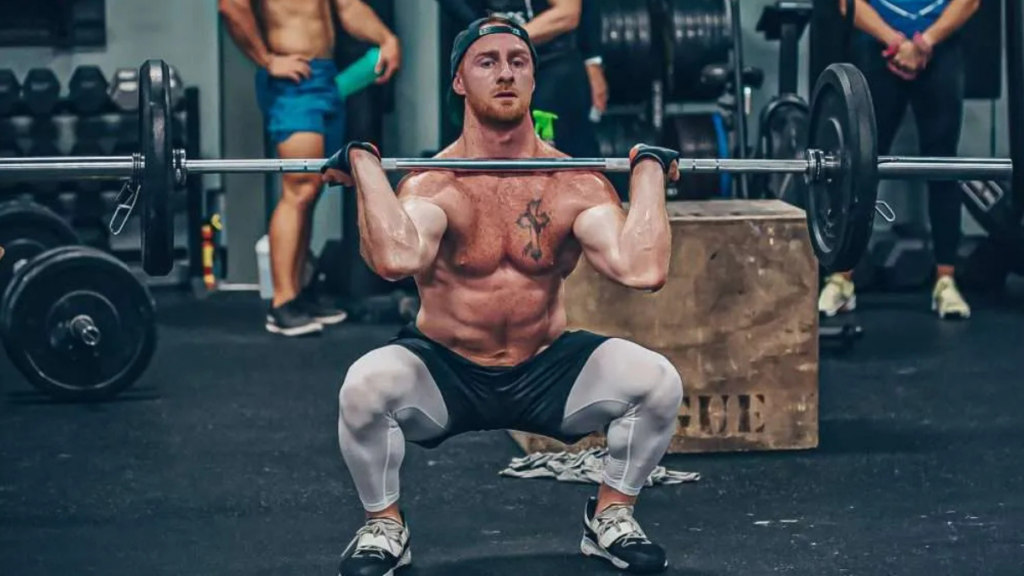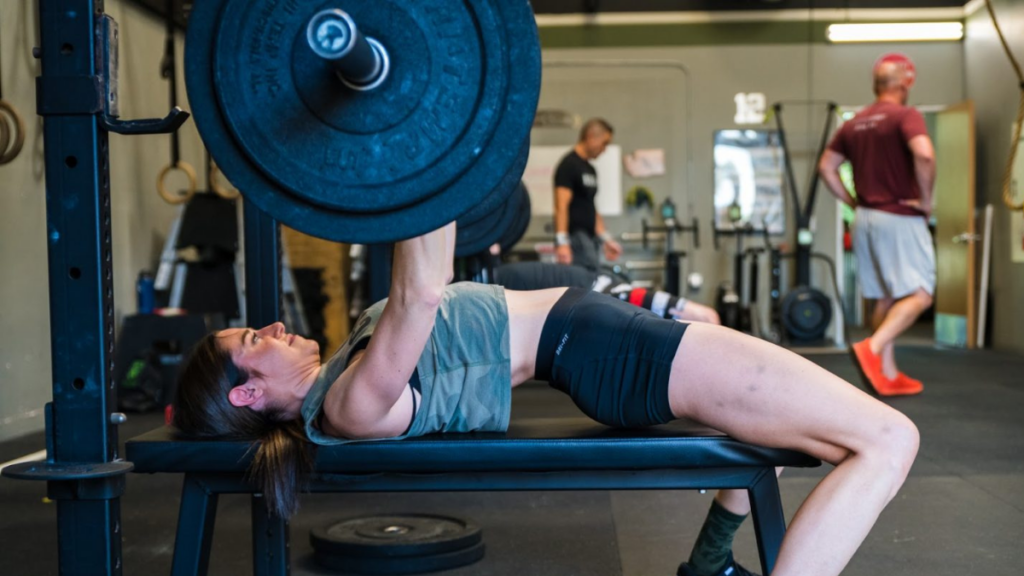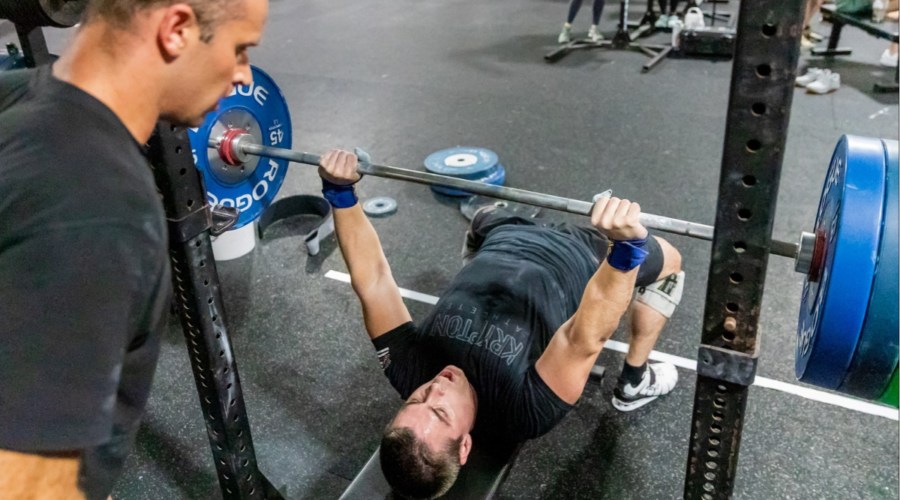


A lean lifter weighing around 155 pounds might quietly lock out a weight that makes bigger athletes pause, while a heavier lifter pushing 230 pounds might grind through a surprisingly modest load despite looking imposing in a fitted t-shirt.
It is tempting to think that bigger bodies automatically press bigger weights, or that dividing your lift by your bodyweight tells the whole story. Yet exercise science reveals that human strength does not scale in a straight line, and comparing two lifters using simple math often creates more confusion than clarity. Before you look up any target numbers or judge your current max against the guy in the next rack, there is a hidden scaling rule that changes how we measure upper-body pressing strength.
Let’s learn more.
Why Simple Bodyweight Ratios Can Fool You
For decades, gym culture has relied on a quick mental shortcut to judge pressing strength: dividing the weight on the bar by your bodyweight. If you weigh 180 pounds and bench press 180 pounds, people casually say you lift your bodyweight, and if you weigh 240 pounds and press 240 pounds, you might assume you are on equal footing.
Exercise scientists have shown that simple ratio scaling often penalizes heavier lifters and flatters lighter ones because body mass increases faster than muscle cross-sectional area. When an athlete grows larger in three dimensions, volume and mass expand at a cubic rate relative to linear dimensions, whereas muscle force potential is closely tied to cross-sectional area.
Researchers investigating allometric scaling have found that maximal bench press strength scales with body mass using a fractional exponent rather than a one-to-one ratio. Classic allometric modeling of elite bench press performance identified a body mass exponent around 0.57, meaning that doubling body weight does not double expected pressing force.
What Actually Drives Your Pressing Numbers
Body weight is only the starting point of the story, because two lifters who step on the scale at the exact same weight can have completely different engines under the hood. Lean body mass and upper-body muscle thickness play massive roles in how much force your chest, anterior deltoids, and triceps can produce against a loaded barbell.
Research on resistance-trained men and women shows a strong positive relationship between lean mass and maximal bench press performance, while fat mass adds scale weight without contributing contractile force. In fact, carrying extra non-contractile mass increases your denominator when someone calculates relative strength, even though adipose tissue does not help push the bar off your chest.
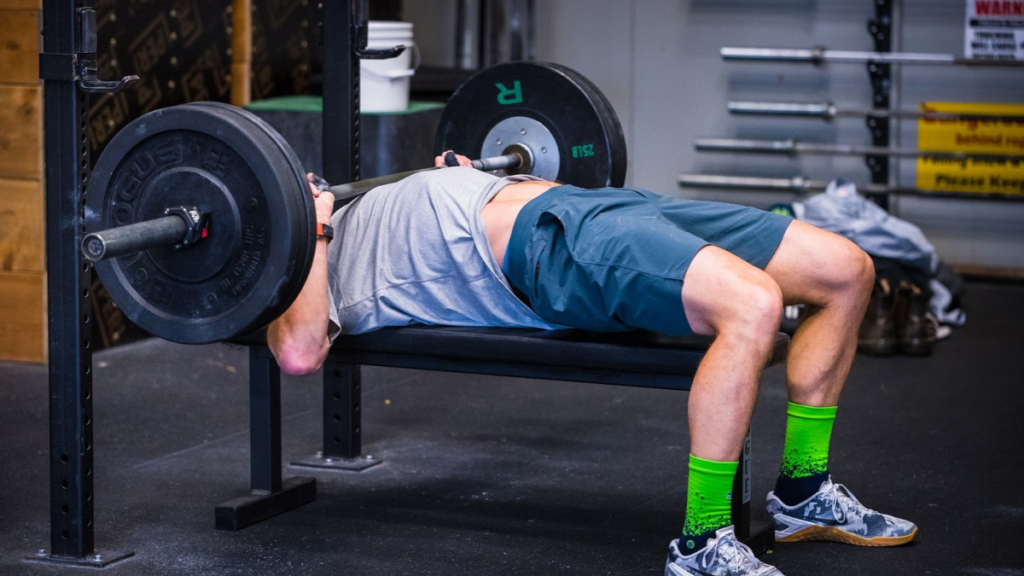
Longitudinal ultrasound studies tracking heavy bench press training over 24 weeks demonstrate that pectoralis major muscle thickness and triceps brachii muscle thickness increase alongside maximal strength, though their timelines are not identical. Chest muscle thickness and overall bench press strength continue climbing across training phases, while upper-arm muscle thickness tends to rise most noticeably during earlier phases before leveling off sooner. Sex differences also shape how size translates to pressing strength, as men generally carry greater absolute upper-body lean mass and higher absolute bench press numbers, whereas relative strength comparisons look different once lean mass and body composition are accounted for. Limb lengths, torso dimensions, and training history further shape leverage and bar path efficiency, which is why two lifters of identical weight rarely press identical numbers.
How Bench Press Standards Scale Across Bodyweights
Even though individual anatomy and training age create natural variation, strength coaches still use structured benchmarks to help lifters gauge where they stand and set realistic targets. Rather than treating any chart as a rigid verdict on your worth as an athlete, it helps to view standards as directional mileposts that reflect typical performance tiers across weight classes. A lifter who has trained consistently for several months will sit in a very different bracket from someone with several years of structured progressive overload, regardless of whether they weigh 145 pounds or 225 pounds.
Bench Press Reference Guide for Adult Men
| Bodyweight | Beginner (1RM) | Novice (1RM) | Intermediate (1RM) | Advanced (1RM) |
| 145 lbs (66 kg) | 80 lbs (36 kg) | 115 lbs (52 kg) | 155 lbs (70 kg) | 195 lbs (88 kg) |
| 165 lbs (75 kg) | 95 lbs (43 kg) | 135 lbs (61 kg) | 180 lbs (82 kg) | 225 lbs (102 kg) |
| 185 lbs (84 kg) | 110 lbs (50 kg) | 155 lbs (70 kg) | 205 lbs (93 kg) | 255 lbs (116 kg) |
| 205 lbs (93 kg) | 125 lbs (57 kg) | 175 lbs (79 kg) | 225 lbs (102 kg) | 280 lbs (127 kg) |
| 225 lbs (102 kg) | 140 lbs (64 kg) | 190 lbs (86 kg) | 245 lbs (111 kg) | 305 lbs (138 kg) |
Bench Press Reference Guide for Adult Women
| Bodyweight | Beginner (1RM) | Novice (1RM) | Intermediate (1RM) | Advanced (1RM) |
| 115 lbs (52 kg) | 35 lbs (16 kg) | 55 lbs (25 kg) | 75 lbs (34 kg) | 100 lbs (45 kg) |
| 135 lbs (61 kg) | 45 lbs (20 kg) | 70 lbs (32 kg) | 95 lbs (43 kg) | 120 lbs (54 kg) |
| 155 lbs (70 kg) | 55 lbs (25 kg) | 80 lbs (36 kg) | 110 lbs (50 kg) | 140 lbs (64 kg) |
| 175 lbs (79 kg) | 60 lbs (27 kg) | 90 lbs (41 kg) | 125 lbs (57 kg) | 160 lbs (73 kg) |
| 195 lbs (88 kg) | 65 lbs (29 kg) | 100 lbs (45 kg) | 135 lbs (61 kg) | 175 lbs (79 kg) |
Notice how the jump in poundage from one weight class to the next gets slightly gentler as bodyweight climbs. That pattern mirrors the nonlinear allometric relationship between body mass and upper-body strength, where adding 20 pounds of body weight at 205 pounds does not add as much extra pressing leverage as adding 20 pounds from a lighter baseline. If you are chasing your next milestone, moving one column to the right over a well-planned training block is far more productive than chasing a viral gym number that ignores your frame and experience.
Smart Ways to Build Your Bench Press for Your Frame
Knowing where your numbers sit is only useful if it guides how you train next week. Evidence on resistance training loading shows that heavier loads, often in the 80% to 100% of one-repetition maximum range for lower repetition sets, tend to produce particularly strong gains in maximal barbell strength, while moderate and lighter loads taken close to failure also support muscle growth. Combining heavy compound pressing with targeted hypertrophy work for the chest, triceps, and anterior deltoids helps you build both neural force expression and the muscular tissue that supports long-term progress.
3 Perfect Exercises for Building the Lower Pecs Beginners Often Overlook
Technique and consistency matter just as much as load selection when you are trying to maximize what your current size can press. Setting your shoulder blades back into the bench, keeping your glutes in contact with the pad, driving through your feet, and lowering the bar under control to your chest without bouncing ensures that every rep builds honest strength rather than momentum. Over time, tracking gradual increases in weight or reps across weeks and months will move your numbers forward far more reliably than comparing yourself to whoever is benching beside you.
Key Takeaways
| Topic | Main Takeaway |
| Bodyweight Scaling | Strength does not scale linearly with body weight, so simple lift-to-bodyweight ratios can mislead. |
| Lean Mass vs. Weight | Lean muscle mass drives pressing force, while extra body fat adds weight without adding force. |
| Muscle Adaptation | Chest and triceps growth support pressing strength over time, with distinct adaptation patterns across muscles. |
| Training Approach | Consistent progressive overload, solid bench mechanics, and appropriate load ranges drive steady gains. |
References
- Dooman, C.S. and Vanderburgh, P.M., 2000. Allometric modeling of the bench press and squat: Who is the strongest regardless of body mass? Journal of Strength and Conditioning Research, 14(1), pp.32-36.
- Hart, P.D., 2024. Allometric scaling of maximal strength performance in physically active college-aged males: Removing the effects of body weight. Journal of Physical Activity Research, 9(1), pp.14-19.
- Ogasawara, R., Thiebaud, R.S., Loenneke, J.P., Loftin, M. and Abe, T., 2012. Time course for arm and chest muscle thickness changes following bench press training. Interventional Medicine and Applied Science, 4(4), pp.217-220.
- Schoenfeld, B.J., Grgic, J., Van Every, D.W. and Plotkin, D.L., 2021. Loading recommendations for muscle strength, hypertrophy, and local endurance: A re-examination of the repetition continuum. Sports, 9(2), p.32.
- Solberg, P., Paulsen, G., Sjøberg, N.S. and Rønnestad, B.R., 2023. Association of strength performance in bench press and squat with anthropometric variables in resistance-trained men and women. Sports, 11(1), p.19.