

The plank looks simple, but a well performed plank asks the abdominal wall, hips, shoulders, and back to work together. That makes it a useful starting point for beginners who want stronger, more athletic abs without jumping straight into advanced hanging or rolling movements.
Planks are not a shortcut to visible abs. A defined six pack depends on developing the rectus abdominis while reducing overall body fat to a level where those muscles can be seen. Your genetics, total calorie intake, protein intake, daily activity, and full body training all matter. Research has found that doing abdominal exercises alone can improve abdominal endurance without preferentially reducing abdominal fat. That does not make planks pointless. It means they should be part of a broader plan, not the entire plan.


The three variations below build from the ground up. Each teaches you to create tension through the trunk while keeping your spine and pelvis under control. Master the position first, then increase the challenge gradually.
What a Plank Actually Trains
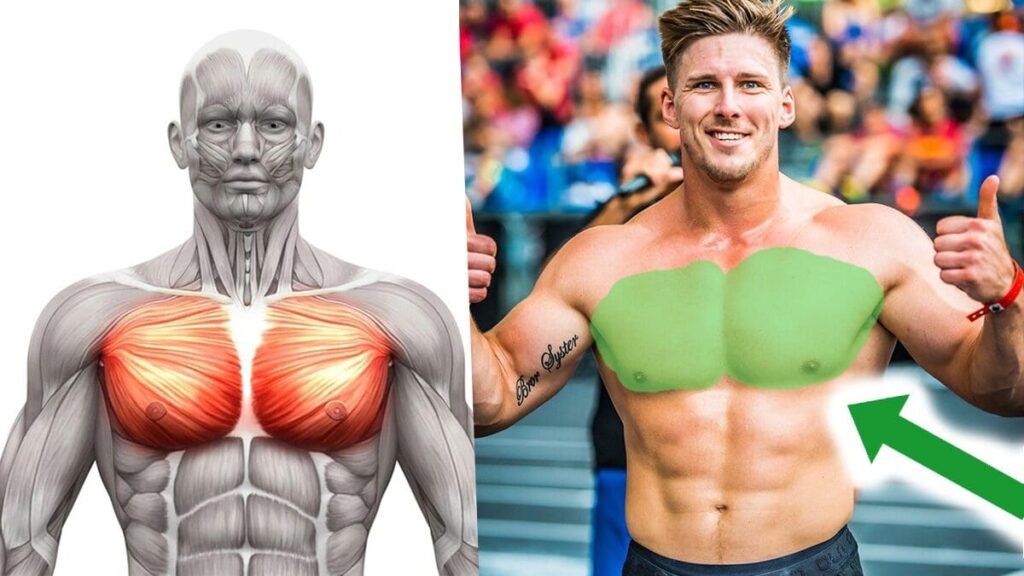
Your rectus abdominis is the muscle that creates the visible rows of a six pack. Its job includes resisting excessive extension of the lower back when your arms and legs apply force. Your internal and external obliques help control rotation and side bending. Deeper trunk muscles, the glutes, and the muscles around the shoulder blades contribute to the stable shape you are trying to hold.
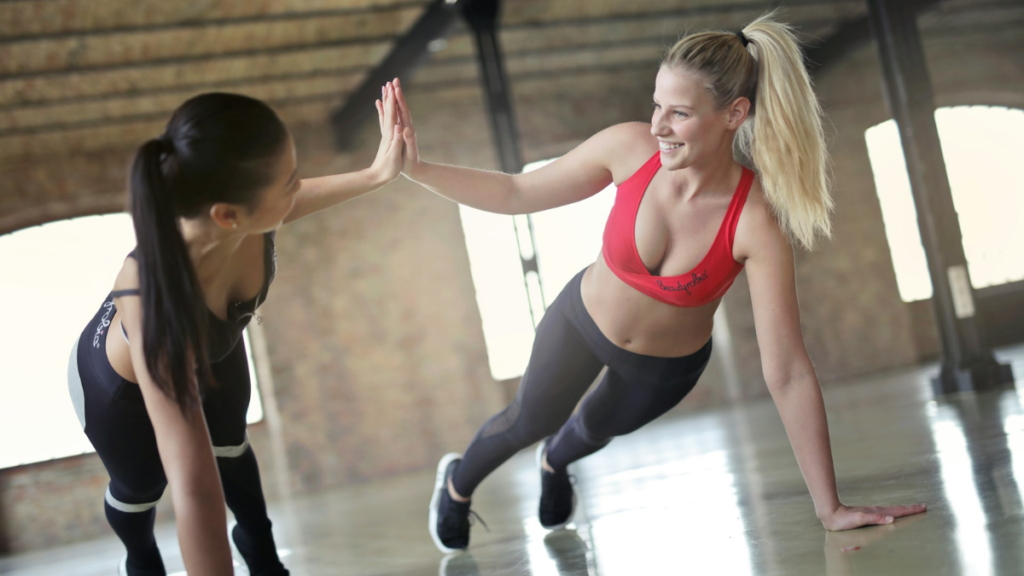
This is why a plank is more than simply trying not to move. It is an anti extension exercise. You actively resist the urge for your lower back to sag while you brace your abdominal wall and maintain a long line from the shoulders to the hips. Studies using muscle activity measurements show that plank and side bridge exercises recruit the abdominal and trunk muscles, while the side bridge particularly challenges muscles on the weight bearing side of the trunk and hip.
Muscle activity data do not automatically prove long term muscle growth, and a plank is primarily a strength endurance exercise. Still, it gives beginners a safe way to learn bracing and creates a foundation for harder ab training, loaded carries, push ups, squats, running, and athletic work.
First, Learn the Brace
Before choosing a variation, learn to make a good plank feel like an active effort. Start by lying on your back with your knees bent and your feet on the floor. Exhale slowly as if you are fogging up a mirror, then gently tighten your midsection as though you are about to be poked in the stomach. You should be able to breathe while staying braced. Do not pull your stomach in as hard as possible and do not hold your breath.
3 Best Cable Back Exercises for a More Attractive V Shaped Torso
In every plank, squeeze your glutes, lightly tuck your pelvis, and keep your ribs from flaring forward. Think about bringing your belt buckle slightly toward your ribs. This should make your lower back feel neutral rather than aggressively rounded. If you feel the work almost entirely in your lower back or shoulders, shorten the hold and reset your position.
1. Incline Forearm Plank
The incline forearm plank is the most useful entry point for many beginners. Because your forearms are raised on a stable bench, countertop, or sturdy box, your core supports a smaller percentage of your body weight than it would on the floor. You can learn the brace without immediately losing position.
How to Do It
Place your forearms on the raised surface with your elbows under or slightly in front of your shoulders. Step your feet back until your body forms a straight diagonal line. Push your forearms into the surface, squeeze your glutes, and exhale to bring your ribs down. Hold the position while taking quiet, controlled breaths.
The key is to use a height that lets you remain strict. A countertop is easier than a low bench. There is no prize for choosing the lowest surface too early. The correct level is the one that allows you to feel your abs working without your hips dropping or your shoulders collapsing.
Why It Works for Beginners
The incline reduces the external demand while preserving the basic anti extension challenge. It lets you practice maintaining a stable ribcage and pelvis with less fatigue. That makes quality repetitions possible, which matters more than chasing a long, messy hold.
Start with three sets of 15 to 25 seconds, resting for about 45 to 60 seconds between efforts. When you can complete three controlled 30 second holds for two sessions in a row, lower the surface slightly or move to the floor forearm plank.
2. Forearm Plank From the Floor
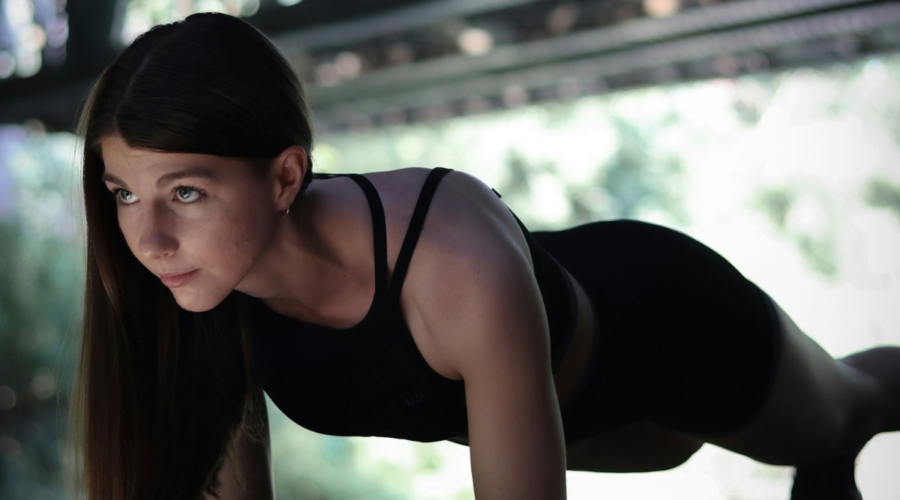
The standard forearm plank is the classic beginner abs exercise, but it only becomes effective when you remove the common shortcuts. Hips that sag turn it into a stressful lower back position. Hips lifted too high make it much easier and reduce the demand on the abdominal wall. Aim for a strong, quiet line rather than a dramatic pose.
How to Do It
Lie face down and set your forearms on the floor, keeping the elbows beneath the shoulders. Lift your body by placing your toes on the ground. Squeeze your glutes, tense your thighs, and drive your forearms down while gently pushing the floor away. Keep your gaze between your hands so your neck stays long.
Now breathe out and lock in the brace. Your body should resemble a plank of wood, but the position should feel active. The shoulders should not shrug toward the ears, and the lower back should not dip. Stop the set as soon as you cannot maintain those points.
Make the Standard Version Harder Without Cheating
Rather than extending every set until you shake, make the position more demanding in small steps. Pull your elbows gently toward your toes without actually moving them. This increases abdominal tension because your body has to resist the force you are creating. You can also gradually move your feet closer together, which narrows your base of support.
Work with three sets of 20 to 40 seconds. A beginner who can control a 30 second floor plank has earned the right to build duration. Once 45 seconds feels consistent, use more tension, longer levers, or a more dynamic variation instead of making every hold several minutes long. Research on trunk endurance supports using stable, low load exercises for endurance and stabilization, but form still determines whether you are training the target muscles well.
3. Side Plank From the Knees
Visible six pack abs are not just about the center line of the torso. Your obliques frame the waist and help transfer force between the upper and lower body. The side plank from the knees is a manageable way to train these muscles while improving lateral trunk and hip control.
How to Do It
Lie on one side with your elbow directly under your shoulder. Bend your knees and stack them, then rest your lower forearm on the floor. Lift your hips until your knees, hips, and shoulders form a straight line. Keep your chest open and your top shoulder directly above the bottom shoulder. Brace your abs and breathe slowly.
Do not let the bottom shoulder creep toward your ear. Do not rotate your chest toward the floor to make the position easier. Imagine pressing your elbow into the floor and lifting your waist away from it. You should feel the side of your trunk and the side of your hip working together.
Progress at the Right Speed
Perform two or three sets of 15 to 25 seconds on each side. Build both sides equally, even if one side feels easier. When you can hold 30 seconds with a stable pelvis and no shoulder discomfort, straighten the top leg while leaving the bottom knee on the floor. The next step is the full side plank with both legs straight.
Side bridge research has found substantial recruitment in the external oblique and gluteal muscles on the weight bearing side. That is useful for beginners because the exercise challenges the trunk without asking the spine to repeatedly bend and straighten. It also teaches you to control side bending, a quality that carries over to single arm carries, lunges, running, and many field sports.
How to Build Planks Into an Abs Plan
Train these variations two or three times each week on nonconsecutive days. Use the incline forearm plank, floor forearm plank, and side plank from the knees as a short skill and strength block after your warm up or at the end of a lifting session. Keep the sets crisp. A 20 second hold with strong breathing and alignment is more valuable than a 90 second hold that is mostly lower back extension.
For the first two weeks, use the variation you can hold correctly for three sets of about 20 seconds. In the third and fourth weeks, add five seconds to each set if your form remains consistent. In the fifth week, progress the angle or lever of one variation and return the hold to 15 to 20 seconds. This is progressive overload in a beginner friendly form: the task becomes a little harder once you have adapted to the current task.
You will get more from planks when you also train your abs through movement. Controlled dead bugs, reverse crunches, and cable crunches can complement this plan when you are ready. Resistance training in general can increase muscle size when it provides sufficient effort and progressive overload, while nutrition and total activity determine whether the muscle becomes visible.
The Nutrition Reality Behind Ripped Abs
Planks can strengthen your abdominal wall, but no exercise selects fat from one area of the body. To reveal a six pack, you need a sustainable approach that reduces overall fat while protecting muscle. That usually means eating enough protein, including filling whole foods, training your full body, and creating a modest calorie deficit if fat loss is your goal.

Avoid aggressive plans that make your training worse or leave you constantly hungry. A slower approach is usually easier to maintain and gives you a better chance of keeping muscle. The exact body fat level at which abs show varies widely between people, so use your strength, energy, waist measurement, and progress photos as useful markers rather than obsessing over a single number.
Common Beginner Mistakes
The biggest mistake is treating the plank as a contest of discomfort. When your lower back sags, your hips rotate, or your breath becomes panicked, the set is finished. Rest, reset, and perform another high quality hold. You are building control, not proving how long you can tolerate a poor position.
Another mistake is forgetting that the shoulders are part of the exercise. Pressing into the floor or bench helps create a stable upper body platform. If your shoulders feel painful, use a higher incline, reduce the hold time, and check that your elbow is below your shoulder. Persistent pain warrants assessment from a qualified health professional.
Finally, do not expect planks alone to build a dramatic physique. They are one smart tool in a complete routine. Combine them with regular resistance training, aerobic activity you enjoy, adequate sleep, and nutrition that matches your goal. Done this way, these three plank variations can give beginners stronger, more resilient abs and a platform for more demanding training.
References
- Ekstrom, R.A., Donatelli, R.A. and Carp, K.C. (2007) ‘Electromyographic analysis of core trunk, hip, and thigh muscles during 9 rehabilitation exercises’, Journal of Orthopaedic and Sports Physical Therapy, 37(12), pp. 754 to 762.
- Escamilla, R.F., Lewis, C., Bell, D., Bramblet, G., Daffron, J., Lambert, S., Pecson, A., Imamura, R., Paulos, L. and Andrews, J.R. (2010) ‘Core muscle activation during Swiss ball and traditional abdominal exercises’, Journal of Orthopaedic and Sports Physical Therapy, 40(5), pp. 265 to 276.
- McGill, S.M., Childs, A. and Liebenson, C. (1999) ‘Endurance times for low back stabilization exercises: clinical targets for testing and training from a normal database’, Archives of Physical Medicine and Rehabilitation, 80(8), pp. 941 to 944.
- Schoenfeld, B.J. (2010) ‘The mechanisms of muscle hypertrophy and their application to resistance training’, Journal of Strength and Conditioning Research, 24(10), pp. 2857 to 2872.
Key Takeaways
| Focus | What to do | Why it matters |
|---|---|---|
| Start point | Begin with the incline forearm plank if floor planks break down | It lets you learn a strong brace with a lower load |
| Main plank | Keep ribs down, glutes tight, and hips level in the forearm plank | Position keeps the focus on resisting lower back extension |
| Obliques | Use the side plank from the knees on both sides | It builds lateral trunk and hip control for a stronger midsection |
| Progression | Add time only while your breathing and alignment stay controlled | Better form is more useful than longer poor quality holds |
| Definition | Pair core work with full body training and sustainable nutrition | Ab exercises alone do not selectively remove abdominal fat |